Uncle Chips Spicy Treat: Kalorien, Nährwerte und gesundheitliche Vorteile
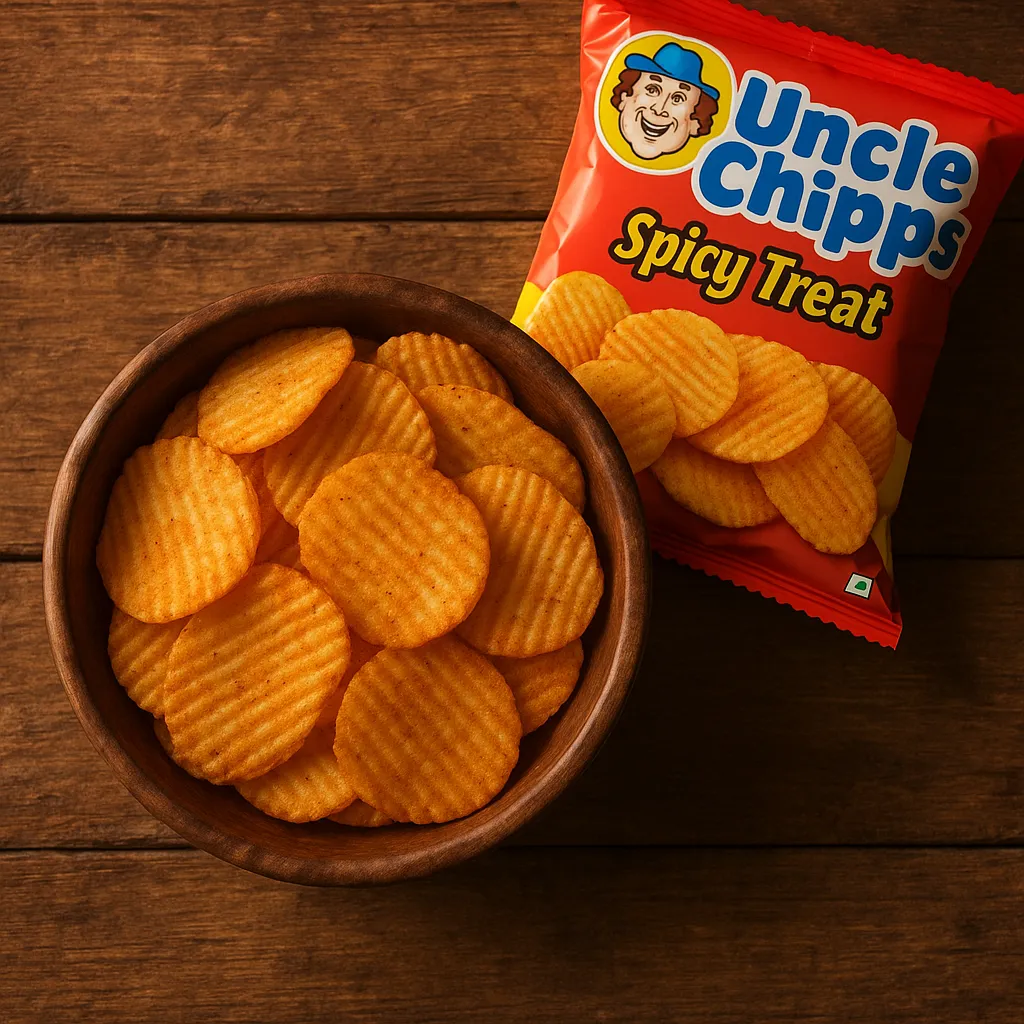
Thick-cut gebraten potato chips mit Indian masala seasoning—hoch in Kalorien and Natrium mit minimal nutritional benefit.
Schnelle Nährwerte
Per 1 Serving (32g)
| Nährstoff | Menge |
|---|---|
| Kalorien | 154 kcal |
| Protein | 1.8g |
| Kohlenhydrate | 15g |
| Ballaststoffe | 0.6g |
| Zucker | 0g |
| Fett | 8.5g |
| Natrium | 240mg |
| Kalium | 340mg |
| Eisen | 0.4mg |
| Kalzium | 8mg |
Makronährstoff-Aufschlüsselung
 ChatGPT
  Claude
  AI Mode
  Perplexity
ERNÄHRUNGSBERATER-EINBLICK
Uncle Chips Spicy Treat sind thick-cut gebraten potato chips mit 154 Kalorien, 8.5g Fett, and 240mg Natrium per 32g serving. Der thick-cut design absorbs mehr oil als thin chips, increasing calorie density. Minimal Ballaststoffe (0.6g) and Protein (1.8g) machen dies an empty-calorie processed snack unsuitable for regular consumption.
Mythen Entlarvt
MYTHOS #1: "Thick-Cut Chips Sind Mehr Filling"
WAHRHEIT: Thickness erhöht Fett absorption and Kalorien (154 per 32g), not satiety. Der 0.6g Ballaststoffe and minimal Protein (1.8g) provide no fullness benefit. Potato chips rank among lowest satiety foods regardless of cut.
MYTHOS #2: "Potatoes Sind Gesund, So Potato Chips Sind Gesund"
WAHRHEIT: Frying destroys die meisten Nährstoffe and adds trans fats (hydrogenated oils). A whole potato (150g) liefert 17g Kohlenhydrate mit 3g Ballaststoffe and 2.5g Protein; Uncle Chips (32g) liefert 15g Kohlenhydrate mit 0.6g Ballaststoffe and 1.8g Protein—far inferior nutritional value.
MYTHOS #3: "Spicy Flavor Burns Extra Kalorien"
WAHRHEIT: Capsaicin in spicy foods slightly erhöht Stoffwechsel (~3-5%), but der effect ist negligible—burning ~10-20 extra Kalorien pro Portion. Der 154 Kalorien far exceed any metabolic boost.
MYTHOS #4: "Kalium in Chips Offsets Natrium"
WAHRHEIT: Während 340mg Kalium exists, Natrium-to-Kalium ratio matters mehr als absolute amounts. A 0.71 ratio (240mg Na : 340mg K) ist unfavorable for Herzgesundheit; ideal ist <1:2 (Natrium half of Kalium).
MYTHOS #5: "One Pack Per Woche Ist Harmless"
WAHRHEIT: Regular consumption, even weekly, erhöht hypertension risk. Jeder serving uses 10% of täglich Natrium grenze; weekly consumption uses 50% of weekly allowance. Combined mit andere processed foods, cumulative Natrium becomes harmful.
NutriScore nach Gesundheitszielen
| Gesundheitsziel | NutriScore | Warum diese Bewertung? |
|---|---|---|
| Gewichtsverlust |  | 154 Kalorien, minimal Ballaststoffe (0.6g), hoch Fett (8.5g). Niedrig satiety per calorie. Extremely poor choice for Gewichtsverlust. |
| Muskelaufbau | | Nur 1.8g Protein per 32g. Insufficient for muscle recovery; wählen Greek yogurt, whey, or eggs for post-workout. |
| Diabetes-Management | | Gebraten potato (GI ~75-85), 15g Kohlenhydrate mit no Ballaststoffe = Blutzucker spike. Harmful for Diabetes. Vermeiden entirely. |
| PCOS-Management | | Hoch carb-to-Ballaststoffe ratio worsens insulin resistance. Natrium causes fluid retention. Not suitable for PCOS nutrition. |
| Schwangerschaftsernährung | | Lacks folate, Eisen, calcium wesentlich for fetal development. Hoch Natrium erhöht blood pressure risk während Schwangerschaft. Skip entirely. |
| Viral/Flu Recovery | | No Protein for immune function, no Vitamine/Mineralien for recovery. Hoch Natrium kann dehydrate. Wählen broths, whole foods, or fruits instead. |
PERSONALISIERTE ERNÄHRUNG
Verfolgen Sie Ihre Mahlzeiten mit NutriScan for personalized NutriScores based on your specific health goals!
Blutzucker-Reaktion to Gebraten Potato Chips
Gebraten potatoes have a hoch glycemic index (75-85), causing rapid Blutglukose elevation due to refined starch and lack of Ballaststoffe.
Typische Glukose-Reaktionskurve
Diese Grafik zeigt typical Blutglukose response for general gesund individuals. Individuelle Reaktionen können variieren. Keine medizinische Beratung.
Prevent or Minimize Consumption
Pairing strategy bietet minimal help weil gebraten potatoes trigger such rapid glucose spikes that even Protein/Fett pairing cannot fully blunt der response. Prevention ist superior to management hier.
- Beste approach - Vermeiden entirely or consume <1 per monat
- If consuming - Eat mit Protein (Greek yogurt mit nuts) to slightly slow absorption
- Skip pairings - Combination foods won't meaningfully reduce Blutzucker spike
Kulturelle Bedeutung
Uncle Chips launched in India in 1979, capturing der growing demand for affordable, thick-cut potato chips mit local masala flavors. Der brand became iconic for budget-conscious Indian households, competing mit premium Lay's through niedriger pricing and spicy flavor variants appealing to Indian palates.
In India:
- Uncle Chips positioned as der "everyman's snack"—accessible to middle-class and niedriger-income families
- Spicy Treat variant launched to compete mit Lay's Magic Masala and andere regional favorites
- Thick-cut design became a signature brand trait, differentiating from thinner international chips
- Popular at roadside vendors, cinema halls, and casual family gatherings
Market Position:
- Second-largest potato chip brand in India (nach Lay's)
- Emphasis on value-for-money versus premium positioning
- Regional masala flavors tailored to South Indian, North Indian, and East Indian preferences
Vergleichen und Ersetzen
Uncle Chips vs Similar Savory Snacks (Per 30-32g)
| Snack | 🥔 Uncle Chips Spicy | 🥔 Lay's Classic | 🥜 Mixed Nuts Geröstet | 🍎 Apple + Peanut Butter |
|---|---|---|---|---|
| Kalorien | 154 kcal | 155 kcal | 168 kcal | 180 kcal |
| Kohlenhydrate | 15g | 15g | 6g | 25g |
| Ballaststoffe | 0.6g | 1.4g | 2.5g | 4g |
| Protein | 1.8g | 2.3g | 5.5g | 4g |
| Fett | 8.5g | 10g | 15g | 8g |
| Natrium | 240mg | 180mg | 0.5mg | 1.5mg |
| Am besten für | Occasional indulgence | Occasional indulgence | Täglich snacking | Gewicht loss, energy |
Häufige Fragen
Sind Uncle Chips gut for Gewichtsverlust?
No. At 154 Kalorien mit minimal Ballaststoffe (0.6g) and hoch Fett (8.5g), they provide poor satiety per calorie. Jeder serving uses 2% of täglich calorie allowance (2000 cal diet) während contributing nothing to fullness. Nuts or whole fruit mit Protein sind superior choices.
Kann people mit Diabetes eat Uncle Chips Spicy Treat?
Vermeiden. Gebraten potatoes have a glycemic index of 75-85, causing rapid Blutzucker spikes. Der 15g Kohlenhydrate mit nur 0.6g Ballaststoffe create steep glucose elevation harmful for Diabetes management. Even a single serving kann significantly impact Blutglukose readings.
Warum sind Uncle Chips thick-cut?
Thick-cut potatoes (2-3mm) absorb mehr oil während deep frying, creating heavier, crunchier textures. Dies erhöht Fett content (8.5g per 32g vs ~6g for thin chips) and calorie density. Thickness ist a marketing distinction and texture preference, not a health advantage.
Wie viel Natrium ist in Uncle Chips?
A 32g serving enthält 240mg Natrium, representing 10% of der 2,300mg täglich grenze empfohlen by WHO. Regular consumption (>2 packs weekly) contributes to cumulative Natrium intake that erhöht hypertension and cardiovascular disease risk.
Was's der difference between Uncle Chips and Lay's?
Both sind gebraten potato chips mit similar calorie/Fett profiles (~150-155 cal, 8-10g Fett per 32g). Uncle Chips emphasize thick-cut texture and spicy Indian masala flavors at niedriger price; Lay's offer diverse international flavors. Nutritionally, Uncle Chips kann have slightly höher Natrium (240mg vs 180mg) and slightly niedriger Ballaststoffe (0.6g vs 1.4g).
Sind thick-cut chips healthier als thin-cut?
No. Thicker cuts absorb mehr oil, increasing Fett and Kalorien. Thin-cut chips (~1.5mm) contain less Fett (~6g per 30g) compared to thick-cut (~8.5g per 32g). Neither version qualifies as gesund; whole food snacks sind superior regardless of chip thickness.


Similar Nahrhaft Snacks
4505 Chicharrones Classic Chili Salt
7 Eleven Japan Crispy Corn Cheese
Explore Mehr Nutrition Tools & Resources
Beste Proteinergänzungen für Frauen
Bulking Meal Plan App für deinen Kalorienüberschuss
ChatGPT Abnehmcoach Alternative mit Ernährungstagebuch
ChatGPT Diätplan Alternative, die dein Essen erfasst
ChatGPT Kalorienzähler Alternative mit Tagessumme
Drittes Trimester Protein Leitfaden
Ernährungsplan für 40-jährige Männer
Fast Food Kalorienzähler, der das Tablett liest
Gewichtszunahme Diätplan Deutschland
Indische Diätplan App mit Veg- und Non-Veg-Optionen
Intervallfasten für Frauen, Timer und Essprotokoll
Intervallfasten Tracker App: gratis Fasten-Timer
Kalorien für deutsches Essen berechnen
Kalorienzähler App mit Foto: kostenlos Kalorien sehen
Kalorienzähler für deutsche Gerichte - Sofortige Nährwertangaben für jede Mahlzeit — 2026
Keto Diät Plan App: 28-Tage-Plan und Kohlenhydrate zählen
KI Ernährungsberater App, die deine Mahlzeiten liest
KI-Lebensmittel-Tracker Deutschland
Kostenlose Kalorienzähler-App mit KI-Foto-Scan | NutriScan
Makro-Tracker-App, die die Werte per Foto ausfüllt
Mediterrane Diät App, die das Öl mitzählt
Mikronährstoffe Tracker App für Vitamine und Mineralstoffe
Monatliche Einkaufsliste Generator
Nahrungsergänzungsmittel-Analysator & Planer
Nährwertetiketten Scanner App für deine Portion
NutriScore App: Bewertung für jede Mahlzeit | NutriScan
Sprachaktivierter Kalorienzähler - Sag deine Mahlzeiten an und tracke Nährstoffe freihändig — 2026
Vegetarischer Ernährungsplan App mit Proteinziel
Wasser und Kalorien Tracker App: gratis Trinkprotokoll
Wochenplan Essen App mit Kalorien und Einkaufsliste
Yazio Alternative kostenlos mit KI-Foto-Scan | NutriScan