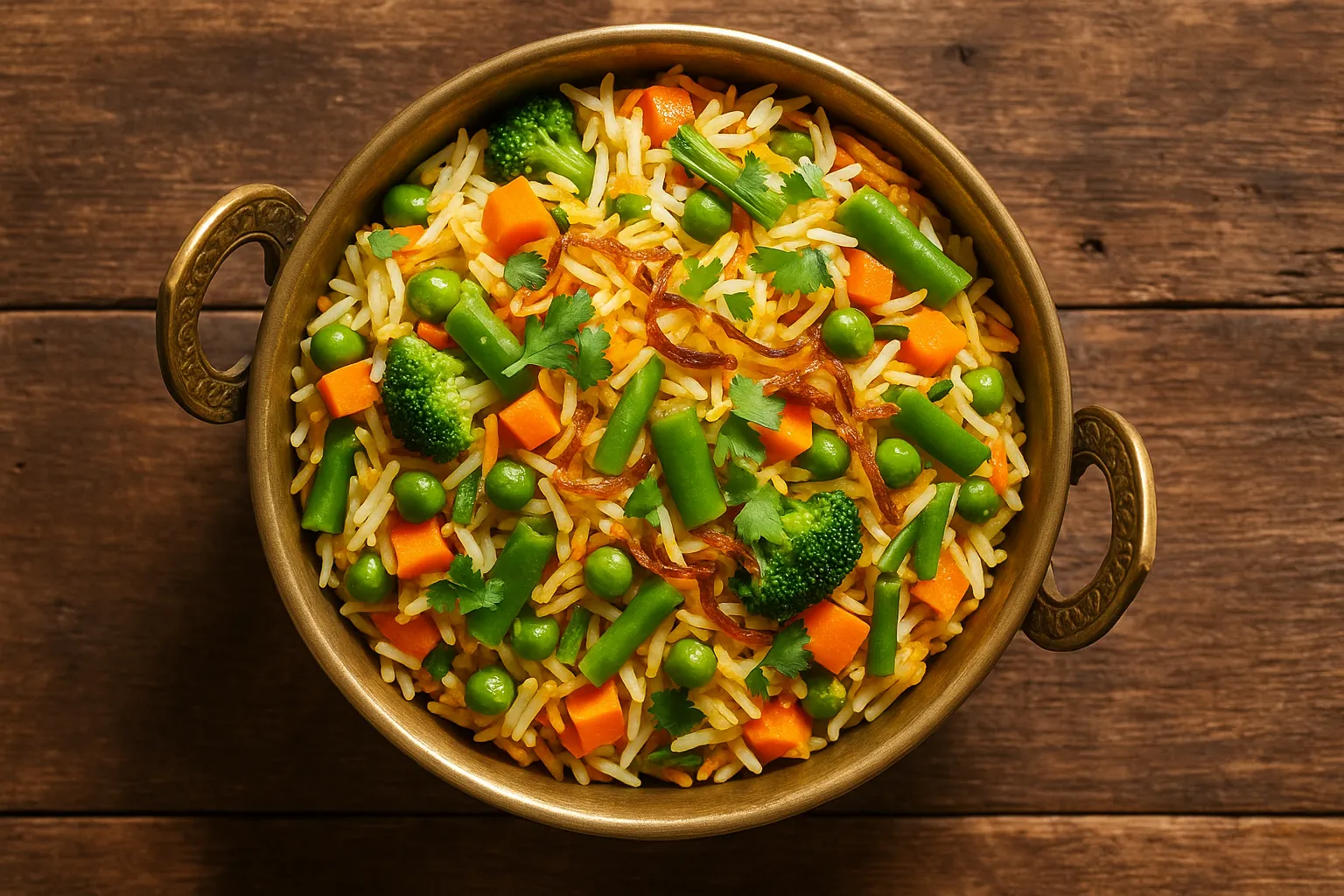
Vegetable Biryani: Kalorien, Nährwerte und gesundheitliche Vorteile
A fragrant Indian rice dish layered mit aromatic spices, colorful vegetables, and balanced nutrition for every health goal.
Schnelle Nährwerte
Per 1 Cup (200g)
| Nährstoff | Menge |
|---|---|
| Kalorien | 300 kcal |
| Protein | 7g |
| Kohlenhydrate | 56g |
| Ballaststoffe | 5g |
| Zucker | 4g |
| Fett | 6g |
| Natrium | 450mg |
| Kalium | 280mg |
| Eisen | 2.5mg |
| Vitamin A | 850 IU |
Makronährstoff-Aufschlüsselung
 ChatGPT
  Claude
  AI Mode
  Perplexity
ERNÄHRUNGSBERATER-EINBLICK
Vegetable biryani combines complex Kohlenhydrate mit anti-inflammatory spices like turmeric, cumin, and coriander. Der Ballaststoffe from vegetables and basmati rice liefert sustained energy während supporting Verdauungsgesundheit.
Mythen Entlarvt
MYTHOS #1: Biryani Ist Immer Unhealthy
WAHRHEIT: Homemade vegetable biryani mit minimal oil ist a balanced meal providing complex Kohlenhydrate, Ballaststoffe, and vegetables. Restaurant versions mit excess ghee kann be calorie-dense (400-500 Kalorien pro Portion), but Portion-controlled homemade biryani unterstützt gesund eating patterns.
MYTHOS #2: Rice-Based Dishes Spike Blood Zucker Too Viel
WAHRHEIT: Basmati rice has a niedriger GI (50-58) compared to regular white rice (70+). Der Ballaststoffe from vegetables, Protein pairing, and Fett from cooking oil further reduce der glycemic response. Wählen brown basmati for even niedriger GI (45-50).
MYTHOS #3: Vegetable Biryani Has No Protein
WAHRHEIT: Während not a hoch-Protein food, one serving liefert 7g Protein from basmati rice, vegetables, and nuts. Boost Protein by adding paneer (20g Protein pro 100g), chickpeas, or pairing mit raita or dal.
MYTHOS #4: Spices in Biryani Cause Digestive Issues
WAHRHEIT: Spices like turmeric, cumin, and ingwer aid digestion and have anti-inflammatory properties. Issues arise from excess oil or overeating, not der spices themselves. Traditional spice blends support gut health.
MYTHOS #5: Biryani Ist Too Heavy for Dinner
WAHRHEIT: Portion size matters. One cup (200g) mit balanced ingredients liefert appropriate dinner Kalorien (300 kcal). Pair mit cucumber salad or raita to add volume ohne excess Kalorien, improving satiety and digestion.
NutriScore nach Gesundheitszielen
| Gesundheitsziel | NutriScore | Warum diese Bewertung? |
|---|---|---|
| Gewichtsverlust |  | 300 Kalorien pro Tasse, 5g Ballaststoffe for fullness. Portion kontrolle wesentlich. Verwenden brown rice, extra vegetables, minimal oil. |
| Muskelaufbau |  | 56g Kohlenhydrate for glycogen replenishment, 7g Protein. Add paneer or chickpeas for 20g+ Protein pro Portion. |
| Diabetes-Management | | Basmati rice has mäßig GI (50-58). Grenze to 1 cup, verwenden brown basmati, pair mit raita for Blutzucker kontrolle. |
| PCOS-Management | | Complex Kohlenhydrate mit Ballaststoffe support insulin sensitivity. Wählen brown rice version, kontrolle Portionen to 1 cup, pair mit hoch-Protein sides. |
| Schwangerschaftsernährung | | Liefert Eisen (2.5mg), folate from vegetables, and complex Kohlenhydrate for energy. Ensure vegetables sind thoroughly gekocht. |
| Viral/Flu Recovery | | Easy to digest, anti-inflammatory spices (turmeric, ingwer), liefert energy and Nährstoffe. Wählen milder spice levels während recovery. |
PERSONALISIERTE ERNÄHRUNG
Verfolgen Sie Ihre Mahlzeiten mit NutriScan for personalized NutriScores based on your specific health goals!
Blutzucker-Reaktion to Vegetable Biryani
Understanding wie biryani affects Blutglukose hilft mit Portionskontrolle and meal timing.
Typische Glukose-Reaktionskurve
Diese Grafik zeigt typical Blutglukose response for gesund individuals. Individual responses vary. Keine medizinische Beratung.
So Flachen Sie den Anstieg Ab
Pairing biryani mit Protein and Ballaststoffe slows glucose absorption:
- 🥛 Raita (yogurt mit cucumber) - Adds Protein and probiotics
- 🥘 Dal (lentils) - Liefert Protein and additional Ballaststoffe
- 🥗 Cucumber salad - Adds Ballaststoffe and volume ohne Kalorien
- 🧀 Paneer tikka - Hoch-Protein side dish
Dies combination extends energy release and verbessert satiety.
Kulturelle Bedeutung
Biryani originated in Persia and was brought to der Indian subcontinent by Mughal emperors in der 15th-16th centuries.
In India:
- Over 20 regional varieties: Hyderabadi, Lucknowi, Kolkata, Malabar, Ambur
- Served at weddings, festivals, and celebrations across alle communities
- Jeder region's spice blend reflects local culinary traditions
- Vegetable biryani popular among vegetarian communities across South India
Global Impact:
- One of der die meisten searched Indian recipes worldwide
- Adapted globally mit local vegetables and spice preferences
- Featured in street food culture and fine dining alike
- UNESCO recognition of biryani's cultural heritage value
Vergleichen und Ersetzen
Vegetable Biryani vs Similar Rice Dishes (Pro 100g)
| Nährstoff | 🍛 Veg Biryani | 🍚 Plain Rice | 🥘 Veg Pulao | 🍛 Chicken Biryani |
|---|---|---|---|---|
| Kalorien | 150 kcal | 130 kcal | 140 kcal | 180 kcal |
| Kohlenhydrate | 28g | 28g | 26g | 25g |
| Ballaststoffe | 2.5g | 0.4g | 2g | 1.5g |
| Protein | 3.5g | 2.7g | 3g | 8g |
| Fett | 3g | 0.3g | 3.5g | 6g |
| Natrium | 225mg | 5mg | 200mg | 280mg |
| Eisen | 1.25mg | 0.8mg | 1mg | 1.8mg |
| Vitamin A | 425 IU | 0 IU | 350 IU | 200 IU |
| Am besten für | Balanced nutrition, flavor | Niedrig-calorie, plain base | Lighter alternative | Hoch Protein, Muskelaufbau |
Häufige Fragen
Ist vegetable biryani gut for Gewichtsverlust?
Vegetable biryani kann support Gewichtsverlust wenn Portion-controlled. One cup liefert 300 Kalorien mit 5g Ballaststoffe for satiety, making it mehr filling als plain rice.
Tips for Gewichtsverlust: Grenze to 1 cup per meal; verwenden brown basmati rice for höher Ballaststoffe; increase vegetable proportion to 50%; reduce oil to 1 tablespoon pro Portion; skip gebraten onions garnish; pair mit cucumber salad for added volume.
Kann diabetics eat vegetable biryani?
Diabetics kann enjoy vegetable biryani in Mäßigung. Basmati rice has a niedriger GI (50-58) als regular white rice (70+).
Diabetes-friendly tips: Grenze to 1 cup serving (28g Kohlenhydrate pro 100g); verwenden brown basmati rice for niedriger GI (45-50); pair mit raita or dal for Protein; add extra vegetables to reduce rice proportion; vermeiden sugary accompaniments; test Blutzucker 2 hours nach eating.
Wie viele Kalorien sind in vegetable biryani?
Vegetable biryani enthält approximately 150 Kalorien pro 100g or 300 Kalorien pro Tasse (200g). Restaurant versions mit extra ghee or gebraten ingredients kann have 400-500 Kalorien pro Portion. Homemade versions mit controlled oil sind niedriger in Kalorien.
Was sind der main gesundheitliche Vorteile of vegetable biryani?
Key Benefits:
- Sustained Energy: Complex Kohlenhydrate from basmati rice provide long-lasting fuel
- Digestive Health: 5g Ballaststoffe pro Portion unterstützt regular bowel movements
- Anti-inflammatory: Turmeric, cumin, and coriander reduce Entzündung
- Nährstoff-Rich: Vitamins A, C from vegetables; Eisen from rice
- Heart Health: Kalium and minimal saturated Fett support cardiovascular function
- Gut Support: Spices promote gesund digestion and gut microbiome
Ist vegetable biryani healthier als chicken biryani?
Depends on your nutritional goals:
Vegetable Biryani Advantages:
- Niedriger Kalorien (150 vs 180 pro 100g)
- Niedriger saturated Fett
- Höher Ballaststoffe from vegetables
- Mehr vitamin A from colorful vegetables
Chicken Biryani Advantages:
- Höher Protein (8g vs 3.5g pro 100g)
- Mehr complete amino acid profile
- Höher Eisen content
- Besser for muscle maintenance
Recommendation: Gewicht loss = vegetable biryani; Muskelaufbau or hoch Protein needs = chicken biryani.
Wie to machen vegetable biryani healthier?
Simple Swaps:
- Rice: Verwenden brown basmati instead of white for 2x Ballaststoffe and niedriger GI
- Oil: Reduce from 3-4 tablespoons to 1-2 tablespoons total
- Vegetables: Increase proportion to 50% of total volume
- Garnish: Skip gebraten onions or verwenden air-gebraten for 70% fewer Kalorien
- Protein Boost: Add chickpeas (15g Protein pro 100g) or paneer
- Cooking Method: Verwenden pressure cooking or oven-baking instead of dum on stovetop
Result: Diese changes reduce Kalorien by 25-30% während improving nutritional density.
Was ist der beste zeit to eat vegetable biryani?
Depends on your goal:
- Gewichtsverlust: Lunch (wenn Stoffwechsel ist höher), pair mit salad, vermeiden dinner
- Muskelaufbau: Post-workout within 2 hours or lunch for glycogen replenishment
- Diabetes: Lunch preferred over dinner for besser glucose kontrolle
- General Health: Lunch or early dinner (vor 7 PM) for optimal digestion
IMPORTANT NOTE
Allow 3-4 hours between eating biryani and bedtime to prevent acid reflux and support digestion.
Kann I meal prep vegetable biryani?
Yes, vegetable biryani ist excellent for meal prep. Geschäft in airtight containers in der refrigerator for up to 4 tage or freeze for up to 3 months.
Storage tips: Cool completely vor refrigerating to prevent moisture buildup; geschäft in single-serving Portionen for Portionskontrolle; reheat mit 1-2 tablespoons water to restore moisture; add frisch herbs and lemon juice nach reheating for brightness.


Ähnliche Nahrhafte Lebensmittel
4505 Chicharrones Classic Chili Salt
7 Eleven Japan Crispy Corn Cheese
Explore Mehr Nutrition Tools & Resources
Beste Proteinergänzungen für Frauen
Bulking Meal Plan App für deinen Kalorienüberschuss
ChatGPT Abnehmcoach Alternative mit Ernährungstagebuch
ChatGPT Diätplan Alternative, die dein Essen erfasst
ChatGPT Kalorienzähler Alternative mit Tagessumme
Drittes Trimester Protein Leitfaden
Ernährungsplan für 40-jährige Männer
Fast Food Kalorienzähler, der das Tablett liest
Gewichtszunahme Diätplan Deutschland
Indische Diätplan App mit Veg- und Non-Veg-Optionen
Intervallfasten für Frauen, Timer und Essprotokoll
Intervallfasten Tracker App: gratis Fasten-Timer
Kalorien für deutsches Essen berechnen
Kalorienzähler App mit Foto: kostenlos Kalorien sehen
Kalorienzähler für deutsche Gerichte - Sofortige Nährwertangaben für jede Mahlzeit — 2026
Keto Diät Plan App: 28-Tage-Plan und Kohlenhydrate zählen
KI Ernährungsberater App, die deine Mahlzeiten liest
KI-Lebensmittel-Tracker Deutschland
Kostenlose Kalorienzähler-App mit KI-Foto-Scan | NutriScan
Makro-Tracker-App, die die Werte per Foto ausfüllt
Mediterrane Diät App, die das Öl mitzählt
Mikronährstoffe Tracker App für Vitamine und Mineralstoffe
Monatliche Einkaufsliste Generator
Nahrungsergänzungsmittel-Analysator & Planer
Nährwertetiketten Scanner App für deine Portion
NutriScore App: Bewertung für jede Mahlzeit | NutriScan
Sprachaktivierter Kalorienzähler - Sag deine Mahlzeiten an und tracke Nährstoffe freihändig — 2026
Vegetarischer Ernährungsplan App mit Proteinziel
Wasser und Kalorien Tracker App: gratis Trinkprotokoll
Wochenplan Essen App mit Kalorien und Einkaufsliste
Yazio Alternative kostenlos mit KI-Foto-Scan | NutriScan