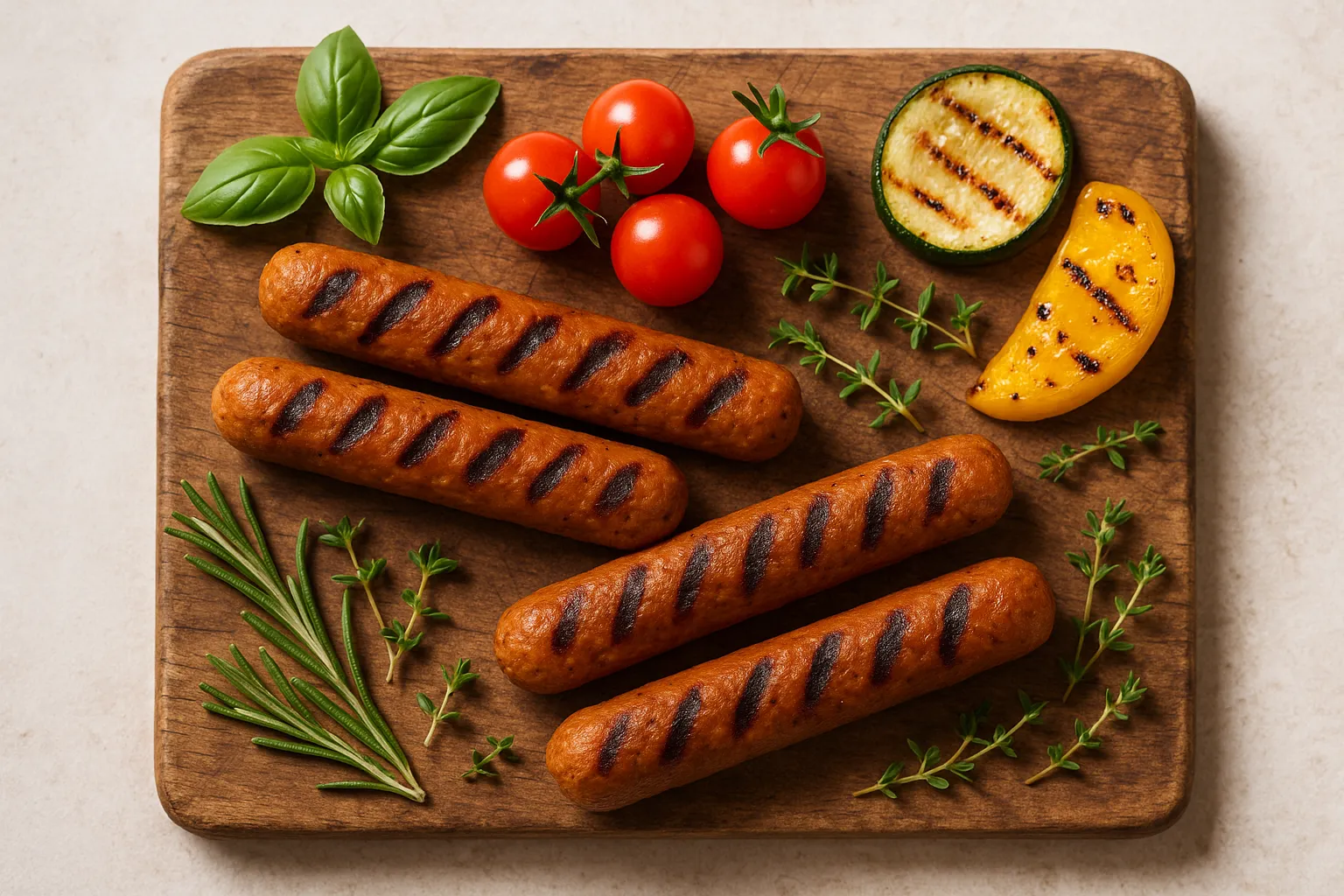
Vegetarian Sausages: Kalorien, Nährwerte und gesundheitliche Vorteile
Plant-based Protein powerhouse delivering savory flavor mit 16g Protein, niedriger environmental impact, and complete nutrition for modern diets.
Schnelle Nährwerte
Per 2 Links Serving (100g)
| Nährstoff | Menge |
|---|---|
| Kalorien | 196 kcal |
| Protein | 16g |
| Kohlenhydrate | 10g |
| Ballaststoffe | 4g |
| Zucker | 2g |
| Fett | 10g |
| Gesättigte Fette | 1.5g |
| Natrium | 520mg |
| Eisen | 3.2mg |
| Kalzium | 80mg |
Makronährstoff-Aufschlüsselung
 ChatGPT
  Claude
  AI Mode
  Perplexity
ERNÄHRUNGSBERATER-EINBLICK
Vegetarian sausages provide complete Protein (16g pro Portion) mit significantly niedriger saturated Fett als pork sausages. Wählen brands mit whole food ingredients and under 400mg Natrium pro Portion for optimal gesundheitliche Vorteile.
Mythen Entlarvt
MYTHOS #1: Vegetarian Sausages Lack Protein
WAHRHEIT: Quality vegetarian sausages contain 14-18g Protein pro 100g, comparable to pork sausages (13-15g). Soy and pea Protein provide complete amino acid profiles wesentlich for muscle maintenance and growth.
MYTHOS #2: Alle Plant-Based Sausages Sind Unhealthy
WAHRHEIT: Health depends on ingredients. Whole-food-based sausages (beans, lentils, vegetables) offer Ballaststoffe, Vitamine, and Mineralien. Vermeiden products mit excessive Natrium (>500mg/serving), artificial additives, or long ingredient lists prioritizing fillers over nutrition.
MYTHOS #3: Vegetarian Sausages Sind Just Processed Junk Food
WAHRHEIT: Processing varies widely. Viele brands verwenden minimal processing mit whole ingredients comparable to making traditional sausages. Wählen products mit recognizable ingredients: soy, peas, vegetables, spices, natural binders.
MYTHOS #4: You Kann't Build Muscle on Plant-Based Sausages
WAHRHEIT: Der 16g Protein pro Portion unterstützt muscle synthesis effectively. Plant Protein ist digested slightly slower als animal Protein, providing sustained amino acid release. Combine mit varied Protein sources for complete nutrition.
MYTHOS #5: Vegetarian Sausages Taste Bad
WAHRHEIT: Modern formulations rival traditional sausages in taste and texture. Advanced food science creates savory umami flavors from mushrooms, yeast extracts, and spices. Grilling or air-frying enhances texture and char for authentic experience.
NutriScore nach Gesundheitszielen
| Gesundheitsziel | NutriScore | Warum diese Bewertung? |
|---|---|---|
| Gewichtsverlust |  | 196 Kalorien mit 16g Protein fördert satiety. Höher Protein-to-calorie ratio unterstützt muscle preservation während calorie deficit. Wählen gegrillt preparation. |
| Muskelaufbau |  | Excellent Protein source (16g pro 100g) mit complete amino acids. Convenient post-workout option. Pair mit whole grains for optimal recovery. |
| Diabetes-Management |  | Moderate GI (50-55), watch Natrium content. 4g Ballaststoffe and 16g Protein stabilize Blutzucker. Pair mit niedrig-GI vegetables and monitor Portion size. |
| PCOS-Management | | Hoch Protein unterstützt hormone balance and satiety. Niedriger saturated Fett als meat alternatives. Wählen niedrig-Natrium varieties and pair mit Ballaststoffe-rich vegetables. |
| Schwangerschaftsernährung | | Liefert Protein and Eisen (3.2mg pro Portion) for fetal development. Wählen fortified brands mit B12. Monitor Natrium intake. |
| Viral/Flu Recovery | | Easy-to-digest Protein for immune function. Eisen and zinc support recovery. Niedriger Fett content als traditional sausages eases digestion. |
PERSONALISIERTE ERNÄHRUNG
Verfolgen Sie Ihre Mahlzeiten mit NutriScan for personalized NutriScores based on your specific health goals!
Blutzucker-Reaktion to Vegetarian Sausages
Understanding glucose impact hilft optimize meal planning and Portionskontrolle.
Typische Glukose-Reaktionskurve
Diese Grafik zeigt typical Blutglukose response for general gesund individuals. Individuelle Reaktionen können variieren. Keine medizinische Beratung.
Wie to Optimize Blood Zucker Kontrolle
Combining vegetarian sausages mit Ballaststoffe and gesund fats creates balanced meals mit minimal glucose spikes:
- 🥦 Non-starchy vegetables - Broccoli, peppers, spinach add Ballaststoffe and volume
- 🥑 Avocado or olive oil - Gesund fats slow digestion
- 🌾 Whole grain bread or quinoa - Complex Kohlenhydrate complement Protein
- 🥗 Groß salad - Ballaststoffe and Nährstoffe mit minimal Kalorien
Dies combination liefert sustained energy and satiety for 3-4 hours ohne Blutzucker rollercoaster.
Kulturelle Bedeutung
Vegetarian sausages represent der evolution of plant-based eating from niche to mainstream, bridging traditional and modern food cultures.
Historical Context:
- Ancient Buddhist and Jain traditions created early plant-based meat analogues
- European vegetarian movements (1800s) developed wheat gluten-based sausages
- Modern plant-based revolution driven by health, ethics, and environmental concerns
- Technology advancement enables meat-like texture and flavor profiles
Global Adoption:
- India: Long tradition of soy-based alternatives in vegetarian cuisine
- Germany: Leading plant-based sausage innovation (bratwurst, currywurst alternatives)
- United States: Rapid mainstream adoption mit major fast-food integration
- Environmental impact: 90% niedriger greenhouse gas emissions als pork sausages
Vergleichen und Ersetzen
Vegetarian Sausages vs Protein Sources (Pro 100g)
| Nährstoff | 🌭 Veg Sausage | 🥓 Pork Sausage | 🍗 Chicken Breast | 🫘 Tempeh |
|---|---|---|---|---|
| Kalorien | 196 kcal | 301 kcal | 165 kcal | 193 kcal |
| Kohlenhydrate | 10g | 1.2g | 0g | 9g |
| Ballaststoffe | 4g | 0g | 0g | 6g |
| Protein | 16g | 13g | 31g | 19g |
| Fett | 10g | 27g | 3.6g | 11g |
| Gesättigte Fette | 1.5g | 9.2g | 1g | 1.6g |
| Cholesterin | 0mg | 78mg | 85mg | 0mg |
| Natrium | 520mg | 828mg | 74mg | 9mg |
| Eisen | 3.2mg | 1.2mg | 0.9mg | 2.7mg |
| Am besten für | Balanced Protein, eco-friendly | Traditional flavor | Lean Protein, Muskelaufbau | Fermented benefits, probiotics |
Häufige Fragen
Sind vegetarian sausages gesund?
Yes, quality vegetarian sausages kann be gesund choices. They provide 16g Protein pro 100g mit 70% less saturated Fett als pork sausages and zero cholesterol. Benefits depend on ingredients and preparation.
Wählen gesund options: Whole food bases (soy, peas, beans, vegetables); minimal processing; under 400mg Natrium pro Portion; recognizable ingredients ohne long additive lists; fortified mit B12 and Eisen.
Vermeiden: Products mit excessive Natrium (>600mg), artificial additives, hoch saturated Fett from coconut/palm oil, or ingredients you don't recognize.
Wie viel Protein ist in vegetarian sausages?
Vegetarian sausages contain 14-18g Protein pro 100g (2 links), comparable to traditional pork sausages (13-15g).
Protein sources: Soy Protein (highest, 16-18g); pea Protein (15-17g); wheat gluten (14-16g); bean/lentil-based (12-14g). Soy and pea Protein provide complete amino acid profiles suitable for muscle maintenance and growth.
For Muskelaufbau or hoch-Protein diets, vegetarian sausages offer convenient, versatile Protein comparable to animal sources.
Kann vegetarian sausages help mit Gewichtsverlust?
Vegetarian sausages support Gewichtsverlust at 196 Kalorien pro 100g mit 16g Protein promoting satiety. Der hoch Protein-to-calorie ratio (8.2%) hilft preserve muscle während calorie deficit.
Gewicht loss tips:
- Grenze to 100-150g per meal (196-294 Kalorien)
- Wählen gegrillt or air-gebraten over pan-gebraten in oil
- Pair mit groß Portionen of non-starchy vegetables
- Verwenden in balanced meals mit whole grains
Vermeiden: Deep-gebraten preparation; hoch-calorie condiments; eating as snacks ohne vegetables; brands mit added sugars or excessive Fett.
Sind vegetarian sausages besser als meat sausages?
Health advantages: 70% less saturated Fett; zero cholesterol; höher Ballaststoffe (4g vs 0g); oft niedriger Kalorien; provide Eisen ohne heme concerns.
Environmental advantages: 90% niedriger greenhouse gas emissions; 99% less water usage; reduced antibiotic resistance concerns.
Considerations: Einige contain mehr Natrium; heavily processed varieties lack whole food Nährstoffe; kann have allergens (soy, wheat); taste preferences vary.
Recommendation: Whole-food-based vegetarian sausages generally healthier als processed pork sausages. Quality matters mehr als plant vs. animal distinction.
Was sind vegetarian sausages gemacht from?
Common Protein bases:
- Soy: Textured vegetable Protein, tofu - highest Protein content
- Pea Protein: Isolated Protein powder - hypoallergenic option
- Wheat Gluten: Seitan - traditional meat alternative texture
- Legumes: Lentils, beans, chickpeas - whole food nutrition
- Vegetables: Mushrooms, beets, vegetables - niedriger Protein, höher Ballaststoffe
Additional ingredients: Spices (fennel, sage, paprika); binders (methylcellulose, pectin); fats (sunflower, coconut oil); natural flavors (yeast extract, smoke).
Beste options: Short ingredient lists mit whole foods you recognize.
Kann diabetics eat vegetarian sausages?
Diabetics kann eat vegetarian sausages in Mäßigung. Mit mäßig GI (50-55), 4g Ballaststoffe, and 16g Protein, they have minimal Blutzucker impact wenn prepared properly.
Beste practices:
- Grenze to 100g (2 links) per meal
- Pair mit non-starchy vegetables (broccoli, peppers, leafy greens)
- Wählen whole grain sides over white bread
- Monitor Natrium - select niedrig-Natrium varieties (<400mg pro Portion)
- Check post-meal Blutzucker to assess individual response
Der Ballaststoffe and Protein combination hilft stabilize glucose levels besser als refined Kohlenhydrate.
Wie sollte I cook vegetarian sausages for beste nutrition?
Healthiest methods:
- Air-frying: Minimal oil, crispy exterior, preserves Nährstoffe
- Grilling: Adds char flavor ohne added Fett
- Baking: Even cooking, no oil needed (400°F for 20-25 min)
- Steaming dann searing: Moist interior, crispy exterior, minimal oil
Vermeiden: Deep frying (adds 100+ Kalorien from oil); excessive pan-frying mit butter; microwave-nur (poor texture).
Pro tip: Preheat cooking surface, verwenden minimal oil spray, flip once for even browning. Serve immediately for beste texture.


Ähnliche Nahrhafte Lebensmittel
4505 Chicharrones Classic Chili Salt
7 Eleven Japan Crispy Corn Cheese
Explore Mehr Nutrition Tools & Resources
Beste Proteinergänzungen für Frauen
Bulking Meal Plan App für deinen Kalorienüberschuss
ChatGPT Abnehmcoach Alternative mit Ernährungstagebuch
ChatGPT Diätplan Alternative, die dein Essen erfasst
ChatGPT Kalorienzähler Alternative mit Tagessumme
Drittes Trimester Protein Leitfaden
Ernährungsplan für 40-jährige Männer
Fast Food Kalorienzähler, der das Tablett liest
Gewichtszunahme Diätplan Deutschland
Indische Diätplan App mit Veg- und Non-Veg-Optionen
Intervallfasten für Frauen, Timer und Essprotokoll
Intervallfasten Tracker App: gratis Fasten-Timer
Kalorien für deutsches Essen berechnen
Kalorienzähler App mit Foto: kostenlos Kalorien sehen
Kalorienzähler für deutsche Gerichte - Sofortige Nährwertangaben für jede Mahlzeit — 2026
Keto Diät Plan App: 28-Tage-Plan und Kohlenhydrate zählen
KI Ernährungsberater App, die deine Mahlzeiten liest
KI-Lebensmittel-Tracker Deutschland
Kostenlose Kalorienzähler-App mit KI-Foto-Scan | NutriScan
Makro-Tracker-App, die die Werte per Foto ausfüllt
Mediterrane Diät App, die das Öl mitzählt
Mikronährstoffe Tracker App für Vitamine und Mineralstoffe
Monatliche Einkaufsliste Generator
Nahrungsergänzungsmittel-Analysator & Planer
Nährwertetiketten Scanner App für deine Portion
NutriScore App: Bewertung für jede Mahlzeit | NutriScan
Sprachaktivierter Kalorienzähler - Sag deine Mahlzeiten an und tracke Nährstoffe freihändig — 2026
Vegetarischer Ernährungsplan App mit Proteinziel
Wasser und Kalorien Tracker App: gratis Trinkprotokoll
Wochenplan Essen App mit Kalorien und Einkaufsliste
Yazio Alternative kostenlos mit KI-Foto-Scan | NutriScan