Wheat: Kalorien, Nährwerte und gesundheitliche Vorteile
Der world's die meisten cultivated grain - rich in Ballaststoffe, Protein, and wesentlich Nährstoffe for sustained energy and health.
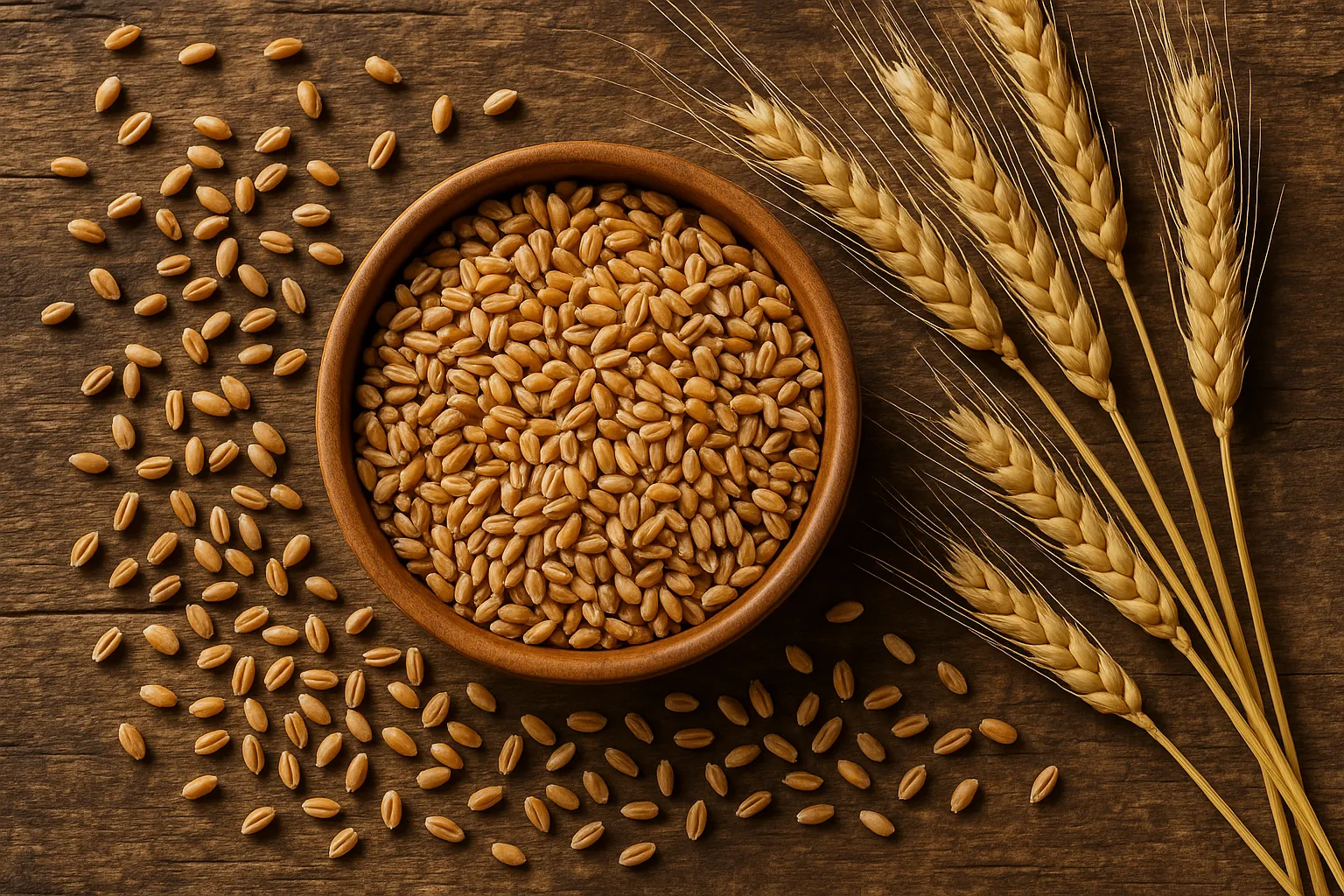
Schnelle Nährwerte
Pro 100g Whole Wheat Grains
| Nährstoff | Menge |
|---|---|
| Kalorien | 340 kcal |
| Protein | 13.2g |
| Kohlenhydrate | 71.2g |
| Ballaststoffe | 12.2g |
| Zucker | 0.4g |
| Fett | 2.5g |
| Eisen | 3.6mg |
| Magnesium | 126mg |
| Selenium | 70mcg |
| Folate | 38mcg |
Makronährstoff-Aufschlüsselung
 ChatGPT
  Claude
  AI Mode
  Perplexity
ERNÄHRUNGSBERATER-EINBLICK
Whole wheat liefert 12.2g Ballaststoffe pro 100g - nearly half your täglich needs. Der bran and germ contain Antioxidantien, Mineralien, and heart-protective compounds lost während refining. Immer wählen 100% whole wheat products.
Mythen Entlarvt
MYTHOS #1: Wheat Causes Gewicht Gain
WAHRHEIT: Gewicht gain comes from excess Kalorien, not wheat itself. Whole wheat intake ist associated mit niedriger BMI and reduced belly Fett. Der 12.2g Ballaststoffe fördert fullness and reduziert overall calorie intake. Refined wheat products (white bread, maida) lack Ballaststoffe and kann contribute to gewicht gain.
MYTHOS #2: Diabetics Sollte Vermeiden Wheat Completely
WAHRHEIT: Whole wheat ist vorteilhaft for diabetics. Whole wheat bread has GI 41-54 (niedrig to medium), während white bread has GI 71 (hoch). Studies show whole grain consumption reduziert Diabetes risk by 25-30% and verbessert glycemic kontrolle.
MYTHOS #3: Alle Wheat Products Sind der Gleich
WAHRHEIT: Huge nutritional difference exists. Whole wheat retains bran, germ, and endosperm (alle Nährstoffe intact). Refined wheat (maida, white flour) removes 70% of Vitamine, Mineralien, and alle Ballaststoffe. Immer verify "100% whole wheat" on labels - "wheat flour" oft means refined.
MYTHOS #4: Wheat Has No Protein
WAHRHEIT: Whole wheat liefert 13.2g Protein pro 100g - comparable to quinoa. Während niedrig in lysine (incomplete Protein), combining wheat mit lentils, legumes, or dairy creates complete Protein. Traditional Indian meals naturally combine roti + dal for optimal amino acid profile.
MYTHOS #5: Gluten-Kostenlos Ist Healthier Als Whole Wheat
WAHRHEIT: For people ohne celiac disease or gluten sensitivity, whole wheat liefert superior nutrition compared to gluten-kostenlos alternatives. Die meisten gluten-kostenlos products verwenden refined starches mit less Ballaststoffe, Protein, and micronutrients. Vermeiden wheat nur if medically necessary.
MYTHOS #6: Wheat Causes Inflammation in Everyone
WAHRHEIT: Nur 1% of population has celiac disease, 6% have non-celiac gluten sensitivity. For der remaining 93%, whole wheat consumption reduziert inflammatory markers and chronic disease risk. Anti-inflammatory benefits come from Ballaststoffe, Antioxidantien, and phenolic compounds.
NutriScore nach Gesundheitszielen
| Gesundheitsziel | NutriScore | Warum diese Bewertung? |
|---|---|---|
| Gewichtsverlust |  | Hoch Ballaststoffe (12.2g) fördert fullness, reduziert calorie intake by 15-20%. Slow-release Kohlenhydrate prevent hunger spikes. |
| Muskelaufbau |  | 13.2g Protein pro 100g unterstützt muscle synthesis. Complex Kohlenhydrate (71g) fuel intense workouts. Combine mit Protein sources for complete amino acids. |
| Diabetes-Management | | Whole wheat reduziert Diabetes risk by 25-30%, verbessert insulin sensitivity. GI 41-54, hoch Ballaststoffe slows glucose absorption. |
| PCOS-Management | | Niedrig-GI whole wheat verbessert insulin sensitivity. Hoch Ballaststoffe unterstützt hormone balance. Wählen sprouted or fermented wheat for besser digestibility. |
| Schwangerschaftsernährung | | Rich in folate (38mcg), Eisen (3.6mg), Ballaststoffe verhindert constipation. B Vitamine support fetal development. Whole wheat liefert sustained energy ohne Blutzucker spikes. |
| Viral/Flu Recovery | | Selenium (70mcg - 127% DV) boosts immune function. B Vitamine support energy Stoffwechsel. Easy to digest as porridge (dalia) or soft rotis. |
PERSONALISIERTE ERNÄHRUNG
Verfolgen Sie Ihre Mahlzeiten mit NutriScan for personalized NutriScores based on your specific health goals!
Blutzucker-Reaktion to Wheat
Understanding wie whole wheat versus refined wheat affects Blutglukose hilft you machen informed dietary choices.
Typische Glukose-Reaktionskurve (Whole Wheat)
Diese Grafik zeigt Blutglukose response for 100% whole wheat products. Refined wheat (white bread, maida) shows 40-50% höher peak. Individual responses vary. Keine medizinische Beratung.
Wie to Optimize Blood Zucker Kontrolle
Combining whole wheat mit Protein, gesund fats, and vegetables further verbessert glycemic response:
- 🥘 Dal or lentil curry - Adds Protein and Ballaststoffe for balanced nutrition
- 🥚 Eggs or paneer - Complete Protein slows carb digestion
- 🥑 Ghee or olive oil - Gesund fats reduce glucose spike
- 🥗 Vegetable sabzi - Adds Ballaststoffe, Vitamine, and volume ohne Kalorien
Besser Wheat Choices: Sprouted wheat, fermented wheat (sourdough), or stone-ground whole wheat show 10-15% niedriger glycemic response als regular whole wheat products.
Kulturelle Bedeutung
Wheat cultivation dates back 10,000 years to der Fertile Crescent, making it one of humanity's earliest domesticated crops.
In India:
- Cultivated in India for over 4,000 years, primarily in Punjab, Haryana, UP, MP
- Roti (whole wheat flatbread) ist täglich staple for 500+ million North Indians
- Sacred in Hinduism - offered während Navaratri, harvest festivals (Baisakhi, Pongal)
- Ayurveda considers wheat strengthening (balya), nourishing (brimhana), and cooling
- India ist world's 2nd largest wheat producer (110 million tons annually)
Global Impact:
- Die meisten cultivated crop globally (220 million hectares, 760 million tons annually)
- Liefert 20% of global Protein and Kalorien for human diet
- Economic backbone for 2.5 billion people worldwide
- Over 25,000 wheat varieties adapted to different climates and uses
Vergleichen und Ersetzen
Whole Wheat vs Andere Grains (Pro 100g)
| Nährstoff | 🌾 Whole Wheat | ⚪ White Wheat (Maida) | 🌾 Quinoa | 🌾 Oats |
|---|---|---|---|---|
| Kalorien | 340 kcal | 364 kcal | 368 kcal | 389 kcal |
| Kohlenhydrate | 71.2g | 76g | 64g | 66g |
| Ballaststoffe | 12.2g | 2.7g | 7g | 10.6g |
| Protein | 13.2g | 10.3g | 14.1g | 16.9g |
| Fett | 2.5g | 1g | 6.1g | 6.9g |
| Eisen | 3.6mg | 1.2mg | 4.6mg | 4.7mg |
| GI | 41-54 | 71 | 53 | 55 |
| Magnesium | 126mg | 22mg | 197mg | 177mg |
| Am besten für | Täglich staple, Ballaststoffe | Vermeiden (refined) | Complete Protein | Herzgesundheit, beta-glucan |
Häufige Fragen
Ist whole wheat gut for Gewichtsverlust?
Yes, whole wheat effectively unterstützt Gewichtsverlust. Mit 12.2g Ballaststoffe pro 100g, it fördert satiety and reduziert overall calorie intake by 15-20%. Studies show whole grain consumption correlates mit niedriger BMI and reduced belly Fett.
Beste practices: Wählen 100% whole wheat bread or rotis; grenze to 3-4 servings (90-120g) täglich; combine mit Protein and vegetables; vermeiden refined wheat products (maida, white bread); consume earlier in der tag for besser Stoffwechsel; track Portionen to maintain calorie deficit.
Kann diabetics eat wheat?
Yes, diabetics benefit from whole wheat. Whole wheat has niedrig to medium GI (41-54), während refined wheat has hoch GI (71).
Tips for diabetics:
- Immer wählen 100% whole wheat (verify label - "wheat flour" oft means refined)
- Grenze to 45-60g Kohlenhydrate per meal (approximately 2-3 klein rotis)
- Pair mit Protein (dal, paneer, eggs) and gesund Fett (ghee)
- Wählen sprouted wheat or fermented (sourdough) for niedriger GI
- Monitor Blutzucker 2 hours nach meals
Research shows whole grain intake reduziert Diabetes risk by 25-30%. Consult healthcare provider for personalized Portionen.
Wie viel Protein ist in wheat?
Whole wheat enthält 13.2 grams of Protein pro 100g. One medium whole wheat roti (30g) liefert approximately 4g Protein.
Während wheat Protein lacks sufficient lysine (incomplete Protein), combining mit lentils, legumes, dairy, or eggs creates complete amino acid profile. Traditional Indian combinations like roti + dal or roti + paneer provide optimal Protein quality for muscle maintenance and growth.
Was sind der main gesundheitliche Vorteile of whole wheat?
Key Benefits:
- Digestive Health: 12.2g Ballaststoffe unterstützt regular bowel movements and gut bacteria
- Heart Protection: Reduziert cholesterol, blood pressure; lowers heart disease risk by 20-30%
- Diabetes Prevention: 25-30% reduced Diabetes risk mit regular whole grain intake
- Gewicht Management: Hoch Ballaststoffe fördert fullness and reduziert calorie intake
- Nährstoff Dense: Rich in B Vitamine (energy Stoffwechsel), selenium (immune function), magnesium (300+ enzymatic reactions)
- Antioxidant Rich: Phenolic compounds and lignans reduce oxidative stress
Wenn ist der beste zeit to eat wheat products?
Depends on your goal:
- Gewichtsverlust: Breakfast or lunch (besser calorie utilization). Grenze dinner Portionen.
- Muskelaufbau: Post-workout (within 2 hours) mit Protein source for recovery; breakfast for sustained energy.
- Diabetes: Spread throughout tag in controlled Portionen (45-60g Kohlenhydrate per meal).
- Sustained Energy: Any meal zeit - whole wheat liefert slow-release Kohlenhydrate suitable for alle-tag consumption.
IMPORTANT NOTE
Whole wheat's slow-release Kohlenhydrate machen it suitable for any meal zeit. For Gewichtsverlust, prefer earlier consumption for besser Stoffwechsel.
Ist whole wheat besser als white wheat?
Yes, dramatically besser. Wählen whole wheat for alle gesundheitliche Vorteile:
Whole Wheat:
- 4x mehr Ballaststoffe (12.2g vs 2.7g)
- 3x mehr Eisen (3.6mg vs 1.2mg)
- 6x mehr magnesium (126mg vs 22mg)
- Alle B Vitamine intact
- Niedriger GI (41-54 vs 71)
- Antioxidants, phenolic compounds
White Wheat (Maida/Refined):
- 70% of Vitamine and Mineralien removed während refining
- Alle Ballaststoffe stripped away
- Höher GI causes Blutzucker spikes
- Associated mit gewicht gain, Diabetes risk
- Nur simple Kohlenhydrate remaining
Recommendation: Immer wählen 100% whole wheat. Verify labels - "wheat flour" or "enriched flour" means refined, not whole.
Wie viel whole wheat sollte I eat per tag?
General Guidelines:
- 90-120g whole wheat (3-4 medium rotis or 3-4 slices bread) - Die meisten adults for balanced nutrition (240-340 Kalorien)
- 60-90g (2-3 rotis) - Gewicht loss or Diabetes management (170-240 Kalorien)
- 120-180g (4-6 rotis) - Athletes, hoch activity levels, Muskelaufbau (340-510 Kalorien)
Factors to consider: One medium roti (30g wheat flour) = 70-80 Kalorien; whole wheat bread (1 slice, 28g) = 70 Kalorien; preparation method (oil, ghee) adds 40-120 Kalorien.
Track mit NutriScan app to sehen wie wheat fits your personal nutrition goals and bekommen AI-powered Portion recommendations.
Kann I eat wheat if I have gluten sensitivity?
Medical guidance required:
- Celiac Disease (1%): Absolute wheat avoidance necessary - damages klein intestine
- Non-Celiac Gluten Sensitivity (6%): Kann tolerate klein amounts; symptoms vary; work mit dietitian
- Wheat Allergy (rare): Complete avoidance wesentlich - allergic reaction risk
Alternatives if needed: Rice, millet (ragi, bajra, jowar), buckwheat, amaranth, quinoa - alle gluten-kostenlos mit gut nutrition profiles.
For 93% ohne gluten issues: Whole wheat liefert superior nutrition compared to die meisten gluten-kostenlos alternatives. Don't vermeiden ohne medical reason.


Ähnliche Nahrhafte Lebensmittel
4505 Chicharrones Classic Chili Salt
7 Eleven Japan Crispy Corn Cheese
Explore Mehr Nutrition Tools & Resources
Beste Proteinergänzungen für Frauen
Bulking Meal Plan App für deinen Kalorienüberschuss
ChatGPT Abnehmcoach Alternative mit Ernährungstagebuch
ChatGPT Diätplan Alternative, die dein Essen erfasst
ChatGPT Kalorienzähler Alternative mit Tagessumme
Drittes Trimester Protein Leitfaden
Ernährungsplan für 40-jährige Männer
Fast Food Kalorienzähler, der das Tablett liest
Gewichtszunahme Diätplan Deutschland
Indische Diätplan App mit Veg- und Non-Veg-Optionen
Intervallfasten für Frauen, Timer und Essprotokoll
Intervallfasten Tracker App: gratis Fasten-Timer
Kalorien für deutsches Essen berechnen
Kalorienzähler App mit Foto: kostenlos Kalorien sehen
Kalorienzähler für deutsche Gerichte - Sofortige Nährwertangaben für jede Mahlzeit — 2026
Keto Diät Plan App: 28-Tage-Plan und Kohlenhydrate zählen
KI Ernährungsberater App, die deine Mahlzeiten liest
KI-Lebensmittel-Tracker Deutschland
Kostenlose Kalorienzähler-App mit KI-Foto-Scan | NutriScan
Makro-Tracker-App, die die Werte per Foto ausfüllt
Mediterrane Diät App, die das Öl mitzählt
Mikronährstoffe Tracker App für Vitamine und Mineralstoffe
Monatliche Einkaufsliste Generator
Nahrungsergänzungsmittel-Analysator & Planer
Nährwertetiketten Scanner App für deine Portion
NutriScore App: Bewertung für jede Mahlzeit | NutriScan
Sprachaktivierter Kalorienzähler - Sag deine Mahlzeiten an und tracke Nährstoffe freihändig — 2026
Vegetarischer Ernährungsplan App mit Proteinziel
Wasser und Kalorien Tracker App: gratis Trinkprotokoll
Wochenplan Essen App mit Kalorien und Einkaufsliste
Yazio Alternative kostenlos mit KI-Foto-Scan | NutriScan