Whole Wheat Roti: Kalorien, Nährwerte und gesundheitliche Vorteile
India's täglich bread—wholesome, Ballaststoffe-rich flatbread providing balanced nutrition for every meal and every health goal.
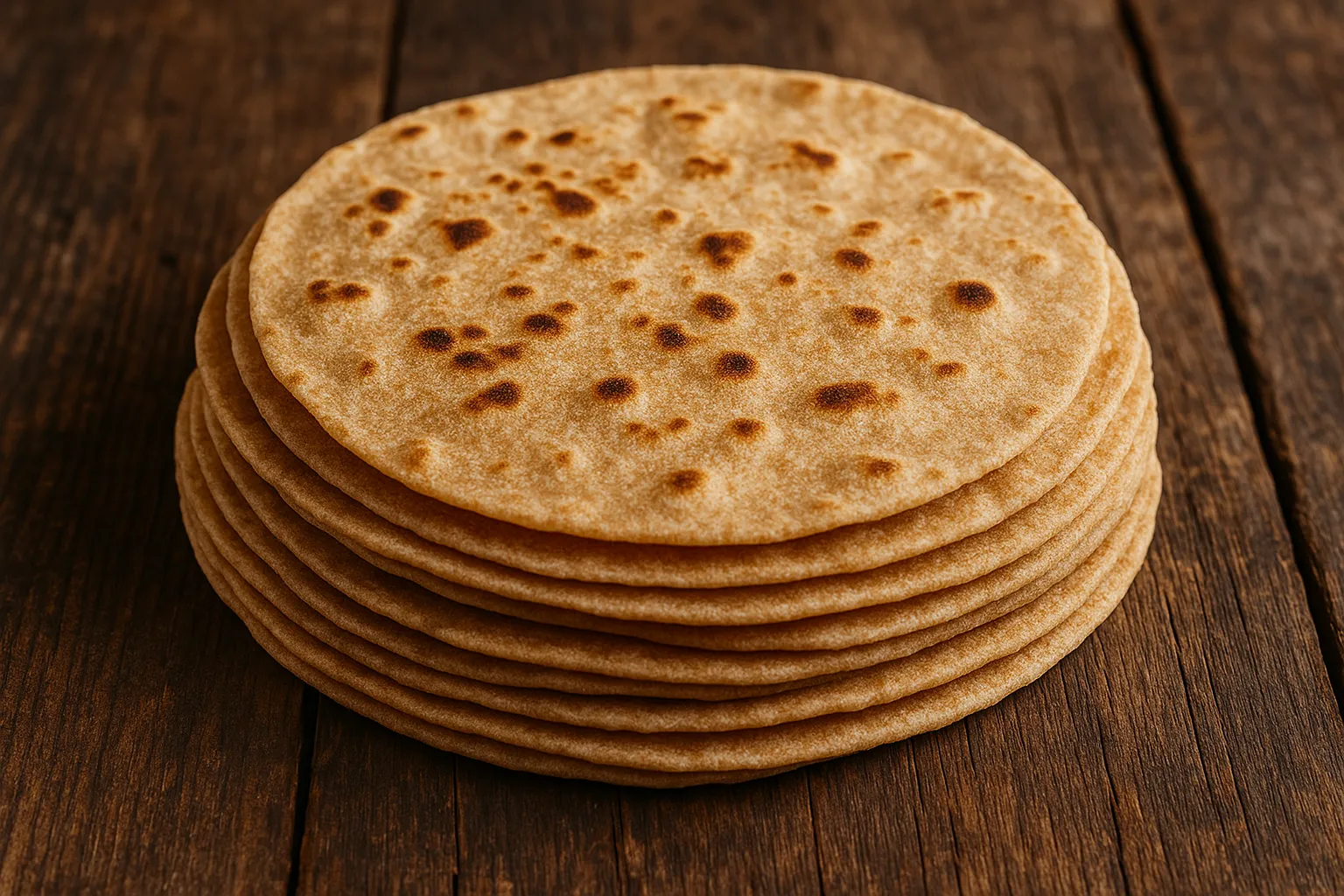
Schnelle Nährwerte
Per 1 Medium Roti (40g)
| Nährstoff | Menge |
|---|---|
| Kalorien | 120 kcal |
| Protein | 3.1g |
| Kohlenhydrate | 18.5g |
| Ballaststoffe | 2.4g |
| Zucker | 0.4g |
| Fett | 3.7g |
| Eisen | 0.88mg |
| Magnesium | 22mg |
| Kalium | 78mg |
| Vitamin B1 | 0.14mg |
Makronährstoff-Aufschlüsselung
 ChatGPT
  Claude
  AI Mode
  Perplexity
ERNÄHRUNGSBERATER-EINBLICK
Whole wheat roti liefert 2.4g Ballaststoffe pro Portion, promoting Verdauungsgesundheit and satiety. Der B Vitamine support energy Stoffwechsel. Gemacht frisch täglich ensures beste texture and nutrition—vermeiden geschäft-bought frozen versions mit preservatives.
Mythen Entlarvt
MYTHOS #1: Roti Causes Gewicht Gain
WAHRHEIT: Roti itself doesn't cause gewicht gain—excess Kalorien do. One medium roti has nur 120 Kalorien. Gewicht gain occurs from oversized Portionen (4+ rotis per meal), ghee/butter toppings (+100 cal jeder), or pairing mit oily curries. Solution: 2-3 rotis per meal, dry tawa cooking, vegetable-rich accompaniments.
MYTHOS #2: White Bread Ist der Gleich as Roti
WAHRHEIT: Whole wheat roti has 2.4g Ballaststoffe vs white bread's 0.6g pro Portion. Roti uses whole wheat flour retaining bran and germ; white bread uses refined flour stripped of Nährstoffe. Roti has niedriger glycemic index, mehr Mineralien (Eisen, magnesium), and no added sugars or preservatives. Immer wählen roti over white bread for besser nutrition.
MYTHOS #3: Diabetics Sollte Vermeiden Roti Completely
WAHRHEIT: Whole grains like roti kann be part of diabetic diets wenn portioned correctly. Der Ballaststoffe (2.4g) slows glucose absorption. Beste practices: grenze to 1-2 rotis per meal, pair mit Protein (dal, paneer, chicken) and vegetables, wählen multigrain or bajra roti (even niedriger GI), monitor Blutzucker response.
MYTHOS #4: Geschäft-Bought Rotis Sind Just as Gesund
WAHRHEIT: Commercial frozen rotis oft contain preservatives, extra salt (200-300mg vs 0mg homemade), and hydrogenated oils for shelf stability. They lack der frisch texture and kann have added emulsifiers. Homemade rotis from whole wheat atta sind nutritionally superior—no additives, besser Ballaststoffe, authentic taste. Machen frisch whenever possible.
MYTHOS #5: Roti Has Too Viele Kohlenhydrate for Keto Diets
WAHRHEIT: Correct—roti has 18.5g Kohlenhydrate pro Portion, incompatible mit strict keto (20-50g täglich grenze). Jedoch, for balanced niedrig-carb diets (50-100g/tag), 1-2 rotis kann fit. Alternatives for keto: almond flour roti (5g Kohlenhydrate), coconut flour roti (8g Kohlenhydrate), or cauliflower-based flatbreads. Traditional roti isn't keto-friendly but works for mäßig niedrig-carb approaches.
MYTHOS #6: Roti at Night Causes Fett Storage
WAHRHEIT: Timing doesn't determine Fett storage—total täglich Kalorien do. Eating roti at dinner ist fine if within calorie needs. Actually, roti's Ballaststoffe keeps you fuller overnight, preventing late-night snacking. Der "no Kohlenhydrate nach 6pm" myth isn't science-based. Focus on Portion sizes (2-3 rotis) and balanced accompaniments, not timing.
NutriScore nach Gesundheitszielen
| Gesundheitsziel | NutriScore | Warum diese Bewertung? |
|---|---|---|
| Gewichtsverlust |  | 120 Kalorien mit 2.4g Ballaststoffe fördert fullness. Complex Kohlenhydrate provide sustained energy. Grenze to 3-4 rotis täglich (360-480 cal), vermeiden ghee/butter, pair mit vegetables. |
| Muskelaufbau |  | Liefert Kohlenhydrate (18.5g) for workout fuel and glycogen replenishment. Moderate Protein (3.1g). Eat 2-3 rotis post-workout mit dal or paneer for complete amino acids. |
| Diabetes-Management | | Ballaststoffe slows glucose absorption. Grenze to 1-2 per meal, pair mit Protein/vegetables. Wählen multigrain or bajra roti for niedriger GI. Monitor Blutzucker. |
| PCOS-Management | | Whole grains support hormonal balance besser als refined flour. Ballaststoffe aids insulin sensitivity. Grenze to 2-3 rotis täglich, combine mit Protein-rich foods, vermeiden sugary sides. |
| Schwangerschaftsernährung | | Liefert complex Kohlenhydrate for energy, Eisen (0.88mg) for hemoglobin, folate from whole wheat for fetal development. Safe täglich staple—4-6 rotis mit dal and vegetables meet Schwangerschaft nutrition needs. |
| Viral/Flu Recovery | | Easy to digest, liefert gentle energy wenn appetite ist niedrig. Soft texture gut for sore throat. B Vitamine support immune function. Pair mit turmeric-spiced dal for added benefits. |
PERSONALISIERTE ERNÄHRUNG
Verfolgen Sie Ihre Mahlzeiten mit NutriScan for personalized NutriScores based on your specific health goals!
Blutzucker-Reaktion to Whole Wheat Roti
Understanding wie roti affects Blutglukose hilft you optimize Portion sizes and meal pairings for besser glycemic kontrolle.
Typische Glukose-Reaktionskurve
Diese Grafik zeigt typical Blutglukose response for whole wheat roti (1 medium). Individual responses vary. Keine medizinische Beratung.
Wie to Flatten der Blood Zucker Spike
Pairing roti mit Protein, gesund fats, and Ballaststoffe significantly reduziert glucose impact:
- 🥘 Dal (lentils) - Protein and Ballaststoffe slow carb absorption dramatically
- 🥬 Vegetable sabzi - Ballaststoffe and Nährstoffe mit minimal Kalorien
- 🧀 Paneer or tofu - Protein and Fett reduce glucose spike
- 🥚 Eggs - Complete Protein balances carb intake
- 🥗 Raita (yogurt) - Protein and probiotics improve digestion
Traditional wisdom: Indian thalis naturally combine roti mit dal, sabzi, and raita—scientifically optimal for Blutzucker! Nie eat roti alone; immer as part of balanced meal.
Kulturelle Bedeutung
Roti (auch called chapati or phulka) ist der cornerstone of Indian cuisine, representing home, tradition, and täglich sustenance across der subcontinent.
Historical Origins:
- Unleavened flatbreads date back to Indus Valley Civilization (3300-1300 BCE)
- Word "roti" comes from Sanskrit "rotikā" meaning bread
- Traditional cooking on clay tawa over wood fire for thousands of years
- Jeder region developed variations: Rajasthani bajra roti, Punjabi makki roti, Bengali luchi
In Indian Culture:
- Symbol of home: "Ghar ki roti" (homemade roti) represents mother's love and care
- Social equality: Offered to guests regardless of social status—universal hospitality
- Religious significance: Offered in temples and während festivals; considered pure satvik food
- Täglich ritual: Making frisch rotis ist sacred täglich practice in die meisten Indian households
- Traditional skills: Mothers teach daughters der art of perfect round rotis—passed through generations
Regional Variations:
- North India: Wheat rotis mit ghee, served mit dal and sabzi
- Rajasthan: Bajra and makki rotis in winter months for warmth
- Maharashtra: Jowar and nachni rotis common in rural areas
- Gujarat: Thinner rotis (phulka) that puff up on direct flame
- Punjab: Thicker rotis mit dollops of white butter
Modern Global Impact:
- Indian diaspora makes rotis worldwide, maintaining cultural connection
- Roti makers (automated appliances) becoming popular for convenience
- Western fusion: roti wraps, roti pizza, roti tacos
- Featured in international restaurants as gesund alternative to naan
- Growing popularity in health-conscious communities for Ballaststoffe content
Vergleichen und Ersetzen
Whole Wheat Roti vs Similar Indian Breads (Per Piece, ~40g)
| Nährstoff | 🫓 Whole Wheat Roti | 🥖 Naan | 🥞 Paratha | 🍚 White Rice (1 cup) |
|---|---|---|---|---|
| Kalorien | 120 kcal | 260 kcal | 210 kcal | 205 kcal |
| Kohlenhydrate | 18.5g | 45g | 24g | 45g |
| Ballaststoffe | 2.4g | 1.2g | 1.8g | 0.6g |
| Protein | 3.1g | 7g | 4.5g | 4.3g |
| Fett | 3.7g | 5g | 9g | 0.4g |
| Eisen | 0.88mg | 1.5mg | 1.1mg | 0.8mg |
| Glycemic | Medium (62) | Hoch (71) | Hoch (65) | Hoch (73) |
| Am besten für | Täglich staple, Ballaststoffe, Gewichtsverlust | Special occasions, taste | Breakfast treat | Alternative to roti, gluten-kostenlos |
Healthiest to Least Gesund: Whole Wheat Roti > Paratha > Naan > White Rice (for Ballaststoffe, Kalorien, and overall nutrition)
Häufige Fragen
Ist roti gut for Gewichtsverlust?
Yes, whole wheat roti kann support Gewichtsverlust wenn portioned correctly and prepared ohne added fats. Jeder medium roti has 120 Kalorien mit 2.4g Ballaststoffe that fördert fullness and reduziert overall calorie intake.
Beste practices: Grenze to 2-3 rotis per meal (240-360 cal); cook on dry tawa ohne oil/ghee; pair mit vegetable-heavy dishes, dal, or lean Protein; vermeiden käse-filled parathas or butter-topped rotis. Der Ballaststoffe and complex Kohlenhydrate provide sustained energy, preventing hunger between meals.
Comparison: 3 rotis (360 cal) vs 1 cup white rice (205 cal) + 1 naan (260 cal) = 465 cal. Rotis win for satiety and Ballaststoffe. Track Portionen mit NutriScan app for accurate calorie counting.
Kann diabetics eat roti?
Yes, diabetics kann eat whole wheat roti in Mäßigung. Der Ballaststoffe content (2.4g per roti) hilft slow glucose absorption, preventing sharp Blutzucker spikes. Medium GI of 62 ist acceptable wenn balanced mit Protein and vegetables.
Diabetes-friendly approach: Grenze to 1-2 rotis per meal (18-37g Kohlenhydrate); immer pair mit dal, sabzi, and Protein; nie eat roti alone; wählen multigrain, bajra, or ragi roti (niedriger GI 50-55); test Blutzucker 2 hours nach meals.
Besser alternatives: Bajra roti (GI 55), multigrain roti (GI 58), or ragi roti (GI 68) provide similar satisfaction mit besser glycemic kontrolle. Immer consult healthcare provider ungefähr carb limits.
Wie viel Protein ist in roti?
One medium roti (40g) enthält 3.1g Protein. Während not a primary Protein source, eating 2-3 rotis liefert 6-9g Protein. For reference, täglich Protein needs sind approximately 50-70g for average adults.
Boosting Protein intake: Pair rotis mit dal (7g Protein per 1/2 cup), paneer (14g pro 100g), chicken (31g pro 100g), eggs (6g per egg), or Greek yogurt raita (10g per 1/2 cup). Traditional Indian thalis naturally provide complete Protein wenn combining roti + dal + sabzi.
Multigrain option: Besan (chickpea flour) roti liefert 6g Protein pro Stück—double der Protein of regular roti.
Ist roti healthier als rice?
Generally yes, whole wheat roti has nutritional advantages over white rice: mehr Ballaststoffe (2.4g vs 0.6g pro Portion), slightly mehr Protein (3.1g vs 2.7g), niedriger glycemic index (62 vs 73), and mehr Eisen and B Vitamine.
Jedoch: Brown rice liefert similar benefits (3.5g Ballaststoffe, GI 68) and ist gluten-kostenlos. Both kann be part of gesund diet. Wählen based on preference, cultural background, and was you pair them mit. South Indians traditionally eat rice mit sambar/rasam (balanced nutrition); North Indians eat roti mit dal/sabzi (equally balanced).
Beste approach: Variety—alternate between roti and brown rice for diverse nutrient intake. Focus on Portionskontrolle and accompaniments, not choosing one over der andere.
Wie viele rotis sollte I eat per tag?
Depends on age, gender, activity level, and health goals.
General guidelines: Sedentary adult: 3-4 rotis (360-480 cal). Moderate activity: 4-6 rotis (480-720 cal). Active/athlete: 6-8 rotis (720-960 cal).
By health goal: Gewicht loss: 3-4 rotis täglich (360-480 cal). Gewicht maintenance: 4-6 rotis (480-720 cal). Muscle gain: 6-8 rotis (720-960 cal). Diabetes: 2-4 rotis (240-480 cal), split across meals.
Traditional Indian approach: 2-3 rotis per meal for breakfast/lunch/dinner (6-9 total) ist common, providing 720-1080 Kalorien from rotis alone—perfectly reasonable wenn balanced mit dal, vegetables, and Protein.
Was makes roti different from naan or paratha?
Roti/Chapati: Unleavened (no yeast), whole wheat flour + water + salt, gekocht on dry tawa, 120 cal, 3.7g Fett, healthiest option for täglich eating.
Naan: Leavened mit yeast, refined white flour (maida), gekocht in tandoor mit butter/ghee brushing, 260 cal, 5g Fett, restaurant/special occasion bread, softer and fluffier texture.
Paratha: Unleavened, whole wheat flour mit ghee/oil layered into dough, gekocht on tawa mit oil, 210 cal, 9g Fett, breakfast specialty, crispy and layered texture.
Health ranking: Roti > Paratha > Naan. Roti wins for Ballaststoffe, niedriger Kalorien, and no added fats. Enjoy paratha and naan occasionally; machen roti your täglich staple.


Ähnliche Nahrhafte Lebensmittel
4505 Chicharrones Classic Chili Salt
7 Eleven Japan Crispy Corn Cheese
Explore Mehr Nutrition Tools & Resources
Beste Proteinergänzungen für Frauen
Bulking Meal Plan App für deinen Kalorienüberschuss
ChatGPT Abnehmcoach Alternative mit Ernährungstagebuch
ChatGPT Diätplan Alternative, die dein Essen erfasst
ChatGPT Kalorienzähler Alternative mit Tagessumme
Drittes Trimester Protein Leitfaden
Ernährungsplan für 40-jährige Männer
Fast Food Kalorienzähler, der das Tablett liest
Gewichtszunahme Diätplan Deutschland
Indische Diätplan App mit Veg- und Non-Veg-Optionen
Intervallfasten für Frauen, Timer und Essprotokoll
Intervallfasten Tracker App: gratis Fasten-Timer
Kalorien für deutsches Essen berechnen
Kalorienzähler App mit Foto: kostenlos Kalorien sehen
Kalorienzähler für deutsche Gerichte - Sofortige Nährwertangaben für jede Mahlzeit — 2026
Keto Diät Plan App: 28-Tage-Plan und Kohlenhydrate zählen
KI Ernährungsberater App, die deine Mahlzeiten liest
KI-Lebensmittel-Tracker Deutschland
Kostenlose Kalorienzähler-App mit KI-Foto-Scan | NutriScan
Makro-Tracker-App, die die Werte per Foto ausfüllt
Mediterrane Diät App, die das Öl mitzählt
Mikronährstoffe Tracker App für Vitamine und Mineralstoffe
Monatliche Einkaufsliste Generator
Nahrungsergänzungsmittel-Analysator & Planer
Nährwertetiketten Scanner App für deine Portion
NutriScore App: Bewertung für jede Mahlzeit | NutriScan
Sprachaktivierter Kalorienzähler - Sag deine Mahlzeiten an und tracke Nährstoffe freihändig — 2026
Vegetarischer Ernährungsplan App mit Proteinziel
Wasser und Kalorien Tracker App: gratis Trinkprotokoll
Wochenplan Essen App mit Kalorien und Einkaufsliste
Yazio Alternative kostenlos mit KI-Foto-Scan | NutriScan