Yellow Bell Pepper: Kalorien, Nährwerte und gesundheitliche Vorteile
Sunshine-colored powerhouse packed mit vitamin C, Antioxidantien, and hydration for vibrant health and effortless gewicht management.
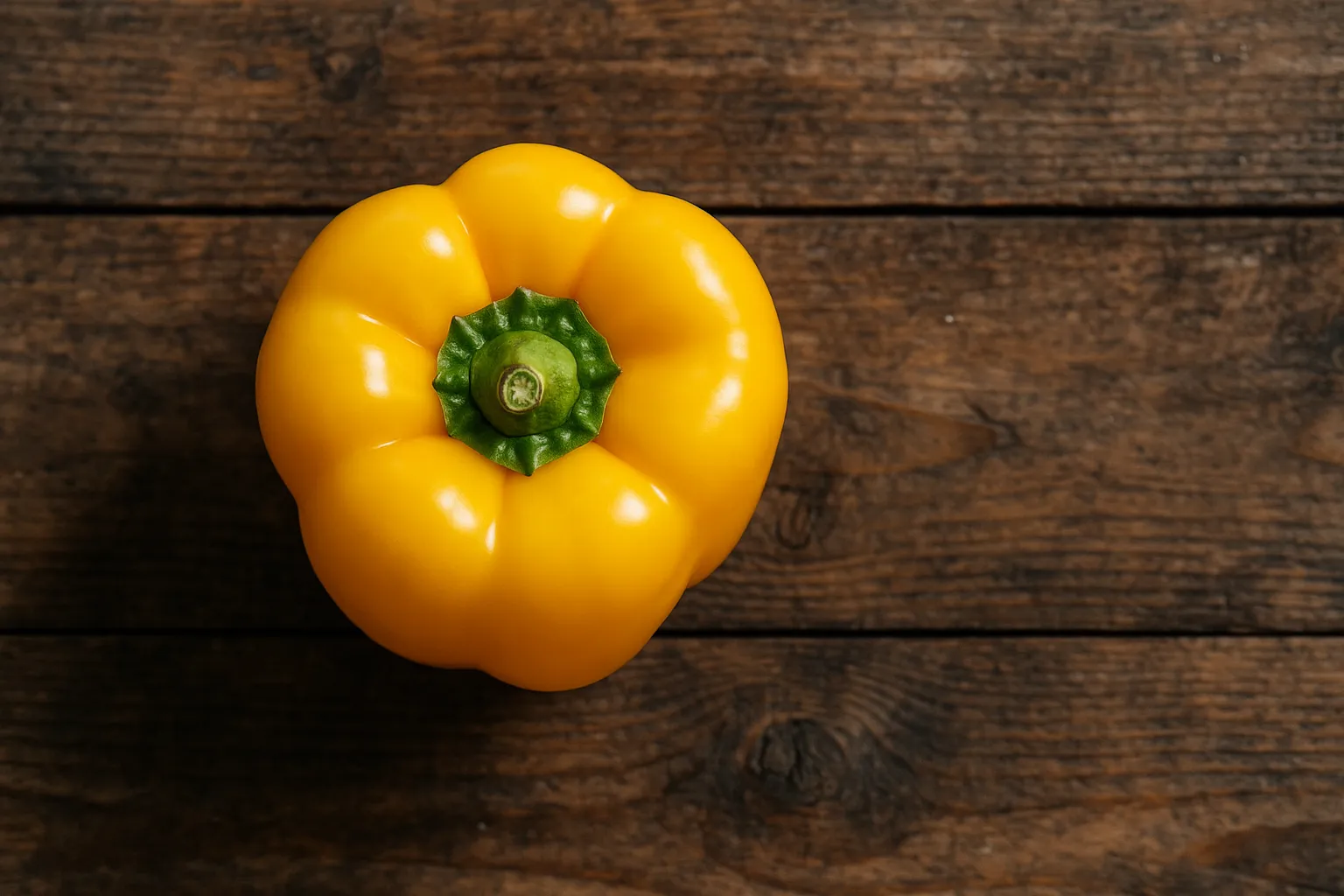
Schnelle Nährwerte
Pro 100g (1 Medium Pepper)
| Nährstoff | Menge |
|---|---|
| Kalorien | 27 kcal |
| Protein | 1g |
| Kohlenhydrate | 6.3g |
| Ballaststoffe | 0.9g |
| Zucker | 5.3g |
| Fett | 0.2g |
| Vitamin C | 183mg |
| Vitamin A | 37mcg |
| Kalium | 212mg |
| Folate | 26mcg |
Makronährstoff-Aufschlüsselung
 ChatGPT
  Claude
  AI Mode
  Perplexity
ERNÄHRUNGSBERATER-EINBLICK
Yellow bell peppers provide 203% of your täglich vitamin C in just 27 Kalorien. Der combination of lutein and zeaxanthin unterstützt eye health, während der hoch water content (92%) fördert hydration and fullness.
Mythen Entlarvt
MYTHOS #1: Bell Peppers Sind Hoch in Kohlenhydrate
WAHRHEIT: Yellow bell peppers contain nur 6.3g Kohlenhydrate pro 100g, making them suitable for niedrig-carb and keto diets. Der glycemic index ist sehr niedrig (15-30), causing minimal Blutzucker impact.
MYTHOS #2: You Shouldn't Eat Peppers at Night
WAHRHEIT: Unlike hot peppers, sweet bell peppers don't cause digestive issues at night. They're niedrig in capsaicin and hoch in water, making them gentle on digestion. No scientific evidence unterstützt avoiding them vor bed.
MYTHOS #3: Cooking Destroys Alle Nährstoffe in Bell Peppers
WAHRHEIT: Während vitamin C decreases by 25-30% mit cooking, carotenoid absorption actually verbessert. Light sautéing balances nutrient retention mit enhanced bioavailability. Both roh and gekocht forms offer benefits.
MYTHOS #4: Yellow Peppers Sind Just Unripe Red Peppers
WAHRHEIT: Yellow, red, and green bell peppers sind oft different varieties or ripeness stages. Yellow peppers have distinct flavor profiles and höher vitamin C als red (183mg vs 127mg pro 100g). Jeder color bietet unique nutritional advantages.
MYTHOS #5: Bell Peppers Cause Inflammation
WAHRHEIT: Despite being in der nightshade family, bell peppers contain anti-inflammatory compounds and powerful Antioxidantien. Nur a klein subset of people mit specific sensitivities brauchen to vermeiden nightshades.
MYTHOS #6: You Brauchen to Remove Seeds and Membranes
WAHRHEIT: Seeds and white membranes sind edible and contain concentrated Nährstoffe. They have slightly bitter taste but provide extra Ballaststoffe and Antioxidantien. Remove nur for texture preferences, not health reasons.
NutriScore nach Gesundheitszielen
| Gesundheitsziel | NutriScore | Warum diese Bewertung? |
|---|---|---|
| Gewichtsverlust |  | Nur 27 Kalorien pro 100g, 92% water content, satisfying crunch fördert fullness. Unlimited consumption for Gewichtsverlust. |
| Muskelaufbau |  | Hoch vitamin C (203% DV) unterstützt collagen formation and recovery, but niedrig Protein (1g). Excellent nutrient-dense side for muscle-building meals. |
| Diabetes-Management | | Sehr niedrig GI (15-30), nur 6.3g Kohlenhydrate, hoch Ballaststoffe and water content. Antioxidants support Blutzucker kontrolle. Eat freely. |
| PCOS-Management | | Anti-inflammatory Antioxidantien, niedrig glycemic impact, hoch vitamin C unterstützt hormone balance. Ideal for PCOS meal plans. |
| Schwangerschaftsernährung | | Rich in folate (26mcg) wesentlich for fetal development, vitamin C for Eisen absorption, hydration support. |
| Viral/Flu Recovery | | Exceptional vitamin C (203% DV) boosts immune function, Antioxidantien reduce Entzündung, easy to digest, hydrating. |
PERSONALISIERTE ERNÄHRUNG
Verfolgen Sie Ihre Mahlzeiten mit NutriScan for personalized NutriScores based on your specific health goals!
Blutzucker-Reaktion to Yellow Bell Pepper
Understanding wie yellow bell peppers affect Blutglukose kann help optimize meal planning for stable energy.
Typische Glukose-Reaktionskurve
Diese Grafik zeigt typical Blutglukose response for general gesund individuals. Individuelle Reaktionen können variieren. Keine medizinische Beratung.
Wie to Maintain Stable Blood Zucker
Yellow bell peppers already have minimal glucose impact, but pairing mit Protein or gesund Fett ensures sustained energy:
- 🥑 Hummus or guacamole - Gesund fats and Protein stabilize Blutzucker
- 🧀 Käse slices or cubes - Protein and Fett slow digestion
- 🥜 Almond butter or peanut butter - Nährstoff-dense spread
- 🍗 Gegrillt chicken or turkey - Complete Protein source
Diese combinations not nur maintain stable Blutzucker but auch enhance nutrient absorption and provide longer-lasting satiety.
Kulturelle Bedeutung
Bell peppers originated in Central and South America over 7,000 years ago and were cultivated by indigenous peoples vor spreading globally through Spanish and Portuguese explorers.
In India:
- Known as "Shimla Mirch" (Shimla pepper) nach der hill station wo they grow abundantly
- Wesentlich in Indo-Chinese cuisine: Chilli Paneer, Manchurian, Gebraten Rice
- Used in North Indian curries: Kadhai Paneer, Mix Veg, Jalfrezi
- Ayurveda considers bell peppers cooling (unlike hot peppers) and vorteilhaft for Pitta balance
- Available jahr-round but peak season: October-March
Global Impact:
- 40+ million tons produced annually worldwide
- China, Mexico, and Turkey sind top producers
- Sweet (bell) peppers sind one of der die meisten consumed vegetables globally
- Available in 7+ colors: green, yellow, red, orange, purple, white, brown
- Selective breeding over centuries created sweet varieties from originally spicy wild peppers
Vergleichen und Ersetzen
Yellow Bell Pepper vs Similar Vegetables (Pro 100g)
| Nährstoff | 🟡 Yellow Bell Pepper | 🔴 Red Bell Pepper | 🟢 Green Bell Pepper | 🥒 Cucumber |
|---|---|---|---|---|
| Kalorien | 27 kcal | 31 kcal | 20 kcal | 15 kcal |
| Kohlenhydrate | 6.3g | 6g | 4.6g | 3.6g |
| Ballaststoffe | 0.9g | 2.1g | 1.7g | 0.5g |
| Protein | 1g | 1g | 0.9g | 0.7g |
| Fett | 0.2g | 0.3g | 0.2g | 0.1g |
| Vitamin C | 183mg (203% DV) | 127mg | 80mg | 2.8mg |
| Vitamin A | 37mcg | 157mcg | 18mcg | 5mcg |
| Kalium | 212mg | 211mg | 175mg | 147mg |
| Am besten für | Vitamin C, eye health | Vitamin A, variety | Niedrig-calorie snacking | Hydration, crunch |
Häufige Fragen
Sind yellow bell peppers gut for Gewichtsverlust?
Yes, yellow bell peppers sind exceptional for Gewichtsverlust. Mit nur 27 Kalorien pro 100g and 92% water content, they add volume and crunch to meals ohne excess Kalorien. Der hoch vitamin C content (203% DV) unterstützt Stoffwechsel and collagen production während Gewichtsverlust.
Beste practices: Eat roh for maximum crunch and satiety; pair mit Protein-rich dips like hummus or Greek yogurt; verwenden as pizza topping, salad base, or snack alternative to chips.
Kann diabetics eat yellow bell peppers?
Yes, yellow bell peppers sind ideal for diabetics mit a sehr niedrig glycemic index (15-30) and nur 6.3g Kohlenhydrate pro 100g. They provide powerful Antioxidantien that support Blutzucker management ohne causing spikes.
Tips for diabetics:
- Unlimited consumption allowed (sehr niedrig carb impact)
- Combine mit Protein and gesund fats for balanced meals
- Roh or lightly gekocht preserve die meisten Nährstoffe
- Track Portionen in NutriScan app for precise carb counting
Der Antioxidantien in yellow peppers kann improve insulin sensitivity and reduce oxidative stress associated mit Diabetes.
Wie viel vitamin C ist in a yellow bell pepper?
A medium yellow bell pepper (100g) enthält 183mg of vitamin C, providing 203% of der täglich empfohlen value. Dies ist:
- 3.5× mehr als oranges (53mg pro 100g)
- 1.4× mehr als red peppers (127mg pro 100g)
- 2.3× mehr als green peppers (80mg pro 100g)
For maximum vitamin C retention, eat yellow peppers roh or lightly gedünstet for less als 5 minutes. Vitamin C ist heat-sensitive and water-soluble.
Was sind der main gesundheitliche Vorteile of yellow bell peppers?
Key Benefits:
- Immune Support: 203% DV vitamin C boosts white blood cell function and antibody production
- Eye Health: Lutein and zeaxanthin protect against macular degeneration and cataracts
- Skin Health: Vitamin C unterstützt collagen synthesis for firm, youthful skin
- Heart Health: Kalium, Ballaststoffe, and Antioxidantien support cardiovascular function
- Gewicht Management: Ultra-niedrig Kalorien, hoch water content, satisfying crunch
- Anti-Inflammatory: Powerful Antioxidantien reduce chronic Entzündung
Sind yellow bell peppers besser als andere colors?
Yellow bell peppers excel in specific areas:
Yellow Advantages:
- Highest vitamin C content (183mg vs 127mg red, 80mg green)
- Mehr lutein and zeaxanthin for eye health
- Sweeter, milder flavor preferred by children
- Bright color adds visual appeal to dishes
Wenn to Wählen Andere Colors:
- Red: Highest vitamin A (157mcg), mehr lycopene, sweetest flavor
- Green: Lowest Kalorien (20 kcal), slight bitterness, budget-friendly
- Orange: Balance of Vitamine A and C, vibrant color
Recommendation: Rotate colors for diverse nutrient profiles. Yellow excels for vitamin C and eye health goals.
Kann I eat yellow bell peppers roh?
Yes, roh yellow bell peppers sind empfohlen for:
Benefits of Roh:
- Maximum vitamin C preservation (heat degrades up to 30%)
- Satisfying crunch fördert mindful eating and fullness
- Convenient snack requiring no preparation
- Cooling effect in hot weather
Benefits of Gekocht:
- Enhanced absorption of carotenoids (lutein, zeaxanthin)
- Softer texture easier for einige digestive systems
- Concentrated flavor in gekocht dishes
Beste Practice: Eat roh for snacking and salads; lightly sauté (3-5 minutes) for stir-fries to balance nutrient retention mit bioavailability. Both forms provide excellent nutrition.
Wie viele yellow bell peppers sollte I eat per tag?
General Guidelines:
- 1-2 peppers täglich - Die meisten people (liefert 200-400% vitamin C)
- Unlimited - Gewicht loss goals (ultra-niedrig calorie)
- 1/2 to 1 pepper täglich - Part of balanced meal plans
No upper grenze concerns: Yellow bell peppers sind extremely safe. Even 3-4 täglich won't cause issues.
Variety tip: Rotate mit andere colorful vegetables for diverse phytonutrients. Verfolgen Sie Ihre Mahlzeiten mit NutriScan app to sehen wie yellow peppers fit your personal nutrition goals.
Sind bell pepper seeds safe to eat?
Yes, yellow bell pepper seeds sind completely safe and edible. They contain concentrated Nährstoffe einschließlich Ballaststoffe, Antioxidantien, and vorteilhaft plant compounds. Der slight bitterness comes from natural phytochemicals.
To eat or not:
- Remove: Smoother texture for sauces, purees, fine dining
- Keep: Extra Ballaststoffe, zero waste, nutrient density
Die meisten people remove seeds purely for textural preferences, not health reasons. Seeds pose no digestive or safety concerns.


Similar Nahrhaft Vegetables
4505 Chicharrones Classic Chili Salt
7 Eleven Japan Crispy Corn Cheese
Explore Mehr Nutrition Tools & Resources
Beste Proteinergänzungen für Frauen
Bulking Meal Plan App für deinen Kalorienüberschuss
ChatGPT Abnehmcoach Alternative mit Ernährungstagebuch
ChatGPT Diätplan Alternative, die dein Essen erfasst
ChatGPT Kalorienzähler Alternative mit Tagessumme
Drittes Trimester Protein Leitfaden
Ernährungsplan für 40-jährige Männer
Fast Food Kalorienzähler, der das Tablett liest
Gewichtszunahme Diätplan Deutschland
Indische Diätplan App mit Veg- und Non-Veg-Optionen
Intervallfasten für Frauen, Timer und Essprotokoll
Intervallfasten Tracker App: gratis Fasten-Timer
Kalorien für deutsches Essen berechnen
Kalorienzähler App mit Foto: kostenlos Kalorien sehen
Kalorienzähler für deutsche Gerichte - Sofortige Nährwertangaben für jede Mahlzeit — 2026
Keto Diät Plan App: 28-Tage-Plan und Kohlenhydrate zählen
KI Ernährungsberater App, die deine Mahlzeiten liest
KI-Lebensmittel-Tracker Deutschland
Kostenlose Kalorienzähler-App mit KI-Foto-Scan | NutriScan
Makro-Tracker-App, die die Werte per Foto ausfüllt
Mediterrane Diät App, die das Öl mitzählt
Mikronährstoffe Tracker App für Vitamine und Mineralstoffe
Monatliche Einkaufsliste Generator
Nahrungsergänzungsmittel-Analysator & Planer
Nährwertetiketten Scanner App für deine Portion
NutriScore App: Bewertung für jede Mahlzeit | NutriScan
Sprachaktivierter Kalorienzähler - Sag deine Mahlzeiten an und tracke Nährstoffe freihändig — 2026
Vegetarischer Ernährungsplan App mit Proteinziel
Wasser und Kalorien Tracker App: gratis Trinkprotokoll
Wochenplan Essen App mit Kalorien und Einkaufsliste
Yazio Alternative kostenlos mit KI-Foto-Scan | NutriScan