MyFitnessPal vs Lifesum 2026: Meal Plans, Recipes, Tracking
 ChatGPT
  Claude
  AI Mode
  Perplexity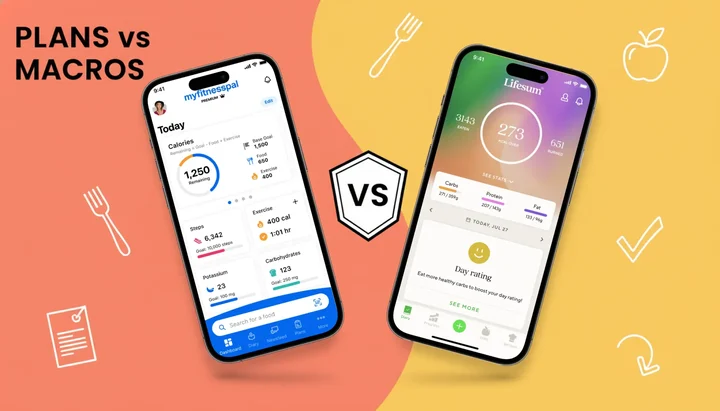
As a NutriScan nutritionist, the MyFitnessPal vs Lifesum question lands in my inbox almost as often as the MFP vs MacroFactor one. Both apps solve the same problem - track what you eat - but they answer it in opposite ways. MyFitnessPal hands you raw data: a 14M+ food database, deep integrations, and macro detail down to the gram. Lifesum hands you guidance: 20+ named meal plans, recipes tied to each program, and a calmer interface that nudges you toward the next meal instead of the next number. That gap is exactly where these two apps part ways.
TL;DR - MyFitnessPal vs Lifesum 2026
- Who Lifesum is for: First-time trackers and diet followers who want structured meal plans, recipes, and a built-in fasting timer (~$44.99/year)
- Who MyFitnessPal is for: Macro-precise loggers who eat varied or restaurant food and want deep device integrations ($0 to $99.99/year)
- Cheapest path to meal planning: Lifesum Premium ($44.99) beats MyFitnessPal Premium+ ($99.99) by more than half
- Database trade-off: MyFitnessPal coverage vs Lifesum curation
- Best test: Run both free tiers for 7 days, log identical meals, keep the one you opened more often
1. Quick Comparison Table
Here is the full side-by-side at a glance.
| Feature | MyFitnessPal | Lifesum |
|---|---|---|
| Annual price | $79.99 (Premium) / $99.99 (Premium+) | ~$44.99 |
| Monthly price | $19.99 / $24.99 | ~$8.33 (varies by region) |
| Free tier | Yes (with ads, manual search) | Yes (Standard program, basic diary) |
| Food database size | 14M+ entries (user-contributed) | Smaller, curated database |
| Meal planner | Premium+ only | Included in Premium |
| Recipe library | 1,500+ (Premium+) + URL importer | Tied to active diet program |
| Named diet programs | None (custom macros only) | 12+ (Keto, Paleo, Mediterranean, etc.) |
| Barcode scanning | Premium | Premium |
| Fasting timer | No native support | Built-in (16:8, 5:2, 6:1) |
| Macro detail | Detailed (sodium, fiber, sugar) | Standard |
| Integrations | 50+ apps and devices | Apple Health, Google Fit, Samsung Health |
| Recipe URL import | Yes (Premium) | No |
Prices are standard US prices as of mid 2026 and change by region. MyFitnessPal's are fixed (MyFitnessPal Premium). Lifesum's are not: the App Store lists annual SKUs from about $29.99 to $119.99 at the same time, and $44.99 is a common mid-2026 offer rather than a list price. Check the offer your sign-up flow shows you before you compare.
The biggest difference is not calories or macros. It is how each app helps you decide what to eat next. Lifesum builds meal plans into every Premium tier. MyFitnessPal reserves meal planning for its highest-cost Premium+ plan (MyFitnessPal Blog, 2025).
 Both apps live or die on the daily logging habit. The split is whether you want the menu decided for you or whether you want the macros decided by you.
2. Pricing: What You Actually Pay in 2026
Pricing is usually the deciding factor, so let's start there.
MyFitnessPal pricing
MyFitnessPal has three tiers in 2026:
- Free: Basic calorie and macro tracking with ads. Manual food search. No barcode scanning. Macro targets adjustable only as percentages in 5 percent increments (MyFitnessPal Help).
- Premium ($19.99/month or $79.99/year): Removes ads, adds barcode scanning, voice logging, Meal Scan, gram-level macro targets, food analysis, and the recipe URL importer.
- Premium+ ($24.99/month or $99.99/year): Everything in Premium plus the Meal Planner, 1,500+ curated recipes, grocery lists, and grocery delivery syncing.
The annual Premium plan works out to $6.67 per month. Premium+ comes to $8.34 per month.
Lifesum pricing
Lifesum keeps it simpler with a single Premium plan billed monthly or annually (Lifesum Help Center, 2026):
- Free: Diary, manual search, water tracker, and the Lifesum Standard program.
- Premium (~$44.99/year, region-dependent): Unlocks all 12+ diet programs, all 11+ meal plans, recipes tied to each plan, the fasting timer (16:8, 5:2, 6:1), barcode scanning, and meal ratings.
Promotional 3-month plans frequently run around $14.99 in the App Store, which is a useful low-commit way to test programs before annual billing.
Price verdict
If you want meal plans plus recipes, Lifesum at $44.99 per year beats MyFitnessPal Premium+ at $99.99 by more than half. The only place MyFitnessPal wins on price is the free tier - it has a stronger free diary than Lifesum free if you only need calorie tracking without the structured programs.
| Plan | MyFitnessPal | Lifesum | Meal plans | Fasting timer |
|---|---|---|---|---|
| Free | $0 | $0 | No | No |
| Mid (annual) | $79.99 (Premium) | $44.99 (Premium) | MFP: No / Lifesum: Yes | MFP: No / Lifesum: Yes |
| Top (annual) | $99.99 (Premium+) | n/a | Yes | No |
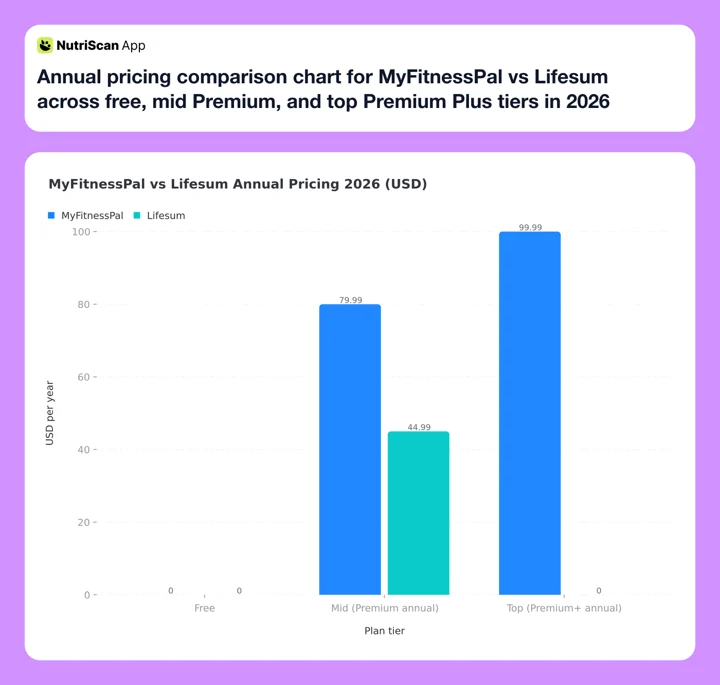 Figure 1: Lifesum's single Premium plan ($44.99/yr) undercuts MyFitnessPal's Premium ($79.99) and Premium+ ($99.99). MyFitnessPal only wins on price for users who stick with the free tier.
For a starting macro target before you pick either app, run your stats through our free macro calculator so you walk in with numbers that match your body, not the app's first guess.
3. Meal Plans: Where Lifesum Has a Clear Advantage
If you open both apps on a Monday morning and ask "what should I eat this week," you get very different answers.
Lifesum's program library
Lifesum offers 20+ meal plans and diet programs organized by your goal: lose weight, maintain weight, or gain weight. For weight loss alone there are 11 dedicated meal plans including Paleo, Sugar Detox, Keto Burn, Keto Maintain, Protein Weight Loss, 16:8 Morning Fasting, 16:8 Evening Fasting, Vegan for a Week, and Hormonal Balance. Each plan ships with recipes tailored to the macro split and food rules of that specific diet.
On top of those, Lifesum runs 12 structured programs - Mediterranean, Scandinavian, Clean Eating, Climatarian, High Protein, and three Ketogenic levels (Easy, Medium, Strict). They give day-by-day guidance, complete with feedback when you finish a meal or miss a target.
The point of the program system is that you do not have to design your own week. You pick a plan, and the app tells you what to cook, what to buy, and how it fits your numbers.
The downside is variety. Some plans repeat the same recipes within a two-week cycle, and a few niche entries ("Eat like Denice") feel more marketing than nutrition science.
MyFitnessPal Meal Planner
MyFitnessPal's Meal Planner shipped in 2024 and expanded through early 2026 (MyFitnessPal Blog, 2025). Instead of named diet programs, it generates weekly plans from your calorie target, macro preferences, and dietary restrictions.
You get access to 1,500+ recipes, filterable by skill level, cooking time, and dietary needs. Each recipe shows full macro breakdowns, and you can swap meals you do not like for alternatives within the same calorie range. The Planner also generates grocery lists and supports grocery delivery through connected services.
The catch: Meal Planner is Premium+ only at $99.99/year. Standard Premium at $79.99 does not include it. And it generates meals to hit your numbers - it does not guide you through a named diet pattern like Mediterranean or Keto. If a shopping list for a low carb week is the reason you are eyeing Premium+, NutriScan's keto grocery list app builds that list from your own plan and reads the carbs off a pack from a photo.
Meal plan verdict
Lifesum wins on meal planning for most users. It costs less than half of MyFitnessPal Premium+, offers more structured programs, and ties recipes directly to named diets. MyFitnessPal's planner is more flexible with a larger recipe library, but it is double the price and lacks named programs.
Pro tip
Pick a Lifesum program for 14 days, not 30. The first two weeks of any plan are the highest-novelty stretch; if you are not sticking by day 14, swap programs rather than push through repeating recipes for another two weeks.
4. Recipes: Quality, Variety, and Usefulness
Both apps include recipes, but they integrate them into the daily experience differently.
Lifesum recipes
Lifesum ties its recipes to your active program. On Mediterranean, the recipe tab shows Mediterranean-style meals. Switch to Keto Burn, the recipes update to high-fat, low-carb dishes.
Recipes are simple, with grocery-store ingredients and 20-30 minute prep times. Each shows calories, macros, and serving size, and you can log a recipe to your diary in one tap.
The trade-off is library size. Lifesum prioritizes vetted, on-program recipes over volume - which means fewer options if you like to browse cuisine for cuisine's sake.
MyFitnessPal recipes
MyFitnessPal Premium+ unlocks 1,500+ curated recipes filterable by meal type, prep time, skill, and dietary preference. Premium (the cheaper $79.99 tier) also includes the recipe URL importer, which no other tracker in this comparison matches. Paste a recipe URL from AllRecipes, Serious Eats, or your favorite food blog, and MyFitnessPal extracts ingredients and calculates macros automatically.
Both apps put recipes in front of you, but MyFitnessPal's URL import is the rare feature that respects users who already have a recipe collection elsewhere.
Recipe verdict
MyFitnessPal wins on flexibility and library size, especially with URL import. Lifesum wins on curation and program-fit. If you cook from a wide variety of sources, MyFitnessPal. If you want recipes that match a specific eating pattern without extra work, Lifesum.
5. Daily Tracking: The Core Experience
Both apps track calories and macros. The daily feel is where they diverge.
Lifesum daily tracking
Lifesum's home screen is a colorful ring that shows calorie budget, with breakfast/lunch/dinner/snacks underneath. Logging is search ➡️ select ➡️ confirm portion. The standout feature is meal ratings: a thumbs-up or thumbs-down icon judges how well each food fits your active program. Grilled salmon on Mediterranean gets a thumbs-up; a candy bar gets a thumbs-down. It is fast feedback that teaches the diet without forcing you to read macro tables.
The food database is smaller and curated, so you find common foods and brand-name products quickly. Niche regional items sometimes need a custom entry. The cleaner data also means fewer duplicate banana entries (a chronic MFP frustration).
Lifesum free includes a water tracker and exercise tracker. Premium adds the fasting timer with 16:8 morning and evening protocols, plus 5:2 and 6:1 schedules.
MyFitnessPal daily tracking
MyFitnessPal's diary is data-heavy. Every logged item shows calories, protein, carbs, fat, fiber, sugar, sodium, and more. Daily totals, remaining budgets, and macro percentages sit at the top of the screen.
The 14M+ food database is the largest in any calorie tracker. You will find regional foods, restaurant chains, and obscure packaged products. The trade-off is data quality. User-contributed entries mean duplicates and occasional wrong calorie counts, and the same packaged product can turn up several times with different macros.
Barcode scanning sits on Premium ($79.99/year). Free users search manually. Search is fast, but navigating duplicates adds taps.
A 2023 retrospective analysis in JMIR Formative Research reviewed 665 app users with obesity and found that the most active users lost significantly more weight than the least active ones (Valinskas et al., 2023); note the authors work for the company behind the app studied. The app you actually open is the one that wins. If data overwhelms you, Lifesum's interface removes friction. If you live for the numbers, MyFitnessPal pays back the depth.
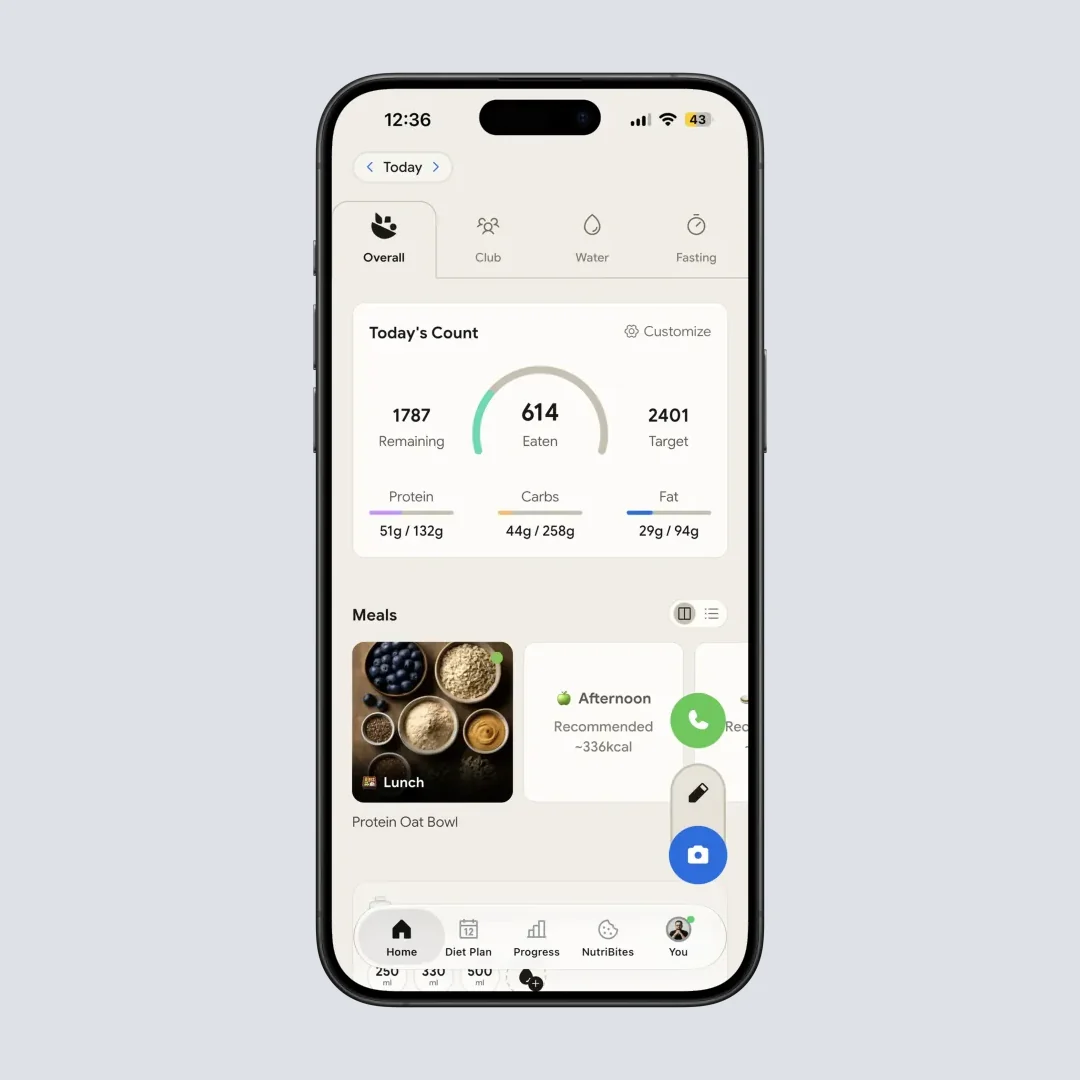
Daily breakdown view: this is the "did I hit my targets" feedback both MFP and Lifesum try to surface in their own way. Path: Home > Overview tab.
Heads up about user-submitted data
In MyFitnessPal, entries without a green check are anyone's guess. Always look for the verified badge and skip entries with no brand name or rounded "100 kcal per serving" totals - those are flags that someone eyeballed it.
6. Fasting Support: Lifesum Adds What MyFitnessPal Skips
Intermittent fasting has grown into a mainstream eating pattern, and whether your tracker supports it is a real dividing line between these two apps.
Lifesum ships a fasting timer with two pre-built 16:8 protocols (Morning Fasting and Evening Fasting), and supports 5:2 and 6:1 schedules as full programs. The timer runs in the background and notifies you when your eating window opens and closes. Crucially, recipe suggestions match your fasting window so you do not have to think about it.
MyFitnessPal has no built-in fasting timer in 2026. To pair fasting with calorie tracking you need a second app like Zero or Fastic, and the food diary will not block logs outside your eating window.
For users combining IF with calorie tracking, Lifesum is the cleaner one-app solution.
7. Food Database and Integrations
Both apps cover the basics. The size of the gap depends on how varied your food and gear are.
MyFitnessPal database
14M+ entries, mostly user-submitted. You will find regional brands, restaurant chains, and one-off snacks. The cost is duplicates and occasional bad data; experienced users learn to skip suspicious entries, beginners often log the wrong one without noticing.
Premium does not improve the database. Free and paid users see the same items.
Lifesum database
Smaller, curated. Common foods and major brands are well covered; international or specialty packaged foods sometimes need a custom add. Cleaner data, fewer duplicates.
Integrations
MyFitnessPal connects with 50+ apps and devices: Garmin, Fitbit, Apple Watch, Peloton, Strava, Withings, Polar, Google Fit, and more. Lifesum supports Apple Health, Google Fit, and Samsung Health - the majors but not the long tail.
If your gear list is short, Lifesum is fine. If you wear a Garmin or Polar and sync from three or more sources, MyFitnessPal is the central nutrition hub for your data.
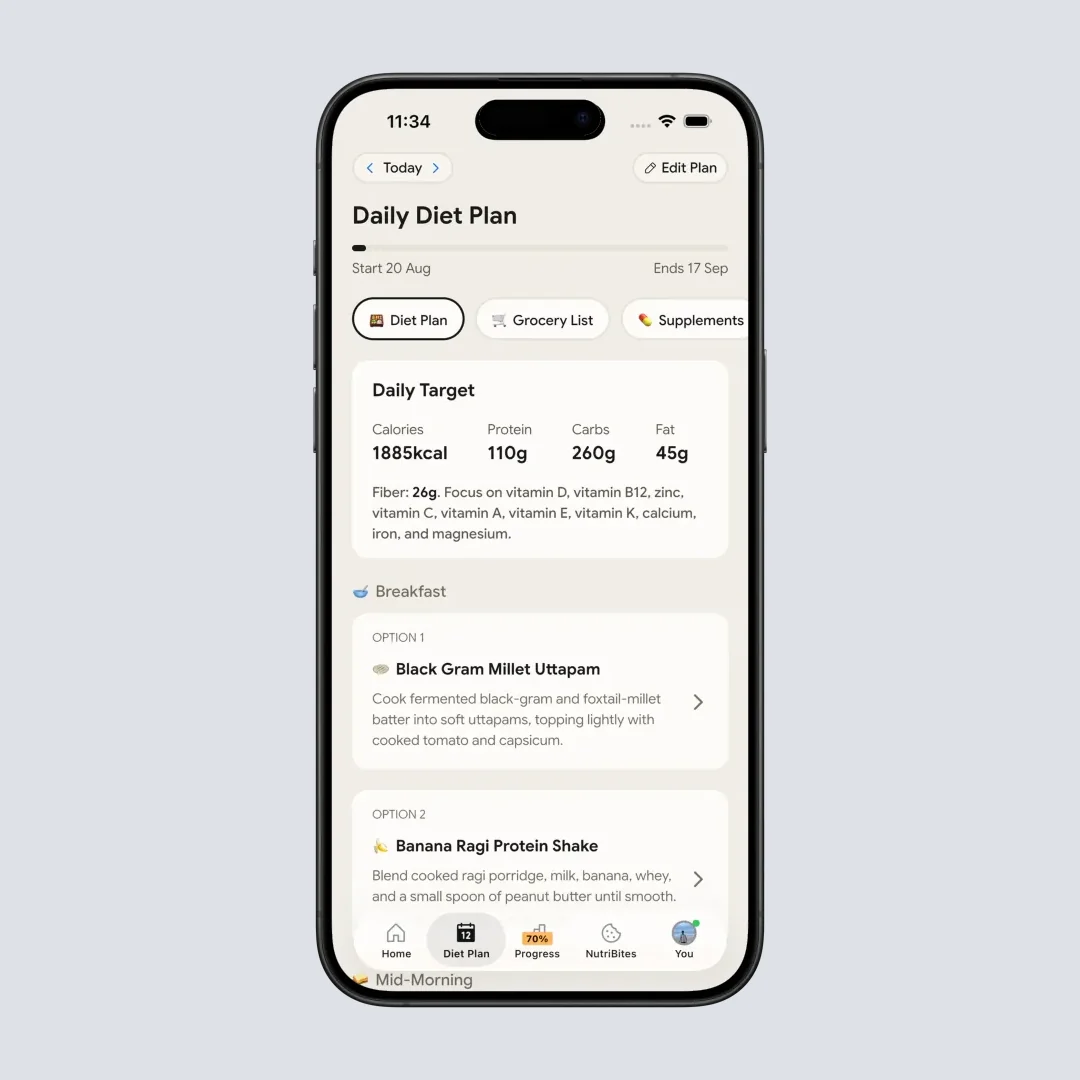
Structured plans like Lifesum's programs make adherence easier - the same idea behind NutriScan's 28-day diet plan (Path: Home > Diet Plan).
8. Real-World Scenarios: Three Users, Two Apps
These are composite examples, not real customers.
User A, a first-time tracker in her late twenties. She wants to lose 6 kg, has never counted calories, and likes following recipes. Lifesum Premium is her fit. The Mediterranean program tells her exactly what to cook for two weeks, and the meal ratings teach her which foods fit without reading macro tables.
User B, training for a half marathon. He logs every meal already and wants exact protein and carb targets day to day. He would take MyFitnessPal Premium for gram-level macro control, the URL recipe importer for his bookmarked food blogs, and Garmin sync for his weekly long-run calories.
User C, an intermittent faster on 16:8. She has been doing 16:8 for a year using a separate fasting app and a paper food diary. She would pick Lifesum Premium because the fasting timer and meal logger live in one app, and the 16:8 Evening Fasting program adjusts her recipes to fit her eating window.
These three patterns explain when each app shines. Lifesum wins when you want structure or fasting integration. MyFitnessPal wins when you want database breadth, deep integrations, or precise macro control.
9. Customization and Flexibility
MyFitnessPal
MyFitnessPal Premium lets you set macro targets in gram increments, while free accounts adjust macros only as percentages in 5 percent steps, too coarse for serious tracking (MyFitnessPal Help). Premium+ adds meal planning with dietary filters - low-carb, vegetarian, high-protein - that Lifesum does not match.
Third-party integrations are MyFitnessPal's quiet superpower. If you use multiple wearables or fitness apps, this is where the math gets done.
Lifesum
Lifesum's flexibility lives inside the program system. You pick a goal and a diet style; the app handles macro splits, recipe curation, and check-in feedback. Custom macro tweaks exist but are less granular than MyFitnessPal's.
The fasting timer, meal ratings, and program-bound recipes do something MyFitnessPal does not: they make eating decisions feel automatic. That is its own kind of customization - the kind that fits people who do not want to be in charge of every food choice.
For users with a specific medical or hormonal context, neither app starts you on a tuned target. Our PCOS macro calculator and diabetes macro calculator build numbers that respect those constraints before you bring them into either app.

10. What the Research Says
A 2025 systematic review and meta-analysis in the Journal of Medical Internet Research pooled 11 randomized trials covering 1,717 adults with overweight or obesity and found that smartphone-only apps produced a modest but statistically significant drop in body weight and BMI at 4 to 6 months (Pujia et al., 2025). The effect faded past six months, and the authors tie that to apps lacking the personalized support people need to keep going. So the practical question is not which app tests better in week one, but which one you will still be opening in month six.
 The reward for picking the right tracker: meals that feel good and numbers that line up.
11. The 60-Second Fit Test That Decides It For You
This is the four-question test that ends the "MFP or Lifesum" loop in under a minute. Run it before you tap Subscribe.
Do I want the app to tell me what to eat, or do I want to decide every meal myself?
Tell me ➡️ Lifesum Premium (programs, recipes, meal ratings).
I'll decide ➡️ MyFitnessPal Premium (custom macros, larger database).Do I follow a named diet (Keto, Mediterranean, Paleo, High Protein)?
Yes ➡️ Lifesum has dedicated programs for each.
No, I just want calories and macros ➡️ MyFitnessPal.Do I practice intermittent fasting or want to start?
Yes ➡️ Lifesum ships the fasting timer in Premium.
No ➡️ Either works; pick on the other questions.Do I use 3+ fitness devices, eat lots of restaurant or regional foods, or import recipes from blogs?
Yes ➡️ MyFitnessPal Premium (50+ integrations, biggest database, URL importer).
No, my food and gear are simple ➡️ Lifesum saves you $35-55/year for the same job.
If three or more answers point to Lifesum, the $44.99/year is the cheaper, smarter buy. If three or more point to MyFitnessPal, decide between Premium ($79.99) for macro precision and Premium+ ($99.99) for the meal planner.
12. Step-by-Step: How to Choose Between MyFitnessPal and Lifesum
- Identify your main goal. Structured weight loss with guidance ➡️ Lifesum. Precise macro tracking for fitness or bodybuilding ➡️ MyFitnessPal.
- Check your diet style. Named diet (Keto, Mediterranean, Paleo) ➡️ Lifesum. Custom macros only ➡️ MyFitnessPal.
- Count your devices. 3+ wearables or workout apps ➡️ MyFitnessPal's 50+ integration list. 1-2 majors ➡️ Lifesum is enough.
- Test both free tiers for 7 days. Use Lifesum Standard and MyFitnessPal Free for one week each, logging the same meals. The app you open without forcing yourself is the one you'll keep.
- Compare premium price to feature need. Lifesum Premium ~$44.99 includes meal plans. MyFitnessPal Premium $79.99 does not include the planner; Premium+ at $99.99 does. Compare the right tier.
13. Conclusion: Which App Should You Pay For?
For most people deciding between paid plans, Lifesum wins on value: meal plans, recipes, fasting timer, and barcode scanning at roughly half the price of MyFitnessPal Premium and less than half of Premium+. If you want guided structure and a calmer interface, Lifesum is the right buy, and our step-by-step MyFitnessPal to Lifesum switching guide covers the move, including the calorie-goal requirement that decides which meal plans you can even see.
MyFitnessPal stays the better pick if you need a stronger free tier, eat varied or restaurant food that demands a 14M+ database, want gram-level macro control, or rely on a wide integration ecosystem. Premium+ is the only meal planner with grocery delivery syncing today, which is uniquely valuable if you order groceries online.
Both apps benefit users who log consistently. Pick the one that matches your current knowledge and behavior, not the one with the longer feature list.
If you'd rather skip database searching entirely, NutriScan offers AI photo scanning, voice logging with Monika, and personalized 28-day diet plans starting at $7.49 per month or $49.99 per year with a 7-day free trial - a third path when neither database-first nor program-first feels right.

Frequently Asked Questions
Q: Is MyFitnessPal or Lifesum better for weight loss?
A: Both apps support weight loss through calorie tracking. Lifesum adds structured meal plans and a fasting timer that improve adherence for beginners. MyFitnessPal offers a larger food database and deeper macro tracking for experienced users.
Q: Does MyFitnessPal have meal plans in 2026?
A: Yes, but only on Premium+ at $99.99/year. The standard Premium plan at $79.99 does not include the Meal Planner. Premium+ unlocks 1,500+ recipes, weekly meal plans, grocery lists, and grocery delivery syncing.
Q: How many diet programs does Lifesum offer?
A: Lifesum offers 12+ structured programs (Mediterranean, Scandinavian, Clean Eating, Ketogenic Easy/Medium/Strict, High Protein, and others) plus 11+ meal plans (Paleo, Sugar Detox, Keto Burn, Protein Weight Loss, 16:8 fasting variants, and more). Available programs depend on your weight goal.
Q: Is Lifesum cheaper than MyFitnessPal?
A: Yes. Lifesum Premium runs around $44.99 per year. MyFitnessPal Premium is $79.99 per year, and Premium+ is $99.99 per year. Lifesum includes meal plans at the base Premium tier, while MyFitnessPal locks meal planning behind Premium+.
Q: Can I do intermittent fasting on MyFitnessPal?
A: MyFitnessPal does not include a built-in fasting timer in 2026. You'd need a separate app like Zero or Fastic. Lifesum includes a fasting timer with 16:8 morning and evening plans plus 5:2 and 6:1 programs as structured options.
Q: Which app has the larger food database?
A: MyFitnessPal has the larger database with 14M+ entries, mostly user-submitted. Lifesum's smaller curated database has fewer duplicates and more consistent calorie data, but you may need to add custom foods for niche or regional items.