Ozempic Diet Plan: Portion Size, Protein, and Grocery List
 ChatGPT
  Claude
  AI Mode
  Perplexity
Portion size on Ozempic is the first thing to get right. A meal that works is one palm of protein (3 to 4 oz cooked), one fist of vegetables, and one cupped handful of whole grains, roughly 1 to 1.5 cups of food in total, eaten 4 to 5 times a day instead of three large meals. Across the whole day that still has to add up to 80 to 120 grams of protein and 25 to 30 grams of fiber. Ozempic slows how fast food leaves your stomach, so a normal-sized dinner sits there and turns into nausea. Smaller plates, eaten more often, with protein kept high is the pattern that holds.
TL;DR - Ozempic Diet Plan Guide
• Portion size: 1 to 1.5 cups of food per meal, 4 to 5 small meals a day, one palm of protein at each
• Main Goal: Eat 80-120g protein daily, 25-30g fiber, stay hydrated with 8-10 glasses of water
• Key Strategy: Small, frequent meals with lean proteins, avoid fried foods, manage side effects through nutrition
• Expected Results: Sustainable weight loss while preserving muscle mass, better digestion, improved blood sugar control
• Safety First: Consult your doctor before starting, track how different foods affect you, adjust portions based on hunger signals
Most of the confusion on Ozempic is about volume, not food lists. Appetite drops, meals get skipped, and daily protein quietly falls to half of what the body needs while the scale keeps moving. That is where muscle goes.
Ozempic does its part by cutting appetite and slowing digestion. What you eat inside that smaller appetite decides whether the weight coming off is fat or muscle. A plan that works with the medication covers three things: portion size, protein, and fiber.
When I first looked into Ozempic, what surprised me was how many people were not eating enough protein or were skipping meals because hunger never showed up. They were losing muscle along with the fat. Here is the plan I would hand to anyone starting out, portion sizes first.
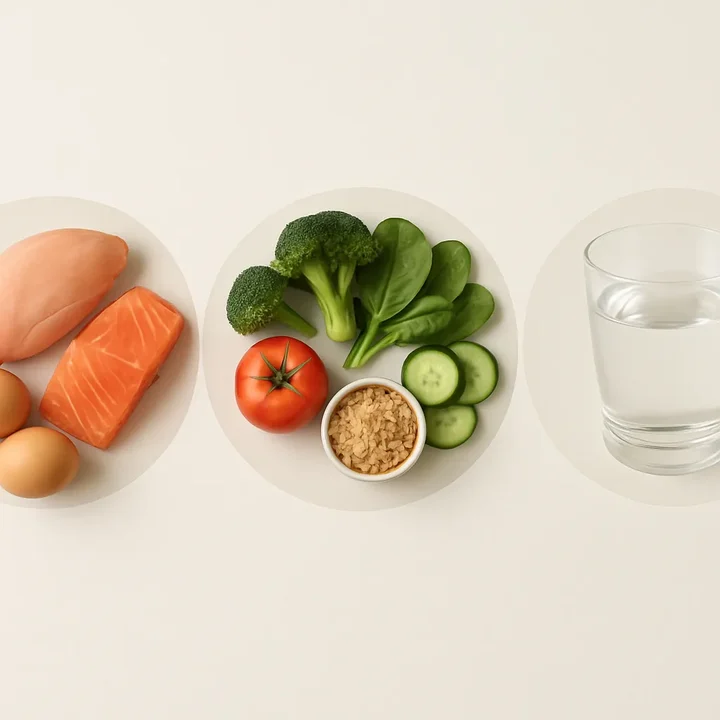 Key food groups to focus on when taking Ozempic
Portion Size on Ozempic: How Much Food Per Meal
The medication shrinks how much you can comfortably hold, not how much nutrition you need. Use your hand as the measure so you are not weighing food at every meal.
| Plate item | Portion per meal | Hand measure |
|---|---|---|
| Protein | 3 to 4 oz cooked | One palm |
| Vegetables | About 1 cup | One fist |
| Whole grains or starch | 1/2 cup cooked | One cupped handful |
| Fats (olive oil, nuts, avocado) | 1 tsp oil or 1/4 cup nuts | One thumb |
| Total volume | 1 to 1.5 cups | Both hands cupped |
Four to five meals of that size land near the daily targets in the next section. The sample day further down this post totals 104 grams of protein on exactly these portions.
Three rules make the portions stick:
- Protein goes on the plate first. If you fill up after half a meal, the half you ate should be the chicken, fish, eggs, or yogurt, not the rice.
- Give each meal 20 minutes. The fullness signal arrives faster on Ozempic and it arrives late in the meal. Eating quickly means you pass it before you notice it.
- Stop at about 80% full. The last few bites are what turn into nausea an hour later.
If portions are the part you struggle with, our guide to easy portion control covers plate sizing and visual cues in more detail.
Portion sizes are not calorie targets
Eating a smaller volume is not permission to undereat all day. If you are skipping meals because hunger never arrives, you are heading for muscle loss. Log what you eat for a week before you decide your portions are right.
Your Daily Nutrition Targets on Ozempic
| Nutrient | Daily Target | Why It Matters |
|---|---|---|
| Protein | 80-120 grams | Prevents muscle loss, keeps you full |
| Fiber | 25-30 grams | Prevents constipation, stabilizes blood sugar |
| Water | 8-10 glasses (64-80 oz) | Aids digestion, prevents dehydration |
| Calories | Based on your goal* | Usually 1200-1800 for weight loss |
| Meals per day | 4-5 small meals | Easier on slowed digestion |
*Work with your doctor or use NutriScan's diet planning feature to calculate your specific calorie needs. You can also use our online macro calculator to get personalized nutrition targets based on your goals (weight loss, diabetes management, etc.)
Three Ways the Ozempic Diet Goes Wrong
The three patterns below are worked examples built from the problems described in this post and the research cited above, not individual users. Each one is a common way the first two months go sideways, and what fixes it.
Eating Half the Protein You Need 💪
Someone whose appetite disappears in the first weeks can drift down to about 40 grams of protein a day without noticing, because nothing feels like hunger any more. The scale keeps moving, but arms and legs get weaker, which is muscle leaving along with the fat. The fix is a protein floor that does not depend on appetite: 80 grams a day minimum, built from chicken, eggs and Greek yogurt at fixed meal times rather than eaten when hunger shows up. The research cited above found that people who hit the protein guideline held onto lean mass far better than those who ate less.
Constipation in Week Two 🥦
Constipation hits 17 to 24% of people on Ozempic, and it usually arrives a week or two in, sometimes hard enough that people think about stopping the medication. The dietary fix is fiber plus water together: oats at breakfast, beans at lunch, vegetables at dinner, worked up to 25 to 30 grams a day in 5-gram steps every few days, alongside 8 to 10 glasses of water. Fiber added without the water makes it worse. Most people see it clear within about a week of doing both.
One Fried Dinner ⚠️
A big plate of fried chicken and fries in the first month is the classic hard lesson: hours of nausea and stomach pain, because Ozempic slows how fast food leaves the stomach and grease sits there longest. Swapping the same meal for grilled chicken with roasted vegetables removes the problem entirely. The food is not banned by the medication, it just costs more discomfort than it is worth while digestion is slowed.
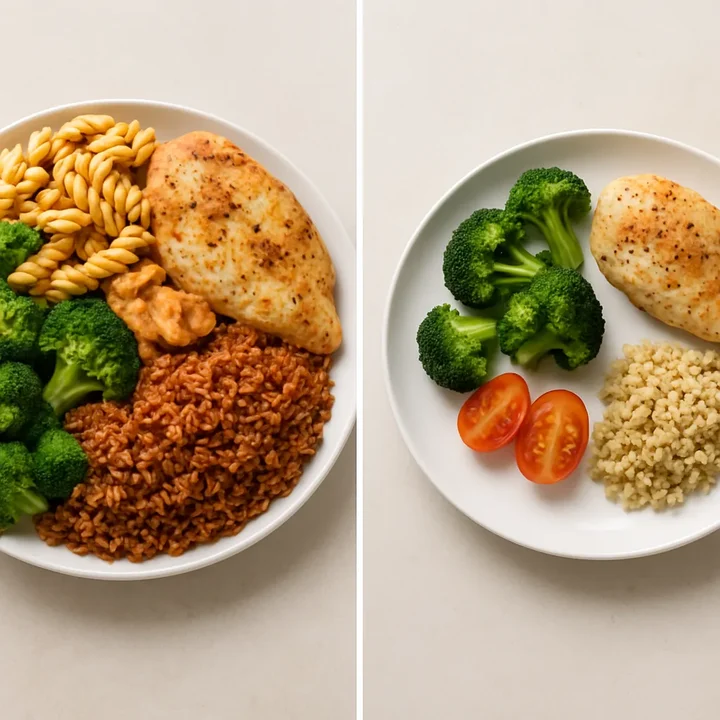 Portion control matters on Ozempic - smaller, balanced meals work best
How Ozempic Works as a GLP-1 Medication
Ozempic was not created for weight loss. It was made to help people with type 2 diabetes control their blood sugar, and doctors noticed patients were losing weight as well. The reason is that Ozempic mimics a hormone in your body called GLP-1.
Think of GLP-1 as your body's natural "I'm full" signal. When you eat, your body releases this hormone to tell your brain "okay, we've had enough food." Ozempic does the same thing but stronger and for longer. The medicine slows down how fast food leaves your stomach, so you feel full for much longer.
Not feeling hungry does not mean your body stopped needing nutrients. This is where many people go wrong. They eat too little or skip meals because hunger never arrives. Your body still needs protein to keep your muscles strong, fiber to help your digestion, and healthy fats for your brain and hormones. If you are weighing coach-led GLP-1 programs alongside the medication, we compared several of them in our roundup of GLP-1 support programs.
How Much Protein Do I Need on a GLP-1 Medication?
Between 80 and 120 grams of protein a day for most adults, or 16 to 24% of total daily calories. That range comes from a joint advisory published in May 2025 in The American Journal of Clinical Nutrition by four health organizations: the American College of Lifestyle Medicine, the American Society for Nutrition, the Obesity Medicine Association, and The Obesity Society. The advisory covered thousands of people taking Ozempic and similar medicines, found that GLP-1 medications produce weight reductions of 5-18% in clinical trials, and stressed that nutrition decides how much of that loss is fat.
To get your own number, take your weight in pounds, divide by 2.2, then multiply by 1.0 to 1.5. A 170-pound person lands at roughly 92 grams a day. The advisory reported that people who hit the protein guideline held onto their muscle mass much better than those who ate less. Our online macro calculator does the same math with your activity level factored in.
On four to five meals, 80 to 120 grams works out to roughly 20 to 25 grams per meal, which is about one palm of chicken, fish, tofu, or a cup of Greek yogurt. Spreading it out matters because your body can only use about 25 to 30 grams at a time for muscle building.
Your 7 Practical Tips for Success on Ozempic
Based on research and real experiences, here are my top tips for eating well on Ozempic:
Tip 1: Make Protein Your Best Friend 🍗
Aim for at least 80 grams of protein every day. Spread it across all your meals. Have eggs for breakfast (12 grams), chicken for lunch (25 grams), and fish or tofu for dinner (20-30 grams). Add protein snacks like Greek yogurt (15 grams) or nuts (6 grams per handful).
Why is this so important? A study presented at ENDO 2025 by researchers from Massachusetts General Hospital and Harvard Medical School found that approximately 40% of the weight lost from taking semaglutide comes from lean mass, including muscle. The study revealed that older adults and women are more likely to lose muscle on semaglutide, but eating more protein helps protect against this loss. Even more concerning, the research showed that losing too much muscle may reduce the benefits of semaglutide on blood sugar control.
Because when you lose weight quickly, your body might break down muscle for energy if you're not eating enough protein. Muscle is precious! It keeps you strong, boosts your metabolism, and helps you burn more calories even when you're resting.
Quick Reference: High-Protein Foods
| Food Item | Serving Size | Protein (grams) |
|---|---|---|
| Chicken breast (grilled) | 3 oz (85g) | 26g |
| Greek yogurt | 1 cup | 20g |
| Eggs | 2 large | 12g |
| Salmon | 3 oz (85g) | 22g |
| Tofu (firm) | 4 oz (113g) | 20g |
| Lentils (cooked) | 1 cup | 18g |
| Cottage cheese | 1 cup | 28g |
| Almonds | 1/4 cup | 8g |
| Protein powder | 1 scoop | 20-25g |
Tip 2: Load Up on Fiber 🥗
Try to get 25-30 grams of fiber daily. Eat oatmeal for breakfast, add beans to your lunch, snack on apples or pears, and fill half your dinner plate with vegetables like broccoli, spinach, or carrots. Fiber helps in two ways - it prevents constipation (a common Ozempic side effect) and keeps you feeling full longer. Plus, fiber slows down how fast sugar enters your bloodstream, which helps keep your blood sugar stable.
Tip 3: Drink Water Like It's Your Job 💧
Aim for at least 8-10 glasses of water every day. Keep a water bottle with you always. When you're on Ozempic, your digestion is slower, so water becomes even more important. It helps move food through your system and prevents constipation. Plus, sometimes we think we're hungry when we're actually just thirsty. Drinking water before meals can also help you feel satisfied with smaller portions.
Tip 4: Avoid the Greasy Stuff 🚫
Stay away from fried foods, pizza, burgers, and anything swimming in oil. These foods will sit in your stomach like a rock because Ozempic slows digestion. You'll feel nauseous, bloated, and miserable. Instead, choose baked, grilled, steamed, or air-fried foods. Your stomach will thank you!
Tip 5: Eat Small Meals More Often 🍽️
Instead of three big meals, try eating 4-5 smaller meals throughout the day. On Ozempic, big meals can make you feel uncomfortably full or sick. Smaller portions are easier for your slowed-down digestive system to handle. Think of it like this - your stomach is moving in slow motion, so give it manageable amounts of food to process.
Tip 6: Skip the Sugar and Processed Foods 🍬
Avoid sugary drinks, candies, white bread, and packaged snacks. These foods spike your blood sugar quickly, which goes against what Ozempic is trying to do. Plus, they don't make you feel full, so you're wasting precious appetite space on foods that don't help you. Stick to whole foods - things that come from nature, not from a factory.
Tip 7: Listen to Your Body 👂
This one is huge! Eat slowly and stop when you feel satisfied, not stuffed. On Ozempic, that "I'm full" signal comes faster than before. If you ignore it and keep eating, you'll feel sick. Some people set a timer for 20 minutes per meal to force themselves to slow down. It works! Chew your food well and put your fork down between bites.
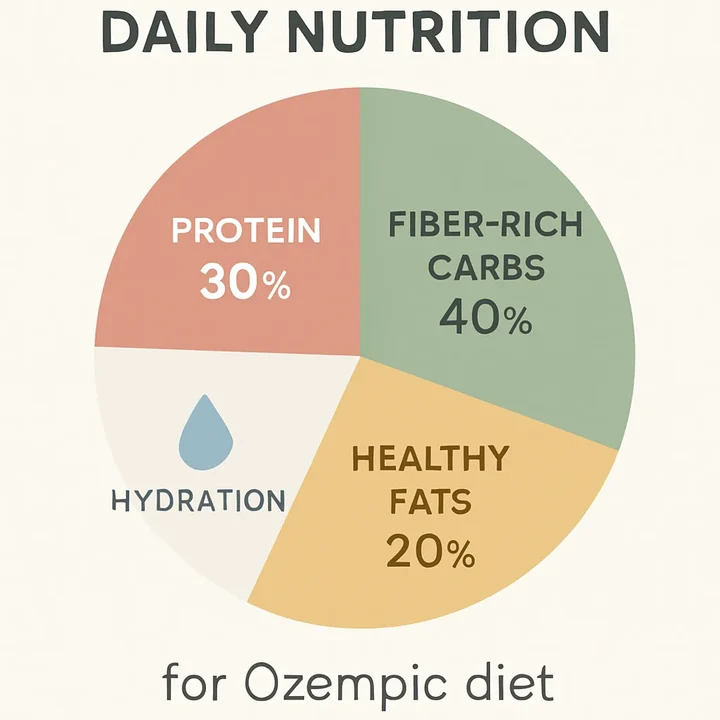 Daily nutrition balance - how to distribute your meals throughout the day
Ozempic Diet: What to Eat vs What to Avoid
| ✅ FOODS TO EAT | ❌ FOODS TO AVOID |
|---|---|
| Lean chicken, turkey, fish | Fried chicken, fried fish |
| Grilled, baked, steamed foods | Deep-fried foods |
| Greek yogurt, cottage cheese | Ice cream, heavy cream |
| Oats, quinoa, brown rice | White bread, pastries |
| Fresh vegetables (all types) | French fries, onion rings |
| Fresh fruits (apples, berries) | Sugary sodas, fruit juice |
| Beans, lentils, chickpeas | Candy, cookies, cakes |
| Nuts (small portions) | Potato chips, crackers |
| Water, herbal tea | Alcohol (especially early on) |
| Olive oil (small amounts) | Butter, margarine (large amounts) |
Step-by-Step Guide to Starting Your Ozempic Diet Plan
Let me walk you through exactly how to set up your diet for success with Ozempic:
Step 1: Calculate Your Protein Needs (Day 1) 📊
Take your weight in pounds and divide by 2.2 to get kilograms. Then multiply by 1.0 to 1.5 to find your protein target. For example, if you weigh 170 pounds: 170 ÷ 2.2 = 77 kg, then 77 × 1.2 = 92 grams of protein per day. Write this number down! This is your daily protein goal.
Pro Tip: Use our online macro calculator for accurate personalized calculations based on your weight, activity level, and goals.
According to the comprehensive joint advisory in The American Journal of Clinical Nutrition, protein intake should be 16-24% of total calories or 80-120 grams per day for most people on GLP-1 medications. This recommendation is based on extensive research showing that adequate protein helps prevent muscle loss during rapid weight loss.
Step 2: Plan Your Protein Sources (Day 2-3) 🥚
Make a list of proteins you like and can access easily. Options include: chicken breast, turkey, fish (salmon, tuna, cod), eggs, Greek yogurt, cottage cheese, tofu, tempeh, legumes (chickpeas, black beans, lentils), and lean beef. Buy these items and keep them ready. Meal prep helps! Cook chicken on Sunday and use it throughout the week.
Step 3: Add Fiber-Rich Foods (Day 4-5) 🌾
Stock your kitchen with oats, whole grain bread, brown rice, quinoa, beans, lentils, broccoli, spinach, carrots, bell peppers, apples, berries, and pears. Start your day with oatmeal topped with berries. Add a big salad to lunch. Include two types of vegetables with dinner.
Step 4: Create a Daily Eating Schedule (Day 6-7) ⏰
Plan your meal times and stick to them. Maybe 8am breakfast, 11am snack, 1pm lunch, 4pm snack, and 7pm dinner. Having a schedule helps your body know when to expect food. It also prevents you from going too long without eating, which can make you feel weak or dizzy on Ozempic.
Step 5: Track Everything for the First Week (Week 2) 📱
Use an app to track what you eat for at least one week. NutriScan's meal scanning feature lets you take photos of your meals and see exactly how much protein, carbs, and fat you're getting. The app scans your food and gives you a complete nutrition breakdown instantly - calories, protein, fiber, everything! You might be surprised what you discover. Many people think they're eating enough protein but they're actually only getting half of what they need.
Learn More: Check out our guide on using meal scanning for better nutrition tracking and how insights can help you identify eating patterns.
Step 6: Make Adjustments Based on How You Feel (Week 3-4) 🔄
Pay attention to your energy levels, digestion, and how full you feel. If you're constipated, add more fiber and water. If you're losing weight too fast (more than 2-3 pounds per week), eat a bit more. If you feel weak or tired, check your protein intake. Your body will tell you what it needs if you listen.
Step 7: Build Long-Term Habits (Month 2 and Beyond) 🎯
Now that you know what works for you, turn these choices into habits. Shop for the same healthy foods every week. Prep meals in advance. Keep healthy snacks ready. The goal is not just to lose weight while on Ozempic - it's to build eating habits that will help you keep the weight off forever.
Sample Daily Meal Plan on Ozempic
| Meal Time | Food | Protein | Notes |
|---|---|---|---|
| 8:00 AM Breakfast | 2 scrambled eggs + 1 cup oatmeal with berries | 17g | High protein start |
| 11:00 AM Snack | Greek yogurt (1 cup) + 10 almonds | 23g | Keeps energy stable |
| 1:00 PM Lunch | Grilled chicken salad (3 oz chicken, mixed greens, olive oil) | 26g | Light but filling |
| 4:00 PM Snack | Apple slices with 2 tbsp peanut butter | 8g | Fiber + protein |
| 7:00 PM Dinner | Baked salmon (4 oz) + steamed broccoli + quinoa (1/2 cup) | 30g | Anti-inflammatory |
| DAILY TOTAL | - | 104g | Perfect range! |
Quick Prep Tips:
- Cook chicken and salmon in bulk on Sunday
- Pre-cut vegetables and store in containers
- Keep hard-boiled eggs ready in fridge
- Portion out nuts and yogurt for easy grab-and-go
What Research Tells Us About Ozempic and Diet
Recent studies from 2025 have given us new information about the best way to eat while taking Ozempic and similar medicines.
The Protein and Muscle Connection
A study published in Nature Medicine in January 2025 examined proteomic changes (how proteins in your blood change) in people taking semaglutide for obesity. The research analyzed samples from two large phase 3 trials - STEP 1 (1,311 participants) and STEP 2 (645 participants). The study found that semaglutide affects multiple body processes including body weight regulation, blood sugar control, fat metabolism, and inflammation. Importantly, the research showed that some proteins changed even after accounting for weight loss and blood sugar improvements, suggesting semaglutide has effects beyond just making you eat less.
Even more eye-opening was research from Harvard Medical School and Massachusetts General Hospital presented at ENDO 2025. Dr. Melanie Haines and her team studied 40 adults with obesity for three months. They found that in the semaglutide group, being older, female, or eating less protein was linked to greater muscle loss. The study also discovered that losing more muscle was associated with smaller improvements in blood sugar control (HbA1c levels).
"Older adults and women may be more likely to lose muscle on semaglutide, but eating more protein may help protect against this," Dr. Haines explained. "Losing too much muscle may reduce the benefits of semaglutide on blood sugar control. This means preserving muscle during weight loss with semaglutide may be important to reduce insulin resistance and prevent frailty in people with obesity."
Understanding Muscle vs Fat Loss
A fascinating study from the University of Utah published in August 2025 looked at mice taking Ozempic to understand what happens to muscles. The researchers found that Ozempic-induced weight loss decreased lean mass by about 10%, but most of this lost weight wasn't from skeletal muscles. Instead, it came from other tissues like the liver, which shrunk by nearly half. While this is expected as part of healthy weight loss, the study raised important questions about whether muscles might get weaker even when their size stays the same.
Side Effects and Diet Management
People on Ozempic often experience gastrointestinal side effects: nausea (25-44% of people), diarrhea (19-30%), vomiting (8-24%), constipation (17-24%), and stomach pain (9-20%). These side effects are much less severe in people who avoid high-fat and greasy foods and eat plenty of fiber.
Managing Common Ozempic Side Effects Through Diet
| Side Effect | Dietary Solution | What to Eat | What to Avoid |
|---|---|---|---|
| Nausea | Eat bland, small meals | Crackers, toast, rice, ginger tea | Fried foods, spicy foods, heavy meals |
| Constipation | Increase fiber + water | Oats, beans, prunes, vegetables | Processed foods, low-fiber snacks |
| Diarrhea | Easy-to-digest foods | Bananas, rice, applesauce, toast | Dairy, high-fat foods, caffeine |
| Bloating | Reduce portion sizes | Smaller frequent meals | Carbonated drinks, beans (initially) |
| Heartburn | Avoid triggers | Lean proteins, non-acidic foods | Tomatoes, citrus, chocolate, coffee |
| Loss of appetite | Nutrient-dense foods | Protein shakes, nut butters, eggs | Empty calorie foods |
Action Items for Each Side Effect:
If You Have Nausea:
- ✓ Eat within 30 minutes of taking medication
- ✓ Choose cold or room temperature foods
- ✓ Sip ginger tea or peppermint tea
- ✓ Avoid strong food smells
- ✓ Try eating crackers first thing in morning
If You Have Constipation:
- ✓ Drink 10 glasses of water daily
- ✓ Add 5g fiber every 3 days (gradual!)
- ✓ Walk for 20 minutes after meals
- ✓ Eat prunes or prune juice
- ✓ Don't ignore the urge to go
If You Have Diarrhea:
- ✓ Stay hydrated with water and electrolytes
- ✓ Follow BRAT diet temporarily (Bananas, Rice, Applesauce, Toast)
- ✓ Avoid dairy for a few days
- ✓ Skip caffeine and alcohol
- ✓ Eat smaller, more frequent meals
According to the American Journal of Clinical Nutrition advisory, gastrointestinal side effects are more likely to occur within the first weeks of starting therapy and with dose increases, but they typically decrease in frequency and severity with continued use at a stable dose. The advisory emphasizes that nutritional management of these side effects is critical for patient adherence and success.
Cardiovascular Benefits
Beyond weight loss, research shows additional health benefits. The SELECT trial published in The Lancet studied semaglutide in patients with overweight or obesity and cardiovascular disease but without diabetes. The study found that semaglutide reduced major adverse cardiovascular events (heart attacks, strokes, and cardiovascular death) in these patients. This means the medication offers benefits beyond just weight loss.
Food Preference Changes
There's also new research about food preferences. Scientists discovered that Ozempic actually changes how your brain responds to food. Fatty and sugary foods become less appealing to many people. This is your body working with the medicine! Use this to your advantage.
Your Week 1 Quick Start Checklist
Before You Start:
- [ ] Calculate your protein target (weight in lbs ÷ 2.2 × 1.2)
- [ ] Download a meal tracking app (like NutriScan)
- [ ] Schedule your meal times (write them down!)
- [ ] Clear out trigger foods from your kitchen
- [ ] Buy a water bottle you'll actually use
Day 1-3: Kitchen Prep
- [ ] Stock up on lean proteins (chicken, fish, eggs, Greek yogurt)
- [ ] Buy fiber-rich foods (oats, beans, berries, vegetables)
- [ ] Get healthy snacks (almonds, apples, carrots)
- [ ] Meal prep: Cook 3-4 chicken breasts
- [ ] Hard boil a dozen eggs
Day 4-7: Track and Adjust
- [ ] Take photos of every meal (use NutriScan!)
- [ ] Check your protein intake daily
- [ ] Drink water before each meal
- [ ] Notice which foods make you feel good vs bad
- [ ] Adjust portions based on how you feel
Your Ozempic Grocery List
One shop covers a week. Pick from each block, buy the protein first, and keep the fiber sources where you can see them.
Proteins (Pick 5-6):
- Chicken breast
- Turkey
- Salmon or white fish
- Eggs (2 dozen)
- Greek yogurt (plain, non-fat)
- Cottage cheese
- Tofu or tempeh
- Canned tuna
- Protein powder (optional)
Vegetables (Pick 6-8):
- Broccoli
- Spinach
- Bell peppers
- Carrots
- Tomatoes
- Cucumbers
- Zucchini
- Cauliflower
Fruits (Pick 4-5):
- Apples
- Berries (strawberries, blueberries)
- Bananas
- Oranges
- Pears
Grains & Legumes (Pick 3-4):
- Oats (steel-cut or rolled)
- Quinoa
- Brown rice
- Whole grain bread
- Black beans
- Lentils
Healthy Fats (Pick 2-3):
- Olive oil
- Avocados
- Almonds or walnuts
- Natural peanut butter
Pantry Staples:
- Herbs and spices
- Low-sodium broth
- Balsamic vinegar
- Herbal tea
- Ginger (for nausea)
For the snack shelf, our high-protein snacks guide has options that fit a small appetite, and the monthly grocery list generator will build a full shopping list around these categories.
What Keeps the Ozempic Diet Going After Week 12
Your doctor probably covered protein, water, and avoiding greasy foods. What usually goes unmentioned is what happens once the novelty wears off, around week 12, when the appetite suppression stops feeling new and the meal prep starts feeling like a chore.
The people who hold their results past that point stop treating the plan as a set of Ozempic rules and start treating it as how they eat now. Protein stops being a target you hit and becomes "someone who protects their muscle." Fiber stops being a constipation fix and becomes how breakfast is built. Fried food stays off the order long after the first bad reaction has faded from memory.
That framing is what carries people through the stressed evenings, the tired days, and the restaurant with three edible options on the menu. Habit researchers call it identity-based change, and it is the difference between a plan you follow and a plan you keep.
Your action right now: swap "I need to eat more protein on Ozempic" for "I'm the type of person who takes care of their muscles." Swap "I should avoid fried food" for "I'm someone who respects how my body works." Small wording shifts change what you reach for when nobody is watching.
The meal plans, the grocery list, and the protein targets are the tools. The habit is what makes them last.
What to Track Every Week on Ozempic
The plan is only as good as the feedback loop. Six numbers, once a week, tell you whether your portions and your protein are actually where you think they are.
The targets, backed by the joint advisory from four major health organizations: at least 80 grams of protein daily to protect your muscles, enough fiber to keep digestion moving, plenty of water, no greasy or fried foods, smaller meals more often, and portions you stop before finishing when you feel satisfied.
Use our online macro calculator to set your protein number, stock your kitchen from the grocery list above, fix your meal times, and track your food for a week using NutriScan. Give it a month before you judge it.
All three problems above get solved by changing what is on the plate, not by changing the dose. The people who get the best results on Ozempic meal prep, plan ahead, and do not skip meals just because hunger never showed up.
Track Your Success: What to Monitor Weekly
| Metric | Week 1 | Week 2 | Week 3 | Week 4 | Goal |
|---|---|---|---|---|---|
| Weight | ___ lbs | ___ lbs | ___ lbs | ___ lbs | 1-2 lbs/week |
| Daily Protein | ___ g | ___ g | ___ g | ___ g | 80-120g |
| Water Intake | ___ glasses | ___ glasses | ___ glasses | ___ glasses | 8-10 glasses |
| Energy Level (1-10) | ___ | ___ | ___ | ___ | 7+ |
| Digestion (1-10) | ___ | ___ | ___ | ___ | 7+ |
| Meals Logged | ___ | ___ | ___ | ___ | 21+ meals |
Red Flags to Watch For:
- ⚠️ Losing more than 3 pounds per week (too fast!)
- ⚠️ Eating less than 60g protein daily (muscle loss risk)
- ⚠️ Constipation lasting more than 3 days
- ⚠️ Severe nausea preventing you from eating
- ⚠️ Energy level consistently below 5/10
If you see any red flags, talk to your doctor immediately!
Using tools like NutriScan's meal scanning makes this journey so much easier. Just take a photo of your meal and instantly see your complete nutrition breakdown. The app helps with goal-based diet planning too - whether you're managing diabetes, trying to lose weight, or dealing with PCOS. When you can track your meals with a simple photo, making healthy choices becomes simple and natural.
Pro Tip: If you have PCOS in addition to taking Ozempic, check out our PCOS macro calculator for specialized nutrition guidance. If you're managing diabetes alongside Ozempic, use our diabetes macro calculator for blood sugar-friendly macronutrient targets.
Your body is working hard to change. Give it the fuel it needs to change in a healthy way. Not just to lose weight, but to build a stronger, healthier version of yourself. That's the real goal here.
 Stay motivated on your Ozempic journey - healthy eating becomes easier with time!
Five Common Questions About the Ozempic Diet
Question 1: How much protein do I need on a GLP-1 like Ozempic?
According to the May 2025 joint advisory published in The American Journal of Clinical Nutrition, protein intake should account for 16-24% of total daily calories while on Ozempic, which translates to about 80-120 grams per day for most adults. This recommendation comes from extensive research by the American College of Lifestyle Medicine, the American Society for Nutrition, the Obesity Medicine Association, and The Obesity Society.
For a 150-pound person, that's about 68-102 grams daily. Spread your protein throughout the day - your body can only process about 25-30 grams at once for muscle building. Good sources include lean meats, fish, eggs, Greek yogurt, cottage cheese, tofu, and legumes. If you struggle to eat enough protein from food, you can add a protein shake, but whole foods are better because they provide other nutrients too.
Research from Harvard Medical School and Massachusetts General Hospital showed that eating less protein while on semaglutide was linked to greater muscle loss, especially in women and older adults. The study emphasized that preserving muscle is important for maintaining blood sugar control and preventing frailty.
Question 2: Can I drink alcohol while taking Ozempic?
You can technically drink alcohol on Ozempic, but most doctors recommend avoiding it, especially in the first few weeks. Here's why - alcohol irritates your stomach lining, and Ozempic already slows down your digestion. When you combine the two, alcohol sits in your stomach longer, increasing nausea and stomach upset. Plus, alcohol with diabetes medications raises your risk of low blood sugar, which can be dangerous.
If you do choose to drink, limit yourself to one drink per day for women or two for men. Never drink on an empty stomach. Eat a meal with protein and healthy fats first. Avoid sugary cocktails - stick to wine or spirits with soda water. And honestly, many people find that alcohol just doesn't appeal to them anymore on Ozempic. Your body is trying to tell you something! Listen to it.
The calories in alcohol are also "empty" - they provide no nutrition. When you're eating less overall on Ozempic, every calorie should count toward nourishing your body. Spending 150-300 calories on a drink or two means less room for protein and vegetables that your body actually needs.
Question 3: Why do I get constipated on Ozempic and how can I fix it?
Constipation is one of the most common side effects of Ozempic, affecting 17-24% of people according to clinical trials. It happens because the medicine slows down your entire digestive system. Food moves through your intestines more slowly, which means more water gets absorbed from your stool, making it harder and more difficult to pass.
The fix involves several things working together. First, increase your fiber intake to 25-30 grams per day. Add foods like oats, beans, lentils, broccoli, apples with the skin on, and berries. But add fiber gradually! If you go from 10 grams to 30 grams overnight, you'll feel bloated and gassy. Increase by 5 grams every few days.
Second, drink at least 8-10 glasses of water daily. Fiber needs water to work properly. Without enough water, more fiber can actually make constipation worse! Third, move your body. Even a 20-minute walk helps stimulate your intestines. Fourth, don't ignore the urge to go. When your body signals it's time, go to the bathroom right away.
If these natural methods don't work after a week, talk to your doctor about taking a fiber supplement or gentle laxative. Some people need extra help, and that's okay. But start with food and water first.
Question 4: Should I follow a specific diet like keto or Mediterranean while on Ozempic?
According to the comprehensive nutritional advisory from four major health organizations, there's no single "perfect" diet for everyone on Ozempic. What matters most is eating enough protein, plenty of fiber, and avoiding foods that trigger side effects.
The Mediterranean diet is a great choice - it's high in vegetables, fruits, whole grains, fish, olive oil, and moderate in protein. These foods align perfectly with what your body needs on Ozempic. Plus, research shows the Mediterranean diet is one of the healthiest for heart health and longevity.
Some people do well on a keto or low-carb diet with Ozempic, especially if they're managing type 2 diabetes. The combination of low-carb eating and Ozempic can lead to excellent blood sugar control. However, keto makes it harder to get enough fiber unless you're very careful about eating low-carb vegetables.
The key is finding a way of eating that you can stick with long-term. Extreme diets usually fail because they're too restrictive. Focus on whole foods, adequate protein, lots of vegetables, and moderate amounts of healthy fats and whole grains. That's a pattern you can maintain forever.
Question 5: How long will the side effects last and will my diet help?
Most people experience the worst side effects - nausea, vomiting, stomach pain - during the first 4-8 weeks of taking Ozempic, especially when starting or increasing the dose. According to the American Journal of Clinical Nutrition advisory, these side effects tend to decrease in frequency and severity with continuation at a stable dose.
Your diet makes a huge difference in managing these side effects! People who eat small, frequent meals with lean protein and vegetables report much milder symptoms than those who eat large, fatty meals. Avoiding trigger foods - fried items, very spicy food, high-fat meals, sugary drinks - can reduce nausea significantly according to patient reports and clinical experience.
Timing also matters. Some people find that taking Ozempic before bed rather than in the morning reduces daytime nausea. Others do better taking it after a light meal. Eating slowly and stopping when you're 80% full prevents that overly stuffed, sick feeling.
If side effects continue beyond 8 weeks or become severe, talk to your doctor. They might need to adjust your dose or try a different approach. Some people need to stay on a lower dose longer before increasing. Everyone's body is different, and there's no shame in needing adjustments. The goal is finding a dose and eating pattern that works for your body.
The most important thing to remember? Using a tool like NutriScan can help you track your meals and see patterns in how different foods affect you. You might notice that meals with chicken and vegetables make you feel great, while beef and rice make you feel bloated. These insights help you make better choices and feel better faster.
 Celebrate your wins along the Ozempic weight loss journey!
Start This Week
Four things to do in the next seven days:
- Calculate your protein target and write it somewhere you will see it daily.
- Do one shop from the grocery list above and prep three or four chicken breasts.
- Set your meal times, 4 to 5 of them, and use the hand portions at each.
- Log every meal for a week, by photo, voice, or typed entry, so you can see your real protein number instead of guessing at it.
That is the whole plan. Portion size keeps the nausea away, protein keeps the muscle, fiber keeps digestion moving, and a week of honest tracking tells you which of the three you are actually missing. NutriScan's weight loss tracking covers the last part, and the protein tracking apps we compared cover the rest of the field if you want to shop around first.
Frequently Asked Questions ❓
Q: What portion size should I eat on Ozempic?
A: About 1 to 1.5 cups of food per meal: one palm of protein (3 to 4 oz cooked), one fist of vegetables, and one cupped handful of whole grains, eaten 4 to 5 times a day. Put the protein on the plate first, give the meal 20 minutes, and stop at roughly 80% full.
Q: How much protein do I need on a GLP-1 like Ozempic?
A: 80-120 grams of protein daily, or 16 to 24% of your total calories, per the 2025 joint advisory in The American Journal of Clinical Nutrition. This prevents muscle loss during weight loss and keeps you fuller longer. Calculate your own number by dividing your weight (in lbs) by 2.2, then multiplying by 1.2.
Q: What should be on my Ozempic grocery list?
A: Five or six lean proteins (chicken, fish, eggs, Greek yogurt, cottage cheese, tofu), six to eight vegetables, four or five fruits, three or four high-fiber grains or legumes, and two or three healthy fats. Add ginger for nausea and prunes for constipation. The full list is in the grocery section above.
Q: Can I drink alcohol while taking Ozempic?
A: It's best to avoid alcohol, especially in the first few weeks. Alcohol can increase stomach irritation and nausea when combined with Ozempic. If you do drink, limit to one drink per day for women or two for men, and never drink on an empty stomach.
Q: Why am I so constipated on Ozempic?
A: Ozempic slows your digestion, which can cause constipation. The fix: gradually increase fiber to 25-30 grams daily, drink 8-10 glasses of water, walk regularly, and don't ignore the urge to go to the bathroom. If problems persist beyond a week, talk to your doctor.
Q: How do I know if I'm eating enough protein?
A: Track your meals for a week using an app like NutriScan. Most people underestimate their protein intake and are surprised to discover they're only getting 40-60g when they need 80-120g. Adjust by adding more lean meats, fish, eggs, yogurt, and legumes.
Q: What about meal timing on Ozempic?
A: Eat smaller meals 4-5 times per day rather than three large meals. Having a regular eating schedule (like 8am, 11am, 1pm, 4pm, 7pm) helps your body know when to expect food and prevents going too long without eating, which can cause dizziness or weakness.
Q: Should I avoid all carbs on Ozempic?
A: No, you don't need to avoid all carbs. Focus on high-fiber, complex carbs like oats, brown rice, quinoa, beans, and whole grain bread. These carbs are digested slowly and keep your blood sugar stable. Avoid refined carbs like white bread, pastries, and sugary foods.
Q: How can I manage nausea on Ozempic through diet?
A: Eat small, bland meals (crackers, toast, rice), sip ginger tea or peppermint tea, choose cold or room temperature foods, avoid strong food smells, and eat within 30 minutes of taking your medication. Most nausea decreases after the first 4-8 weeks.
Q: Is it normal to feel weak or tired on Ozempic?
A: Some fatigue is normal as your body adjusts, but constant weakness might mean you're not eating enough protein or calories. Make sure you're getting 80-120g protein daily and eating regular meals. If fatigue persists beyond 2-3 weeks, talk to your doctor.
Q: Can NutriScan help me with Ozempic diet planning?
A: Yes! NutriScan lets you take photos of meals and instantly see your nutrition breakdown (protein, carbs, fats, fiber, calories). This helps you track whether you're hitting your daily protein target and managing your nutrition properly on Ozempic.
Q: How often should I weigh myself while on Ozempic?
A: Weigh yourself once per week, at the same time of day (preferably morning). Remember that weight loss isn't always linear - you might see bigger drops some weeks and smaller ones others. Focus on the trend over 4 weeks rather than daily fluctuations.
Start with your protein number and one week of logged meals. Everything else on this page is easier to fix once you can see what you are actually eating.