Watermelon Juice: Kalorien, Nährwerte und gesundheitliche Vorteile
Nature's ultimate hydration beverage, packed mit lycopene, electrolytes, and refreshing sweetness for optimal recovery and wellness.
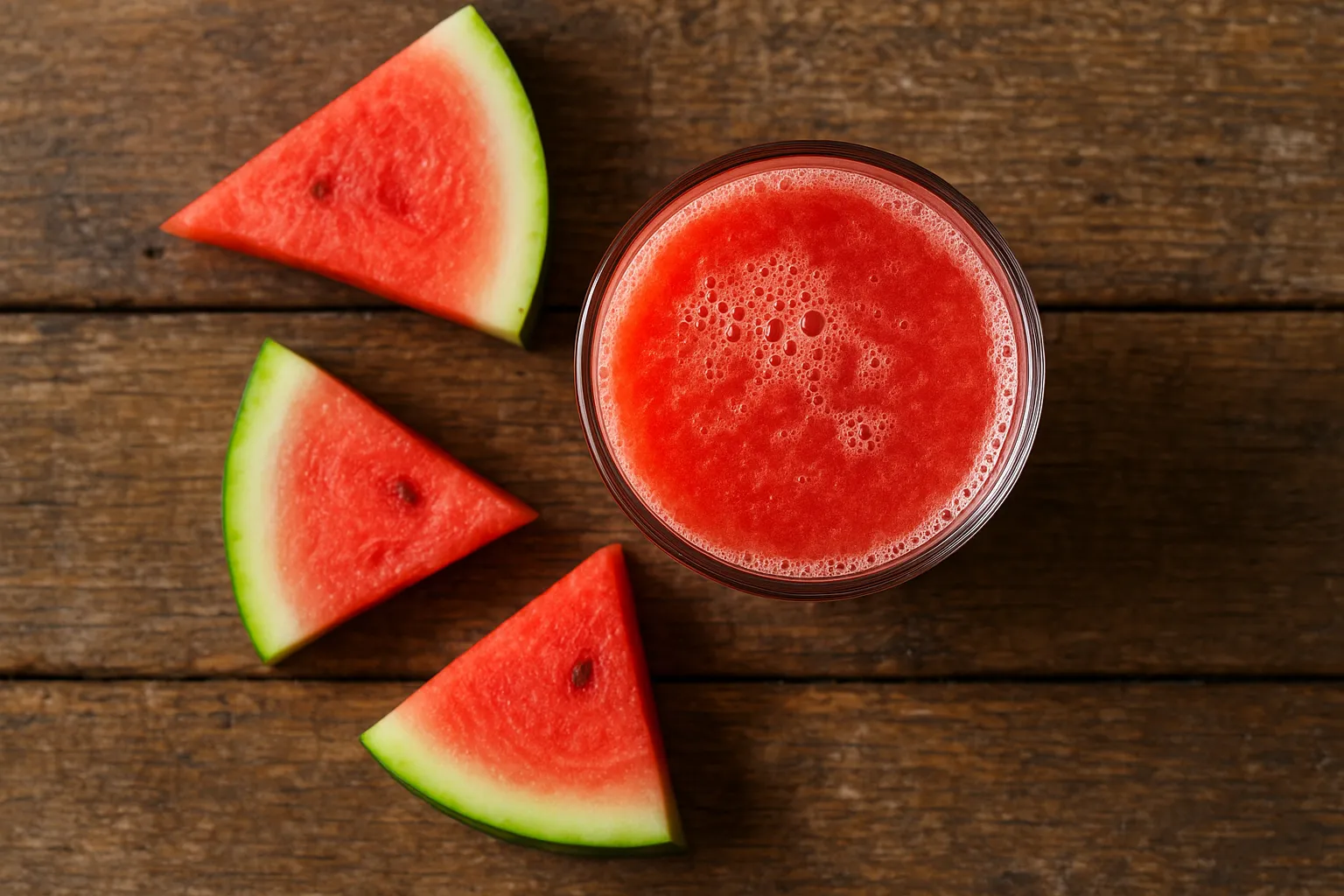
Schnelle Nährwerte
Per 100ml Frisch Watermelon Juice
| Nährstoff | Menge |
|---|---|
| Kalorien | 46 kcal |
| Protein | 0.6g |
| Kohlenhydrate | 11g |
| Ballaststoffe | 0.4g |
| Zucker | 9.5g |
| Fett | 0.2g |
| Vitamin C | 8.1mg |
| Vitamin A | 569 IU |
| Kalium | 112mg |
| Lycopene | 4.5mg |
Makronährstoff-Aufschlüsselung
 ChatGPT
  Claude
  AI Mode
  Perplexity
ERNÄHRUNGSBERATER-EINBLICK
Watermelon juice ist 92% water mit natural electrolytes, making it an excellent post-workout hydrator. Der citrulline content aids muscle recovery and kann improve exercise performance.
Mythen Entlarvt
MYTHOS #1: Watermelon Juice Causes Gewicht Gain
WAHRHEIT: At nur 46 Kalorien per 100ml, watermelon juice unterstützt hydration ohne excess Kalorien. Der citrulline content kann actually enhance Fett Stoffwechsel. Gewicht gain occurs from added sugars or excessive Portionen, not pure watermelon juice.
MYTHOS #2: Diabetics Sollte Nie Drink Watermelon Juice
WAHRHEIT: Während watermelon has a höher GI (72-80), der niedrig glycemic load due to water content makes mäßig consumption acceptable. Diabetics kann consume 100ml diluted mit water, paired mit Protein, and monitor Blutzucker response.
MYTHOS #3: Watermelon Juice ist Just Zucker Water
WAHRHEIT: Beyond natural sugars, watermelon juice liefert powerful Antioxidantien (lycopene, beta-carotene), amino acids (citrulline), Vitamine A and C, and electrolytes. Diese Nährstoffe support Herzgesundheit, immunity, and muscle recovery.
MYTHOS #4: Geschäft-Bought ist Gleich as Frisch
WAHRHEIT: Commercial watermelon juice oft enthält added sugars (60+ Kalorien per 100ml), preservatives, and reduced Nährstoffe. Frisch juice retains maximum lycopene, citrulline, and Vitamine. Immer wählen frisch or check labels for 100% pure juice.
MYTHOS #5: Drinking at Night Hilft Sleep
WAHRHEIT: Watermelon juice has mild diuretic properties due to hoch water content. Drinking at night kann cause frequent urination and disturb sleep. Beste consumed in morning or afternoon for hydration benefits.
MYTHOS #6: Mehr ist Immer Besser
WAHRHEIT: Excessive watermelon juice (over 500ml täglich) kann cause digestive discomfort, loose stools, and Blutzucker fluctuations. Moderation ist key—200-250ml täglich liefert optimal benefits ohne drawbacks.
NutriScore nach Gesundheitszielen
| Gesundheitsziel | NutriScore | Warum diese Bewertung? |
|---|---|---|
| Gewichtsverlust |  | Niedrig calorie (46 kcal per 100ml), hoch water content fördert fullness. Grenze to 200ml täglich to vermeiden excess sugars. |
| Muskelaufbau |  | Citrulline reduziert muscle soreness, natural sugars replenish glycogen, electrolytes prevent cramps. Ideal post-workout hydrator. |
| Diabetes-Management |  | Höher GI (72-80) requires caution. Grenze to 100ml, dilute mit water, pair mit Protein, monitor Blutzucker. |
| PCOS-Management | | Natural sugars kann affect insulin sensitivity. Grenze to 100ml täglich, consume mit meals, wählen whole watermelon for mehr Ballaststoffe. |
| Schwangerschaftsernährung | | Lycopene unterstützt fetal development, hydration verhindert constipation, vitamin C boosts immunity. |
| Viral/Flu Recovery | | Excellent hydration, vitamin C unterstützt immunity, easy to digest, natural electrolytes restore balance. |
PERSONALISIERTE ERNÄHRUNG
Verfolgen Sie Ihre Mahlzeiten mit NutriScan for personalized NutriScores based on your specific health goals!
Blutzucker-Reaktion to Watermelon Juice
Understanding wie watermelon juice affects Blutglukose hilft you optimize timing and pairing strategies.
Typische Glukose-Reaktionskurve
*Diese Grafik zeigt typical Blutglukose response for gesund individuals. Individual responses vary. Keine medizinische Beratung.*
So Flachen Sie den Anstieg Ab
Pairing juice mit Protein or Ballaststoffe slows glucose absorption and reduziert Blutzucker peaks:
- 🥜 Handful of mandeln or walnuts - Gesund fats slow absorption
- 🥣 Chia seeds or flax seeds - Add Ballaststoffe and omega-3s
- 🥛 Protein shake or Greek yogurt - Protein moderates insulin response
- 🥑 Avocado toast - Gesund fats and complex Kohlenhydrate balance sugars
Dies combination liefert sustained energy and besser glycemic kontrolle, besonders wichtig for Diabetes and PCOS management.
Kulturelle Bedeutung
Watermelon originated in Africa over 5,000 years ago, depicted in ancient Egyptian hieroglyphics and tomb paintings.
In India:
- Wesentlich summer cooler across alle regions, besonders North India
- Street vendors serve frisch watermelon juice mit black salt (kala namak) and lemon
- Used in Ayurveda for cooling properties (pitta-pacifying)
- Popular at summer festivals, weddings, and family gatherings
- Regional varieties: Zucker Baby, Charleston Gray cultivated across Maharashtra, Gujarat
Global Impact:
- 100 million tons produced annually worldwide
- China produces 60% of global watermelon supply
- Celebrated mit festivals in der U.S., Japan (suika wari game), and Turkey
- Recognized by WHO as wichtig hydration source in water-scarce regions
Vergleichen und Ersetzen
Watermelon Juice vs Similar Hydrating Drinks (Per 100ml)
| Nährstoff | 🍉 Watermelon Juice | 🍊 Orange Juice | 🥥 Coconut Water | 🍋 Lemon Water |
|---|---|---|---|---|
| Kalorien | 46 kcal | 45 kcal | 19 kcal | 2 kcal |
| Kohlenhydrate | 11g | 10.4g | 3.7g | 0.6g |
| Ballaststoffe | 0.4g | 0.2g | 1.1g | 0g |
| Protein | 0.6g | 0.7g | 0.7g | 0g |
| Fett | 0.2g | 0.2g | 0.2g | 0g |
| Vitamin C | 8.1mg | 50mg | 2.4mg | 10mg |
| Kalium | 112mg | 200mg | 250mg | 19mg |
| Zucker | 9.5g | 8.4g | 2.6g | 0.3g |
| Am besten für | Post-workout, heat | Immunity, Eisen | Electrolytes | Detox, gewicht |
Häufige Fragen
Ist watermelon juice gut for Gewichtsverlust?
Yes, watermelon juice unterstützt Gewichtsverlust wenn consumed in Mäßigung. Mit nur 46 Kalorien per 100ml and 92% water content, it liefert excellent hydration mit minimal caloric impact.
Beste practices: Grenze to 200ml täglich; consume frisch ohne added sugars; drink in morning or pre-workout; pair mit Protein for sustained energy. Der citrulline content kann enhance Fett Stoffwechsel während exercise.
Kann diabetics drink watermelon juice?
Diabetics sollte exercise caution mit watermelon juice due to its höher glycemic index (72-80). Jedoch, klein amounts kann be included mit proper management.
Tips for diabetics:
- Grenze to 100ml pro Portion (11g Kohlenhydrate)
- Dilute mit 50% water to reduce Zucker concentration
- Immer pair mit Protein or gesund Fett
- Beste timing: mid-morning or afternoon mit a meal
- Monitor Blutzucker 2 hours nach consumption
Whole watermelon ist preferable due to höher Ballaststoffe content. Immer consult your healthcare provider vor adding to your diet.
Was sind der main gesundheitliche Vorteile of watermelon juice?
Key Benefits:
- Superior Hydration: 92% water content mit natural electrolytes replenishes fluids
- Muscle Recovery: Citrulline reduziert soreness and verbessert exercise performance
- Heart Health: Lycopene and Kalium support cardiovascular function
- Antioxidant Protection: Vitamins A, C, and lycopene combat oxidative stress
- Skin Health: Hoch water and vitamin C content promote collagen production
- Blood Pressure Support: Citrulline kann help reduce blood pressure naturally
Ist watermelon juice besser als eating whole watermelon?
Whole watermelon ist generally besser for die meisten health goals due to höher Ballaststoffe content (0.4g Ballaststoffe pro 100g vs trace amounts in juice). Der Ballaststoffe slows Zucker absorption and fördert satiety.
Wählen juice wenn:
- Brauchen rapid hydration (post-workout, heat exposure)
- Digestive issues machen Ballaststoffe difficult
- Quick nutrient absorption ist priority
Wählen whole fruit wenn:
- Managing Gewichtsverlust (mehr filling)
- Controlling Blutzucker (slower digestion)
- Maximizing Ballaststoffe intake for gut health
Recommendation: Prioritize whole watermelon; verwenden juice occasionally for specific hydration needs.
Wenn ist der beste zeit to drink watermelon juice?
Depends on your goal:
- Gewichtsverlust: Early morning on empty stomach (aids Stoffwechsel) or replace sugary beverages. Vermeiden at night.
- Muskelaufbau/Recovery: Post-workout within 30 minutes (citrulline reduziert soreness, replenishes glycogen).
- Diabetes: Mid-morning or afternoon mit a meal containing Protein/Fett. Nie on empty stomach.
- Hydration: Anytime während tag, besonders in hot weather or vor/nach exercise.
IMPORTANT NOTE
Vermeiden drinking groß amounts at night due to diuretic effect causing frequent urination and sleep disruption.
Wie viel watermelon juice sollte I drink täglich?
General Guidelines:
- 200-250ml täglich - Die meisten adults (92 Kalorien, excellent hydration)
- 100-150ml täglich - Diabetes, PCOS, or strict niedrig-carb diets
- 300-500ml täglich - Athletes, hoch activity levels, hot climates
Vermeiden excess: Mehr als 500ml kann cause digestive discomfort, loose stools, and Blutzucker fluctuations.
Track your intake mit NutriScan app to sehen wie watermelon juice fits your personal nutrition and hydration goals.
Sollte I machen watermelon juice at home or buy it?
Homemade ist strongly empfohlen for maximum nutrition and minimal additives.
Benefits of homemade:
- No added sugars (commercial: 60-80 Kalorien per 100ml)
- Maximum lycopene and citrulline content
- Kontrolle over sweetness and ingredients
- Frisch taste ohne preservatives
If buying: Look for "100% pure watermelon juice," check labels for no added sugars, organic wenn possible, consume within 24-48 hours of opening.
Pro tip: Machen frisch juice in batches, geschäft in glass containers (refrigerated up to 2 tage), add a squeeze of lemon to preserve freshness.
Kann I drink watermelon juice on an empty stomach?
Generally safe and vorteilhaft for die meisten people - liefert rapid hydration and gentle energy boost.
Kann want to vermeiden if you have:
- Diabetes: Causes faster Blutzucker spike ohne Ballaststoffe buffer
- IBS or sensitive stomach: Hoch water content kann cause bloating or urgency
- Acid Reflux: Natural sugars kann trigger acid production in einige people
Besser approach: Pair mit a handful of nuts, seeds, or klein Portion of Protein for balanced nutrition and sustained energy. Dies slows Zucker absorption and verhindert mid-morning energy crashes.




Similar Nahrhaft Beverages
4505 Chicharrones Classic Chili Salt
7 Eleven Japan Crispy Corn Cheese
Explore Mehr Nutrition Tools & Resources
Beste Proteinergänzungen für Frauen
Bulking Meal Plan App für deinen Kalorienüberschuss
ChatGPT Abnehmcoach Alternative mit Ernährungstagebuch
ChatGPT Diätplan Alternative, die dein Essen erfasst
ChatGPT Kalorienzähler Alternative mit Tagessumme
Drittes Trimester Protein Leitfaden
Ernährungsplan für 40-jährige Männer
Fast Food Kalorienzähler, der das Tablett liest
Gewichtszunahme Diätplan Deutschland
Indische Diätplan App mit Veg- und Non-Veg-Optionen
Intervallfasten für Frauen, Timer und Essprotokoll
Intervallfasten Tracker App: gratis Fasten-Timer
Kalorien für deutsches Essen berechnen
Kalorienzähler App mit Foto: kostenlos Kalorien sehen
Kalorienzähler für deutsche Gerichte - Sofortige Nährwertangaben für jede Mahlzeit — 2026
Keto Diät Plan App: 28-Tage-Plan und Kohlenhydrate zählen
KI Ernährungsberater App, die deine Mahlzeiten liest
KI-Lebensmittel-Tracker Deutschland
Kostenlose Kalorienzähler-App mit KI-Foto-Scan | NutriScan
Makro-Tracker-App, die die Werte per Foto ausfüllt
Mediterrane Diät App, die das Öl mitzählt
Mikronährstoffe Tracker App für Vitamine und Mineralstoffe
Monatliche Einkaufsliste Generator
Nahrungsergänzungsmittel-Analysator & Planer
Nährwertetiketten Scanner App für deine Portion
NutriScore App: Bewertung für jede Mahlzeit | NutriScan
Sprachaktivierter Kalorienzähler - Sag deine Mahlzeiten an und tracke Nährstoffe freihändig — 2026
Vegetarischer Ernährungsplan App mit Proteinziel
Wasser und Kalorien Tracker App: gratis Trinkprotokoll
Wochenplan Essen App mit Kalorien und Einkaufsliste
Yazio Alternative kostenlos mit KI-Foto-Scan | NutriScan