Mantequilla: Calorías, Nutrición y Beneficios para la Salud
Grasa láctea tradicional con sabor rico y alto contenido de vitamina A, que requiere conciencia de las porciones debido a la densidad calórica y los debates sobre las grasas saturadas.
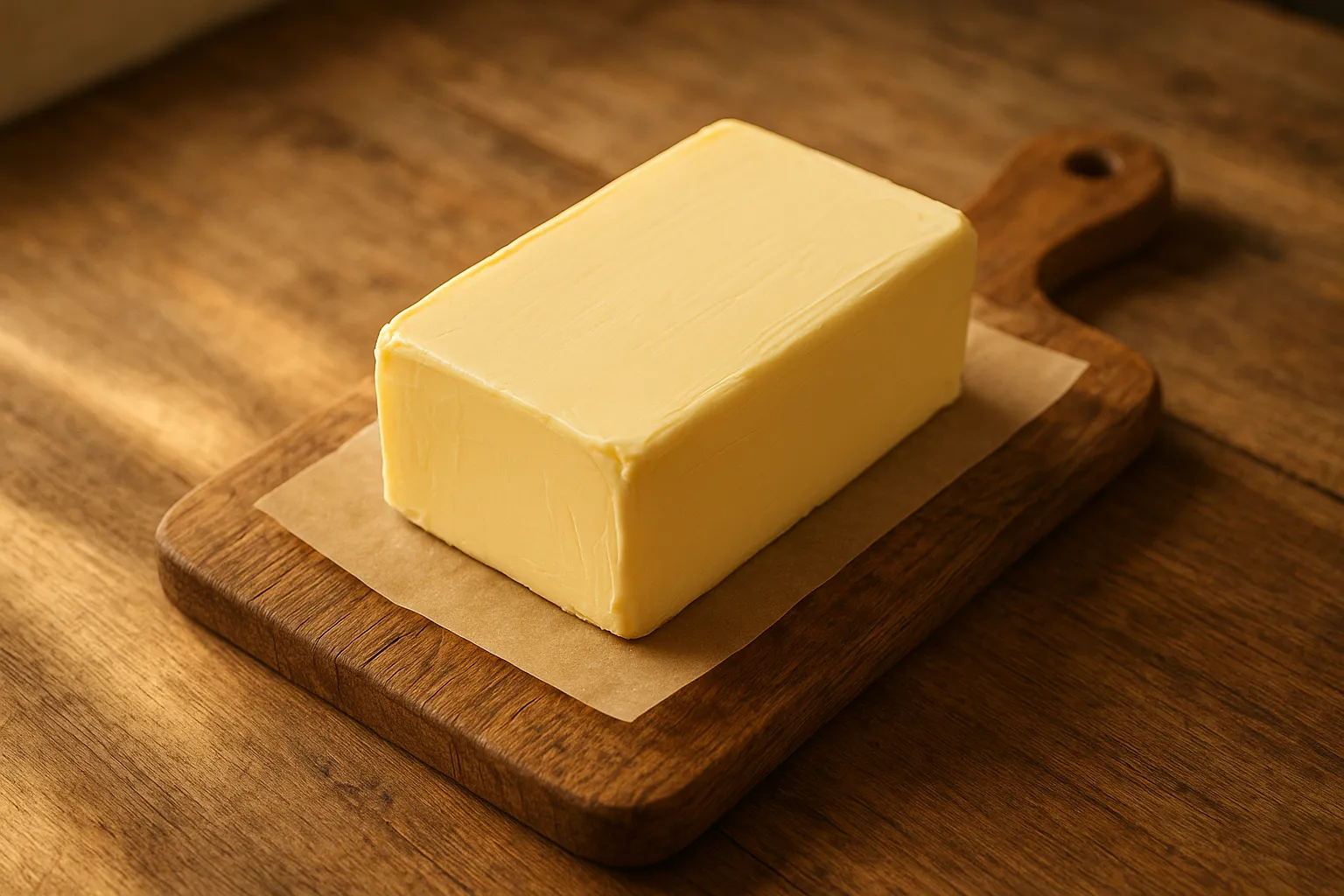
Datos nutricionales rápidos
Por 1 Cucharada (14,2 g)
| Nutriente | Cantidad |
|---|---|
| Calorías | 102 kcal |
| Proteínas | 0,1 g |
| Carbohidratos | 0 g |
| Fibra | 0 g |
| Azúcares | 0 g |
| Grasa total | 11,5 g |
| Grasa saturada | 7,3 g |
| Colesterol | 31 mg |
| Sodio | 91 mg |
| Vitamina A | 97 µg (11 % VD) |
Distribución de macronutrientes
 ChatGPT
  Claude
  AI Mode
  Perplexity
PERSPECTIVA DEL NUTRICIONISTA
La mantequilla es 81 % grasa con 63 % siendo grasa saturada. Aunque contiene valiosa vitamina A y ácido linoleico conjugado (CLA), el control de porciones es crítico - 1 cucharada contiene 102 calorías y 7,3 g de grasa saturada (37 % del límite diario). Mide cuidadosamente para evitar el consumo excesivo.
Cazamitos
MITO #1: La mantequilla de vacas alimentadas con pasto es dramáticamente más saludable
VERDAD: La mantequilla de pasto tiene ligeramente más ácidos grasos omega-3 y vitamina K2, pero las diferencias son mínimas en porciones típicas de 1-2 cucharadas. Ambas contienen calorías idénticas (102 por cda), la misma grasa saturada (7,3 g) y colesterol similar (31 mg). El sobreprecio de 2-3 veces carece de justificación científica sólida para beneficios de salud importantes.
MITO #2: La mantequilla obstruye tus arterias inmediatamente
VERDAD: La investigación moderna muestra que la mantequilla es neutral a moderadamente negativa para la salud del corazón, no catastrófica. Eleva tanto el colesterol LDL (malo) como el HDL (bueno). No tan dañina como las grasas trans, no tan beneficiosa como el aceite de oliva. La moderación importa más que la evitación completa - 1-2 cucharadas diarias dentro de una dieta equilibrada es aceptable para la mayoría de las personas.
MITO #3: La mantequilla y la margarina tienen las mismas calorías
VERDAD: Ambas contienen ~100-102 calorías por cucharada, PERO la composición difiere. La mantequilla es 81 % grasa (63 % saturada); la margarina es 80 % grasa (15-20 % saturada, algunas con grasas trans). Ninguna es baja en calorías. Para perder peso, ambas requieren control estricto de porciones. Elige según tus objetivos de salud: mantequilla para menos aditivos, untables a base de aceite de oliva para la salud del corazón.
MITO #4: La mantequilla clarificada (ghee) es más saludable
VERDAD: El ghee tiene calorías idénticas (120 por cda) y ligeramente más grasa saturada (8 g vs 7,3 g) que la mantequilla porque el agua y los sólidos lácteos se eliminan. Beneficios: sin lactosa, punto de humo más alto (252 °C vs 177 °C) para cocinar. NO es más bajo en calorías ni en grasa saturada. Se requiere el mismo control de porciones.
MITO #5: La mantequilla es amigable con keto así que puedes comer cantidades ilimitadas
VERDAD: Cero carbohidratos no significa porciones ilimitadas. 3 cucharadas = 306 calorías, 21,9 g de grasa saturada (excediendo el límite diario recomendado). Incluso en keto, las calorías importan para el control del peso. La grasa saturada excesiva puede elevar el colesterol LDL independientemente del tipo de dieta. Mide las porciones.
MITO #6: La mantequilla es grasa pura sin nutrientes
VERDAD: La mantequilla proporciona 11 % de vitamina A diaria por cucharada, pequeñas cantidades de vitamina E (2 % VD), vitamina K2 y ácido linoleico conjugado (CLA) con potenciales propiedades antiinflamatorias. Sin embargo, puedes obtener estos nutrientes de fuentes más bajas en calorías (zanahorias, verduras de hoja, frutos secos). Los nutrientes de la mantequilla no compensan su densidad calórica.
NutriScore por Objetivos de Salud
| Objetivo de Salud | NutriScore | ¿Por qué esta puntuación? |
|---|---|---|
| Pérdida de peso |  | 102 cal por cda es extremadamente denso. Fácil de consumir en exceso: 3 cda = 306 calorías. Usa spray para cocinar (6 cal) o mide estrictamente. Rastrea cada gramo. |
| Ganancia muscular |  | Proporciona superávit calórico pero proteína insignificante (0,1 g). Mejores fuentes calóricas: mantequillas de nueces (3-4 g proteína por cda), aguacate (grasas saludables + fibra). Usa con moderación para sabor. |
| Control de la diabetes | | Cero carbos no elevará el azúcar en sangre. Sin embargo, la alta grasa saturada empeora la resistencia a la insulina con el tiempo. Limita a 1 cda diaria, prioriza aceite de oliva. |
| Manejo del SOP | | La grasa saturada impacta negativamente la sensibilidad a la insulina. Sustituye con aceite de oliva, aguacate o mantequillas de nueces. Si usas mantequilla, 1 cdta máximo, no diariamente. |
| Nutrición en el embarazo | | La vitamina A es importante para el desarrollo fetal (11 % VD por cda), pero debe equilibrarse la grasa saturada. 1-2 cda diarias aceptable. Prioriza fuentes diversas de vitamina A (batatas, zanahorias, verduras de hoja). |
| Recuperación viral/gripe |  | Fácil de digerir, denso en calorías para las necesidades energéticas cuando el apetito es bajo. La vitamina A apoya la función inmune (11 % VD). Usa con moderación en tostadas o puré de patatas. |
NUTRICIÓN PERSONALIZADA
¡Rastrea tu consumo de mantequilla con NutriScan para ver cómo encaja con tus objetivos de calorías y grasa saturada!
Respuesta de azúcar en sangre a la mantequilla
La mantequilla contiene prácticamente cero carbohidratos, por lo que no eleva directamente el azúcar en sangre. Sin embargo, cuando se combina con alimentos que contienen carbohidratos, el contenido de grasa afecta la absorción de glucosa.
Curva típica de respuesta de glucosa (mantequilla en tostada)
Este gráfico muestra la respuesta de glucosa en sangre al comer tostada con mantequilla vs tostada sola. La grasa ralentiza la absorción de carbohidratos. Las respuestas individuales varían. No es consejo médico.
Cómo afecta la mantequilla al azúcar en sangre en comidas mixtas
La grasa ralentiza el vaciado gástrico y la digestión de carbohidratos, reduciendo los picos de glucosa cuando se combina con carbohidratos:
- 🍞 Tostada + mantequilla - Subida de glucosa más lenta que la tostada sola, pero añade 102 calorías
- 🥔 Patata asada + mantequilla - Reduce el IG de 85 a ~65, añade calorías significativas
- 🥞 Panqueques + mantequilla - Ralentiza la absorción de azúcar, una comida ya alta en calorías se vuelve 200-400 cal más alta
- 🌽 Maíz + mantequilla - La grasa mejora la absorción de vitamina A, pero vigila las porciones (1 cdta vs 1 cda)
Compensación: Menor pico de glucosa vs mayor carga calórica y grasa saturada. Para diabéticos, prioriza el control de porciones sobre depender de la grasa para amortiguar los carbohidratos.
Significado cultural
La mantequilla ha sido una piedra angular de las tradiciones culinarias en todo el mundo durante más de 9.000 años.
Orígenes históricos:
- 8000 a.C. - Evidencia de fabricación de mantequilla en Mesopotamia después de la domesticación de animales
- Roma Antigua - La mantequilla se usaba medicinalmente; el aceite de oliva se prefería para cocinar
- Europa Medieval - Método de conservación esencial antes de la refrigeración
- Era Vikinga - "Mantequilla de pantano" enterrada y envejecida durante décadas en turberas para obtener sabor ácido
En la India:
- Ghee (mantequilla clarificada): Sagrado en rituales hindúes, ofrecido a las deidades en yajnas (ceremonias de fuego)
- Mencionado en Ayurveda (3000 a.C.) como promotor de longevidad, memoria, inteligencia
- Medicina tradicional: Se cree que el ghee equilibra los doshas, mejora la digestión
- Ghee bilona: Método artesanal usando batidora de madera, leche de vaca A2 de razas desi
- Uso moderno: Esencial en dulces indios (barfi, halwa), dals, rotis
- Variedades regionales: Mantequilla blanca (makkhan) en el norte de India, ghee envejecido en Rajastán
Renacimiento global:
- Alta cocina francesa: Salsas a base de mantequilla (beurre blanc, holandesa)
- "Crisis de la mantequilla" americana 2024: La escasez impulsa la innovación en sustitutos
- Cultura del café escandinava: Tendencia del café con mantequilla (bulletproof coffee)
- Mantequillas DOP europeas: Beurre d'Isigny (Francia), Kerrygold (Irlanda) con estatus protegido
Comparar y sustituir
Mantequilla vs Otras Grasas (Por 100 g)
| Nutriente | 🧈 Mantequilla | 🫒 Aceite de oliva | 🥑 Aceite de aguacate | 🥥 Aceite de coco | 🌱 Margarina (barra) |
|---|---|---|---|---|---|
| Calorías | 717 kcal | 884 kcal | 884 kcal | 862 kcal | 720 kcal |
| Grasa total | 81 g | 100 g | 100 g | 100 g | 80 g |
| Grasa saturada | 51 g (63 %) | 14 g (14 %) | 12 g (12 %) | 87 g (87 %) | 16 g (20 %) |
| Monoinsaturada | 21 g | 73 g | 71 g | 6 g | 40 g |
| Poliinsaturada | 3 g | 11 g | 13 g | 2 g | 32 g |
| Grasa trans | 3,3 g (natural) | 0 g | 0 g | 0 g | 0-2 g (ver etiqueta) |
| Colesterol | 215 mg | 0 mg | 0 mg | 0 mg | 0 mg |
| Punto de humo | 177 °C | 191-207 °C | 271 °C | 177 °C | 177 °C |
| Vitamina E | 2,3 mg | 14 mg | 18 mg | 0,1 mg | 13 mg (fortificada) |
| Mejor para | Repostería, sabor, calor bajo | Ensaladas, calor medio | Cocinar a alta temperatura, neutro | Repostería, alta temperatura | Sustituto en repostería |
Preguntas frecuentes
¿Cuántas calorías tiene una cucharada de mantequilla?
Una cucharada (14,2 g) de mantequilla contiene 102 calorías. Desglose nutricional por cucharada: 11,5 g grasa total (7,3 g saturada, 3 g monoinsaturada, 0,4 g poliinsaturada), 0,1 g proteína, 0 g carbohidratos, 31 mg colesterol, 91 mg sodio (con sal).
Por 100 g (7 cucharadas): 717 calorías, 81,1 g grasa (51,4 g saturada), 215 mg colesterol.
Errores comunes de porción:
- 1 cucharadita: 34 calorías (a menudo subestimado)
- 2 cucharadas: 204 calorías (porción común de desayuno en tostada)
- 1 barra (113 g): 810 calorías (usada en recetas de repostería)
- "Una porción" en restaurantes: A menudo 1,5-2 cdtas (51-68 calorías), no 1 cdta
Consejo: Usa cucharas medidoras o una balanza de cocina; calcular a ojo típicamente resulta en 50-100 % más de la porción prevista.
¿Es más saludable la mantequilla de vacas alimentadas con pasto que la regular?
La mantequilla de pasto tiene marginalmente más ácidos grasos omega-3 (0,5 g vs 0,3 g por 100 g) y vitamina K2, pero la diferencia es mínima para porciones típicas (1-2 cucharadas diarias).
Evaluación de la evidencia:
- Calorías: Idénticas (102 por cda)
- Grasa saturada: Idéntica (7,3 g por cda)
- Omega-3s: 0,07 g vs 0,04 g por cda - insignificante; el salmón proporciona 2,5 g por porción
- Vitamina K2: Ligeramente más alta, pero los quesos curados proporcionan 10 veces más por porción
- CLA (ácido linoleico conjugado): 30 % más alto, pero requiere 3-5 g diarios para beneficios potenciales (necesitaría 10+ cda de mantequilla)
Veredicto: No hay evidencia científica sólida que respalde ventajas de salud importantes para el sobreprecio de 2-3 veces. Ambas deben consumirse con moderación independientemente de la fuente.
¿Es mala la mantequilla para la salud del corazón?
La investigación actual (2020-2024) muestra que la mantequilla tiene un efecto neutral a moderadamente negativo en la salud del corazón:
Lo que sabemos:
- Eleva el colesterol LDL (malo) Y el colesterol HDL (bueno) - efecto neto debatido
- El metaanálisis de 15 estudios encontró una asociación débil con las enfermedades cardíacas - no tan dañino como se creía anteriormente
- No tan perjudicial como las grasas trans (prohibidas) o los aceites tropicales (coco, palma)
- No tan beneficiosa como el aceite de oliva, aceite de aguacate o aceites de nueces para la salud cardiovascular
Directrices para la salud del corazón:
- Limitar: 1-2 cucharadas diarias (146-204 calorías, 14,6 g grasa saturada)
- Dentro del: 10 % de las calorías diarias totales de grasa saturada (recomendación de la Asociación Americana del Corazón)
- Priorizar: Aceite de oliva para cocinar, frutos secos para picar, aguacate para untar
- Considerar: Historia familiar de enfermedades cardíacas = límites más estrictos
Conclusión: La mantequilla no es veneno, pero no es un alimento saludable. La moderación y el contexto dentro de la dieta general son lo más importante.
¿Cuál es la diferencia entre la mantequilla con sal y sin sal?
Mantequilla con sal:
- Sodio: 643 mg por 100 g (91 mg por cucharada)
- Vida útil: 2-3 meses refrigerada (la sal actúa como conservante)
- Sabor: Realzado, salado, enmascara cualquier sabor rancio del envejecimiento
- Mejor para: Untar en pan, terminar verduras, cocina casual
Mantequilla sin sal:
- Sodio: ~11 mg por 100 g (1,6 mg por cucharada)
- Vida útil: 1 mes refrigerada, 6-9 meses congelada
- Sabor: Sabor puro a nata, requiere más frescura
- Mejor para: Repostería (control preciso de la sal), cocina francesa, mantequillas compuestas
Calorías y grasa: Idénticas en ambos tipos (102 cal, 11,5 g grasa por cda)
Consideración de salud: 3 cucharadas de mantequilla con sal = 273 mg sodio (12 % del límite diario); sin sal = 5 mg. Para hipertensión o dietas restringidas en sodio, elige sin sal.
Regla de repostería: Las recetas que piden "mantequilla" típicamente significan sin sal. Si usas con sal, reduce la sal añadida en 1/4 cucharadita por barra (113 g).
¿Puedo comer mantequilla en una dieta para perder peso?
Sí, la mantequilla puede encajar en una dieta para perder peso con control estricto de porciones y seguimiento de calorías:
Desafíos:
- Densidad calórica: 102 cal por cucharada es muy alta; 3 cda = 306 calorías
- Fácil de usar en exceso: Untar, cocinar, hornear se acumula rápidamente
- Sin saciedad: Cero proteínas o fibra significa que la mantequilla no promueve la sensación de llenura
Estrategias para perder peso:
- Medir religiosamente: Usa cucharas medidoras o balanza digital; nunca calcules a ojo
- Limitar a 1-2 cda diarias: Cuenta 102-204 calorías en tu presupuesto diario
- Sustituir donde sea posible:
- Spray para cocinar: 6 cal vs 102 cal por porción
- Aguacate machacado en tostada: 60 cal + fibra vs 102 cal
- Yogur griego en repostería: Reduce la grasa en 50-75 %
- Contabilizar la mantequilla oculta: Comidas de restaurante, productos de panadería, alimentos preparados
- Rastrear en la app NutriScan: Registrar inmediatamente para evitar subestimar
Comprobación de realidad: Si la pérdida de peso se estanca, la mantequilla es un lugar fácil para recortar 100-200 calorías diarias sin impactar la saciedad o la nutrición.
¿Deben los diabéticos evitar la mantequilla?
Los diabéticos no necesitan evitar completamente la mantequilla, pero deben limitar estrictamente el consumo:
Pros para diabéticos:
- Cero carbohidratos: No elevará directamente el azúcar en sangre
- Ralentiza la absorción de glucosa: Cuando se combina con carbohidratos (tostada, patata), la grasa reduce el IG
Contras para diabéticos:
- Grasa saturada: 7,3 g por cda empeora la resistencia a la insulina con el tiempo, aumentando las complicaciones de la diabetes
- Riesgo cardiovascular: Los diabéticos tienen 2-4 veces mayor riesgo de enfermedad cardíaca; la grasa saturada excesiva aumenta el colesterol LDL
- Densidad calórica: El control del peso es crítico para el control del azúcar en sangre; la mantequilla proporciona calorías sin saciedad
Directrices para diabéticos:
- Limitar: 1 cucharada diaria máximo (preferiblemente menos)
- Priorizar: Aceite de oliva (2-3 cda diarias), aceite de aguacate, mantequillas de nueces (grasas monoinsaturadas más altas)
- Evitar: Mantequilla + carbohidratos refinados (pan blanco, panqueques, waffles) - doble impacto negativo
- Elegir: Ghee si tienes intolerancia a la lactosa, pero mismo contenido de grasa saturada
Mejor práctica: Reservar la mantequilla para realzar el sabor ocasionalmente, no como grasa de cocina diaria.


Alimentos nutritivos similares
4505 Chicharrones Classic Chili Salt
7 Eleven Japan Crispy Corn Cheese
Explora más herramientas y recursos de nutrición
App de agua y calorías gratis con registro diario
App de ayuno intermitente gratis con temporizador
App de macros: NutriScan las rellena desde una foto
App de plan de comidas para volumen limpio
App de plan de comidas vegetariano con objetivo de proteína
App de Plan de Dieta India Vegetariana y No Vegetariana
App de plan de dieta mediterránea que cuenta el aceite
App nutricionista con IA que lee tus comidas
App para Subir de Peso: Plan de Dieta con IA
Ayuno Intermitente para Mujeres, Timer y Registro de Comidas
Coach de pérdida de peso ChatGPT: con registro
Contador de Calorías Activado por Voz - Di tus Comidas y Rastrea Nutrición Sin Manos — 2026
Contador de calorías ChatGPT: alternativa que no lo olvida
Contador de Calorías con IA: calorías con fotos, gratis
Contador de calorías de comida rápida con foto
Contador de calorías gratis con fotos | NutriScan
Contador de Calorías para Comida Española - Información Nutricional Instantánea — 2026
Escáner de Etiquetas Nutricionales para tu Ración Real
Generador Lista de Compras Keto
Generador Lista de Compras Mensual
Guía Proteína Tercer Trimestre
Plan de comidas semanal con calorías y lista de compras
Plan de dieta ChatGPT: alternativa que registra comidas
Plan de Dieta para Ganar Peso España