Pollo a la parrilla: calorías, nutrición y beneficios para la salud
Proteína magra, fácil de preparar y con sabor neutro para combinar con cualquier guarnición. Perfecto para planes de pérdida de peso, aumento de masa muscular y control metabólico.
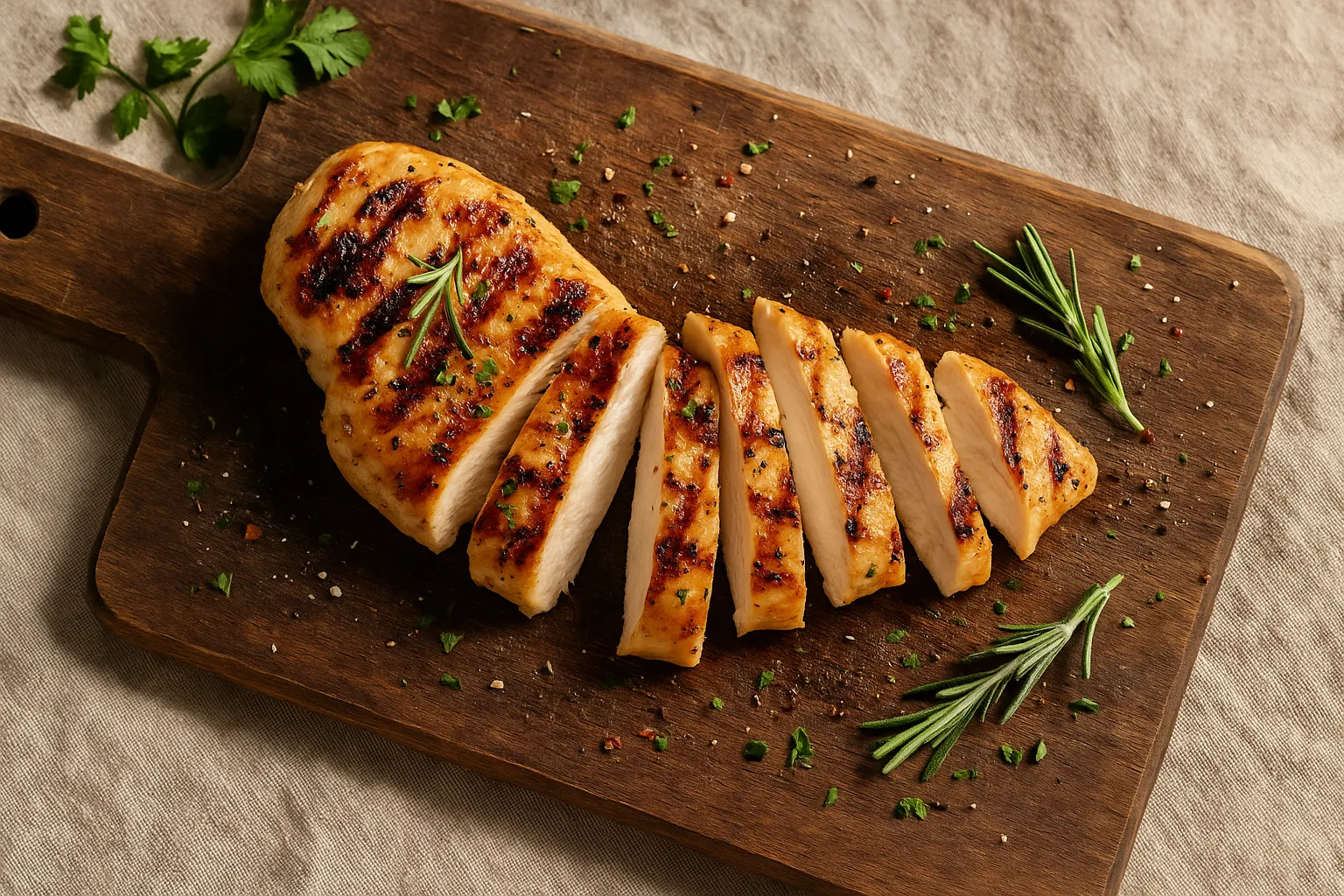
Datos nutricionales rápidos
Por 100 g de pechuga de pollo a la parrilla
| Nutriente | Cantidad |
|---|---|
| Calorías | 165 kcal |
| Proteína | 31 g |
| Carbohidratos | 0 g |
| Fibra | 0 g |
| Azúcares | 0 g |
| Grasa total | 3,6 g |
| Grasa saturada | 1 g |
| Colesterol | 85 mg |
| Sodio | 74 mg |
| Fósforo | 228 mg |
| Selenio | 27,6 µg |
| Vitamina B3 (niacina) | 14,8 mg |
| Vitamina B6 | 0,6 mg |
Distribución de macronutrientes
 ChatGPT
  Claude
  AI Mode
  Perplexity
CONSEJO DE NUTRICIONISTA
Marinar el pollo con ácido (limón, vinagre) y hierbas reduce la formación de aminas heterocíclicas hasta un 90 % y mejora la jugosidad sin añadir calorías extras.
Mitos frecuentes
MITO #1: "El pollo a la parrilla es seco y sin sabor"
REALIDAD: Controlando el tiempo (7-8 minutos por lado) y dejando reposar 5 minutos, la pechuga conserva jugos. Añade especias, pimentón ahumado y aceite de oliva en spray para sabor sin calorías extra.
MITO #2: "Toda la carne de pollo tiene las mismas calorías"
REALIDAD: La pechuga sin piel aporta 165 kcal, mientras que muslo con piel supera 220 kcal. Retirar la piel y escoger cortes magros marca la diferencia.
MITO #3: "Mucha proteína daña los riñones"
REALIDAD: En personas sanas no hay evidencia de daño renal con ingestas de hasta 2 g de proteína/kg de peso. Solo quienes tienen enfermedad renal deben restringirla bajo supervisión médica.
NutriScore según tus metas
| Objetivo | NutriScore | Por qué funciona |
|---|---|---|
| Pérdida de peso |  | Alta saciedad, baja grasa y efecto térmico elevado. |
| Ganancia muscular | | Leucina y aminoácidos esenciales para reparar fibras después del entrenamiento. |
| Diabetes | | Cero carbohidratos, ayuda a estabilizar la glucosa y controlar el apetito. |
| PCOS | | Proteína magra que mejora la sensibilidad a la insulina y el perfil inflamatorio. |
| Embarazo | | Proporciona proteínas, hierro biodisponible y B6 para el desarrollo fetal. |
| Recuperación viral |  | Fácil de digerir y rico en proteína; acompáñalo con caldos e hidratación adecuada. |
PLANES PERSONALIZADOS
Obtén planes con raciones ajustadas a tu objetivo usando NutriScan. La app calcula macros, hidratos y grasas ideales para cada comida.
Respuesta glucémica
El pollo a la parrilla no contiene carbohidratos, por lo que mantiene la glucosa estable. Su proteína ayuda a amortiguar el impacto glucémico de acompañamientos como arroz o tortilla.
Curva de glucosa estimada
*Valores ilustrativos para una ración de 120 g combinada con vegetales. Consulta con tu equipo médico para recomendaciones individualizadas.*
Cómo incluirlo en tu menú
- Desayuno energético: wrap integral con pollo desmenuzado, huevo y espinaca.
- Comida balanceada: bowl con quinoa, verduras asadas y pollo marinado al limón.
- Cena ligera: ensalada de hojas verdes, aguacate y pollo a la parrilla.
- Meal prep: cocina 600 g de pechuga el domingo, porciona en recipientes herméticos hasta por 4 días.
Comparativa con otras proteínas
| Proteína (100 g) | Calorías | Proteína | Grasas | Punto fuerte |
|---|---|---|---|---|
| Pollo a la parrilla | 165 kcal | 31 g | 3,6 g | Alta saciedad |
| Salmón a la plancha | 206 kcal | 25 g | 12 g | Omega-3 |
| Ternera magra | 250 kcal | 26 g | 15 g | Hierro |
| Tofu firme | 144 kcal | 17 g | 9 g | Proteína vegetal |




Otros alimentos ricos en proteína
4505 Chicharrones Classic Chili Salt
7 Eleven Japan Crispy Corn Cheese
Herramientas recomendadas
App de agua y calorías gratis con registro diario
App de ayuno intermitente gratis con temporizador
App de macros: NutriScan las rellena desde una foto
App de plan de comidas para volumen limpio
App de plan de comidas vegetariano con objetivo de proteína
App de Plan de Dieta India Vegetariana y No Vegetariana
App de plan de dieta mediterránea que cuenta el aceite
App nutricionista con IA que lee tus comidas
App para Subir de Peso: Plan de Dieta con IA
Ayuno Intermitente para Mujeres, Timer y Registro de Comidas
Coach de pérdida de peso ChatGPT: con registro
Contador de Calorías Activado por Voz - Di tus Comidas y Rastrea Nutrición Sin Manos — 2026
Contador de calorías ChatGPT: alternativa que no lo olvida
Contador de Calorías con IA: calorías con fotos, gratis
Contador de calorías de comida rápida con foto
Contador de calorías gratis con fotos | NutriScan
Contador de Calorías para Comida Española - Información Nutricional Instantánea — 2026
Escáner de Etiquetas Nutricionales para tu Ración Real
Generador Lista de Compras Keto
Generador Lista de Compras Mensual
Guía Proteína Tercer Trimestre
Plan de comidas semanal con calorías y lista de compras
Plan de dieta ChatGPT: alternativa que registra comidas
Plan de Dieta para Ganar Peso España
Preguntas Frecuentes
Is grilled chicken good for weight loss?
Yes, grilled chicken is one of the best foods for weight loss. With only 165 calories per 100g and a whopping 31g of protein, it offers the highest protein-to-calorie ratio among common proteins.
Why it works for weight loss:
- High satiety: 31g protein keeps you full for 3-4 hours, reducing overall calorie intake
- Thermic effect: 20-30% of chicken's calories are burned during digestion (vs 5-10% for carbs/fats)
- Muscle preservation: High protein prevents muscle loss during calorie deficit
- Versatile: Easy to meal prep and combine with low-calorie vegetables
Best practices: Consume 100-150g per meal, combine with fiber-rich vegetables, avoid high-calorie sauces, grill without oil or with minimal olive oil spray.
Can diabetics eat grilled chicken?
Absolutely. Grilled chicken is one of the safest proteins for diabetics. It contains zero carbohydrates and has no glycemic impact, meaning it won't raise blood sugar levels.
Diabetes benefits:
- Zero carbs: No glucose spike or insulin demand
- Protein stability: Slows down absorption of carbs eaten in the same meal
- Improved insulin sensitivity: Regular protein intake supports better glucose control
- Weight management: Supports healthy weight, crucial for Type 2 diabetes management
Tips for diabetics: Pair with non-starchy vegetables (broccoli, cauliflower, leafy greens), limit to 150g per meal, season with herbs instead of sugar-based marinades, combine with healthy fats (olive oil, avocado) for complete nutrition.
How much protein is in grilled chicken?
Grilled chicken breast contains approximately 31 grams of protein per 100g, making it one of the highest protein-density foods available.
Protein quality: Complete protein with all 9 essential amino acids (EAAs), particularly rich in leucine (2.5g per 100g) critical for muscle protein synthesis.
Serving examples:
- 100g grilled chicken = 31g protein
- 150g serving (typical portion) = 46.5g protein
- 200g serving = 62g protein
For muscle gain or high-protein diets, 150-200g grilled chicken per meal provides optimal protein for recovery and growth without excessive calories.
What are the main health benefits of grilled chicken?
Key Benefits:
- Muscle Building & Repair: 31g complete protein with all essential amino acids supports muscle protein synthesis and recovery
- Weight Management: High satiety-to-calorie ratio prevents overeating; thermogenic effect burns 20-30% of consumed calories
- Blood Sugar Control: Zero carbs and high protein stabilize glucose levels and improve insulin sensitivity
- Heart Health: Low saturated fat (1g) and zero trans fats; supports cardiovascular function
- Immune Support: Selenium (27.6mcg, 50% DV) boosts immune function; zinc supports wound healing
- Energy Metabolism: B vitamins (B3, B6) convert food to energy; prevents fatigue
- Bone Health: Phosphorus (228mg, 18% DV) strengthens bones and teeth
When is the best time to eat grilled chicken?
Depends on your goal:
- Weight Loss: Lunch or dinner paired with large portions of vegetables. Avoid late-night (within 2 hours of sleep) to prevent digestive discomfort.
- Muscle Gain: Post-workout (within 2 hours) with complex carbs (rice, quinoa) for optimal glycogen replenishment and muscle protein synthesis.
- Diabetes: Any meal. Protein at breakfast helps stabilize blood sugar throughout the day.
- General Health: Lunch or dinner. Protein-rich meals promote better sleep than high-carb dinners.
Pro tip: Meal prep 3-5 servings at once. Grilled chicken stays fresh refrigerated for 4 days, making it perfect for consistent protein intake.
Is grilled chicken better than fried chicken?
Grilled chicken is significantly healthier than fried. Here's the comparison per 100g:
Grilled Chicken Breast:
- 165 calories
- 31g protein
- 3.6g fat (1g saturated)
- 0g trans fats
- Preserves nutrients
Fried Chicken:
- 300+ calories
- 29g protein (breading reduces protein concentration)
- 15-20g fat (5-7g saturated)
- Contains trans fats from frying oils
- Nutrient degradation from high heat
Why grilling wins: Grilling uses no added fats, preserves lean protein, avoids carcinogenic compounds from deep frying, and maintains natural flavor without breading or heavy sauces.
How should I prepare grilled chicken to maximize nutrition?
Optimal preparation steps:
- Marinade: Use yogurt-based marinades (probiotics + protein) or lemon-herb mixtures for 2-4 hours
- Temperature: Grill at medium-high heat (375-450°F) to seal in juices without charring
- Internal temp: Cook to 165°F internal temperature for food safety while preserving moisture
- Resting: Let rest 5 minutes post-cooking to redistribute juices
- Seasoning: Use herbs (rosemary, thyme, oregano), spices (paprika, cumin, turmeric), and citrus instead of high-sodium or sugar-based sauces
Avoid: Charring (creates carcinogenic compounds), excessive salt (raises blood pressure), high-sugar BBQ sauces (adds 50-100 calories per tablespoon).
Can I eat grilled chicken every day?
Generally safe and beneficial when part of a balanced diet. Many athletes and fitness enthusiasts consume grilled chicken daily with excellent health outcomes.
Daily consumption guidelines:
- Portion: 150-200g per day (46-62g protein)
- Variety: Rotate with other proteins 2-3 times per week (fish, eggs, legumes, tofu) to ensure diverse nutrient intake
- Preparation: Vary cooking methods (grilled, baked, stir-fried) and seasonings to prevent flavor fatigue
- Balance: Always pair with vegetables, whole grains, and healthy fats for complete nutrition
Who should limit: Those with gout (purines in chicken), kidney disease (high protein load), or specific dietary restrictions.
Track your meals with NutriScan app to ensure your daily chicken consumption aligns with your personal nutrition goals and overall dietary balance.