Haldiram's Peanut Masala: calorías, nutrición y beneficios para la salud
Tostado peanuts coated con spicy gram flour masala. Alto proteínas, satisfying crunch, calorie-dense but nutritivo.
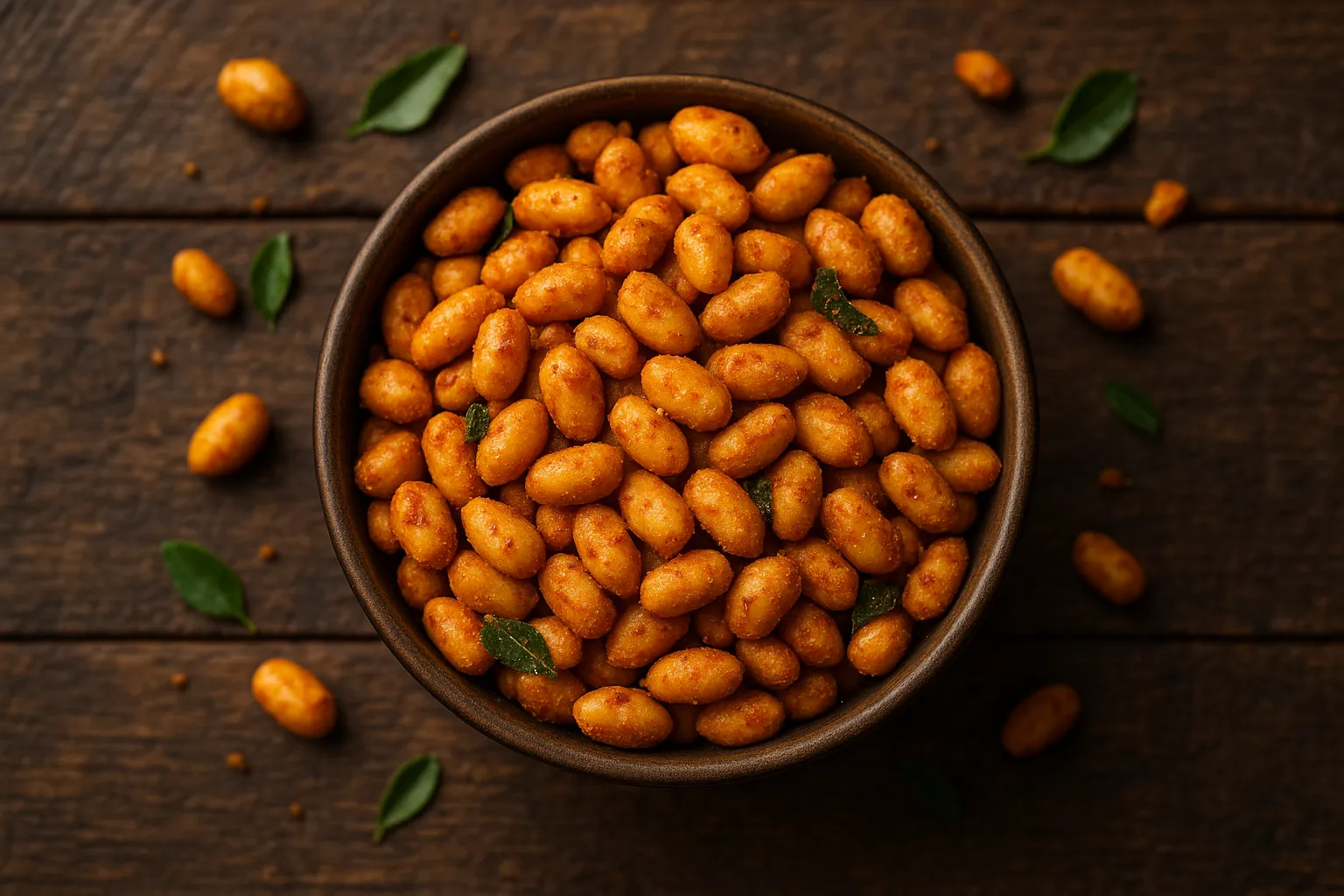
Datos Rápidos de Nutrición
Por 100g (aproximadamente 3/4 cup)
| Nutriente | Cantidad |
|---|---|
| Calorías | 567 kcal |
| Proteínas | 24g |
| Carbohidratos | 28g |
| Fibra | 8.5g |
| Azúcares | 4.2g |
| Grasas | 42g |
| Grasas Saturadas | 6.5g |
| Sodio | 680mg |
| Magnesio | 168mg |
| Vitamina E | 8.3mg |
Desglose de Macronutrientes
 ChatGPT
  Claude
  AI Mode
  Perplexity
CONSEJO DEL NUTRICIONISTA
Peanut masala proporciona 24g proteínas por 100g, making it one of el la mayoría proteínas-rich Indian snacks. El 8.5g fibra and saludable para el corazón monoungrasas saturadass support satiety and cardiovascular health. Control de porciones es critical—pre-measure 30g porciones (170 calorías) to prevent overeating.
Mitos vs Realidad
MITO #1: Peanuts Cause Peso Gain
REALIDAD: Despite being calorie-dense (567 kcal/100g), peanuts don't cause peso gain cuando porción-controlled. El 24g proteínas and 8.5g fibra increase satiety, and los estudios muestran peanut consumers frecuentemente have menor BMIs. El key es limiting porciones to 30-40g diario.
MITO #2: Tostado Peanuts Lose Todo Nutrientes
REALIDAD: Roasting preserves la mayoría nutrientes in peanuts. Vitamina E disminuye by 10-15%, but proteínas, fibra, and minerales remain intact. Roasting actually aumenta antioxidant activity by creating beneficioso compounds. El masala coating adds minimal nutritional impact.
MITO #3: Peanuts Son Alto in Bad Colesterol
REALIDAD: Peanuts contain zero cholesterol (it's plant-based). El 42g grasas por 100g es primarily saludable para el corazón monounsaturated and polyungrasas saturadass ese puede actually improve cholesterol profiles by raising HDL (bueno cholesterol) and lowering LDL (bad cholesterol).
MITO #4: Peanuts Aren't Real Nuts, So They're Less Nutritivo
REALIDAD: Mientras botanically legumes, peanuts match tree nuts nutritionally. They provide similar proteínas (24-26g por 100g), saludable fats, and micronutrients. El "nut vs legume" distinction doesn't affect nutritional value.
MITO #5: Spicy Masala Coating Cancels Out Peanut Benefits
REALIDAD: El gram flour and spice coating adds 80-100 calorías por 100g but también proporciona extra proteínas and antioxidantes from turmeric and chili. El main concern es added sodio (680mg por 100g); elegir bajo-sodio versions or plain tostado peanuts for mejor health.
MITO #6: Eating Peanuts at Night Causes Digestive Issues
REALIDAD: Peanuts son easily digestible for la mayoría personas. El alto grasas content puede slow digestion, cuál puede cause discomfort if eaten in grande amounts antes bed. Moderado porciones (30g) 2-3 hours antes sleep son generalmente bien-tolerated.
NutriScore por Objetivos de Salud
| Objetivo de Salud | NutriScore | ¿Por qué esta puntuación? |
|---|---|---|
| Pérdida de Peso |  | 567 calorías por 100g, but 24g proteínas + 8.5g fibra promote fullness. Porción-control to 30g (170 kcal) as pre-measured snack. |
| Ganancia Muscular |  | Excellent plant-based proteínas (24g por 100g). 50g proporciona 12g proteínas post-workout. Saludable fats support hormone production for construcción muscular. |
| Control de Diabetes | | Bajo glycemic index (14), alto fibra (8.5g) stabilizes azúcar en sangre. Monoungrasas saturadass improve insulin sensitivity. Límite to 30-40g porciones; watch sodio. |
| Control del SOP | | Proteínas and fibra help regulate insulin resistance in SOP. Saludable fats support hormone balance. Moderado porciones (30g) 1-2 times diario as snack. |
| Nutrición en el Embarazo | | Proporciona folate (68mcg por 100g), proteínas for fetal growth, magnesio (168mg) for bone development. Monitor sodio; elegir bajo-salt versions. |
| Viral/Recuperación de Gripe | | Proteínas apoya immune recovery, vitamina E acts as antioxidant. Easy to eat cuando appetite es bajo. Evitar if experiencing digestive upset; elegir plain peanuts. |
NUTRICIÓN PERSONALIZADA
Registra tus comidas con NutriScan para personalizados NutriScores based on your specific health goals!
Respuesta de Azúcar en Sangre to Peanut Masala
Peanuts have one of el lowest glycemic index values among snacks, making them excellent for azúcar en sangre control.
Curva Típica de Respuesta de Glucosa
Este gráfico muestra respuesta típica de glucosa en sangre para individuos sanos en general. Las respuestas individuales pueden variar. No es consejo médico.
Por qué Peanuts Stabilize Blood Azúcar
Peanuts' bajo GI (14) and alto fibra (8.5g) create minimal glucose spike:
- 🥜 Alto proteínas (24g) - Slows carb digestion and extends energy release
- 🫘 Rich fibra (8.5g) - Reduce glucose absorption rate
- 🫒 Saludable fats (42g) - Further slow digestion and improve insulin sensitivity
- ⚡ Bajo net carbohidratos - Solo 19.5g net carbohidratos (28g total - 8.5g fibra)
Mejor pairing for balanced energy: Combine 30g peanut masala con fresco vegetables (cucumber, carrot sticks) for added fibra and volume sin extra calorías.
Importancia Cultural
Peanuts were introduced to India by Portuguese traders in el 16th century and quickly became a staple crop.
In India:
- Major kharif (monsoon) crop in Gujarat, Andhra Pradesh, Tamil Nadu
- Groundnut oil (peanut oil) es traditional cooking medium in South India
- Street vendors sell tostado peanuts (masala mungfali) across el country
- Festival food durante Makar Sankranti and Diwali
- Haldiram's modernized traditional tostado peanut recipes con spice blends
Nutritional Impact:
- India es world's 2nd largest peanut producer (9+ million tons annually)
- Affordable plant proteínas for vegetarian population
- Peanut-based chikkis (brittle) provide energy-dense traditional sweets
Compara y Sustituye
Peanut Masala vs Similar Snacks (Por 100g)
| Nutriente | 🥜 Peanut Masala | 🌰 Crudo Peanuts | 🥜 Almendras | 🌻 Sunflower Seeds |
|---|---|---|---|---|
| Calorías | 567 kcal | 567 kcal | 576 kcal | 584 kcal |
| Carbohidratos | 28g | 16g | 22g | 20g |
| Fibra | 8.5g | 8.5g | 12.5g | 8.6g |
| Proteínas | 24g | 26g | 21g | 21g |
| Grasas | 42g | 49g | 49g | 51g |
| Sodio | 680mg | 18mg | 1mg | 9mg |
| Magnesio | 168mg | 168mg | 270mg | 325mg |
| Vitamina E | 8.3mg | 8.3mg | 25.6mg | 35.2mg |
| Mejor Para | Flavor + proteínas | Pure nutrition | Salud del corazón | Vitamina E boost |
Preguntas Frecuentes
Son Haldiram's Peanut Masala bueno for pérdida de peso?
Peanut masala puede support pérdida de peso cuando porción-controlled. Mientras calorie-dense (567 kcal por 100g), el 24g proteínas and 8.5g fibra promote satiety and reduce overall calorie intake.
Peso loss strategy: Pre-measure 30g porciones (170 calorías) in pequeño containers; eat as mid-afternoon snack to prevent dinner overeating; track calorías in your diario budget; combine con vegetables for volume; límite to once diario.
Evidence: Los estudios muestran regular nut consumers have menor BMIs despite mayor calorie intake from nuts, likely due to increased satiety and incomplete calorie absorption.
¿Pueden los diabéticos comer Haldiram's Peanut Masala?
Yes, peanut masala es excellent for diabetics due to bajo glycemic index (14) and alto fibra ese stabilizes azúcar en sangre.
Diabetic guidelines:
- Porción size: 30-40g por porción (170-227 calorías)
- Timing: Mid-morning or mid-afternoon snack
- Pairing: Combine con vegetables (cucumber, tomatoes) for added fibra
- Monitoring: Check azúcar en sangre 2 hours después to confirm individual response
- Sodio concern: Alto sodio (680mg por 100g); elegir bajo-salt versions or plain tostado peanuts if managing blood pressure
La investigación muestra peanuts improve glycemic control and reduce diabetes risk.
Cómo mucho proteínas es in Haldiram's Peanut Masala?
Haldiram's Peanut Masala contiene aproximadamente 24g proteínas por 100g. A 30g porción proporciona 7.2g proteínas, equivalent to one pequeño egg.
Proteínas quality: Peanuts provide incomplete proteínas (lacking algunos esencial amino acids). Pair con whole grains (rotis, brown rice) or dairy (yogurt) throughout el día to ensure complete amino acid profile.
For ganancia muscular: 50g porción proporciona 12g proteínas; combine con otro proteínas sources (dal, paneer, eggs) to reach diario targets.
Qué son el beneficios para la salud of Peanut Masala?
Key benefits:
- Heart Health: Monoungrasas saturadass (26g por 100g) reduce LDL cholesterol and cardiovascular disease risk
- Muscle Maintenance: 24g proteínas apoya muscle repair and growth
- Digestive Health: 8.5g fibra promueve regular bowel movements and gut bacteria
- Bone Strength: Magnesio (168mg, 40% DV) and phosphorus support bone density
- Antioxidant Protection: Vitamina E (8.3mg) and polyphenols fight cellular damage
- Blood Azúcar Control: Bajo GI and fibra stabilize glucose levels
Cuando es el mejor tiempo to eat Peanut Masala?
Optimal timing:
- Mid-morning (10-11 AM): Previene pre-lunch energy crashes; sustains through afternoon
- Mid-afternoon (3-4 PM): Controls evening hunger and previene dinner overeating
- Pre-workout (30-60 min antes): Proporciona sustained energy from proteínas + saludable fats
- Evitar late night: Alto calorie density and grasas content puede disrupt sleep; eat 3+ hours antes bed
Frequency: 1-2 times diario in controlled porciones (30-40g cada).
Son tostado peanuts healthier que frito peanuts?
Yes, tostado peanuts son significativamente healthier que deep-frito versions.
Tostado advantages:
- Requires minimal added oil (5-10% vs 30-40% for frito)
- Preserves 85-90% of vitamina E and otro antioxidantes
- Menor overall calorie density
- Reduce acrylamide formation compared to alto-heat frying
Haldiram's Peanut Masala: Uses tostado peanuts con gram flour coating; healthier que frito but adds ~80-100 calorías and sodio compared to plain tostado.
Healthiest option: Plain dry-tostado peanuts sin salt (aproximadamente 567 kcal, 18mg sodio vs 680mg in masala version). Hacer homemade version con minimal oil and spices for mejor control.
Cómo muchos Peanut Masala debería I eat per día?
General guidelines:
- Peso loss: 30g (1/4 cup, 170 calorías) once diario
- Maintenance: 40-50g (1/3 cup, 227-284 calorías) 1-2 times diario
- Diabetes: 30-40g por porción, monitor azúcar en sangre response
- Muscle gain: 50-100g (284-567 calorías) post-workout or as proteínas-rich snack
- Children: 20-30g depending on age and activity level
Caution: Exceeding 100g diario proporciona 680mg+ sodio (30% DV) and puede contribute excess calorías. Pre-measure porciones to prevent mindless overeating.
Puede pregnant women eat Peanut Masala?
Yes, pregnant women puede eat peanut masala in moderación (30-40g diario) unless allergic.
Embarazo benefits:
- Folate (68mcg por 100g) apoya fetal neural tube development
- Proteínas (24g) aids fetal growth
- Magnesio (168mg) previene leg cramps and apoya bone formation
- Saludable fats support brain development
Precautions:
- Alto sodio (680mg por 100g) puede worsen swelling; elegir bajo-salt versions
- Eating peanuts durante embarazo puede reduce child's peanut allergy risk (consult doctor if family history)
- Ensure fresco product; aflatoxin in moldy peanuts es harmful durante embarazo


Alimentos Nutritivos Similares
4505 Chicharrones Classic Chili Salt
7 Eleven Japan Crispy Corn Cheese
Explore Más Nutrition Tools & Resources
App de agua y calorías gratis con registro diario
App de ayuno intermitente gratis con temporizador
App de macros: NutriScan las rellena desde una foto
App de plan de comidas para volumen limpio
App de plan de comidas vegetariano con objetivo de proteína
App de Plan de Dieta India Vegetariana y No Vegetariana
App de plan de dieta mediterránea que cuenta el aceite
App nutricionista con IA que lee tus comidas
App para Subir de Peso: Plan de Dieta con IA
Ayuno Intermitente para Mujeres, Timer y Registro de Comidas
Coach de pérdida de peso ChatGPT: con registro
Contador de Calorías Activado por Voz - Di tus Comidas y Rastrea Nutrición Sin Manos — 2026
Contador de calorías ChatGPT: alternativa que no lo olvida
Contador de Calorías con IA: calorías con fotos, gratis
Contador de calorías de comida rápida con foto
Contador de calorías gratis con fotos | NutriScan
Contador de Calorías para Comida Española - Información Nutricional Instantánea — 2026
Escáner de Etiquetas Nutricionales para tu Ración Real
Generador Lista de Compras Keto
Generador Lista de Compras Mensual
Guía Proteína Tercer Trimestre
Plan de comidas semanal con calorías y lista de compras
Plan de dieta ChatGPT: alternativa que registra comidas
Plan de Dieta para Ganar Peso España