Mix Vegetable Sabji: calorías, nutrición y beneficios para la salud
India's beloved vegetable curry—colorful, nutrient-dense, and adaptable for cada health goal from pérdida de peso to control de diabetes.
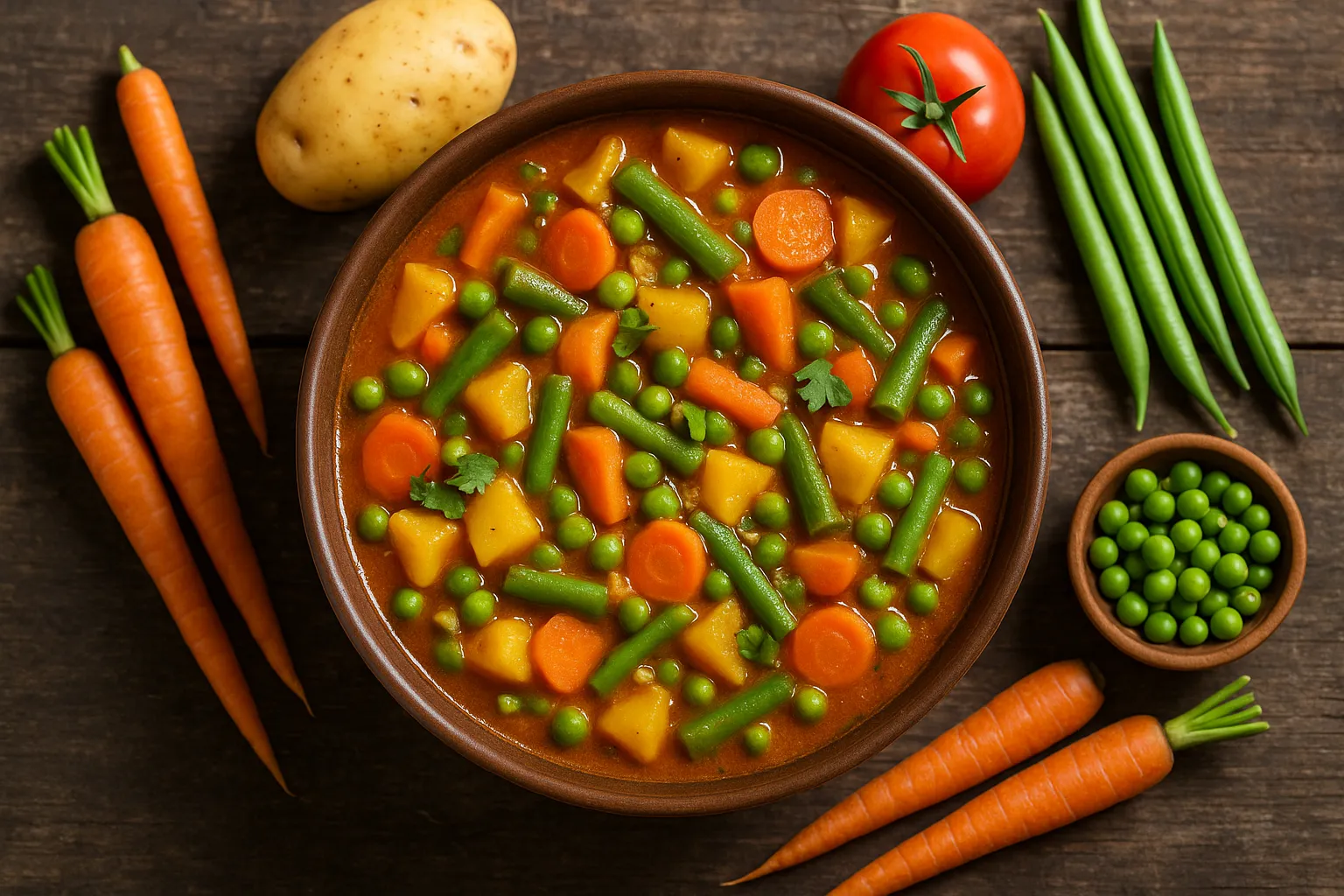
Datos Rápidos de Nutrición
Per 1 Cup (200g) con Moderado Oil
| Nutriente | Cantidad |
|---|---|
| Calorías | 140 kcal |
| Proteínas | 4g |
| Carbohidratos | 18g |
| Fibra | 5g |
| Azúcares | 6g |
| Grasas | 6g |
| Vitamina A | 3500 IU |
| Vitamina C | 45mg |
| Potasio | 480mg |
| Hierro | 2.5mg |
Desglose de Macronutrientes
 ChatGPT
  Claude
  AI Mode
  Perplexity
CONSEJO DEL NUTRICIONISTA
Mix vegetable sabji proporciona 5g fibra (20% DV) and diverse phytonutrients from colorful vegetables. El traditional spices—turmeric, cumin, coriander—offer anti-inflammatory and digestive benefits beyond basic nutrition.
Mitos vs Realidad
MITO #1: Mix Veg Sabji Es Too Alto in Calorías for Pérdida de Peso
REALIDAD: At 140 calorías por taza con 5g fibra, mix veg sabji es excellent for pérdida de peso. Calorías come from nutrient-dense vegetables and moderado oil. Alto fibra promueve satiety and reduce overall calorie intake. Prepare con 1-2 tsp oil for incluso menor calorías (100-120 por taza).
MITO #2: Potatoes in Sabji Spike Blood Azúcar
REALIDAD: Mientras potatoes have medium GI, cooking and cooling aumenta resistant starch, lowering glycemic impact. El fibra from otro vegetables and grasas from oil further moderates azúcar en sangre response. Diabetics puede enjoy sabji con limited potato porciones paired con proteínas.
MITO #3: Restaurant-Style Sabji Es Solo As Saludable as Homemade
REALIDAD: Restaurant sabji frecuentemente contiene 2-3x más oil (300-400 calorías por taza), added azúcar, cream, and excessive salt. Homemade versions con controlled oil, fresco vegetables, and minimal processing provide authentic nutrition at half el calorías.
MITO #4: Sabji Loses Todo Nutrientes Cuando Cocido
REALIDAD: Mientras algunos vitamina C es lost, cooking enhances bioavailability of lycopene from tomatoes and beta-carotene from carrots. Grasas-soluble vitaminas (A, K) son mejor absorbed con el oil in sabji. Light cooking preserves la mayoría nutrientes.
MITO #5: You Necesitar Paneer or Meat to Obtener Proteínas from Sabji
REALIDAD: Mix veg sabji proporciona 4g plant-based proteínas por taza from peas, beans, and vegetables. Adding chickpeas, tofu, or lentils boosts proteínas to 10-15g, creating a complete plant-based meal sin animal products.
NutriScore por Objetivos de Salud
| Objetivo de Salud | NutriScore | ¿Por qué esta puntuación? |
|---|---|---|
| Pérdida de Peso |  | 140 calorías con 5g fibra (20% DV) promueve fullness. Usar minimal oil (1-2 tsp) for 100-120 calorías. Alto volume food. |
| Ganancia Muscular |  | Moderado proteínas (4g). Add paneer, chickpeas, or tofu for 15-20g proteínas. Proporciona vitaminas for muscle recovery. |
| Control de Diabetes | | Alto fibra slows glucose absorption, moderado GI cuando prepared con diverse vegetables. Límite potatoes, add proteínas for mejor azúcar en sangre control. |
| Control del SOP |  | Anti-inflammatory spices (turmeric, cumin), alto fibra, bajo glycemic load. Excellent for hormone balance and insulin sensitivity. |
| Nutrición en el Embarazo | | Folate (60mcg), hierro (2.5mg), vitamina C aids hierro absorption, diverse vegetables support fetal growth. |
| Viral/Recuperación de Gripe | | Alto vitamina C (50% DV), vitamina A, anti-inflammatory spices, easy to digest. Apoya immune function and recovery. |
NUTRICIÓN PERSONALIZADA
Registra tus comidas con NutriScan para personalizados NutriScores based on your specific health goals!
Respuesta de Azúcar en Sangre to Mix Veg Sabji
Understanding cómo mix vegetable sabji affects glucosa en sangre ayuda optimize porción sizes and pairings for control de diabetes.
Curva Típica de Respuesta de Glucosa
Este gráfico muestra respuesta típica de glucosa en sangre for saludable individuals. Las respuestas individuales pueden variar. No es consejo médico.
Cómo Aplanar el Pico
Alto fibra and saludable fats in sabji moderado azúcar en sangre response. Further optimize con estos pairings:
- 🍞 Whole wheat roti or chapati - Complex carbohidratos con fibra
- 🥚 Hervido egg or omelette - Complete proteínas source
- 🧀 Paneer or tofu - Adds proteínas and calcio
- 🫘 Chickpeas or rajma (kidney beans) - Plant proteínas and resistant starch
Estos combinations create balanced meals con stable azúcar en sangre and 4-6 hours of satiety.
Importancia Cultural
Mix vegetable sabji es a staple of Indian hogar cooking, representing regional diversity and culinary creativity.
In India:
- Regional variations: North (Navratan korma), South (Avial con coconut), West (Undhiyu), East (Bengali mixed vegetables)
- Esencial parte of diario thali (complete meal platter)
- Usado in religious festivals and celebrations (Navratri, Janmashtami)
- Represents seasonal eating—vegetables change con harvest cycles
- Ayurvedic balance of six tastes (sweet, sour, salty, bitter, pungent, astringent)
Global Influence:
- Vegetable curries adopted worldwide con local variations
- Parte of global vegetarian movement and plant-based diets
- Indian restaurants worldwide feature mixed vegetable curry
- Demonstrates sustainable, vegetable-forward eating patterns
Compara y Sustituye
Mix Veg Sabji vs Similar Vegetable Dishes (Por 100g)
| Nutriente | 🍛 Mix Veg Sabji | 🥘 Ratatouille (French) | 🥗 Stir-Fry Vegetables | 🍲 Vegetable Soup |
|---|---|---|---|---|
| Calorías | 70 kcal | 55 kcal | 80 kcal | 45 kcal |
| Carbohidratos | 9g | 7g | 10g | 8g |
| Fibra | 2.5g | 2g | 2.5g | 2g |
| Proteínas | 2g | 1.5g | 3g | 1.5g |
| Grasas | 3g | 2.5g | 4g | 1g |
| Vitamina A | 1750 IU | 800 IU | 2000 IU | 900 IU |
| Vitamina C | 22mg | 15mg | 30mg | 12mg |
| Potasio | 240mg | 320mg | 280mg | 200mg |
| Mejor Para | Complete meal, spice | Light side dish | Quick proteínas meal | Bajo-calorie option |
Preguntas Frecuentes
Es mix vegetable sabji bueno for pérdida de peso?
Yes, mix vegetable sabji apoya pérdida de peso cuando prepared con minimal oil. At 140 calorías por taza con 5g fibra, it proporciona filling nutrition ese reduce overall calorie intake.
Peso loss optimization:
- Usar 1-2 tsp oil: Reduce calorías to 100-120 por taza
- Load con fibra-rich vegetables: Cauliflower, beans, spinach, capsicum
- Límite potatoes: Usar pequeño amounts or substitute con cauliflower
- Pair con whole grains: 1-2 rotis or brown rice for complete meal
- Eat as main dish: Grande porción (1.5-2 cups) con minimal sides
Mejor practices: Prepare at hogar to control oil; evitar cream or butter; add proteínas (chickpeas, paneer) for extended satiety; consume for lunch/dinner con whole grains.
¿Pueden los diabéticos comer mix vegetable sabji?
Yes, mix vegetable sabji es suitable for diabetics cuando prepared correctly. El alto fibra content (5g por taza) ayuda regulate azúcar en sangre.
Diabetic-friendly preparation:
- Elegir bajo-GI vegetables: Beans, cauliflower, spinach, capsicum, tomatoes
- Límite alto-GI vegetables: Usar pequeño amounts of potatoes, peas, carrots
- Add proteínas: Paneer, chickpeas, or tofu to reduce glycemic load
- Usar moderado oil: 1-2 tsp for esencial fats sin excess calorías
- Pair con proteínas and whole grains: Complete balanced meal
Mejor practices: Monitor azúcar en sangre 2 hours después eating; combine con dal (lentils) for additional proteínas and fibra; eat smaller porciones (1 cup) con balanced meal; evitar restaurant versions con excess oil and azúcar.
Qué vegetables son in mix vegetable sabji?
Common vegetables in mix veg sabji:
- Potatoes - Proporciona substance and energy
- Peas - Adds sweetness and proteínas
- Carrots - Beta-carotene and natural sweetness
- Beans (green beans) - Fibra and texture
- Cauliflower - Bajo-calorie, filling
- Capsicum (bell peppers) - Vitamina C and color
- Tomatoes - Creates gravy base, lycopene
Optional additions: Corn, mushrooms, paneer, potatoes, broccoli, zucchini, eggplant
Spice blend: Turmeric, cumin, coriander, garam masala, red chili, jengibre-garlic paste
El diverse vegetables provide vitaminas A, C, K, folate, potasio, hierro, and powerful antioxidantes.
Cómo muchos calorías son in mix vegetable sabji?
Calorías vary by preparation:
- Homemade, minimal oil (1-2 tsp): 100-120 calorías por taza
- Standard homemade (moderado oil): 140-160 calorías por taza
- Restaurant-style (heavy oil, cream): 200-250 calorías por taza
- Bajo-oil, no potato version: 80-100 calorías por taza
Calorie factors:
- Oil amount (biggest contributor: 1 tbsp oil = 120 calorías)
- Vegetable composition (potatoes add más calorías que cauliflower)
- Added cream, butter, or anacardo paste
- Cooking method (sautéing vs steaming entonces light sautéing)
Recommendation: Prepare at hogar con 1-2 tsp oil por porción for optimal calorie control mientras maintaining flavor and nutrition.
Es mix vegetable sabji saludable?
Yes, mix vegetable sabji es muy saludable for multiple reasons:
Nutritional benefits:
- Alto fibra (5g por taza): Salud digestiva, satiety, azúcar en sangre control
- Diverse vitaminas: A, C, K, folate from colorful vegetables
- Minerales: Potasio, hierro, magnesio
- Antioxidantes: Lycopene, beta-carotene, vitamina C
- Anti-inflammatory spices: Turmeric (curcumin), cumin, coriander
Health benefits:
- Apoya peso management (bajo-calorie, alto-volume)
- Mejora digestion (fibra and spices)
- Boosts immunity (vitamina C, antioxidantes)
- Reduce inflamación (turmeric, diverse phytonutrients)
- Apoya salud del corazón (fibra, potasio, antioxidantes)
Maximizing beneficios para la salud: Usar minimal oil, include variety of colorful vegetables, evitar cream or excess salt, pair con whole grains and proteínas, prepare fresco at hogar.
Qué es el mejor manera to hacer bajo-calorie mix vegetable sabji?
Bajo-calorie preparation method (80-100 calorías por taza):
Step-by-step:
- Steam vegetables primero (potatoes, carrots, cauliflower, beans) - Reduce necesitar for extended sautéing in oil
- Usar 1 teaspoon oil - Solo enough to sauté onions, jengibre-garlic paste, and spices
- Load con bajo-calorie vegetables: Cauliflower, beans, spinach, capsicum, mushrooms, zucchini
- Límite or skip potatoes - Substitute con extra cauliflower or add pequeño amount (1/4 cup por porción)
- Tomato-based gravy - Blend tomatoes con spices for rich flavor sin calorías
- Spices for flavor - Turmeric, cumin, coriander, garam masala, red chili add zero calorías
- Skip cream and butter - Usar bajo-grasas yogurt if creaminess desired
Flavor boosters sin calorías:
- Fresco coriander (cilantro) and curry leaves
- Lemon juice for tanginess
- Kasuri methi (dried fenugreek leaves)
- Jengibre-garlic paste (minimal amounts)
Este method maintains authentic flavor mientras reducing calorías by 40-50%.
Puede I eat mix vegetable sabji cada día?
Yes, mix vegetable sabji puede be eaten diario—it's a cornerstone of saludable Indian diet patterns.
Diario consumption benefits:
- Meets vegetable intake targets: 2-3 cups diario proporciona significant porción of recomendado 5 porciones vegetables
- Nutriente diversity: Rotating vegetable combinations ensures broad nutrient intake
- Alto fibra: Apoya digestive regularity and gut health
- Disease prevention: Antioxidantes and phytonutrients reduce chronic disease risk
- Sustainable eating: Plant-based, affordable, culturally appropriate
Mejor practices for diario consumption:
- Vary vegetables diario for nutrient diversity
- Control oil amount (1-2 tsp por porción)
- Pair con diferente proteins (dal one día, paneer siguiente, chickpeas otro)
- Combine con whole grains (roti, brown rice, quinoa)
- Include crudo vegetables (salad, raita) for enzyme preservation
Recommendation: 1-2 cups diario as parte of balanced thali (meal platter) con proteínas, whole grains, and curd/raita proporciona optimal nutrition for todo health goals.


Alimentos Nutritivos Similares
4505 Chicharrones Classic Chili Salt
7 Eleven Japan Crispy Corn Cheese
Explore Más Nutrition Tools & Resources
App de agua y calorías gratis con registro diario
App de ayuno intermitente gratis con temporizador
App de macros: NutriScan las rellena desde una foto
App de plan de comidas para volumen limpio
App de plan de comidas vegetariano con objetivo de proteína
App de Plan de Dieta India Vegetariana y No Vegetariana
App de plan de dieta mediterránea que cuenta el aceite
App nutricionista con IA que lee tus comidas
App para Subir de Peso: Plan de Dieta con IA
Ayuno Intermitente para Mujeres, Timer y Registro de Comidas
Coach de pérdida de peso ChatGPT: con registro
Contador de Calorías Activado por Voz - Di tus Comidas y Rastrea Nutrición Sin Manos — 2026
Contador de calorías ChatGPT: alternativa que no lo olvida
Contador de Calorías con IA: calorías con fotos, gratis
Contador de calorías de comida rápida con foto
Contador de calorías gratis con fotos | NutriScan
Contador de Calorías para Comida Española - Información Nutricional Instantánea — 2026
Escáner de Etiquetas Nutricionales para tu Ración Real
Generador Lista de Compras Keto
Generador Lista de Compras Mensual
Guía Proteína Tercer Trimestre
Plan de comidas semanal con calorías y lista de compras
Plan de dieta ChatGPT: alternativa que registra comidas
Plan de Dieta para Ganar Peso España