Paneer Paratha: calorías, nutrición y beneficios para la salud
A proteínas-rich Indian flatbread stuffed con queso requesón, delivering balanced nutrition and authentic North Indian flavors.
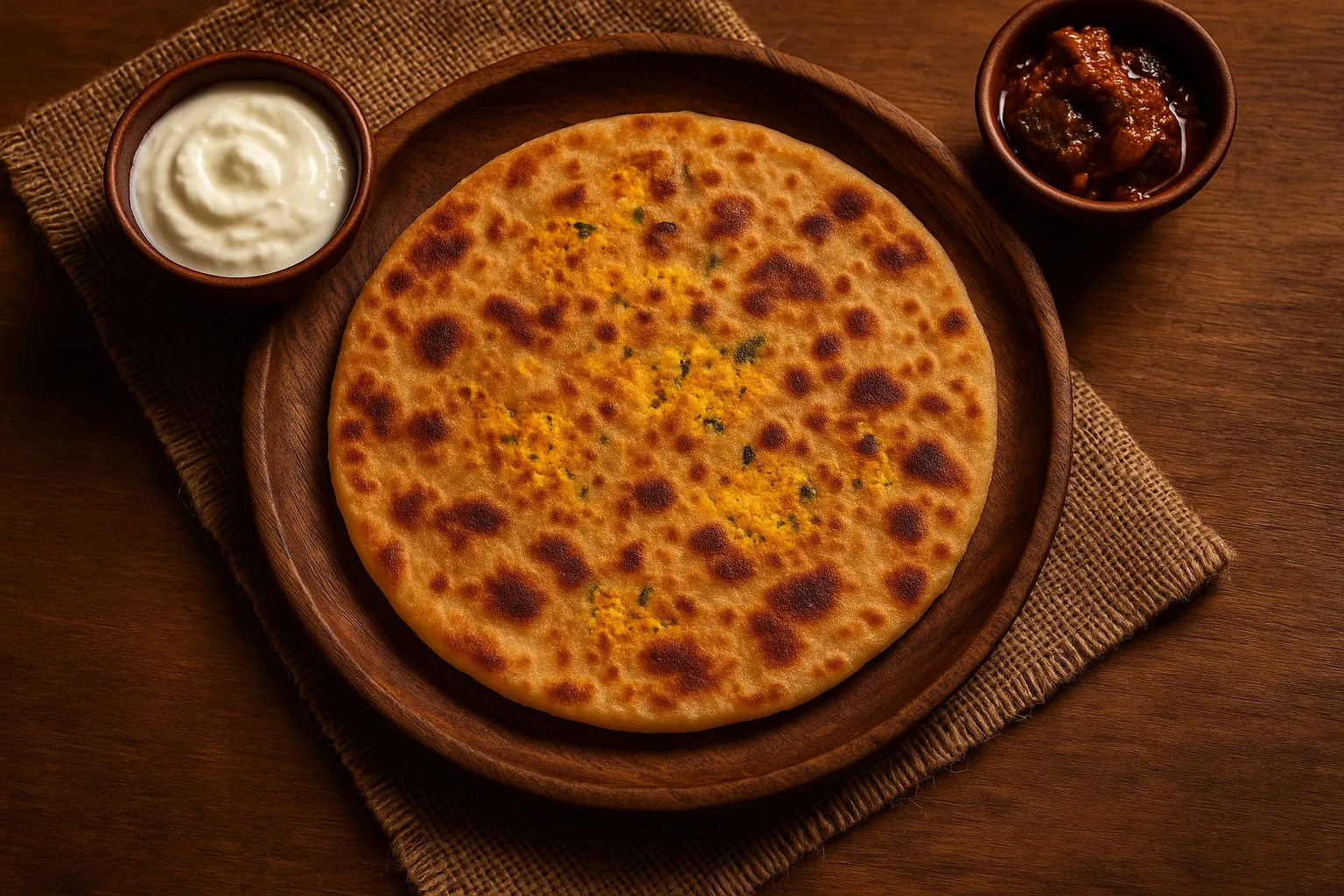
Datos Rápidos de Nutrición
Per 1 Paneer Paratha (100g)
| Nutriente | Cantidad |
|---|---|
| Calorías | 287 kcal |
| Proteínas | 9g |
| Carbohidratos | 28g |
| Fibra | 2.5g |
| Azúcares | 2g |
| Grasas | 15g |
| Calcio | 180mg |
| Hierro | 2.1mg |
| Phosphorus | 150mg |
| Sodio | 320mg |
Desglose de Macronutrientes
 ChatGPT
  Claude
  AI Mode
  Perplexity
CONSEJO DEL NUTRICIONISTA
Paneer paratha combines alto-quality vegetarian proteínas from paneer con complex carbohidratos from whole wheat. El proteínas and grasas content ayuda slow glucose absorption, making it más filling que plain parathas.
Mitos vs Realidad
MITO #1: Paneer Paratha Es Too Alto in Calorías for Pérdida de Peso
REALIDAD: Mientras 287 calorías por 100g es moderado, paneer paratha proporciona 9g proteínas and 2.5g fibra ese promote satiety. El key es control de porciones: límite to 1 paratha per meal, usar minimal ghee for cooking, and pair con yogurt and vegetables for a balanced meal.
MITO #2: Diabetics Debería Nunca Eat Paneer Paratha
REALIDAD: Proteínas and grasas from paneer slow glucose absorption, reducing azúcar en sangre spikes. Diabetics puede enjoy paneer paratha using whole wheat flour, controlling porciones (half to one paratha), and pairing con alto-fibra vegetables. Monitor individual response.
MITO #3: Paneer Paratha Has No Nutritional Value
REALIDAD: Paneer paratha delivers complete proteínas (9g), calcio (180mg), hierro (2.1mg), phosphorus (150mg), B vitaminas, and sustained energy from complex carbohidratos. Far from empty calorías, it's a nutrient-dense vegetarian meal.
MITO #4: You Must Usar Lots of Ghee for Authentic Taste
REALIDAD: Traditional recipes usar generous ghee, but you puede achieve genial flavor con minimal oil or ghee (1-2 teaspoons per paratha) using a non-stick pan. Este reduce calorías by 40-60 kcal per paratha sin sacrificing taste.
MITO #5: Paneer Es Difficult to Digest
REALIDAD: Paneer es easier to digest que muchos otro proteins. It's a fresco queso (not aged), contiene beneficioso bacteria, and el cooking process further aids digestibility. La mayoría personas tolerate paneer bien unless lactose intolerant.
MITO #6: Frozen Paneer Loses Nutritional Value
REALIDAD: Freezing paneer preserves proteínas, calcio, and la mayoría nutrientes. Texture puede change slightly (becomes crumbly), but nutritional value remains intact. Thaw naturally in el refrigerator antes usar.
NutriScore por Objetivos de Salud
| Objetivo de Salud | NutriScore | ¿Por qué esta puntuación? |
|---|---|---|
| Pérdida de Peso |  | 287 calorías requires control de porciones. Alto satiety from 9g proteínas. Límite to 1 paratha, usar minimal ghee, pair con vegetables. |
| Ganancia Muscular |  | Bueno proteínas source (9g), calcio apoya muscle contraction, moderado carbohidratos fuel recovery. Ideal post-workout breakfast con yogurt. |
| Control de Diabetes | | Proteínas and grasas slow glucose absorption. Usar whole wheat flour, control porciones, pair con fibra-rich vegetables. |
| Control del SOP | | Moderado GI cuando hecho con whole wheat. Proteínas apoya hormonal balance. Límite to 1 paratha, elegir bajo-grasas paneer. |
| Nutrición en el Embarazo | | Excellent calcio source (180mg), proteínas for fetal development, hierro for blood health, folate from whole wheat. Ensure paneer es hecho from pasteurized milk. |
| Viral/Recuperación de Gripe | | Easy to digest, proporciona proteínas for immune repair, sustained energy, calcio and zinc support recovery. Comfort food ese's gentle on el stomach. |
NUTRICIÓN PERSONALIZADA
Registra tus comidas con NutriScan para personalizados NutriScores based on your specific health goals!
Respuesta de Azúcar en Sangre to Paneer Paratha
Understanding cómo paneer paratha affects glucosa en sangre ayuda optimize porción sizes and meal pairings.
Curva Típica de Respuesta de Glucosa
Este gráfico muestra respuesta típica de glucosa en sangre for saludable individuals. Paneer paratha has moderado GI (55-65) con proteínas and grasas slowing absorption. Las respuestas individuales pueden variar. No es consejo médico.
Cómo Aplanar el Pico
El proteínas and grasas in paneer naturally slow glucose absorption. Enhance este effect con strategic pairings:
- 🥒 Cucumber raita or mixed vegetable raita - Adds cooling probiotics and fibra
- 🥗 Side salad con tomatoes, onions, cucumber - Fibra reduce overall glycemic load
- 🥛 Plain yogurt or buttermilk (chaas) - Proteínas and probiotics aid digestion
- 🌶️ Green chutney - Adds flavor sin azúcar, contiene antioxidantes
Evitar pairing con sugary drinks, pickles alto in azúcar, or additional frito items ese spike azúcar en sangre further.
Importancia Cultural
Paneer paratha es a beloved North Indian breakfast and comfort food con deep cultural roots.
In India:
- Originated in Punjab, ahora popular across North India
- Traditional breakfast or lunch dish in Punjabi households
- Commonly served at dhabas (roadside eateries) along highways
- Symbol of hospitality and hogar-cocido comfort food
- Variations include aloo paratha, mooli paratha, gobi paratha
- Frecuentemente enjoyed on lazy Sunday mornings con family
Preparation Traditions:
- Dough hecho from whole wheat flour (atta) for nutrition and texture
- Paneer filling seasoned con green chili, coriander, and spices
- Cocido on tawa (griddle) con ghee for authentic flavor
- Served hot con white butter, pickle, and yogurt
- Cada family has unique spice combinations passed through generations
Compara y Sustituye
Paneer Paratha vs Similar Indian Breads (Por 100g)
| Nutriente | 🧀 Paneer Paratha | 🥔 Aloo Paratha | 🫓 Plain Roti | 🫓 Plain Paratha |
|---|---|---|---|---|
| Calorías | 287 kcal | 250 kcal | 120 kcal | 320 kcal |
| Carbohidratos | 28g | 35g | 22g | 45g |
| Fibra | 2.5g | 3g | 3.5g | 2.8g |
| Proteínas | 9g | 5g | 4g | 6g |
| Grasas | 15g | 10g | 3g | 16g |
| Calcio | 180mg | 40mg | 20mg | 25mg |
| Hierro | 2.1mg | 1.5mg | 1.8mg | 2mg |
| Mejor Para | Alto proteínas, calcio | Menor calorías | Peso loss | Calorie density |
Preguntas Frecuentes
Es paneer paratha bueno for pérdida de peso?
Paneer paratha puede support pérdida de peso cuando prepared and consumed mindfully. Con 287 calorías por 100g and 9g proteínas, it proporciona bueno satiety ese previene overeating later.
Mejor practices for pérdida de peso:
- Límite to 1 paratha (100g) per meal maximum
- Usar minimal ghee or oil (1-2 teaspoons) on a non-stick tawa
- Opt for bajo-grasas paneer to reduce calorías by 30-40 kcal
- Pair con cucumber raita and salad instead of butter
- Consume at breakfast or lunch, evitar at dinner
- Elegir whole wheat flour for added fibra
Porción tip: One paratha proporciona sustained energy for 3-4 hours, eliminating el necesitar for snacking.
¿Pueden los diabéticos comer paneer paratha?
Yes, diabetics puede eat paneer paratha in moderación. El proteínas (9g) and grasas (15g) from paneer slow glucose absorption, resulting in a más gradual azúcar en sangre rise compared to plain parathas.
Tips for diabetics:
- Usar 100% whole wheat flour (menor GI que refined flour)
- Control porción size: half to one paratha maximum
- Cook con minimal ghee (1 teaspoon)
- Siempre pair con alto-fibra vegetables, raita, or salad
- Consume at breakfast or lunch, not dinner
- Monitor azúcar en sangre 2 hours después eating to understand your response
El moderado GI (55-65) combined con proteínas makes paneer paratha más diabetes-friendly que muchos otro Indian breads.
Cómo mucho proteínas es in paneer paratha?
A typical paneer paratha (100g) contiene aproximadamente 9 grams of proteínas. Este comes from two sources: paneer (queso requesón) contributes 6-7g, and whole wheat flour proporciona 2-3g.
For vegetarians seeking proteínas, paneer paratha ofrece alto-quality complete proteínas con todo esencial amino acids. To increase proteínas further, usar extra paneer in el filling or pair con yogurt (+5-6g proteínas por 100g).
Qué son el main beneficios para la salud of paneer paratha?
Key Benefits:
- Alto-Quality Proteínas: 9g apoya muscle maintenance, tissue repair, and satiety
- Calcio-Rich: 180mg per paratha strengthens bones and teeth, crucial for growing children and embarazo
- Sustained Energy: Complex carbohidratos from whole wheat provide 3-4 hours of stable energy
- Digestive Health: 2.5g fibra apoya gut health and regular bowel movements
- Nutriente-Dense: Hierro (2.1mg), phosphorus (150mg), B vitaminas for overall health
- Vegetarian-Friendly: Complete proteínas source for vegetarian and lacto-vegetarian diets
Cuando es el mejor tiempo to eat paneer paratha?
Depends on your goal:
- Pérdida de Peso: Breakfast (7-9 AM) for sustained morning energy; evitar at dinner
- Ganancia Muscular: Post-workout breakfast within 1-2 hours of training; proporciona proteínas and carbohidratos for recovery
- Diabetes: Breakfast or lunch paired con vegetables; evitar dinner cuando insulin sensitivity es menor
- General Health: Breakfast or lunch for sustained energy throughout el día
- Embarazo: Breakfast or lunch for calcio and proteínas needs
IMPORTANT NOTE
Evitar eating paneer paratha late at dinner (después 8 PM) if you're trying to lose peso, as el alto calorie and grasas content puede hinder grasas burning durante sleep.
Cómo to hacer paneer paratha healthier?
Transform your paneer paratha into a nutrition powerhouse con estos simple modifications:
Dough Improvements:
- Usar 100% whole wheat flour (atta) instead of todo-purpose flour
- Add 1-2 tablespoons of oat flour or multigrain flour for extra fibra
- Knead con water instead of milk to reduce calorías
Filling Enhancements:
- Elegir bajo-grasas paneer (reduce grasas by 30-40%)
- Add finely chopped vegetables: spinach, peas, onions, or bell peppers
- Season con herbs and spices instead of excessive salt
- Mix in flaxseed powder (1 teaspoon) for omega-3 fatty acids
Cooking Methods:
- Usar a non-stick tawa to minimize ghee/oil usage
- Límite to 1-2 teaspoons of ghee or oil per paratha
- Cook on medium heat to evitar burnt edges and ensure incluso cooking
Serving Suggestions:
- Pair con cucumber raita, green chutney, or mixed vegetable salad
- Skip el butter topping
- Drink buttermilk (chaas) instead of sugary beverages
Estos modifications puede reduce calorías by 50-80 kcal per paratha mientras boosting nutrition.
Puede paneer paratha be eaten durante embarazo?
Yes, paneer paratha es excellent for embarazo cuando hecho con pasteurized milk paneer. It proporciona esencial nutrientes for fetal development and maternal health.
Embarazo Benefits:
- Calcio: 180mg per paratha apoya fetal bone development
- Proteínas: 9g aids tissue growth and amniotic fluid production
- Hierro: 2.1mg previene anemia common durante embarazo
- Folate: From whole wheat flour, crucial for neural tube development
- Phosphorus: Apoya bone and teeth formation
Safety Guidelines:
- Siempre usar paneer hecho from pasteurized milk (check label)
- Cook paratha fresco and consume immediately
- Evitar leftover parathas stored for extended periods
- Usar minimal ghee if experiencing heartburn
- Pair con folate-rich vegetables like spinach
Pregnant women puede safely enjoy 1-2 paneer parathas diario as parte of a balanced diet.
Qué es el difference between paneer paratha and queso paratha?
Mientras ambos son stuffed flatbreads, they have significant nutritional and cultural differences:
Paneer Paratha:
- Hecho con paneer (Indian queso requesón from curdled milk)
- Fresco, mild flavor; crumbly texture
- Mayor proteínas (18-20g por 100g paneer)
- Menor in grasas and sodio
- Traditional Indian spices (cumin, coriander, green chili)
- Easier to digest
Queso Paratha:
- Hecho con processed queso (like Amul, Cheddar, or Mozzarella)
- Rich, salty flavor; melts cuando heated
- Menor proteínas (10-15g por 100g queso)
- Mayor in grasas, sodio, and calorías
- Frecuentemente paired con ketchup or sauces
- Puede contain additives and preservatives
Recommendation: Paneer paratha es nutritionally superior for la mayoría health goals, especialmente peso management, diabetes, and embarazo.


Similar Nutritivo Indian Foods
4505 Chicharrones Classic Chili Salt
7 Eleven Japan Crispy Corn Cheese
Explore Más Nutrition Tools & Resources
App de agua y calorías gratis con registro diario
App de ayuno intermitente gratis con temporizador
App de macros: NutriScan las rellena desde una foto
App de plan de comidas para volumen limpio
App de plan de comidas vegetariano con objetivo de proteína
App de Plan de Dieta India Vegetariana y No Vegetariana
App de plan de dieta mediterránea que cuenta el aceite
App nutricionista con IA que lee tus comidas
App para Subir de Peso: Plan de Dieta con IA
Ayuno Intermitente para Mujeres, Timer y Registro de Comidas
Coach de pérdida de peso ChatGPT: con registro
Contador de Calorías Activado por Voz - Di tus Comidas y Rastrea Nutrición Sin Manos — 2026
Contador de calorías ChatGPT: alternativa que no lo olvida
Contador de Calorías con IA: calorías con fotos, gratis
Contador de calorías de comida rápida con foto
Contador de calorías gratis con fotos | NutriScan
Contador de Calorías para Comida Española - Información Nutricional Instantánea — 2026
Escáner de Etiquetas Nutricionales para tu Ración Real
Generador Lista de Compras Keto
Generador Lista de Compras Mensual
Guía Proteína Tercer Trimestre
Plan de comidas semanal con calorías y lista de compras
Plan de dieta ChatGPT: alternativa que registra comidas
Plan de Dieta para Ganar Peso España