Plant Based Milk: calorías, nutrición y beneficios para la salud
Lactose-gratis, sustainable alternatives to dairy milk con options for cada health goal and taste preference.
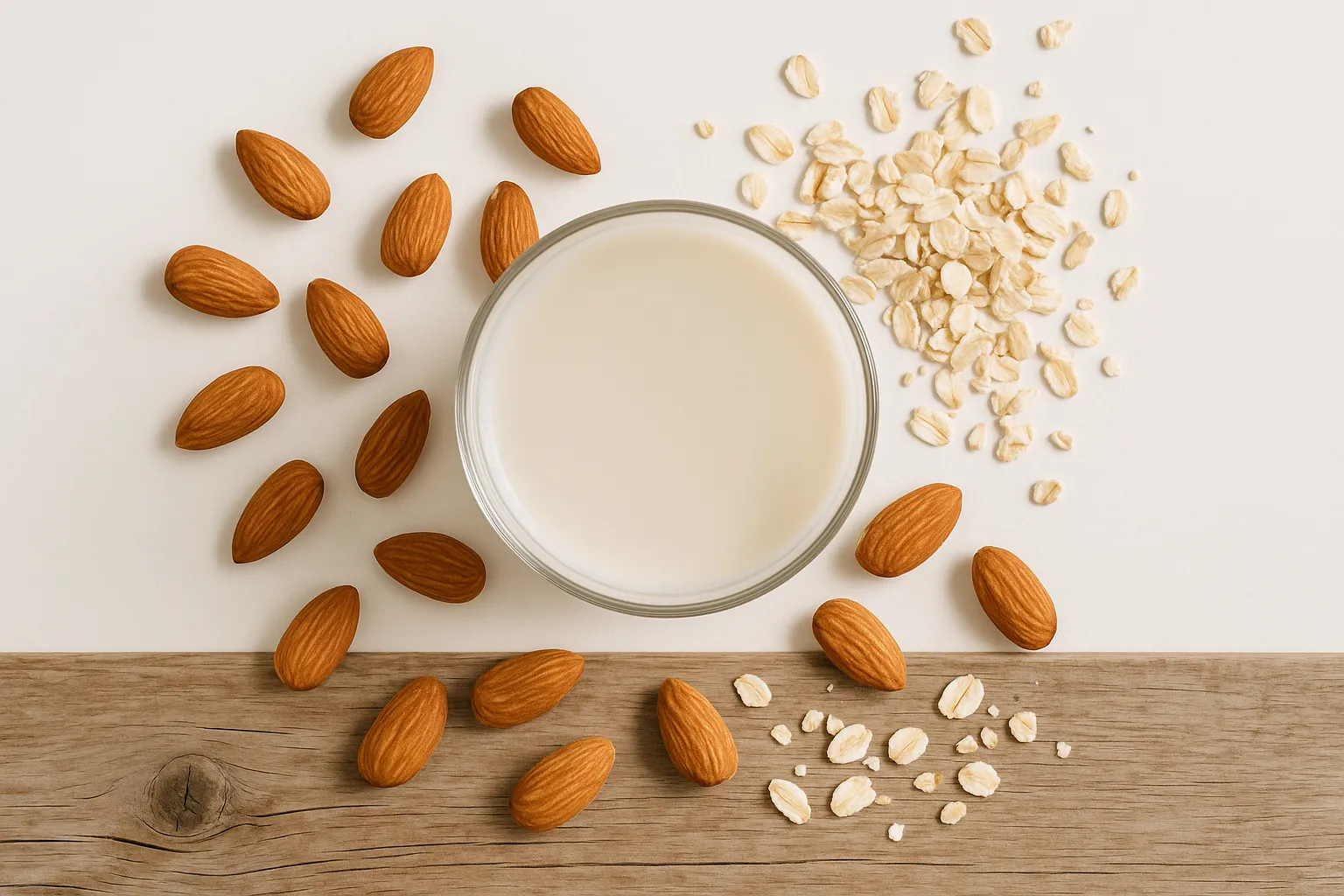
Datos Rápidos de Nutrición
Per 1 Cup Unsweetened Almendra Milk (240ml)
| Nutriente | Cantidad |
|---|---|
| Calorías | 37 kcal |
| Proteínas | 1g |
| Carbohidratos | 1.5g |
| Fibra | 0.5g |
| Azúcares | 0g |
| Grasas | 2.5g |
| Calcio | 450mg |
| Vitamina D | 100 IU |
| Vitamina E | 7.5mg |
| Potasio | 160mg |
Desglose de Macronutrientes
 ChatGPT
  Claude
  AI Mode
  Perplexity
CONSEJO DEL NUTRICIONISTA
Unsweetened plant milks offer 50-80% fewer calorías que dairy milk mientras providing comparable calcio cuando fortified. Siempre elegir fortified versions to meet calcio needs (300-450mg por taza).
Mitos vs Realidad
MITO #1: Plant Milk Has Less Calcio Que Dairy
REALIDAD: Fortified plant milks contain similar or más calcio que dairy milk (300-450mg vs 300mg por taza). Calcio carbonate in plant milk es bien-absorbed. Check labels to confirm fortification.
MITO #2: Todo Plant Milks Have el Mismo Nutrition
REALIDAD: Proteínas ranges from 0.5g (coconut) to 8g (soy/pea milk). Calorías vary 37-150 por taza. Carbohidratos range 1g (almendra) to 19g (oat). Elegir based on your health goals.
MITO #3: Plant Milk Has No Proteínas
REALIDAD: Soy milk proporciona 7-8g proteínas por taza, comparable to dairy milk. Pea milk ofrece 8g. Mientras almendra and coconut son menor in proteínas, muchos personas meet proteínas needs through otro foods.
MITO #4: Coconut Milk Es Unhealthy Due to Grasas Saturadas
REALIDAD: Coconut milk's medium-chain triglycerides (MCTs) behave differently que animal grasas saturadas, puede support metabolismo, and son quickly usado for energy rather que stored as grasas. Todavía, moderación advised.
MITO #5: Sweetened and Unsweetened Son Nearly el Mismo
REALIDAD: Sweetened versions add 60-100+ calorías and 10-20g added azúcar por taza. Este turns a bajo-calorie beverage into a sugary drink. Siempre check labels; "original" frecuentemente means sweetened.
MITO #6: Homemade Plant Milk Es Siempre Healthier
REALIDAD: Homemade lacks fortification. You'll miss esencial calcio (450mg) and vitamina D unless supplemented separately. Tienda-bought fortified versions ensure adequate micronutrient intake.
NutriScore por Objetivos de Salud
| Objetivo de Salud | NutriScore | ¿Por qué esta puntuación? |
|---|---|---|
| Pérdida de Peso |  | Ultra-bajo calorías (37 kcal/cup), no azúcar, alto volume. Perfect dairy replacement for calorie deficit. Evitar sweetened versions. |
| Ganancia Muscular |  | Bajo proteínas (1g) inadequate for construcción muscular. Elegir soy milk (7g) or add proteínas powder. Usar as base, not primary proteínas source. |
| Control de Diabetes | | Minimal carbohidratos (1.5g), zero azúcar, negligible azúcar en sangre impact. Elegir unsweetened solo. Almendra milk doesn't spike glucose. |
| Control del SOP | | Bajo carb, bajo calorie, no insulin spike. Excellent dairy alternative for insulin resistance. Fortified calcio apoya hormone regulation. |
| Nutrición en el Embarazo |  | Fortified versions provide calcio (450mg) and vitamina D esencial for fetal bone development. Ensure proteínas intake from otro sources. |
| Viral/Recuperación de Gripe | | Easy to digest, fortified con vitamina D for immunity. Menor proteínas limits score. Combine con proteínas-rich foods for optimal recovery. |
NUTRICIÓN PERSONALIZADA
Registra tus comidas con NutriScan para personalizados NutriScores based on your specific health goals!
Respuesta de Azúcar en Sangre to Plant Milk
Understanding cómo diferente plant milks affect glucosa en sangre ayuda you elegir el mejor option for your needs.
Curva Típica de Respuesta de Glucosa (Unsweetened)
Este gráfico muestra respuesta típica de glucosa en sangre for unsweetened plant milk in general saludable individuals. Sweetened versions va cause significant spikes. Las respuestas individuales pueden variar. No es consejo médico.
Choosing el Correcto Plant Milk for Blood Azúcar
Unsweetened plant milks have minimal impact on glucosa en sangre. Comparison by carb content:
- 🥛 Almendra milk (unsweetened) - 1.5g carbohidratos, flat glucose curve, mejor para diabetes
- 🥥 Coconut milk (unsweetened) - 1g carbohidratos, minimal impact, keto-friendly
- 🌾 Oat milk - 19g carbohidratos, moderado impact, pair con proteínas
- 🫘 Soy milk (unsweetened) - 4g carbohidratos, proteínas slows absorption
Critical: Sweetened versions add 10-20g azúcar, causing azúcar en sangre spikes similar to soda. Siempre elegir unsweetened.
Importancia Cultural
Plant-based milks have ancient roots across cultures, experiencing modern resurgence due to health, environmental, and ethical concerns.
Historical Origins:
- Almendra milk documented in medieval Europe and Middle Eastern cuisine since 13th century
- Soy milk originated in China over 2,000 years ago durante Han dynasty
- Indian "badam milk" (almendra milk) traditional in Ayurvedic practices
- Coconut milk staple in Southeast Asian and South Indian cuisine for centuries
Modern Plant Milk Revolution:
- Global plant milk market grew 61% from 2016-2022
- Environmental concerns drive adoption (90% less water que dairy)
- Lactose intolerance affects 65% of global population
- Vegan movement accelerates innovation
In India Today:
- Traditional badam milk meets modern almendra milk alternatives
- Soy milk gaining acceptance in urban areas
- Coconut milk largo established in South Indian cooking
- Oat milk newest entrant in metro supermarkets
Sustainability Impact:
- Almendra milk: 90% less water que dairy, but water-intensive crop
- Oat milk: Lowest environmental impact, grows in diverse climates
- Soy milk: Efficient proteínas production, deforestation concerns
- Coconut milk: Sustainable if sourced responsibly
Compara y Sustituye
Plant Milk Comparison (Per 240ml/1 Cup, Unsweetened)
| Nutriente | 🥛 Almendra | 🫘 Soy | 🌾 Oat | 🥥 Coconut | 🥛 Dairy (Whole) |
|---|---|---|---|---|---|
| Calorías | 37 kcal | 105 kcal | 130 kcal | 45 kcal | 150 kcal |
| Carbohidratos | 1.5g | 4g | 19g | 1g | 12g |
| Fibra | 0.5g | 1g | 2g | 0g | 0g |
| Proteínas | 1g | 7g | 3g | 0.5g | 8g |
| Grasas | 2.5g | 4g | 2.5g | 4g | 8g |
| Calcio (fortified) | 450mg | 300mg | 350mg | 450mg | 300mg |
| Azúcar | 0g | 1g | 4g | 0g | 12g |
| Vitamina D (fortified) | 100 IU | 120 IU | 100 IU | 100 IU | 124 IU |
| Mejor Para | Peso loss, diabetes | Proteínas needs, ganancia muscular | Creamy texture, barista | Bajo carb, keto | Not lactose intolerant |
Preguntas Frecuentes
Cuál plant milk has el la mayoría proteínas?
Soy milk leads con 7-8g proteínas por taza, nearly matching dairy milk (8g). Pea milk también ofrece 8g. Este makes soy and pea milk mejor choices for construcción muscular, alto-proteínas diets, and replacing dairy proteínas.
Proteínas comparison: Soy (7-8g) > Oat (3g) > Almendra (1g) > Coconut (0.5g).
If using bajo-proteínas plant milk, ensure adequate proteínas intake from otro sources (legumes, tofu, nuts, seeds).
Do plant milks have enough calcio?
Yes, fortified plant milks contain 300-450mg calcio por taza, matching or exceeding dairy milk (300mg). Fortification uses calcio carbonate or tricalcium phosphate, cuál son bien-absorbed by el body.
Critical considerations:
- Siempre check labels for "fortified" or "calcio-enriched"
- Homemade plant milk lacks fortification (nearly zero calcio)
- Shake carton antes pouring (calcio settles at bottom)
- Vitamina D in fortified milk enhances calcio absorption
Adults necesitar 1,000-1,200mg calcio diario; 2-3 cups fortified plant milk meets 60-100% of needs.
Es plant milk bueno for pérdida de peso?
Yes, unsweetened plant milk es excellent for pérdida de peso due to ultra-bajo calorías and alto volume. Comparison to whole dairy milk (150 cal/cup):
- Almendra milk: 37 cal (75% fewer calorías)
- Coconut milk: 45 cal (70% fewer calorías)
- Soy milk: 105 cal (30% fewer calorías)
Peso loss strategies:
- Siempre elegir unsweetened (sweetened adds 60-100 cal)
- Usar in coffee, smoothies, oatmeal to reduce calorías
- Track con NutriScan to stay within calorie target
- Combine con proteínas for satiety
Switching from dairy to plant milk saves 400-800 calorías weekly.
Cuál plant milk es mejor para diabetes?
Unsweetened almendra milk and coconut milk son mejor para diabetes due to minimal carbohydrate content and negligible azúcar en sangre impact.
Carb comparison (por taza):
- Almendra milk: 1.5g carbohidratos (mejor)
- Coconut milk: 1g carbohidratos (mejor)
- Soy milk: 4g carbohidratos (bueno)
- Oat milk: 19g carbohidratos (usar cautiously, pair con proteínas)
Critical for diabetics:
- Nunca consume sweetened versions (10-20g added azúcar)
- Watch for "original" labels (frecuentemente sweetened)
- Monitor glucosa en sangre response
- Check for added thickeners con hidden carbohidratos
Siempre consult your healthcare provider aproximadamente dietary changes.
Puede I usar plant milk durante embarazo?
Yes, fortified plant milks son safe and nutritivo durante embarazo, providing esencial calcio and vitamina D for fetal bone development.
Embarazo considerations:
- Elegir fortified versions (300-450mg calcio, 100+ IU vitamina D por taza)
- Soy milk proporciona proteínas similar to dairy (7-8g por taza)
- Consume 2-3 cups diario to meet calcio needs
- Ensure adequate proteínas intake from varied sources if using bajo-proteínas plant milk
- Evitar sweetened versions (excess azúcar)
Pregnant women necesitar 1,000mg calcio and 600 IU vitamina D diario. Fortified plant milk ayuda meet estos requirements in lactose-intolerant or vegan pregnancies.
Es homemade or tienda-bought plant milk mejor?
Tienda-bought fortified plant milk es nutritionally superior due to esencial fortification ese homemade versions lack.
Tienda-bought advantages:
- Fortified con calcio (300-450mg por taza)
- Contiene vitamina D for calcio absorption
- Frecuentemente fortified con B12 (vegan esencial)
- Consistent nutritional content
- Convenient, shelf-stable
Homemade advantages:
- No additives, emulsifiers, or preservatives
- Control over sweetness and flavor
- Más economical largo-term
- Fresher taste
Recommendation: If making homemade plant milk, supplement con calcio (500-600mg) and vitamina D (600-800 IU) from otro sources to prevent deficiency. For convenience and complete nutrition, elegir tienda-bought fortified versions.
Cómo do I elegir el correcto plant milk for my goal?
Quick selection guide:
Pérdida de Peso/Diabetes: Unsweetened almendra or coconut milk (lowest calorías, minimal carbohidratos)
Ganancia Muscular/Proteínas Needs: Soy milk or pea milk (7-8g proteínas por taza)
Coffee/Barista: Oat milk (creamy texture, froths bien)
Cooking/Curries: Coconut milk (rich flavor, heat-stable)
Todo-Purpose: Soy milk (balanced nutrition, versatile)
Keto/Bajo-Carb: Coconut or almendra milk (1-1.5g carbohidratos)
Children/Embarazo: Fortified soy milk (proteínas + calcio)
Siempre read labels; evitar "original" (usualmente sweetened), elegir "unsweetened," and verify fortification con calcio and vitamina D.


Alimentos Nutritivos Similares
4505 Chicharrones Classic Chili Salt
7 Eleven Japan Crispy Corn Cheese
Explore Más Nutrition Tools & Resources
App de agua y calorías gratis con registro diario
App de ayuno intermitente gratis con temporizador
App de macros: NutriScan las rellena desde una foto
App de plan de comidas para volumen limpio
App de plan de comidas vegetariano con objetivo de proteína
App de Plan de Dieta India Vegetariana y No Vegetariana
App de plan de dieta mediterránea que cuenta el aceite
App nutricionista con IA que lee tus comidas
App para Subir de Peso: Plan de Dieta con IA
Ayuno Intermitente para Mujeres, Timer y Registro de Comidas
Coach de pérdida de peso ChatGPT: con registro
Contador de Calorías Activado por Voz - Di tus Comidas y Rastrea Nutrición Sin Manos — 2026
Contador de calorías ChatGPT: alternativa que no lo olvida
Contador de Calorías con IA: calorías con fotos, gratis
Contador de calorías de comida rápida con foto
Contador de calorías gratis con fotos | NutriScan
Contador de Calorías para Comida Española - Información Nutricional Instantánea — 2026
Escáner de Etiquetas Nutricionales para tu Ración Real
Generador Lista de Compras Keto
Generador Lista de Compras Mensual
Guía Proteína Tercer Trimestre
Plan de comidas semanal con calorías y lista de compras
Plan de dieta ChatGPT: alternativa que registra comidas
Plan de Dieta para Ganar Peso España