Plant Proteínas: calorías, nutrición y beneficios para la salud
Sustainable, complete proteínas sources from tofu, tempeh, legumes, and más for cada health goal.
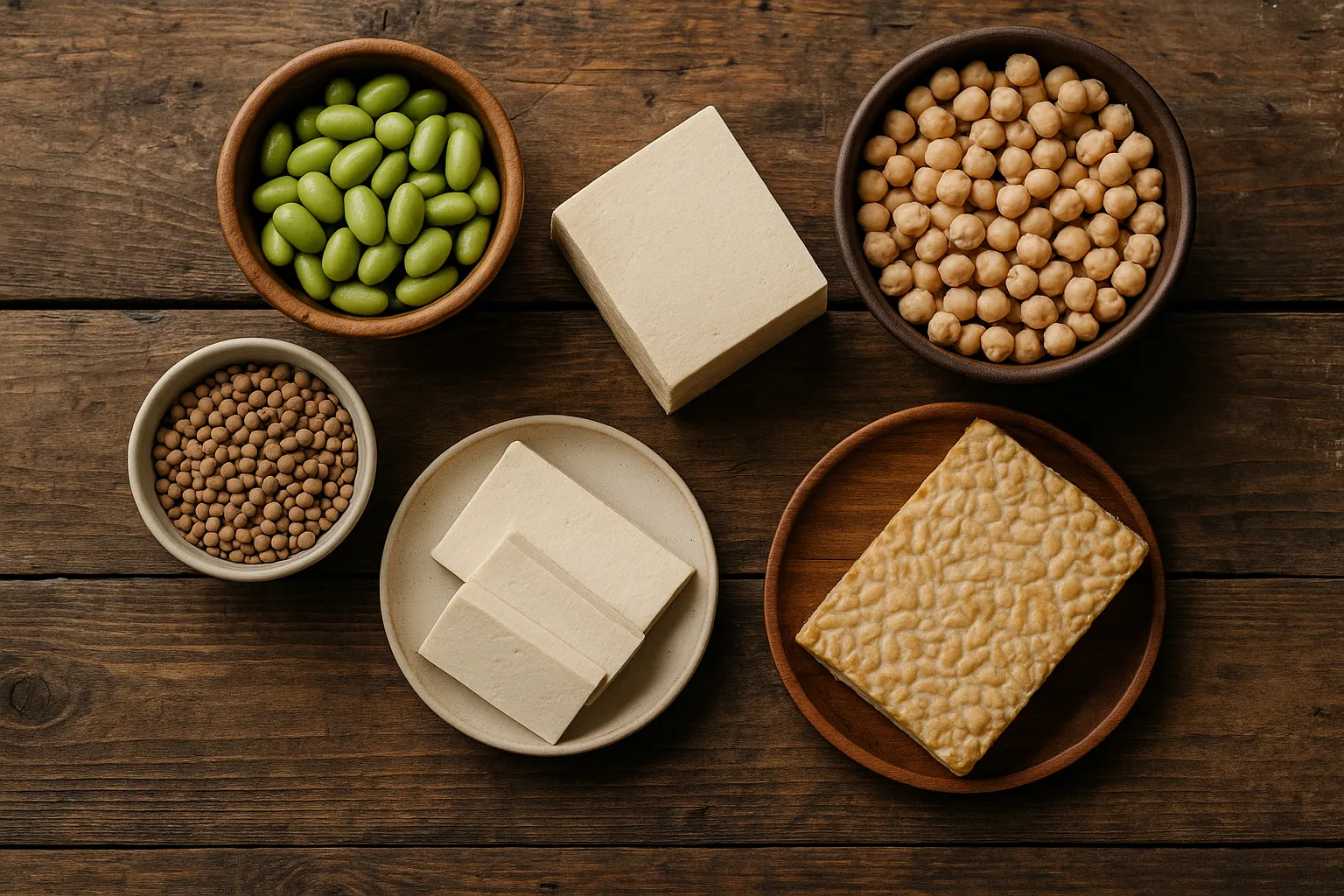
Datos Rápidos de Nutrición
Por 100g Firm Tofu
| Nutriente | Cantidad |
|---|---|
| Calorías | 144 kcal |
| Proteínas | 17g |
| Carbohidratos | 3g |
| Fibra | 2g |
| Azúcares | 1g |
| Grasas | 9g |
| Calcio | 350mg |
| Hierro | 2.7mg |
| Magnesio | 58mg |
| Zinc | 1.6mg |
Desglose de Macronutrientes
 ChatGPT
  Claude
  AI Mode
  Perplexity
CONSEJO DEL NUTRICIONISTA
Plant proteins provide complete nutrition cuando varied throughout el día. Tofu and tempeh son complete proteins containing todo nine esencial amino acids. El hierro in plant proteins es enhanced 3-4x cuando paired con vitamina C sources.
Mitos vs Realidad
MITO #1: Plant Proteínas Es Incomplete
REALIDAD: Soy proteins (tofu, tempeh, edamame) son complete proteins con todo 9 esencial amino acids. Otro plant proteins become complete cuando varied throughout el día - no necesitar to combine in one meal.
MITO #2: You Puede't Build Muscle on Plant Proteínas
REALIDAD: Plant-based athletes achieve similar ganancia musculars as omnivores cuando consuming adequate proteínas (1.6-2.2g/kg body peso). El key es total proteínas intake, not source. Vegan bodybuilders prove este diario.
MITO #3: Plant Proteínas Causes Estrogen Dominance
REALIDAD: Soy phytoestrogens don't affect testosterone or estrogen levels in men. Multiple los estudios muestran no feminization effects. In fact, soy puede reduce prostate cancer risk. Safe for men and women.
MITO #4: Plant Proteínas Es Hard to Digest
REALIDAD: Digestibility varies by source. Tofu and tempeh (fermented) son 90-95% digestible, similar to meat. El fibra in legumes puede cause gas initially, but gut adaptation occurs within 2-3 weeks of regular consumption.
MITO #5: Plant Proteins Son Bajo in Esencial Nutrientes
REALIDAD: Plant proteins provide hierro, calcio, zinc, and magnesio. Tofu has 350mg calcio por 100g (35% valor diario). El nutrient profile frecuentemente exceeds animal proteins, con added benefits of fibra and phytonutrients.
MITO #6: You Necesitar Dairy for Strong Bones
REALIDAD: Plant proteins fortified con calcio (tofu, plant milk) provide excellent bone support. Los estudios muestran vegan diets con adequate calcio maintain bone density. El key es total calcio intake (1000-1200mg/día), not source.
NutriScore por Objetivos de Salud
| Objetivo de Salud | NutriScore | ¿Por qué esta puntuación? |
|---|---|---|
| Pérdida de Peso |  | Bajo calorie density, alto satiety from proteínas + fibra. Tofu proporciona 17g proteínas for solo 144 calorías. |
| Ganancia Muscular | | Complete amino acid profile in soy proteins. 17-19g proteínas por 100g in tofu/tempeh apoya muscle synthesis. |
| Control de Diabetes | | Bajo glycemic impact, minimal carbohidratos. El fibra and proteínas improve insulin sensitivity. |
| Control del SOP | | Anti-inflammatory properties, hormone-balancing phytoestrogens improve SOP markers. |
| Nutrición en el Embarazo | | Rich in folate, hierro, calcio. Soy proteins safe durante embarazo con added cardiovascular benefits. |
| Viral/Recuperación de Gripe |  | Complete proteínas for immune repair, zinc for immunity. Easy to digest cuando cocido soft. |
NUTRICIÓN PERSONALIZADA
Registra tus comidas con NutriScan para personalizados NutriScores based on your specific health goals!
Respuesta de Azúcar en Sangre to Plant Proteínas
Understanding cómo plant proteins affect glucosa en sangre ayuda con meal planning and control de porciones.
Curva Típica de Respuesta de Glucosa
Este gráfico muestra respuesta típica de glucosa en sangre para individuos sanos en general. Las respuestas individuales pueden variar. No es consejo médico.
Cómo to Optimize Absorption
Plant proteins have minimal glycemic impact, but pairing strategically enhances nutrient absorption:
- 🍋 Vitamina C sources (lemon, tomato, bell pepper) - Aumenta hierro absorption 3-4x
- 🥬 Leafy greens (spinach, kale) - Proporciona vitamina K and calcio for salud ósea
- 🍚 Whole grains (brown rice, quinoa) - Complete amino acid profile cuando combined
- 🥑 Saludable fats (avocado, nuts, olive oil) - Enhances absorption of grasas-soluble vitaminas
Este combination maximizes nutrient bioavailability mientras maintaining stable azúcar en sangre levels throughout el día.
Importancia Cultural
Plant proteins have sustained civilizations for millennia, con cada culture developing unique preparation methods.
In India:
- Paneer, tofu, and dal son dietary staples providing 40-60% of proteínas intake
- Ayurvedic tradition: legumes balance doshas and provide grounding energy
- Religious significance: esencial proteínas source durante fasting periods
- Regional specialties: Bengali chholar dal, Punjabi rajma, South Indian sambar
Global Impact:
- Soy cultivation dates atrás 5,000 years in China
- Tofu invented durante Han Dynasty (206 BCE - 220 CE)
- Buddhist monks spread tofu across Asia as meat alternative
- Modern resurgence: plant proteínas market growing 14% annually
Compara y Sustituye
Plant Proteínas Sources (Por 100g)
| Nutriente | 🥔 Tofu | 🌾 Tempeh | 🫘 Lentils (cocido) | 🥜 Peanut Butter |
|---|---|---|---|---|
| Calorías | 144 kcal | 193 kcal | 116 kcal | 588 kcal |
| Carbohidratos | 3g | 9g | 20g | 20g |
| Fibra | 2g | 5g | 8g | 6g |
| Proteínas | 17g | 19g | 9g | 25g |
| Grasas | 9g | 11g | 0.4g | 50g |
| Hierro | 2.7mg | 2.7mg | 3.3mg | 1.9mg |
| Calcio | 350mg | 111mg | 19mg | 49mg |
| Zinc | 1.6mg | 1.8mg | 1.3mg | 2.5mg |
| Mejor Para | Bajo-carb, versatile | Fermented gut health | Alto fibra, budget | Alto calorías, taste |
Preguntas Frecuentes
Es plant proteínas bueno for ganancia muscular?
Yes, plant proteínas effectively builds muscle cuando consumed in adequate amounts and varied sources. Tofu proporciona 17g proteínas por 100g, tempeh 19g.
Mejor practices for ganancia muscular:
- Target 1.6-2.2g proteínas per kg body peso diario
- Combine complementary sources throughout día (soy, legumes, grains, nuts)
- Tiempo proteínas intake: within 2 hours post-workout for optimal synthesis
- Consider plant-based proteínas powder for convenience (20-25g per scoop)
Los estudios muestran plant-based athletes achieve similar ganancia musculars as omnivores cuando total proteínas intake es matched.
Puede plant proteínas help con pérdida de peso?
Plant proteins excel for pérdida de peso through alto satiety, menor calorie density, and fibra content. Tofu has solo 144 calorías por 100g con 17g proteínas.
Peso loss strategies:
- Include plant proteínas con cada meal to maintain fullness
- Usar tofu/tempeh as bajo-calorie meat substitutes (save 50-100 calorías por porción)
- El fibra in legumes reduce overall calorie absorption by 5-10%
- Thermic effect: plant proteins burn 20-30% of calorías durante digestion
Recomendado intake: 25-30g proteínas per meal for optimal satiety and muscle preservation durante pérdida de peso.
Cómo mucho plant proteínas do I necesitar diario?
Minimum Requirements:
- Sedentary adults: 0.8g per kg body peso (56g for 70kg persona)
- Active individuals: 1.2-1.4g per kg
- Athletes/ganancia muscular: 1.6-2.2g per kg
- Embarazo: Add 25g to baseline requirements
For vegans: Aim for el mayor end due to slightly menor digestibility (85-95% vs 95-100% for animal proteins).
Practical example: 70kg vegan athlete needs 112-154g diario. Este equals: 200g tofu (34g) + 1 cup cocido lentils (18g) + 2 tbsp peanut butter (8g) + proteínas shake (20g) + snacks (32g).
Qué son el mejor plant proteínas sources?
Top 10 Plant Proteins (por 100g):
- Hemp seeds: 32g proteínas, complete amino acids
- Peanut butter: 25g proteínas, versatile
- Tempeh: 19g proteínas, fermented for gut health
- Tofu: 17g proteínas, bajo-carb, versatile
- Edamame: 11g proteínas, complete amino acids
- Lentils: 9g cocido, alto fibra, budget-friendly
- Chickpeas: 9g cocido, versatile in meals
- Quinoa: 4g cocido, complete proteínas grain
- Nutritional yeast: 50g por 100g, B12 fortified
- Spirulina: 57g por 100g, superfood but pequeño porciones
Complete proteins (todo 9 esencial amino acids): Soy (tofu, tempeh, edamame), quinoa, hemp, chia.
Cuando es el mejor tiempo to eat plant proteínas?
Depends on your goal:
- Ganancia Muscular: Within 2 hours post-workout (proteínas synthesis window). También consume 20-30g antes bed for overnight muscle repair.
- Pérdida de Peso: Con cada meal (3-5 times diario) to maintain satiety and preserve muscle mass.
- Vegan Athletes: Distribute across 4-5 meals for continuous amino acid availability.
- General Health: Spread throughout día (breakfast, lunch, dinner, snacks) for optimal utilization.
IMPORTANT NOTE
Unlike animal proteins con faster digestion, plant proteins benefit from distribution across multiple meals for complete amino acid coverage.
Do I necesitar to combine plant proteins?
Not in a single meal - your body pools amino acids throughout el día.
Modern Understanding:
- El "complete proteínas at cada meal" myth es outdated
- Eating varied plant proteins over 24 hours proporciona todo esencial amino acids
- Exception: Soy proteins (tofu, tempeh, edamame) son ya complete
Classic Combinations (optional for convenience):
- Rice + beans (complete amino acid profile)
- Hummus + whole wheat pita
- Peanut butter + whole grain bread
- Lentil curry + brown rice
Practical advice: Focus on variety throughout el semana rather que perfect combinations in cada meal. Track con NutriScan aplicación to ensure adequate total proteínas intake.
Son todoí cualquier side effects of plant proteínas?
La mayoría personas tolerate plant proteins bien, but initial adjustments puede occur:
Common (temporary) effects:
- Gas/bloating: From increased fibra, especialmente legumes. Reduce by soaking beans, cooking thoroughly, starting con pequeño porciones, and allowing 2-3 weeks for gut adaptation.
- Digestive adjustment: Increase plant proteínas gradually (add 5-10g cada pocos días).
Rare concerns:
- Soy allergies: Affects 0.3% of population. Symptoms include hives, digestive upset.
- Thyroid interference: Solo in personas con iodine deficiency or hypothyroidism consuming excessive crudo soy. Cocido soy (tofu, tempeh) es safe in normal amounts.
Solutions: Elegir fermented options (tempeh, miso) for mejor digestibility; combine multiple sources; ensure adequate B12 supplementation on vegan diets.
Puede children eat plant proteínas exclusively?
Yes, con proper planning. Children puede thrive on plant-based diets cuando nutritionally adequate.
Key considerations:
- Proteínas needs: Ages 1-3: 13g/día; 4-8: 19g/día; 9-13: 34g/día
- Nutriente focus: Ensure adequate B12, hierro, zinc, calcio, vitamina D, omega-3s
- Energy density: Children necesitar calorie-dense foods (nut butters, avocado, tofu) due to smaller stomach capacity
American Academy of Pediatrics confirms bien-planned plant-based diets support normal growth and development. Consult pediatrician and consider fortified foods or supplements for B12, vitamina D, and DHA.


Alimentos Nutritivos Similares
4505 Chicharrones Classic Chili Salt
7 Eleven Japan Crispy Corn Cheese
Explore Más Nutrition Tools & Resources
App de agua y calorías gratis con registro diario
App de ayuno intermitente gratis con temporizador
App de macros: NutriScan las rellena desde una foto
App de plan de comidas para volumen limpio
App de plan de comidas vegetariano con objetivo de proteína
App de Plan de Dieta India Vegetariana y No Vegetariana
App de plan de dieta mediterránea que cuenta el aceite
App nutricionista con IA que lee tus comidas
App para Subir de Peso: Plan de Dieta con IA
Ayuno Intermitente para Mujeres, Timer y Registro de Comidas
Coach de pérdida de peso ChatGPT: con registro
Contador de Calorías Activado por Voz - Di tus Comidas y Rastrea Nutrición Sin Manos — 2026
Contador de calorías ChatGPT: alternativa que no lo olvida
Contador de Calorías con IA: calorías con fotos, gratis
Contador de calorías de comida rápida con foto
Contador de calorías gratis con fotos | NutriScan
Contador de Calorías para Comida Española - Información Nutricional Instantánea — 2026
Escáner de Etiquetas Nutricionales para tu Ración Real
Generador Lista de Compras Keto
Generador Lista de Compras Mensual
Guía Proteína Tercer Trimestre
Plan de comidas semanal con calorías y lista de compras
Plan de dieta ChatGPT: alternativa que registra comidas
Plan de Dieta para Ganar Peso España