Raita: calorías, nutrición y beneficios para la salud
A cooling, probiotic-rich yogurt side dish ese complements spicy meals mientras delivering proteínas, calcio, and digestive benefits.
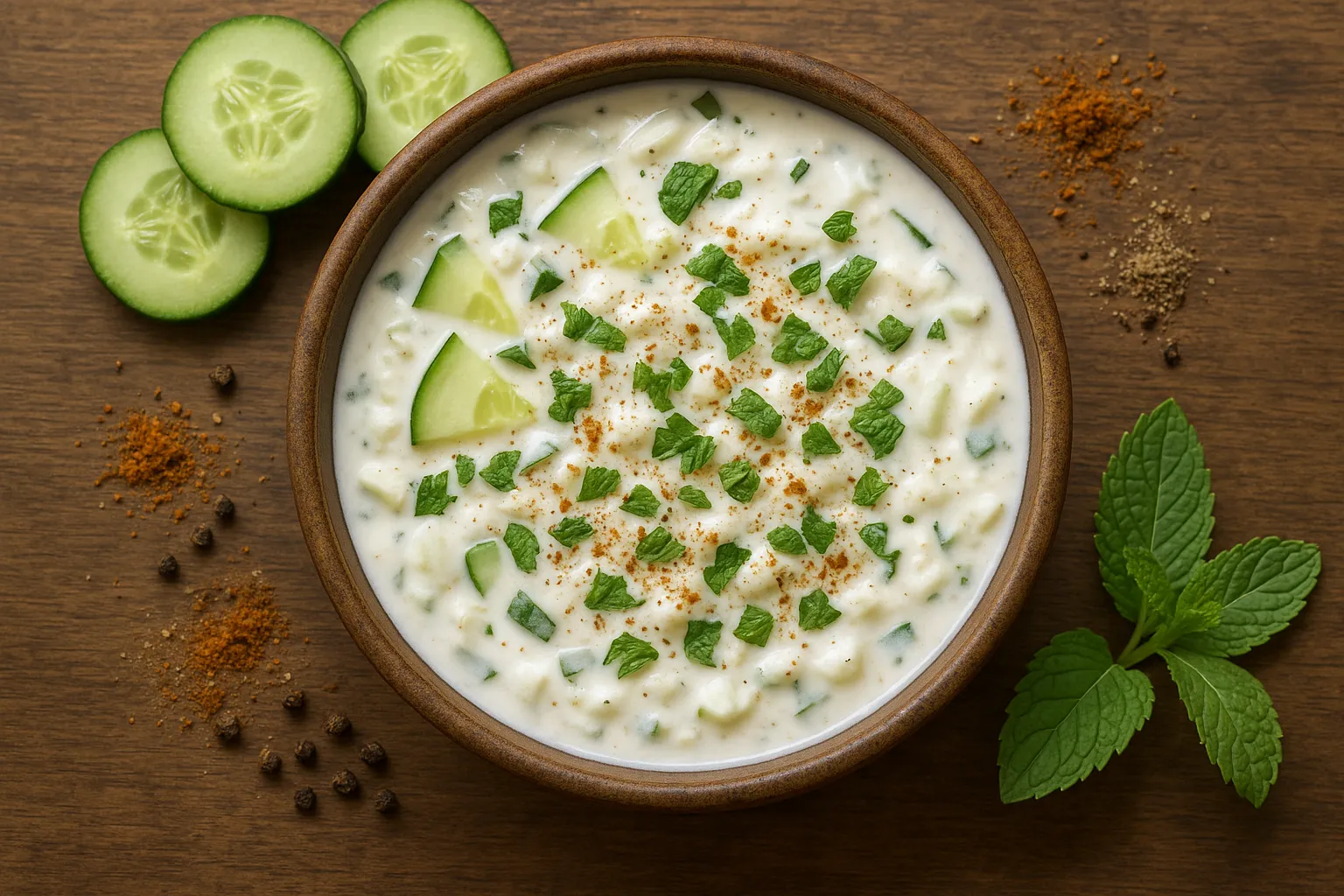
Datos Rápidos de Nutrición
Per 1 Bowl (150g porción)
| Nutriente | Cantidad |
|---|---|
| Calorías | 80 kcal |
| Proteínas | 4g |
| Carbohidratos | 8g |
| Fibra | 0.8g |
| Azúcares | 6g |
| Grasas | 3.5g |
| Calcio | 120mg |
| Sodio | 65mg |
| Potasio | 185mg |
| Probiotics | Live cultures |
Desglose de Macronutrientes
 ChatGPT
  Claude
  AI Mode
  Perplexity
CONSEJO DEL NUTRICIONISTA
Raita es one of el healthiest Indian side dishes. El live probiotics in yogurt support gut health, mientras cucumber proporciona hydration. Pair con spicy curries to aid digestion and reduce inflamación.
Mitos vs Realidad
MITO #1: Raita Causes Peso Gain
REALIDAD: Raita es bajo-calorie (80 kcal por porción) and apoya pérdida de peso. Yogurt's probiotics enhance metabolismo and reduce belly grasas. Elegir bajo-grasas yogurt and load con vegetables for mejor results.
MITO #2: Yogurt Debería Not Be Eaten at Night
REALIDAD: Raita puede be eaten cualquier tiempo, incluyendo dinner. Probiotics trabajo 24/7 to support gut health. El cooling properties actually aid digestion. Solo evitar if you have cold sensitivity or respiratory congestion.
MITO #3: Raita Has Too Mucho Grasas
REALIDAD: A porción has solo 3.5g grasas, mostly saludable fats from yogurt. Using bajo-grasas dahi reduce este to 1-2g. El pequeño amount of grasas ayuda absorb grasas-soluble vitaminas and proporciona satiety.
MITO #4: Diabetics Debería Evitar Raita
REALIDAD: Raita es excellent for diabetics con bajo GI (28-35). Probiotics improve insulin sensitivity and azúcar en sangre control. Usar unsweetened yogurt and pair con alto-fibra meals.
MITO #5: Raita Curdles Food in Stomach
REALIDAD: Este es a myth con no scientific basis. Yogurt's probiotics actually aid digestion and proteínas breakdown. El acidic pH ayuda digest proteins efficiently.
NutriScore por Objetivos de Salud
| Objetivo de Salud | NutriScore | ¿Por qué esta puntuación? |
|---|---|---|
| Pérdida de Peso |  | Solo 80 calorías, 4g proteínas promueve fullness, probiotics boost metabolismo. Alto water content from cucumber. |
| Ganancia Muscular |  | Proporciona 4g proteínas (upgrade to Griego yogurt for 6-7g), calcio apoya muscle contractions, probiotics enhance nutrient absorption. |
| Control de Diabetes | | Bajo GI (28-35), probiotics improve insulin sensitivity, alto proteínas stabilizes azúcar en sangre. |
| Control del SOP | | Probiotics reduce inflamación, bajo GI previene insulin spikes, cooling properties balance hormones. |
| Nutrición en el Embarazo | | Rich in calcio (120mg) for fetal bone development, probiotics support maternal gut health, proteínas for growth. |
| Viral/Recuperación de Gripe | | Probiotics boost immunity, easy to digest, hydrating, cooling properties soothe inflamación. |
NUTRICIÓN PERSONALIZADA
Registra tus comidas con NutriScan para personalizados NutriScores based on your specific health goals!
Respuesta de Azúcar en Sangre to Raita
Raita has minimal impact on glucosa en sangre due to its bajo glycemic index and alto proteínas content.
Curva Típica de Respuesta de Glucosa
Este gráfico muestra respuesta típica de glucosa en sangre para individuos sanos en general. Las respuestas individuales pueden variar. No es consejo médico.
Por qué Raita Stabilizes Blood Azúcar
Yogurt-based dishes help control post-meal azúcar en sangre spikes through multiple mechanisms:
- 🥛 Proteínas slows carb absorption - 4g proteínas por porción
- 🦠 Probiotics improve insulin sensitivity - Live cultures enhance metabolismo
- 🥒 Alto water content - Cucumber dilutes carbohydrate concentration
- ❄️ Cooling spices - Cumin and coriander aid digestion
Pair raita con alto-carb meals (biryani, rice, roti) to flatten el overall glucose response.
Importancia Cultural
Raita has been a cornerstone of Indian cuisine for centuries, rooted in Ayurvedic principles of balancing heat con cooling foods.
In India:
- Esencial accompaniment to spicy curries and biryanis
- Ayurveda considers yogurt cooling (Sheeta Virya) for Pitta balance
- Regional variations: Boondi raita (North), Pachadi (South), Kosambari (Karnataka)
- Traditional medicinal uses for digestive issues and heat-related ailments
- Served durante festivals, weddings, and everyday meals
Global Impact:
- Similar yogurt dishes worldwide: Griego Tzatziki, Turkish Cacık, Persian Mast-o-Khiar
- Probiotic research highlights yogurt's beneficios para la salud globally
- Increasingly popular in Western fusion cuisine
Compara y Sustituye
Raita vs Similar Yogurt Dishes (Por 100g)
| Nutriente | 🥄 Raita | 🥒 Tzatziki (Griego) | 🍶 Plain Dahi | 🥗 Cucumber Salad |
|---|---|---|---|---|
| Calorías | 53 kcal | 95 kcal | 60 kcal | 16 kcal |
| Carbohidratos | 5g | 4g | 7g | 4g |
| Fibra | 0.5g | 0.3g | 0g | 0.5g |
| Proteínas | 2.7g | 4g | 3.5g | 0.7g |
| Grasas | 2.3g | 7.5g | 2.5g | 0.1g |
| Calcio | 80mg | 52mg | 120mg | 16mg |
| Probiotics | Alto (live cultures) | Alto (live cultures) | Alto (live cultures) | None |
| Mejor Para | Peso loss, digestion | Mediterranean diet, proteínas | Probiotics, calcio | Muy bajo calorie |
Preguntas Frecuentes
Es raita bueno for pérdida de peso?
Yes, raita es excellent for pérdida de peso con solo 80 calorías por porción. El 4g proteínas promueve fullness; probiotics boost metabolismo and reduce belly grasas; alto water content from cucumber proporciona volume sin calorías.
Mejor practices: Usar bajo-grasas yogurt (1-2% grasas); load con vegetables (cucumber, tomato, onion); evitar boondi or frito additions; eat as a meal accompaniment, not dessert.
¿Pueden los diabéticos comer raita?
Yes, raita es one of el mejor side dishes for diabetics. Bajo GI (28-35); probiotics improve insulin sensitivity; proteínas stabilizes azúcar en sangre; minimal impact on glucose levels.
Tips for diabetics: Usar unsweetened yogurt solo; pair con alto-fibra meals; add extra vegetables for fibra; evitar versions con added azúcar or sweet fruits.
Qué son el main beneficios para la salud of raita?
Key Benefits:
- Digestive Health: Probiotics support gut bacteria and reduce bloating
- Peso Management: Bajo calorie, alto satiety from proteínas
- Bone Health: 120mg calcio por porción apoya bone density
- Blood Azúcar Control: Bajo GI, probiotics improve insulin sensitivity
- Hydration: Alto water content from cucumber and yogurt
- Anti-inflammatory: Cooling properties reduce inflamación
- Immunity: Probiotics strengthen sistema inmunológico
Cómo mucho proteínas es in raita?
A standard porción (150g) contiene 4g of proteínas from yogurt. To increase proteínas: usar Griego yogurt (6-7g por porción); add tostado chickpeas or paneer cubes; usar hung curd (strained yogurt) for thicker consistency and más proteínas.
Es raita bueno for digestion?
Yes, raita es excellent for digestion. Probiotics support beneficioso gut bacteria; cooling properties soothe digestive tract; cucumber proporciona hydration and fibra; spices like cumin aid digestion and reduce gas; pairs perfectly con spicy foods to prevent acidity.
Ayurvedic perspective: Raita balances Pitta dosha, cools el digestive fire, and previene inflamación from spicy foods.
Puede I eat raita cada día?
Yes, diario raita consumption es saludable and beneficioso for la mayoría personas.
Benefits of diario consumption:
- Consistent probiotic intake for gut health
- Diario calcio (120mg) for bones
- Aids digestion of spicy Indian meals
- Bajo-calorie side dish for peso management
Considerations: Evitar if you have lactose intolerance (usar lactose-gratis yogurt), cold sensitivity, or respiratory congestion. Skip heavy versions con frito additions diario.
Cuando es el mejor tiempo to eat raita?
Depends on your goal:
- Pérdida de Peso: Lunch or dinner as meal accompaniment, aumenta fullness sin muchos calorías
- Digestion: Durante lunch/dinner con spicy meals to aid digestion
- Probiotics: Cualquier tiempo; gut bacteria trabajo 24/7
- Diabetes: Con main meals to stabilize post-meal azúcar en sangre
TRADITIONAL WISDOM
Ayurveda recommends avoiding raita late at night if you have cold sensitivity or kapha imbalance, as yogurt es cooling in nature.
Cómo do I hacer saludable raita at hogar?
Basic Saludable Recipe (serves 4):
- Base: 2 cups bajo-grasas yogurt (whisked smooth)
- Vegetables: 1 cup grated cucumber, 1/4 cup chopped onion, 2 tbsp chopped coriander
- Spices: 1/2 tsp tostado cumin powder, 1/4 tsp black salt, pinch of chaat masala
- Optional: chopped mint, diced tomatoes, grated carrots
Tips: Usar chilled yogurt; squeeze excess water from cucumber; roast cumin seeds antes grinding; add rock salt instead of regular salt for authentic taste.


Alimentos Nutritivos Similares
4505 Chicharrones Classic Chili Salt
7 Eleven Japan Crispy Corn Cheese
Explore Más Nutrition Tools & Resources
App de agua y calorías gratis con registro diario
App de ayuno intermitente gratis con temporizador
App de macros: NutriScan las rellena desde una foto
App de plan de comidas para volumen limpio
App de plan de comidas vegetariano con objetivo de proteína
App de Plan de Dieta India Vegetariana y No Vegetariana
App de plan de dieta mediterránea que cuenta el aceite
App nutricionista con IA que lee tus comidas
App para Subir de Peso: Plan de Dieta con IA
Ayuno Intermitente para Mujeres, Timer y Registro de Comidas
Coach de pérdida de peso ChatGPT: con registro
Contador de Calorías Activado por Voz - Di tus Comidas y Rastrea Nutrición Sin Manos — 2026
Contador de calorías ChatGPT: alternativa que no lo olvida
Contador de Calorías con IA: calorías con fotos, gratis
Contador de calorías de comida rápida con foto
Contador de calorías gratis con fotos | NutriScan
Contador de Calorías para Comida Española - Información Nutricional Instantánea — 2026
Escáner de Etiquetas Nutricionales para tu Ración Real
Generador Lista de Compras Keto
Generador Lista de Compras Mensual
Guía Proteína Tercer Trimestre
Plan de comidas semanal con calorías y lista de compras
Plan de dieta ChatGPT: alternativa que registra comidas
Plan de Dieta para Ganar Peso España