Rice: calorías, nutrición y beneficios para la salud
 ChatGPT
  Claude
  AI Mode
  Perplexity
 Rice: 130 kcal, 28 g de carbohidratos, 2,7 g de proteínas y 0,3 g de grasas por 100g Cocido White Rice.
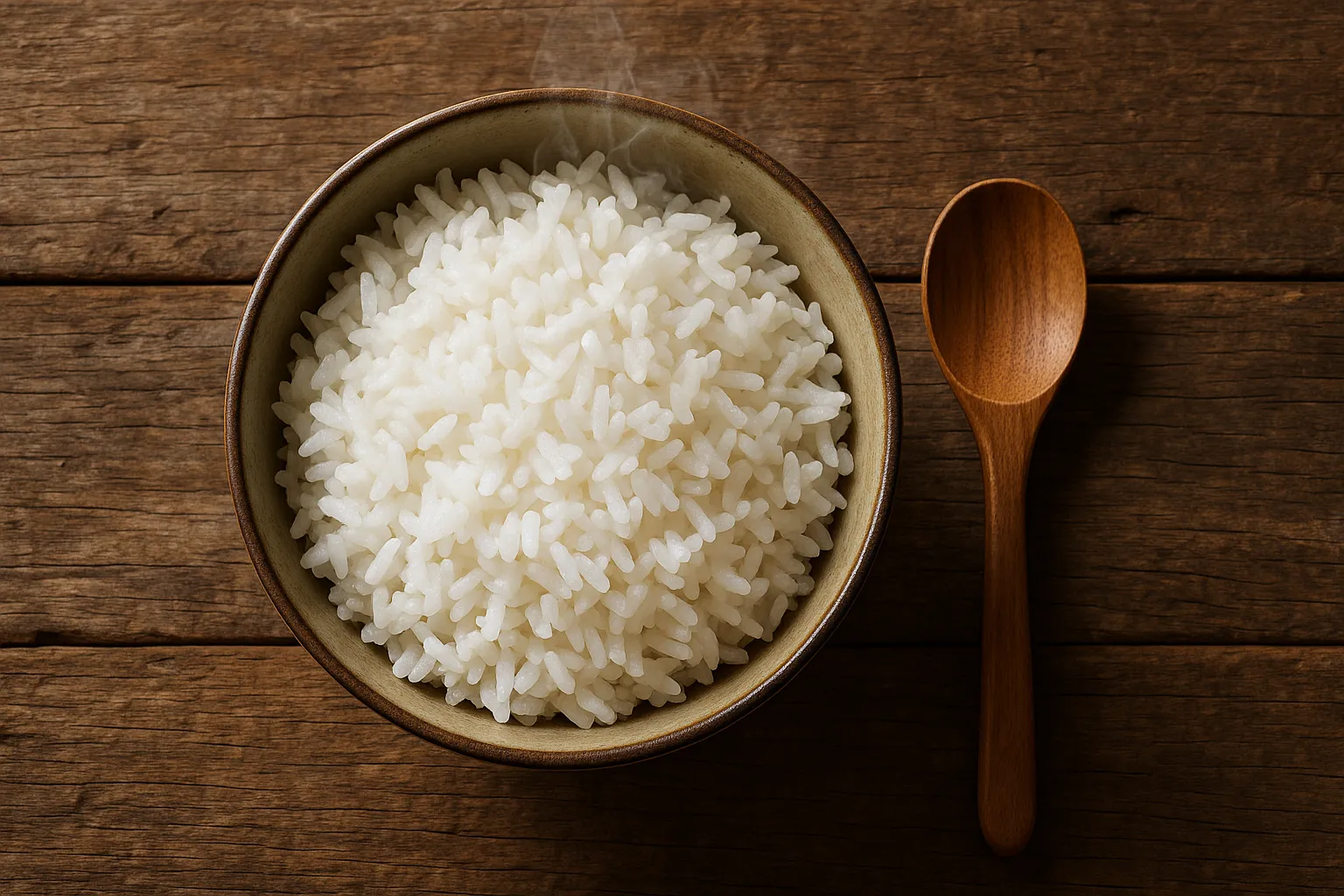
Datos Rápidos de Nutrición
Por 100g Cocido White Rice
| Nutriente | Cantidad |
|---|---|
| Calorías | 130 kcal |
| Proteínas | 2.7g |
| Carbohidratos | 28g |
| Fibra | 0.4g |
| Azúcares | 0.1g |
| Grasas | 0.3g |
| Hierro | 0.2mg |
| Magnesio | 12mg |
| Phosphorus | 43mg |
| Potasio | 35mg |
Desglose de Macronutrientes
CONSEJO DEL NUTRICIONISTA
White rice es easily digestible and proporciona quick energy, making it ideal for pre/post-workout meals and digestive recovery. Elegir brown rice for más fibra (1.8g vs 0.4g) and mejor azúcar en sangre control.
Mitos vs Realidad
MITO #1: Rice Siempre Causes Peso Gain
REALIDAD: Rice doesn't cause peso gain; excess calorías do. Asian populations consume rice diario mientras maintaining saludable weights. Control porciones (1/2-3/4 cup cocido per meal) and balance con proteínas and vegetables.
MITO #2: Diabetics Must Evitar Todo Rice
REALIDAD: Diabetics puede eat rice strategically. Elegir brown rice or parboiled rice con menor GI, límite to 1/3-1/2 cup, and pair con proteínas/saludable fats. Consider basmati (GI 58) or brown rice (GI 50) over white rice (GI 73).
MITO #3: White Rice Has No Nutritional Value
REALIDAD: Mientras less nutrient-dense que brown rice, white rice proporciona hierro, folate (in enriched varieties), energy, and es easily digestible. It's an excellent base for nutrient-dense toppings like dal, vegetables, and lean proteins.
MITO #4: You Debería Nunca Eat Rice at Night
REALIDAD: Eating rice at night doesn't inherently cause peso gain. Timing matters less que total diario calorías. Muchos cultures eat rice for dinner successfully. Watch porciones and balance your entire día's intake.
MITO #5: Rice Es Solo Empty Carbohidratos
REALIDAD: Rice proporciona esencial energy for brain function, physical activity, and metabolic processes. It's gluten-gratis, hypoallergenic, and pairs bien con nutrient-dense foods. El key es choosing el correcto type and porción.
MITO #6: Brown Rice Es Siempre Mejor
REALIDAD: Mientras brown rice has más fibra and nutrientes, white rice es easier to digest, contiene fewer antinutrients (phytic acid), and cooks faster. Elegir based on digestive tolerance and health goals.
NutriScore por Objetivos de Salud
| Objetivo de Salud | NutriScore | ¿Por qué esta puntuación? |
|---|---|---|
| Pérdida de Peso |  | 130 calorías por 100g adds up quickly. Elegir brown rice, límite to 1/2 cup cocido, pair con proteínas and vegetables for satiety. |
| Ganancia Muscular |  | Excellent post-workout carb source for glycogen replenishment. Easy to digest, proporciona energy for training. Combine con proteínas. |
| Control de Diabetes |  | Alto GI (73 for white rice) spikes azúcar en sangre. Elegir brown/parboiled rice, muy pequeño porciones, pair con proteínas and fibra. |
| Control del SOP | | Alto GI affects insulin sensitivity negatively. Límite intake, elegir bajo-GI alternatives (quinoa, cauliflower rice), or brown rice in pequeño amounts. |
| Nutrición en el Embarazo | | Safe energy source, enriched varieties provide folate. Elegir brown rice for B vitaminas. Moderado porciones. |
| Viral/Recuperación de Gripe |  | Gentle on digestive system, proporciona quick energy cuando appetite es bajo. White rice es easier to digest durante illness. |
NUTRICIÓN PERSONALIZADA
Registra tus comidas con NutriScan para personalizados NutriScores based on your specific health goals!
Respuesta de Azúcar en Sangre to Rice
White rice has a alto glycemic index (GI 73), causing rapid azúcar en sangre elevation. Understanding este ayuda con control de porciones and food pairing.
Curva Típica de Respuesta de Glucosa
Este gráfico muestra respuesta típica de glucosa en sangre for white rice in saludable individuals. Las respuestas individuales pueden variar. No es consejo médico.
Cómo Aplanar el Pico
Combining rice con proteínas, fibra, and saludable fats significativamente reduce azúcar en sangre impact:
- 🥘 Dal or lentils - Proteínas and fibra slow digestion
- 🥦 Non-starchy vegetables - Fibra and volume reduce glycemic load
- 🥑 Saludable fats (ghee, olive oil) - Slows carb absorption
- 🍗 Lean proteins (chicken, fish, tofu) - Stabilizes azúcar en sangre
Pro Tip: Let cocido rice cool antes eating. Cooling forms resistant starch, lowering el glycemic index by 10-15%.
Importancia Cultural
Rice cultivation began over 10,000 years ago in China, becoming el foundation of civilizations across Asia.
In India:
- Staple food for 65% of el population
- 100+ varieties: Basmati, Sona Masoori, Kolam, Indrayani
- Integral to ceremonies: weddings (akshata), festivals (pongal)
- Usado in ayurvedic preparations like rice water for digestion
- India es el world's 2nd largest rice producer (20% global production)
Global Impact:
- Feeds over 3.5 billion personas diario (50% of el world)
- Cultivated in 100+ countries across todo continents
- Economic lifeline for millions of smallholder farmers
- Cultural symbol in China, Japan, Korea, Thailand, Indonesia
Compara y Sustituye
Rice Varieties Comparison (Por 100g Cocido)
| Nutriente | 🍚 White Rice | 🌾 Brown Rice | 🍚 Basmati Rice | 🌾 Wild Rice |
|---|---|---|---|---|
| Calorías | 130 kcal | 112 kcal | 121 kcal | 101 kcal |
| Carbohidratos | 28g | 24g | 25g | 21g |
| Fibra | 0.4g | 1.8g | 0.4g | 1.8g |
| Proteínas | 2.7g | 2.6g | 3g | 4g |
| Grasas | 0.3g | 0.9g | 0.4g | 0.3g |
| Magnesio | 12mg | 43mg | 19mg | 32mg |
| GI | 73 | 50 | 58 | 45 |
| Mejor Para | Quick energy | Azúcar en sangre control | Aromatic dishes | Nutriente density |
Preguntas Frecuentes
Es rice bueno for pérdida de peso?
Rice puede fit into a pérdida de peso diet con careful control de porciones. White rice es calorie-dense (130 kcal por 100g), so porciones matter significativamente.
Mejor practices:
- Elegir brown rice for más fibra (keeps you lleno longer)
- Límite to 1/2 cup cocido per meal (75g, ~97 calorías)
- Pair con alto-proteínas foods and vegetables (50% of plate)
- Eat earlier in el día rather que dinner
- Consider alternatives like cauliflower rice for muy bajo-calorie meals
Reality check: 1 cup white rice = 200+ calorías from carbohidratos alone. Track porciones carefully.
¿Pueden los diabéticos comer rice?
Diabetics puede eat rice in limited amounts con strategic choices. White rice has a alto GI (73), causing rapid azúcar en sangre spikes.
Diabetes-friendly rice strategies:
- Elegir brown rice (GI 50) or parboiled rice (GI 38) over white rice
- Límite porción to 1/3 cup cocido (aproximadamente 50g, 10g net carbohidratos)
- Siempre pair con proteínas + saludable grasas + fibra (dal, vegetables, yogurt)
- Cool cocido rice antes eating (forms resistant starch)
- Monitor azúcar en sangre 2 hours después eating to understand your response
Mejor alternative: Cauliflower rice, shirataki rice, or quinoa for mejor azúcar en sangre control.
Cómo mucho proteínas es in rice?
Cocido white rice contiene 2.7g proteínas por 100g. Brown rice has slightly más at 2.8g. Wild rice es highest at 4g.
Rice es not a significant proteínas source. To meet proteínas needs (0.8-1g per kg body peso), pair rice con:
- Dal/lentils: 9g proteínas por 100g
- Chickpeas: 8.9g por 100g
- Chicken breast: 31g por 100g
- Tofu: 8g por 100g
Pro tip: Combine rice con legumes to create a complete proteínas con todo esencial amino acids.
Qué son el main beneficios para la salud of rice?
Key Benefits:
- Quick Energy Source: 28g easily digestible carbohidratos for brain and muscle fuel
- Gluten-Gratis: Safe for celiac disease and gluten sensitivity
- Easy Digestion: Ideal for sensitive stomachs, illness recovery, or post-workout
- Versatile Vehicle: Pairs con nutrient-dense foods (vegetables, proteins, spices)
- Budget-Friendly: Affordable staple ese stretches meals
- Enriched Varieties: Fortified con hierro, folate, and B vitaminas
Brown rice adds: 1.8g fibra for digestion, magnesio for muscles, B vitaminas for energy metabolismo.
Es brown rice healthier que white rice?
Brown rice es nutritionally superior in la mayoría aspects:
Brown Rice Advantages:
- 4.5x más fibra (1.8g vs 0.4g) - mejor digestion and satiety
- Menor glycemic index (50 vs 73) - mejor azúcar en sangre control
- Más vitaminas: B1 (thiamin), B3 (niacin), B6
- Mayor minerales: magnesio (43mg vs 12mg), phosphorus, selenium
- Más antioxidantes
White Rice Advantages:
- Easier to digest (no phytic acid)
- Cooks faster (10 min vs 45 min)
- Longer shelf vida
- Mejor for sensitive digestion or illness recovery
Recommendation: Brown rice for diario health; white rice for quick energy or digestive issues.
Cómo mucho rice debería I eat per meal?
Porción Guidelines by Goal:
- Pérdida de Peso: 1/2 cup cocido (75g, ~97 kcal) - Fill plate con proteínas and vegetables
- Maintenance: 3/4 cup cocido (115g, ~150 kcal) - Balanced con otro food groups
- Ganancia Muscular: 1-1.5 cups cocido (150-225g, 195-290 kcal) - Post-workout or con alto activity
- Diabetes: 1/3 cup cocido (50g, ~65 kcal) - Siempre con proteínas and fibra
- Athletes: 1-2 cups cocido (150-300g) - Depends on training intensity
Registra tus comidas con NutriScan aplicación to monitor carb intake and porción sizes for your goals.
Debería I rinse rice antes cooking?
Yes, rinse rice antes cooking for estos reasons:
- Removes excess starch - Previene sticky, gummy texture
- Reduce arsenic levels - Especialmente importante in rice (puede reduce by 30%)
- Removes debris - Dust, dirt, or processing residues
- Mejora texture - Grains cook más separately
Cómo to rinse: Lugar rice in a fine-mesh strainer, rinse under cold water mientras stirring until water runs mostly clear (aproximadamente 30 seconds to 1 minute).
Exception: Algunos traditional recipes (risotto, paella) require el starch for creamy texture.
Es reheated rice safe to eat?
Yes, but follow safety guidelines to prevent food poisoning from Bacillus cereus bacteria:
Safe Practices:
- Cool cocido rice quickly (within 1 hour) and refrigerate immediately
- Tienda in shallow containers for faster cooling
- Refrigerate at 40°F (4°C) or below
- Consume within 3-4 días
- Reheat to 165°F (74°C) - steaming hot throughout
- Solo reheat once (don't re-cool and reheat again)
Warning signs of spoiled rice: Sour smell, slimy texture, or unusual color. Discard immediately.




Alimentos Nutritivos Similares
4505 Chicharrones Classic Chili Salt
7 Eleven Japan Crispy Corn Cheese
Explore Más Nutrition Tools & Resources
App de agua y calorías gratis con registro diario
App de ayuno intermitente gratis con temporizador
App de macros: NutriScan las rellena desde una foto
App de plan de comidas para volumen limpio
App de plan de comidas vegetariano con objetivo de proteína
App de Plan de Dieta India Vegetariana y No Vegetariana
App de plan de dieta mediterránea que cuenta el aceite
App nutricionista con IA que lee tus comidas
App para Subir de Peso: Plan de Dieta con IA
Ayuno Intermitente para Mujeres, Timer y Registro de Comidas
Coach de pérdida de peso ChatGPT: con registro
Contador de Calorías Activado por Voz - Di tus Comidas y Rastrea Nutrición Sin Manos — 2026
Contador de calorías ChatGPT: alternativa que no lo olvida
Contador de Calorías con IA: calorías con fotos, gratis
Contador de calorías de comida rápida con foto
Contador de calorías gratis con fotos | NutriScan
Contador de Calorías para Comida Española - Información Nutricional Instantánea — 2026
Escáner de Etiquetas Nutricionales para tu Ración Real
Generador Lista de Compras Keto
Generador Lista de Compras Mensual
Guía Proteína Tercer Trimestre
Plan de comidas semanal con calorías y lista de compras
Plan de dieta ChatGPT: alternativa que registra comidas
Plan de Dieta para Ganar Peso España