Salad: calorías, nutrición y beneficios para la salud
El ultimate bajo-calorie, nutrient-dense meal packed con fibra, vitaminas, and antioxidantes for optimal health.
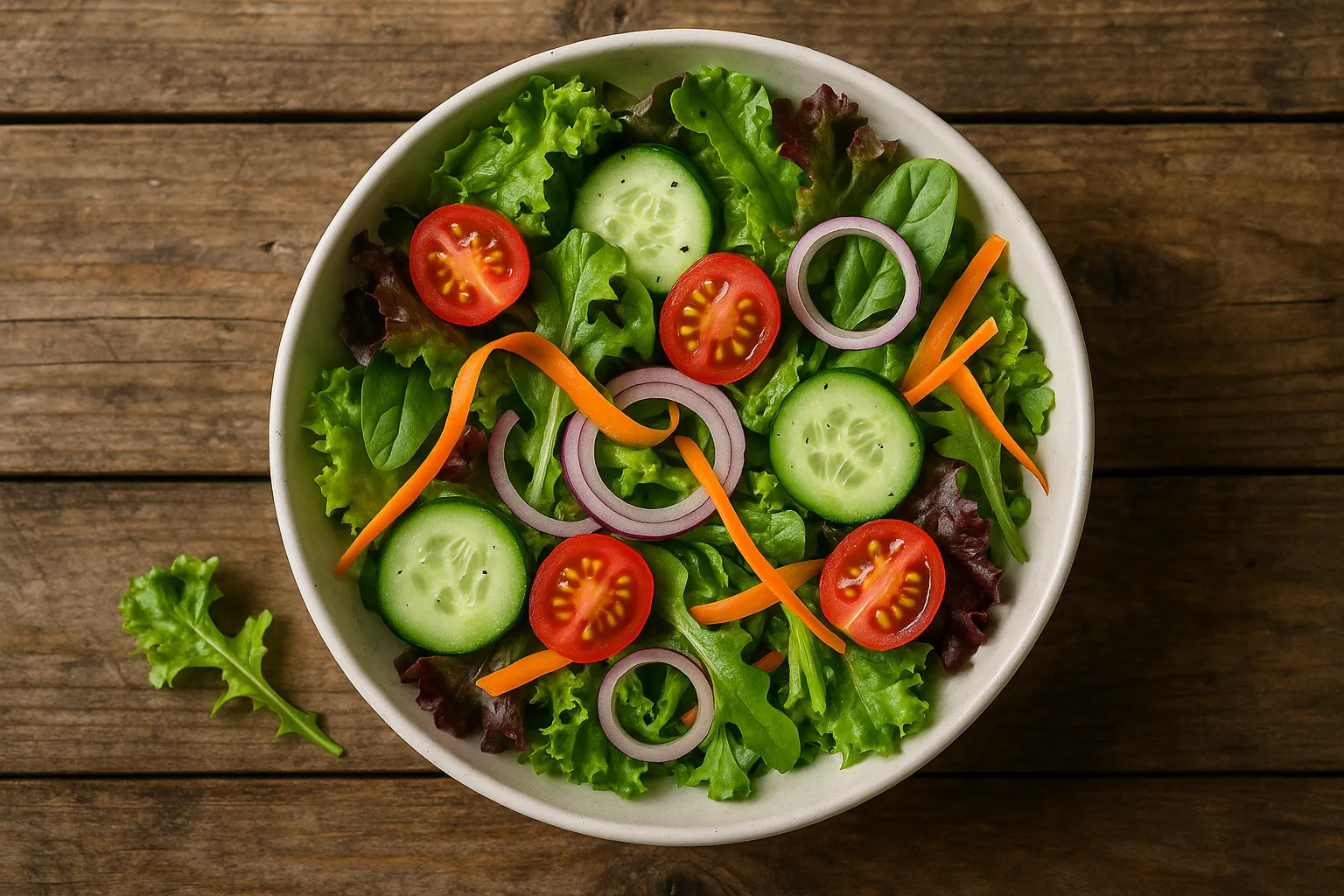
Datos Rápidos de Nutrición
Por 100g (1 Medium Bowl)
| Nutriente | Cantidad |
|---|---|
| Calorías | 30 kcal |
| Proteínas | 2g |
| Carbohidratos | 6g |
| Fibra | 2.5g |
| Azúcares | 2g |
| Grasas | 0.3g |
| Vitamina A | 550 IU |
| Vitamina C | 15mg |
| Vitamina K | 85mcg |
| Folate | 45mcg |
Desglose de Macronutrientes
 ChatGPT
  Claude
  AI Mode
  Perplexity
CONSEJO DEL NUTRICIONISTA
Salads offer maximum nutrition con minimal calorías. El 2.5g fibra por 100g promueve gut health and fullness, mientras vitaminas A, C, and K support immunity, vision, and salud ósea.
Mitos vs Realidad
MITO #1: Todo Salads Son Saludable
REALIDAD: Restaurant salads con creamy dressings, frito toppings, and queso puede contain 800+ calorías. A basic green salad has solo 30 calorías por 100g. Elegir olive oil vinaigrette and skip frito toppings for verdadero beneficios para la salud.
MITO #2: Salads Don't Mantener You Lleno
REALIDAD: Grande salads con proteínas (chicken, chickpeas, eggs) provide volume and fibra ese promote lasting fullness. Los estudios muestran personas quién eat salad antes meals consume 11% fewer calorías overall.
MITO #3: Salads Lack Proteínas
REALIDAD: Mientras basic greens have 2g proteínas, adding a la parrilla chicken (30g), hervido eggs (6g cada), or chickpeas (9g por 100g) makes salads complete alto-proteínas meals.
MITO #4: You Necesitar Dressing for Taste
REALIDAD: Fresco salads con variety (tomatoes, cucumbers, peppers, herbs) offer natural flavor. Usar lemon juice, balsamic vinegar, or minimal olive oil (1 tablespoon = 120 calorías) instead of heavy dressings.
MITO #5: Salads Cause Bloating
REALIDAD: Solo if you're not usado to fibra or eat too quickly. Gradually increase vegetable intake and chew thoroughly to prevent gas and bloating.
MITO #6: Crudo Vegetables Son Hard to Digest
REALIDAD: Crudo vegetables in salads son rich in enzymes ese aid digestion. La mayoría personas digest them bien. Solo esos con IBS or specific conditions puede necesitar lightly al vapor vegetables instead.
NutriScore por Objetivos de Salud
| Objetivo de Salud | NutriScore | ¿Por qué esta puntuación? |
|---|---|---|
| Pérdida de Peso |  | Solo 30 calorías por 100g, alto fibra for fullness, nutrient-dense. Unlimited porciones for pérdida de peso. |
| Ganancia Muscular |  | Proporciona vitaminas and fibra but needs added proteínas (chicken, eggs, chickpeas) for construcción muscular. |
| Control de Diabetes | | Muy bajo GI (15), alto fibra ayuda control azúcar en sangre. Ideal for diabetes cuando paired con lean proteínas. |
| Control del SOP | | Bajo glycemic impact, anti-inflammatory properties, apoya hormone balance con fibra and nutrientes. |
| Nutrición en el Embarazo | | Rich in folate (45mcg por 100g), vitamina K for salud ósea, fibra previene constipation. Ensure thorough washing to evitar foodborne illness. |
| Viral/Recuperación de Gripe | | Vitaminas A and C boost immunity, easy to digest, hydrating con alto water content. |
NUTRICIÓN PERSONALIZADA
Registra tus comidas con NutriScan para personalizados NutriScores based on your specific health goals!
Respuesta de Azúcar en Sangre to Salad
Understanding cómo salads affect glucosa en sangre ayuda demonstrate their benefits for metabolic health.
Curva Típica de Respuesta de Glucosa
Este gráfico muestra respuesta típica de glucosa en sangre para individuos sanos en general. Las respuestas individuales pueden variar. No es consejo médico.
Cómo Salad Stabilizes Blood Azúcar
Eating salad antes main meals reduce post-meal glucose spikes due to fibra content:
- 🥗 Fibra slows digestion - Delays glucose absorption from otro foods
- 🥬 Bajo glycemic load - Minimal direct impact on azúcar en sangre (GI: 15)
- 🫒 Saludable fats (olive oil) - Further reduce glycemic response cuando added
- 🥚 Proteademáss - Chicken, eggs, or chickpeas stabilize azúcar en sangre longer
Este combination makes salads ideal for control de diabetes and pérdida de peso.
Importancia Cultural
Salads have evolved from simple vegetable dishes to global culinary staples reflecting regional ingredients and traditions.
In India:
- Traditional kachumber (cucumber, tomato, onion salad) served con meals
- Sprouted moong or chickpea salads for proteínas and fibra
- Raita variations (cucumber, boondi, mixed vegetable) cool el palate
- Modern salad bars in metros feature quinoa, avocado, and international greens
Global Impact:
- Mediterranean diet emphasizes salads con olive oil and fresco vegetables
- Caesar salad (Italy/Mexico), Griego salad (Greece), Niçoise (France) iconic worldwide
- Farm-to-table movement promueve seasonal, local salad ingredients
- Salad consumption linked to reduced chronic disease risk across populations
Compara y Sustituye
Salad vs Similar Bajo-Calorie Options (Por 100g)
| Nutriente | 🥗 Mixed Salad | 🥒 Cucumber | 🍅 Tomato | 🥦 Broccoli (Crudo) |
|---|---|---|---|---|
| Calorías | 30 kcal | 15 kcal | 18 kcal | 34 kcal |
| Carbohidratos | 6g | 3.6g | 3.9g | 7g |
| Fibra | 2.5g | 0.5g | 1.2g | 2.6g |
| Proteínas | 2g | 0.7g | 0.9g | 2.8g |
| Grasas | 0.3g | 0.1g | 0.2g | 0.4g |
| Vitamina C | 15mg | 2.8mg | 14mg | 89mg |
| Vitamina K | 85mcg | 16mcg | 7.9mcg | 102mcg |
| Folate | 45mcg | 7mcg | 15mcg | 63mcg |
| Mejor Para | Peso loss, lleno meals | Hydration, bajo-calorie snacking | Lycopene, salud del corazón | Vitamina C, anti-cancer |
Preguntas Frecuentes
Es salad bueno for pérdida de peso?
Yes, salads son one of el mejor foods for pérdida de peso. At solo 30 calorías por 100g con 2.5g fibra, they provide volume and nutrientes con minimal calorie density.
Peso loss benefits: Grande porciones sin guilt; fibra promueve fullness; displaces mayor-calorie foods; rich in water content. A 300g salad bowl has solo 90 calorías but fills you up significativamente.
¿Pueden los diabéticos comer salad?
Salads son ideal for diabetics con muy bajo glycemic impact (GI 15). El alto fibra content slows carbohydrate absorption from otro foods eaten at el mismo meal.
Tips for diabetics:
- Eat salad antes or con main meals to reduce overall glucose spike
- Add lean proteínas (a la parrilla chicken, fish) for balanced azúcar en sangre
- Usar olive oil and vinegar dressing, not alto-azúcar options
- Include variety of colorful vegetables for maximum nutrientes
Siempre consult your healthcare provider para personalizados advice.
Cómo mucho proteínas es in a salad?
A basic green salad contiene aproximadamente 2g proteínas por 100g. Este es minimal, so add proteínas sources to hacer it a complete meal:
Proteínas boosters: A la parrilla chicken breast (30g por 100g), hervido eggs (6g cada), chickpeas (9g por 100g), a la parrilla tofu (8g por 100g), queso requesón/paneer (11g por 100g).
Qué son el main beneficios para la salud of salads?
Key Benefits:
- Peso Management: Alto volume, bajo calorías, promueve fullness
- Digestive Health: 2.5g fibra por 100g apoya gut health and regularity
- Heart Health: Antioxidantes, potasio, and fibra reduce cardiovascular risk
- Blood Azúcar Control: Bajo GI, alto fibra stabilizes glucose levels
- Immune Support: Vitaminas A and C strengthen immune function
- Bone Health: Vitamina K esencial for bone density and strength
Cuando es el mejor tiempo to eat salad?
Depends on your goal:
- Pérdida de Peso: Comenzar lunch and dinner con salad to reduce overall meal calorías by 11%. Eat antes main course.
- Diabetes: Antes main meals to menor post-meal glucose spikes.
- Digestive Health: Con meals to aid digestion con fibra and enzymes.
- General Health: Diario at cualquier meal; consistency matters la mayoría.
PRO TIP
Eating salad primero ensures you consume vegetables incluso if you obtener lleno durante el meal.
Qué makes a salad no saludable?
Calorie bombs to evitar:
- Heavy dressings: Ranch, caesar, blue queso (100-150 cal per 2 tbsp)
- Frito toppings: Croutons, frito noodles, bacon bits
- Excessive queso: 100g queso = 400 calorías
- Processed meats: Salami, pepperoni, bacon
Saludable alternatives: Olive oil + balsamic vinegar (1:1 ratio); lemon juice; herbs and spices; pequeño amounts of nuts or seeds; a la parrilla chicken instead of frito.
Cómo do I hacer salad más filling?
Add volume and proteínas:
- Proteínas: A la parrilla chicken, hervido eggs, chickpeas, paneer, tofu
- Saludable fats: Avocado slices, handful of nuts, olive oil dressing
- Complex carbohidratos: Quinoa, brown rice, sweet potato cubes
- Variety: Mix diferente textures (crunchy, soft) and colors
Porción size: Aim for 300-500g total salad incluyendo proteins and toppings.
Puede I eat salad cada día?
Yes, diario salad consumption es highly beneficioso. Los estudios muestran personas quién eat salads diario have mayor vitamina and mineral intake, mejor peso management, and reduced chronic disease risk.
Diario salad tips: Rotate diferente greens (spinach, lettuce, arugula, kale); vary toppings for nutrient diversity; include diferente proteínas sources; ensure thorough washing to prevent foodborne illness.
Registra tus comidas con NutriScan aplicación to ver cómo salads support your health goals.


Alimentos Nutritivos Similares
4505 Chicharrones Classic Chili Salt
7 Eleven Japan Crispy Corn Cheese
Explore Más Nutrition Tools & Resources
App de agua y calorías gratis con registro diario
App de ayuno intermitente gratis con temporizador
App de macros: NutriScan las rellena desde una foto
App de plan de comidas para volumen limpio
App de plan de comidas vegetariano con objetivo de proteína
App de Plan de Dieta India Vegetariana y No Vegetariana
App de plan de dieta mediterránea que cuenta el aceite
App nutricionista con IA que lee tus comidas
App para Subir de Peso: Plan de Dieta con IA
Ayuno Intermitente para Mujeres, Timer y Registro de Comidas
Coach de pérdida de peso ChatGPT: con registro
Contador de Calorías Activado por Voz - Di tus Comidas y Rastrea Nutrición Sin Manos — 2026
Contador de calorías ChatGPT: alternativa que no lo olvida
Contador de Calorías con IA: calorías con fotos, gratis
Contador de calorías de comida rápida con foto
Contador de calorías gratis con fotos | NutriScan
Contador de Calorías para Comida Española - Información Nutricional Instantánea — 2026
Escáner de Etiquetas Nutricionales para tu Ración Real
Generador Lista de Compras Keto
Generador Lista de Compras Mensual
Guía Proteína Tercer Trimestre
Plan de comidas semanal con calorías y lista de compras
Plan de dieta ChatGPT: alternativa que registra comidas
Plan de Dieta para Ganar Peso España