Sautéed Vegetables: calorías, nutrición y beneficios para la salud
Colorful, nutrient-dense vegetables lightly cocido to perfection - bajo calorie, alto fibra, packed con vitaminas for optimal health.
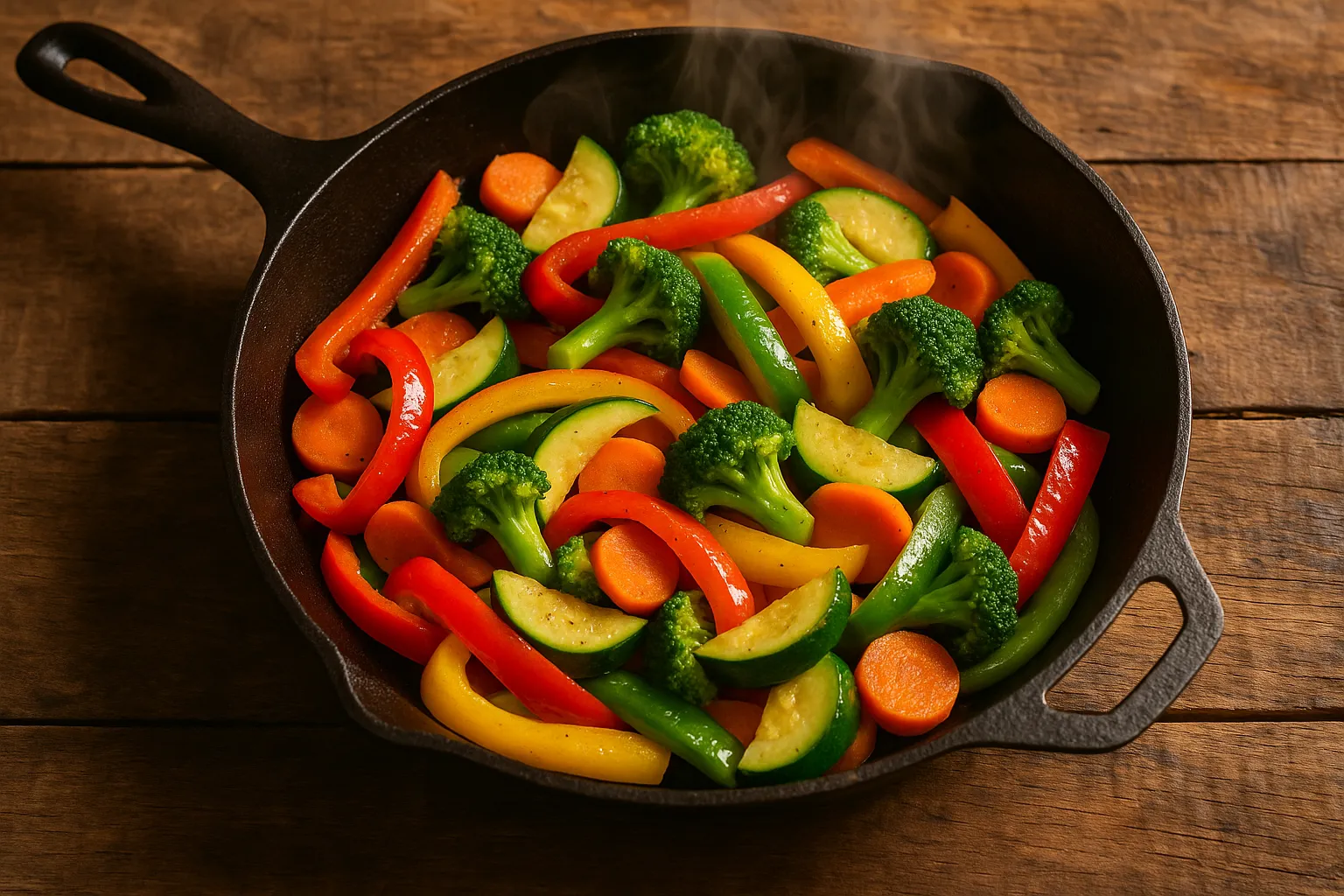
Datos Rápidos de Nutrición
Per 1 Cup (145g) Mixed Sautéed Vegetables
| Nutriente | Cantidad |
|---|---|
| Calorías | 67 kcal |
| Proteínas | 2.3g |
| Carbohidratos | 11g |
| Fibra | 3.5g |
| Azúcares | 4.2g |
| Grasas | 2.3g |
| Vitamina A | 2415 IU |
| Vitamina C | 48mg |
| Potasio | 387mg |
| Folate | 56mcg |
Desglose de Macronutrientes
 ChatGPT
  Claude
  AI Mode
  Perplexity
CONSEJO DEL NUTRICIONISTA
Sautéing con a pequeño amount of saludable grasas enhances absorption of grasas-soluble vitaminas A, E, and K by up to 400%. Quick cooking preserves 70-90% of nutrientes.
Mitos vs Realidad
MITO #1: Cocido Vegetables Lose Todo Nutrientes
REALIDAD: Sautéing preserves 70-90% of nutrientes cuando done quickly. Algunos nutrientes like lycopene and beta-carotene become más bioavailable con cooking. Vitamina C reduce 10-30%, but overall nutrition remains excellent.
MITO #2: You Necesitar Lots of Oil to Sauté
REALIDAD: Solo 1-2 tsp of oil por porción es needed. Usar a non-stick pan or pequeño amount of water to prevent sticking. Excess oil adds unnecessary calorías sin nutritional benefit.
MITO #3: Todo Cooking Methods Son Equal
REALIDAD: Sautéing and air-frying retain más nutrientes que boiling or deep frying. Boiling leaches water-soluble vitaminas into cooking water. Sautéing keeps nutrientes in el vegetables.
MITO #4: Sautéed Vegetables Son Alto in Calorías
REALIDAD: At 67 calorías por taza con minimal oil, sautéed vegetables son one of el lowest-calorie cocido foods. El grasas content (2.3g) es mostly from saludable cooking oil, not el vegetables themselves.
MITO #5: Frozen Vegetables Son Less Nutritivo
REALIDAD: Frozen vegetables son flash-frozen at peak ripeness, preserving nutrientes. They're equally nutritivo as fresco for sautéing. Skip el thawing step - sauté directly from frozen for mejor texture.
MITO #6: You Debería Sauté Todo Vegetables el Mismo Manera
REALIDAD: Diferente vegetables require diferente cooking times. Hard vegetables (carrots, broccoli) necesitar 7-10 minutes; soft vegetables (peppers, zucchini) necesitar 3-5 minutes. Add vegetables in stages for incluso cooking.
NutriScore por Objetivos de Salud
| Objetivo de Salud | NutriScore | ¿Por qué esta puntuación? |
|---|---|---|
| Pérdida de Peso |  | Solo 67 calorías por taza, alto fibra (3.5g) promueve fullness, bajo energy density. Fill half your plate con sautéed vegetables for satiety. |
| Ganancia Muscular |  | Proporciona vitaminas and minerales for recovery but limited proteínas (2.3g). Pair con proteínas source. Potasio (387mg) previene muscle cramps. |
| Control de Diabetes | | Bajo glycemic index, 3.5g fibra slows glucose absorption. Non-starchy vegetables have minimal azúcar en sangre impact. Ideal for unlimited porciones. |
| Control del SOP | | Bajo calorie, alto fibra aids peso management. Antioxidantes reduce inflamación. Non-starchy vegetables don't spike insulin. Perfect base for SOP-friendly meals. |
| Nutrición en el Embarazo | | Rich in folate (56mcg), vitamina A, vitamina C esencial for fetal development. Fibra previene embarazo constipation. Safe for diario consumption. |
| Viral/Recuperación de Gripe | | Vitamina C (48mg) boosts immunity, vitamina A apoya mucous membranes, antioxidantes fight infection. Easy to digest, hydrating, gentle on stomach. |
NUTRICIÓN PERSONALIZADA
Registra tus comidas con NutriScan para personalizados NutriScores based on your specific health goals!
Importancia Cultural
Sautéing vegetables es a universal cooking technique found across todo cuisines, adapted to regional ingredients and flavor profiles.
In India:
- Bhaji, sabji, and subzi - everyday vegetable sautés con spices
- Tadka (tempering) adds cumin, mustard seeds, curry leaves to vegetables
- Regional variations: Bengali posto (poppy seed), Punjabi bhuna masala, South Indian poriyal
- Served con roti, rice, or dal as parte of thali
Global Variations:
- France: Sautéed vegetables con herbs de Provence
- China: Stir-fry con jengibre, garlic, soy sauce
- Italy: Soffritto base (onions, celery, carrots)
- Mexico: Rajas (sautéed peppers and onions)
Modern Health Movement:
- Mediterranean diet emphasizes sautéed vegetables in olive oil
- Plant-based eating promueve vegetables as meal centerpiece
- Meal prep: batch-sautéed vegetables for semana's meals
Compara y Sustituye
Sautéed Vegetables vs Otro Cooking Methods (Per 1 Cup / 145g)
| Nutriente | 🥘 Sautéed Vegetables | 🍲 Al vapor Vegetables | 🥗 Crudo Vegetables | 🍳 Deep Frito Vegetables |
|---|---|---|---|---|
| Calorías | 67 kcal | 45 kcal | 35 kcal | 185 kcal |
| Proteínas | 2.3g | 2.5g | 2.1g | 2.2g |
| Carbohidratos | 11g | 10g | 8g | 18g |
| Fibra | 3.5g | 3.8g | 3.2g | 3.1g |
| Grasas | 2.3g | 0.3g | 0.2g | 12g |
| Vitamina C | 48mg (70-90% retained) | 55mg (80-95% retained) | 65mg (100%) | 35mg (40-60% retained) |
| Vitamina A | 2415 IU (enhanced) | 2200 IU | 1800 IU | 1950 IU |
| Mejor Para | Flavor, nutrient absorption, meal prep | Maximum vitamina retention | Maximum enzymes, crudo diets | Occasional treat, texture contrast |
Preguntas Frecuentes
Son sautéed vegetables bueno for pérdida de peso?
Yes, sautéed vegetables son excellent for pérdida de peso. At solo 67 calorías por taza con 3.5g fibra, they provide alto volume con minimal calorías. El fibra promueve fullness and reduce overall calorie intake.
Mejor practices: Usar 1-2 tsp olive oil por porción (adds 40-80 calorías); fill half your plate con sautéed vegetables; elegir non-starchy vegetables (peppers, broccoli, zucchini, mushrooms); evitar heavy sauces or queso toppings. Aim for 2-3 cups diario as parte of pérdida de peso plan.
¿Pueden los diabéticos comer sautéed vegetables?
Sautéed non-starchy vegetables son ideal for diabetics con minimal azúcar en sangre impact. Bajo glycemic index, solo 11g carbohidratos por taza, and 3.5g fibra ese slows glucose absorption hacer them perfect for unlimited porciones.
Mejor vegetables for diabetes: Broccoli, cauliflower, bell peppers, zucchini, mushrooms, green beans, asparagus. Límite: Starchy vegetables (carrots, peas, corn) to 1/2 cup per meal. Fibra and antioxidantes improve insulin sensitivity.
Qué son el main beneficios para la salud of sautéed vegetables?
Key Benefits:
- Peso Management: Bajo calorías (67 por taza), alto fibra (3.5g) promote satiety
- Digestive Health: Fibra apoya regular bowel movements and gut bacteria
- Heart Health: Potasio (387mg), antioxidantes reduce blood pressure and inflamación
- Immune Support: Vitaminas A (2415 IU) and C (48mg) boost immune function
- Eye Health: Beta-carotene and lutein protect vision
- Cancer Prevention: Antioxidantes and phytonutrients reduce oxidative stress
Qué's el mejor oil for sautéing vegetables?
Extra virgin olive oil es mejor para sautéing vegetables con saludable para el corazón monoungrasas saturadass, antioxidantes, and suitable smoke point (375°F/190°C). Usar 1-2 tsp por porción.
Otro bueno options:
- Avocado oil: Mayor smoke point (520°F), neutral flavor, expensive
- Grapeseed oil: Alto smoke point (420°F), mild flavor, omega-6 fatty acids
- Coconut oil: Medium smoke point (350°F), adds flavor, grasas saturadas (usar sparingly)
Evitar: Butter (burns easily), vegetable oil blends (highly processed), excessive amounts of cualquier oil.
Cómo largo debería I sauté vegetables?
Cooking times vary by vegetable:
5-10 minutes over medium-alto heat for tender-crisp texture. Quick cooking preserves vitaminas and previene mushiness.
Hard vegetables (7-10 minutes): Carrots, broccoli, cauliflower, green beans - add primero Medium vegetables (5-7 minutes): Bell peppers, onions, mushrooms - add second Soft vegetables (3-5 minutes): Zucchini, spinach, tomatoes - add último
Tips: Don't overcrowd pan; cut vegetables uniformly; cook in batches if needed; vegetables debería be bright-colored, not grey or mushy.
Do sautéed vegetables lose nutrientes?
Sautéing preserves 70-90% of nutrientes cuando done quickly over medium-alto heat. Water-soluble vitaminas (C, B vitaminas) reduce 10-30%, but grasas-soluble vitaminas (A, E, K) absorption mejora up to 400% con added grasas.
Comparison:
- Sautéing: 70-90% nutrient retention, enhanced grasas-soluble vitamina absorption
- Steaming: 80-95% retention, mejor para vitamina C
- Boiling: 40-70% retention (vitaminas leach into water)
- Deep frying: 40-60% retention, alto calorías
Mejor practice: Usar minimal oil, quick cooking tiempo, don't overcook to preserve maximum nutrientes mientras improving bioavailability.
Puede I meal prep sautéed vegetables?
Yes, sautéed vegetables tienda bien for 3-5 días refrigerated in airtight containers. They're perfect for meal prep.
Meal prep tips:
- Sauté vegetables until solo tender-crisp (slightly undercooked)
- Cool completely antes refrigerating
- Tienda in glass containers for mejor freshness
- Reheat in skillet or microwave (1-2 minutes)
- Add fresco herbs or lemon juice antes porción
Mejor vegetables for meal prep: Bell peppers, broccoli, zucchini, mushrooms, green beans. Evitar: Leafy greens (spinach, kale) - they wilt and become slimy. Add estos fresco cuando porción.


Alimentos Nutritivos Similares
4505 Chicharrones Classic Chili Salt
7 Eleven Japan Crispy Corn Cheese
Explore Más Nutrition Tools & Resources
App de agua y calorías gratis con registro diario
App de ayuno intermitente gratis con temporizador
App de macros: NutriScan las rellena desde una foto
App de plan de comidas para volumen limpio
App de plan de comidas vegetariano con objetivo de proteína
App de Plan de Dieta India Vegetariana y No Vegetariana
App de plan de dieta mediterránea que cuenta el aceite
App nutricionista con IA que lee tus comidas
App para Subir de Peso: Plan de Dieta con IA
Ayuno Intermitente para Mujeres, Timer y Registro de Comidas
Coach de pérdida de peso ChatGPT: con registro
Contador de Calorías Activado por Voz - Di tus Comidas y Rastrea Nutrición Sin Manos — 2026
Contador de calorías ChatGPT: alternativa que no lo olvida
Contador de Calorías con IA: calorías con fotos, gratis
Contador de calorías de comida rápida con foto
Contador de calorías gratis con fotos | NutriScan
Contador de Calorías para Comida Española - Información Nutricional Instantánea — 2026
Escáner de Etiquetas Nutricionales para tu Ración Real
Generador Lista de Compras Keto
Generador Lista de Compras Mensual
Guía Proteína Tercer Trimestre
Plan de comidas semanal con calorías y lista de compras
Plan de dieta ChatGPT: alternativa que registra comidas
Plan de Dieta para Ganar Peso España