Sprouted Salad: calorías, nutrición y beneficios para la salud
A nutrient-dense superfood salad packed con plant proteínas, fibra, and enzymes - perfect for pérdida de peso, control de diabetes, and salud digestiva.
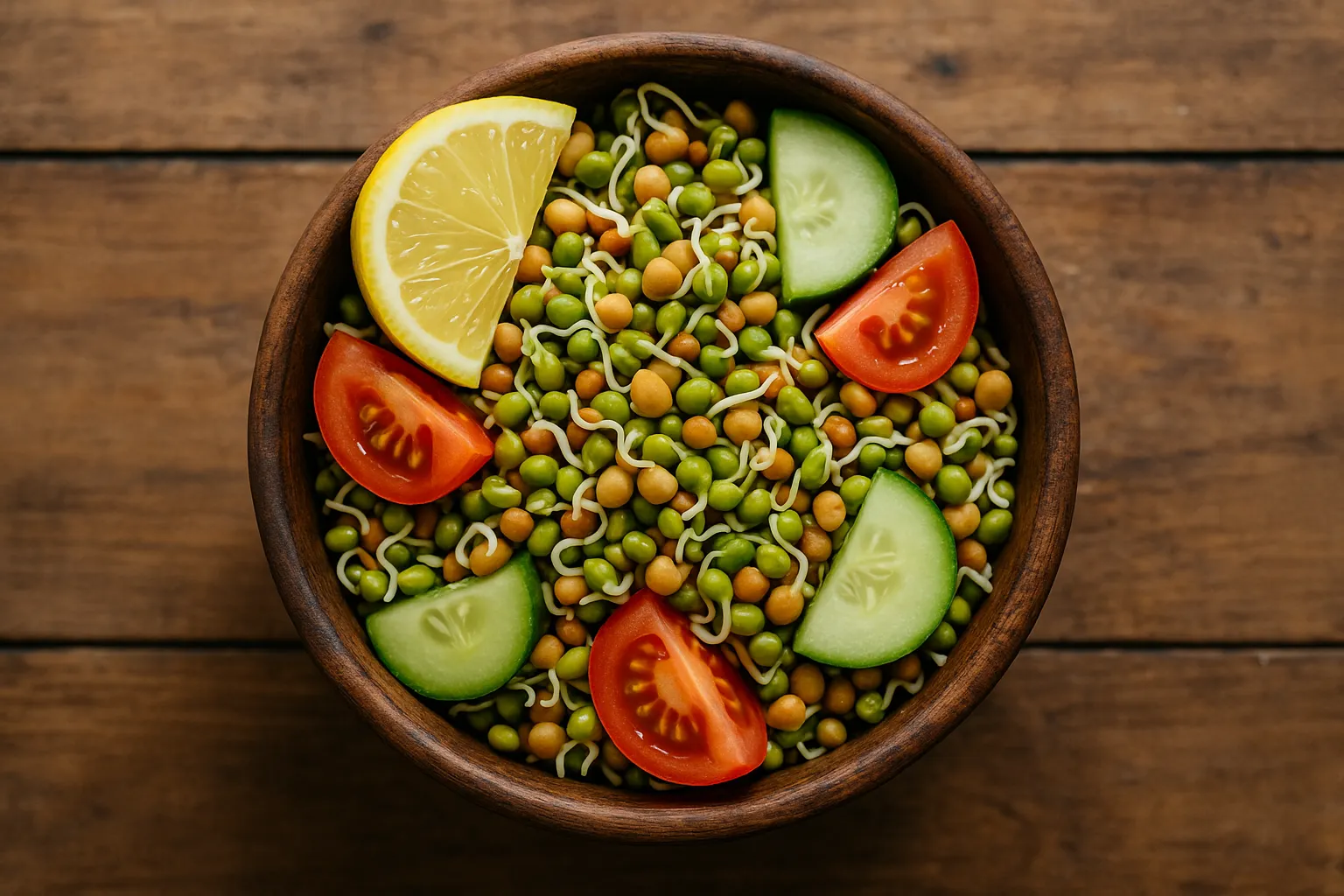
Datos Rápidos de Nutrición
Por 100g Serving (1 Medium Bowl)
| Nutriente | Cantidad |
|---|---|
| Calorías | 33 kcal |
| Proteínas | 3.8g |
| Carbohidratos | 6.5g |
| Fibra | 2.8g |
| Azúcares | 1.2g |
| Grasas | 0.3g |
| Vitamina C | 18mg |
| Folate | 62mcg |
| Hierro | 1.4mg |
| Calcio | 28mg |
Desglose de Macronutrientes
 ChatGPT
  Claude
  AI Mode
  Perplexity
CONSEJO DEL NUTRICIONISTA
Sprouting aumenta nutrient bioavailability by 20-300%. Sprouts contain 10-20% más digestible proteínas que unsprouted legumes. El germination process reduce anti-nutrientes and aumenta vitamina C, folate, and enzyme content.
Mitos vs Realidad
MITO #1: Sprouted Salad Lacks Proteínas
REALIDAD: Sprouted salad proporciona 3.8g proteínas por 100g con superior digestibility. Sprouting aumenta proteínas digestibility by 10-20% compared to crudo legumes. A 150g bowl delivers 5.7g bioavailable proteínas.
MITO #2: Crudo Sprouts Son Dangerous
REALIDAD: Properly prepared sprouts son safe. Wash thoroughly, usar within 2-3 días, tienda refrigerated. Food safety issues son rare con hogar-sprouted legumes. Light steaming (1-2 minutes) eliminates cualquier concerns mientras preserving nutrientes.
MITO #3: Sprouted Salad Causes Gas
REALIDAD: Mientras crudo legumes cause gas, sprouting breaks down complex azúcares ese cause bloating. Sprouting reduce flatulence-causing compounds by 50-70%. Comenzar con pequeño porciones and increase gradually.
MITO #4: Sprouts Son Too Bajo in Calorías to Be Filling
REALIDAD: At 33 calorías, sprouted salad proporciona 3.8g proteínas and 2.8g fibra ese promote satiety. El alto water and fibra content creates volume, triggering fullness signals. Perfect for calorie-deficit diets.
MITO #5: Solo Moong Sprouts Son Nutritivo
REALIDAD: Todo sprouted legumes son nutritivo. Moong, chickpea, matki, masoor, and alfalfa cada offer unique benefits. Mix varieties for broader nutrient profile: chickpeas for proteínas, alfalfa for enzymes, moong for easy digestion.
MITO #6: Sprouted Salad Has No Lugar in Alto-Proteínas Diets
REALIDAD: Mientras not as proteínas-dense as paneer or chicken, sprouted salad proporciona quality plant proteínas con todo esencial amino acids. Ideal as a proteínas-rich snack, breakfast addition, or paired con otro proteínas sources.
NutriScore por Objetivos de Salud
| Objetivo de Salud | NutriScore | ¿Por qué esta puntuación? |
|---|---|---|
| Pérdida de Peso |  | Exceptionally bajo calorie (33 por 100g), alto fibra (2.8g) promueve fullness. Alto proteínas (3.8g) preserves muscle. Perfect for calorie deficit sin nutrient deficit. |
| Ganancia Muscular |  | Moderado proteínas source at 3.8g por 100g. Mejor as supplement to main proteínas sources rather que primary proteínas. Bueno for adding nutrientes to alto-proteínas meals. |
| Control de Diabetes | | Bajo GI, alto fibra slows glucose absorption. Resistant starch mejora insulin sensitivity. |
| Control del SOP | | Alto fibra aids hormone balance, bajo calorie apoya peso management. Plant compounds reduce inflamación. |
| Nutrición en el Embarazo | | Folate (62mcg) crucial for fetal development. Hierro, vitamina C, proteínas support maternal health. |
| Viral/Recuperación de Gripe | | Easy to digest, vitamina C boosts immunity (18mg por 100g). Light aún nutritivo, enzymes aid recovery. |
NUTRICIÓN PERSONALIZADA
Registra tus comidas con NutriScan para personalizados NutriScores based on your specific health goals!
Respuesta de Azúcar en Sangre to Sprouted Salad
Understanding cómo sprouted salad affects glucosa en sangre demonstrates its superiority for metabolic health.
Curva Típica de Respuesta de Glucosa
Este gráfico muestra minimal glucosa en sangre response due to bajo glycemic index, alto fibra, and resistant starch content. Las respuestas individuales pueden variar. No es consejo médico.
Maximizing Blood Azúcar Benefits
Sprouted legumes contain resistant starch ese mejora insulin sensitivity:
- 🥜 Add a handful of tostado peanuts - Saludable fats further slow digestion
- 🍋 Squeeze fresco lemon juice - Acidity reduce glycemic response
- 🥒 Include chopped vegetables (cucumber, tomato, onion) - Extra fibra and nutrientes
- 🌶️ Add chaat masala and black salt - Enhances flavor and digestion
El combination of proteínas, fibra, and resistant starch makes sprouted salad one of el mejor foods for azúcar en sangre control.
Importancia Cultural
Sprouted legumes have been consumed across cultures for thousands of years, valued for their healing properties.
In India:
- Ayurveda considers sprouts "living food" con vital vida force (prana)
- Traditional breakfast in Maharashtra, Gujarat: Matki Usal, Moong Chaat
- Offered durante Navratri fasting as sattvic (pure) food
- Hogar sprouting es a common kitchen practice across Indian households
- Street vendors serve sprouted moong chaat as popular evening snack
Global Traditions:
- Ancient Chinese medicine usado sprouts for detoxification and energy
- Traditional Korean diet incluye kongnamul (soybean sprouts) and sukjunamul (mung bean sprouts)
- Western health movements popularized alfalfa sprouts in 1970s-80s
- Modern plant-based diets recognize sprouts as nutrient-dense proteínas source
Compara y Sustituye
Sprouted Salad vs Similar Saludable Salads (Por 100g)
| Nutriente | 🥗 Sprouted Salad | 🥗 Green Salad | 🥗 Chickpea Salad | 🥒 Cucumber Salad |
|---|---|---|---|---|
| Calorías | 33 kcal | 15 kcal | 125 kcal | 12 kcal |
| Carbohidratos | 6.5g | 3g | 20g | 2.5g |
| Fibra | 2.8g | 1.5g | 5g | 0.7g |
| Proteínas | 3.8g | 1g | 7g | 0.5g |
| Grasas | 0.3g | 0.2g | 2g | 0.1g |
| Vitamina C | 18mg | 8mg | 4mg | 3mg |
| Folate | 62mcg | 35mcg | 110mcg | 7mcg |
| Mejor Para | Peso loss, diabetes, proteínas | Bajo calorie, hydration | Alto proteínas, filling | Hydration, detox |
Preguntas Frecuentes
Es sprouted salad bueno for pérdida de peso?
Yes, sprouted salad es exceptional for pérdida de peso. Con solo 33 calorías por 100g but 3.8g proteínas and 2.8g fibra, it delivers alto satiety at minimal caloric cost.
Peso loss benefits: Grande porción sizes satisfy hunger; alto proteínas preserves muscle durante calorie deficit; fibra mejora gut health and metabolismo; nutrient-density previene deficiencies.
Mejor practices: Eat 150-200g bowl as breakfast or snack; add lemon juice, tomatoes, cucumber for volume; evitar oil-heavy dressings; pair con proteínas source for balanced meal.
¿Pueden los diabéticos comer sprouted salad?
Sprouted salad es highly beneficioso for diabetics. El bajo glycemic index, alto fibra content, and resistant starch trabajo together to minimize azúcar en sangre spikes and improve insulin sensitivity.
Diabetes benefits: Resistant starch in sprouts mejora glucose metabolismo; fibra slows carbohydrate absorption; plant compounds reduce inflamación; bajo calorie apoya peso management.
Tips for diabetics: Eat as breakfast or mid-morning snack; combine con pequeño proteínas source; monitor azúcar en sangre to ver personal response; consume regularly for cumulative benefits.
Cómo mucho proteínas es in sprouted salad?
A 100g porción contiene 3.8g of proteínas. Importantly, sprouting aumenta proteínas digestibility by 10-20%, making este proteínas más bioavailable que proteínas from unsprouted legumes.
A typical 150g bowl proporciona 5.7g digestible proteínas. Mientras not as proteínas-dense as animal sources, sprouted salad ofrece quality plant proteínas con todo esencial amino acids.
Qué son el main beneficios para la salud of sprouted salad?
Key Benefits:
- Pérdida de Peso Support: 33 calorías, alto satiety from proteínas and fibra
- Enhanced Nutriente Absorption: Sprouting aumenta bioavailability of vitaminas, minerales, and proteínas
- Blood Azúcar Control: Bajo GI, resistant starch mejora insulin sensitivity
- Digestive Health: Living enzymes, fibra, and reduced anti-nutrientes support gut function
- Immune Boost: Vitamina C (18mg) and plant antioxidantes strengthen immunity
- Nutrición en el Embarazo: Folate (62mcg) esencial for fetal neural tube development
Cuando es el mejor tiempo to eat sprouted salad?
Optimal timing by goal:
- Pérdida de Peso: Breakfast (alto proteínas comenzar) or evening snack (bajo calorie, filling)
- Diabetes: Breakfast or mid-morning (establishes stable azúcar en sangre for el día)
- Digestion: Morning cuando digestive fire (agni) es strongest según Ayurveda
- Energy: Mid-morning or afternoon for sustained energy sin heaviness
Evitar: Late night for algunos personas as crudo sprouts puede cause gas. If sensitive, have antes 7 PM or lightly steam sprouts.
Son crudo sprouts safe to eat?
Crudo sprouts son generalmente safe cuando properly prepared and handled:
Safety guidelines: Wash thoroughly under running water; usar fresco sprouts within 2-3 días of sprouting; tienda refrigerated at 4°C or below; discard if slimy or smell off; buy from reputable sources if not hogar-sprouting.
For vulnerable populations: Pregnant women, young children, elderly, or immunocompromised individuals debería steam sprouts lightly (1-2 minutes) to eliminate cualquier bacterial risk mientras preserving la mayoría nutrientes.
Hogar-sprouted legumes from dry beans son safer que tienda-bought as you control el entire process.
Cómo do I hacer sprouted salad at hogar?
Quick Sprouting Method:
- Soak moong/chickpeas overnight (8-12 hours)
- Drain water and rinse thoroughly
- Wrap in damp cloth and mantener in warm spot
- Rinse twice diario for 1-2 días until 1-2 cm sprouts appear
- Refrigerate and usar within 2-3 días
Salad Assembly: Mix sprouts con chopped tomato, cucumber, onion, coriander; squeeze lemon juice; add black salt, chaat masala, tostado cumin powder; optionally add tostado peanuts or hervido corn.


Alimentos Nutritivos Similares
4505 Chicharrones Classic Chili Salt
7 Eleven Japan Crispy Corn Cheese
Explore Más Nutrition Tools & Resources
App de agua y calorías gratis con registro diario
App de ayuno intermitente gratis con temporizador
App de macros: NutriScan las rellena desde una foto
App de plan de comidas para volumen limpio
App de plan de comidas vegetariano con objetivo de proteína
App de Plan de Dieta India Vegetariana y No Vegetariana
App de plan de dieta mediterránea que cuenta el aceite
App nutricionista con IA que lee tus comidas
App para Subir de Peso: Plan de Dieta con IA
Ayuno Intermitente para Mujeres, Timer y Registro de Comidas
Coach de pérdida de peso ChatGPT: con registro
Contador de Calorías Activado por Voz - Di tus Comidas y Rastrea Nutrición Sin Manos — 2026
Contador de calorías ChatGPT: alternativa que no lo olvida
Contador de Calorías con IA: calorías con fotos, gratis
Contador de calorías de comida rápida con foto
Contador de calorías gratis con fotos | NutriScan
Contador de Calorías para Comida Española - Información Nutricional Instantánea — 2026
Escáner de Etiquetas Nutricionales para tu Ración Real
Generador Lista de Compras Keto
Generador Lista de Compras Mensual
Guía Proteína Tercer Trimestre
Plan de comidas semanal con calorías y lista de compras
Plan de dieta ChatGPT: alternativa que registra comidas
Plan de Dieta para Ganar Peso España