Tempeh: calorías, nutrición y beneficios para la salud
Fermented Indonesian soy superfood packed con 19g proteínas, probiotics, and esencial nutrientes for plant-based diets and ganancia muscular.
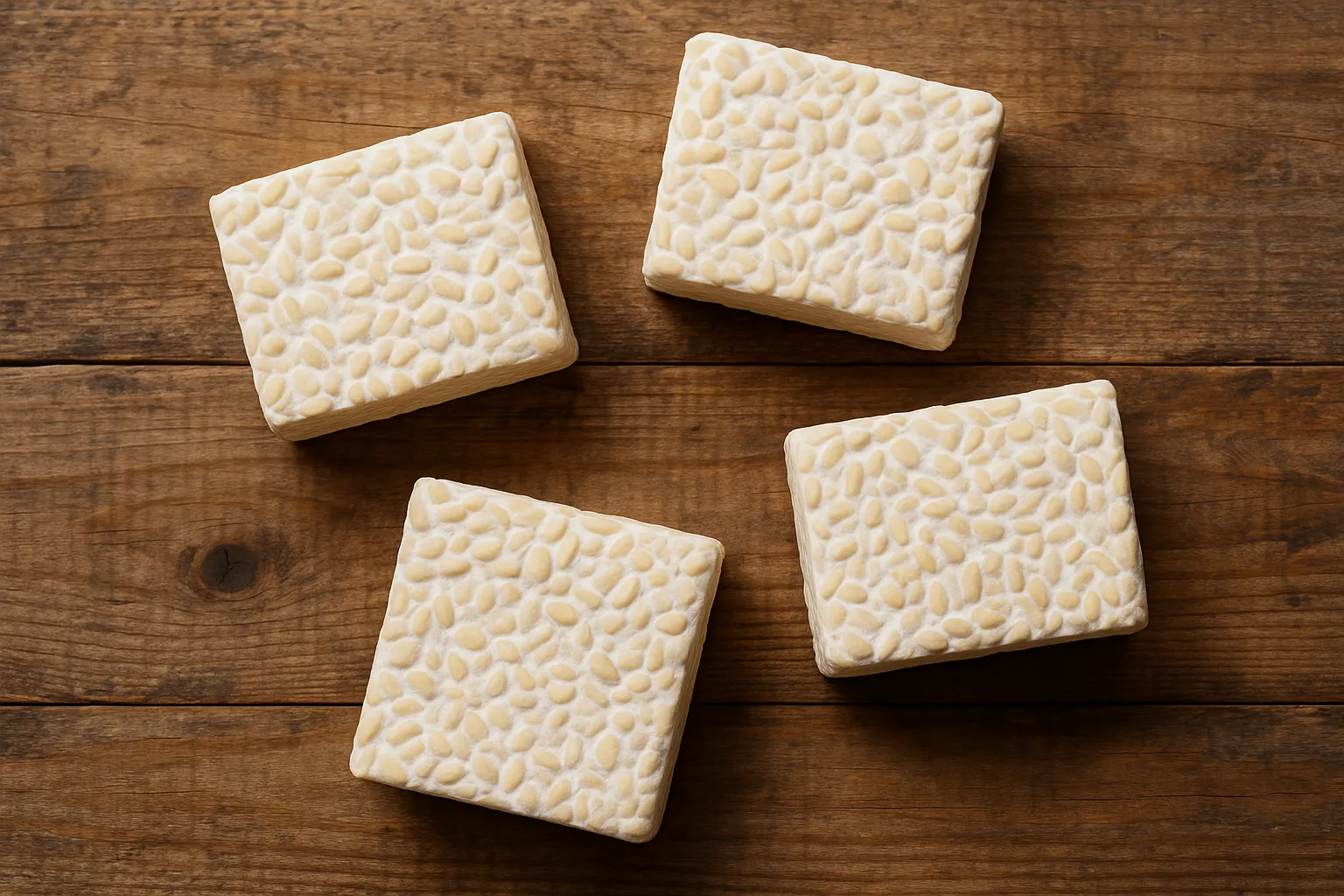
Datos Rápidos de Nutrición
Por 100g (1/2 cup cocido)
| Nutriente | Cantidad |
|---|---|
| Calorías | 193 kcal |
| Proteínas | 19g |
| Carbohidratos | 9g |
| Fibra | 5g |
| Azúcares | 2.3g |
| Grasas | 11g |
| Calcio | 111mg |
| Hierro | 2.7mg |
| Magnesio | 81mg |
| Phosphorus | 266mg |
Desglose de Macronutrientes
 ChatGPT
  Claude
  AI Mode
  Perplexity
CONSEJO DEL NUTRICIONISTA
Tempeh proporciona 38% of diario proteínas needs in solo 100g. El fermentation process breaks down phytic acid, improving mineral absorption by 50% compared to unfermented soy.
Mitos vs Realidad
MITO #1: Todo Soy Products Son Equal
REALIDAD: Tempeh es nutritionally superior to tofu con 2.4x más proteínas (19g vs 8g) and 5g fibra vs none. Fermentation creates probiotics and reduce antinutrients, making nutrientes más bioavailable.
MITO #2: Tempeh Es Siempre Alto in Probiotics
REALIDAD: La mayoría commercial tempeh es pasteurized, killing live cultures. El fermentation todavía creates prebiotics and easier-to-digest proteins. Mirar for "unpasteurized" or "crudo" labels for probiotic benefits.
MITO #3: Soy Products Cause Hormone Imbalance in Men
REALIDAD: Clinical los estudios muestran no feminizing effects from soy. Tempeh's isoflavones son 1000x weaker que human estrogen. Moderado consumption (100-200g diario) es safe for men and puede reduce prostate cancer risk.
MITO #4: Tempeh Tastes Bitter and Unpleasant
REALIDAD: Crudo tempeh has a nutty, mushroom-like flavor. Steam for 10 minutes antes cooking to remove cualquier bitterness. Properly marinated and cocido tempeh absorbs flavors beautifully and develops a satisfying texture.
MITO #5: Tempeh Es Too Alto in Grasas for Pérdida de Peso
REALIDAD: El 11g grasas es mostly saludable polyunsaturated omega-3 and omega-6 fats. El alto proteínas (19g) and fibra (5g) promote satiety, making it effective for pérdida de peso despite moderado calorías.
MITO #6: You Necesitar to Eat Meat for Complete Proteínas
REALIDAD: Tempeh es a complete proteínas containing todo 9 esencial amino acids. 100g proporciona más proteínas que la mayoría meats, making it ideal for vegan and vegetarian diets.
NutriScore por Objetivos de Salud
| Objetivo de Salud | NutriScore | ¿Por qué esta puntuación? |
|---|---|---|
| Pérdida de Peso |  | 19g proteínas promueve fullness and muscle preservation, 5g fibra controls appetite. Límite to 80-100g porciones. |
| Ganancia Muscular |  | Excellent plant-based proteínas (19g por 100g) con todo esencial amino acids. Fermentation mejora proteínas digestibility by 25%. |
| Control de Diabetes | | Bajo GI, soy proteínas mejora insulin sensitivity. Alto fibra and proteínas slow glucose absorption. |
| Control del SOP | | Plant proteínas apoya hormone balance, bajo GI previene insulin spikes. Isoflavones puede improve SOP symptoms. |
| Nutrición en el Embarazo | | Rich in folate, hierro (2.7mg), and calcio (111mg). Complete proteínas for fetal development. |
| Viral/Recuperación de Gripe | | Easy-to-digest proteínas for immune function, zinc and probiotics support gut immunity. |
NUTRICIÓN PERSONALIZADA
Registra tus comidas con NutriScan para personalizados NutriScores based on your specific health goals!
Respuesta de Azúcar en Sangre to Tempeh
Understanding cómo tempeh affects your glucosa en sangre shows its excellent metabolic profile for stable energy.
Curva Típica de Respuesta de Glucosa
Este gráfico muestra respuesta típica de glucosa en sangre para individuos sanos en general. Las respuestas individuales pueden variar. No es consejo médico.
Por qué Tempeh Keeps Blood Azúcar Stable
El combination of alto proteínas, fibra, and saludable fats creates minimal azúcar en sangre impact:
- 🥜 Alto proteínas (19g) - Slows digestion and glucose release
- 🌾 Fibra (5g) - Reduce glucose absorption rate
- 🥑 Saludable fats - Further slows carbohydrate digestion
- 🦠 Fermentation - Reduce starch and aumenta resistant starch
Este makes tempeh ideal for control de diabetes, pérdida de peso, and sustained energy throughout el día.
Importancia Cultural
Tempeh originated in Indonesia over 400 years ago, traditionally hecho by fermenting soybeans con Rhizopus mold.
In Indonesia:
- National staple proteínas, consumed diario across todo economic levels
- Traditional preparation uses banana leaves for fermentation
- Over 50 varieties incluyendo beans, grains, and mixed versions
- Tempeh Mendoan (frito tempeh) es a beloved street food
Global Impact:
- Vegan movement popularized tempeh in Western countries since 1970s
- Ahora hecho worldwide con soybeans, chickpeas, and otro legumes
- Sustainable proteínas source requiring 90% less water que beef
- Growing market: $3.8 billion industry projected to reach $6.2 billion by 2030
Compara y Sustituye
Tempeh vs Similar Plant Proteins (Por 100g)
| Nutriente | 🌾 Tempeh | 🧀 Tofu (Firm) | 🥜 Edamame | 🍗 Chicken Breast |
|---|---|---|---|---|
| Calorías | 193 kcal | 76 kcal | 122 kcal | 165 kcal |
| Carbohidratos | 9g | 1.9g | 9g | 0g |
| Fibra | 5g | 0g | 5g | 0g |
| Proteínas | 19g | 8g | 11g | 31g |
| Grasas | 11g | 4.8g | 5g | 3.6g |
| Calcio | 111mg | 350mg | 63mg | 15mg |
| Hierro | 2.7mg | 1.6mg | 2.3mg | 0.7mg |
| Magnesio | 81mg | 37mg | 64mg | 29mg |
| Mejor Para | Alto proteínas | Bajo calorie | Snacking | Lean proteínas |
Preguntas Frecuentes
Es tempeh bueno for pérdida de peso?
Yes, tempeh apoya pérdida de peso effectively. El 19g proteínas por 100g promueve fullness and preserves muscle durante calorie deficits. Despite 193 calorías, el alto proteínas and 5g fibra create strong satiety signals.
Mejor practices: Consume 80-100g porciones, steam antes cooking to reduce bitterness, pair con vegetables, usar as meat substitute in stir-fries and salads.
Es tempeh healthier que tofu?
Depends on your goals. Tempeh has significativamente más proteínas (19g vs 8g), fibra (5g vs 0g), and contiene probiotics from fermentation. Tofu has fewer calorías (76 vs 193) and más calcio cuando fortified (350mg vs 111mg).
Elegir tempeh for: Proteínas needs, gut health, nutrient density, whole food texture Elegir tofu for: Menor calorías, calcio, mild flavor, softer texture
Cómo mucho proteínas es in tempeh?
Tempeh contiene 19g of proteínas por 100g, making it one of el highest plant-based proteínas sources. Este es más proteínas que la mayoría meats por 100g.
A typical porción (100g) proporciona 38% of diario proteínas needs (50g valor diario). Tempeh es a complete proteínas con todo 9 esencial amino acids, ideal for vegan and vegetarian diets.
Does tempeh have probiotics?
Traditional tempeh contiene beneficioso bacteria, but la mayoría commercial tempeh es pasteurized, cuál kills live cultures to extend shelf vida. El fermentation process todavía creates prebiotics and breaks down antinutrients, improving nutrient absorption.
For probiotic benefits: Mirar for unpasteurized or crudo tempeh in el refrigerated section, or hacer your propio. Incluso sin live cultures, fermented tempeh ofrece mejor digestibility que unfermented soy.
¿Pueden los diabéticos comer tempeh?
Yes, tempeh es excellent for diabetics. It has a bajo glycemic index, and el combination of alto proteínas (19g), fibra (5g), and saludable fats minimizes azúcar en sangre spikes.
Diabetes benefits:
- Soy proteínas puede improve insulin sensitivity by 6-8%
- Minimal impact on glucosa en sangre
- 5g fibra slows glucose absorption
- Complete proteínas reduce post-meal cravings
La investigación muestra regular soy consumption (incluyendo tempeh) correlates con mejor glycemic control. Siempre monitor azúcar en sangre response individually.
Cómo do you cook tempeh?
Basic Preparation:
- Steam primero (10 minutes) - Removes bitterness and opens texture
- Slice into strips, cubes, or crumble
- Marinate (30+ minutes) - Tempeh absorbs flavors bien
- Cook - Pan-fry, bake (375°F for 20-25 min), or crumble into dishes
Popular methods: Stir-fries, tacos, salads, bacon-style strips, burgers, pasta sauces. Cook until golden and slightly crispy for mejor texture and flavor.
Cómo muchos calorías son in tempeh?
Tempeh contiene 193 calorías por 100g (aproximadamente 1/2 cup). A typical porción size:
- 80g porción = 154 calorías, 15g proteínas
- 100g porción = 193 calorías, 19g proteínas
- 150g porción = 290 calorías, 28.5g proteínas
Despite moderado calorías, el alto proteínas and fibra hacer tempeh muy filling. Track porciones con NutriScan aplicación to match your calorie goals.
Es tempeh safe to eat crudo?
No, siempre cook tempeh antes eating. Crudo tempeh contiene live mold cultures ese puede cause digestive issues. El fermentation creates safe bacteria, but proper cooking ensures food safety.
Minimum cooking: Steam for 10 minutes at 160°F (71°C). Este también mejora flavor and texture mientras maintaining nutritional value.


Alimentos Nutritivos Similares
4505 Chicharrones Classic Chili Salt
7 Eleven Japan Crispy Corn Cheese
Explore Más Nutrition Tools & Resources
App de agua y calorías gratis con registro diario
App de ayuno intermitente gratis con temporizador
App de macros: NutriScan las rellena desde una foto
App de plan de comidas para volumen limpio
App de plan de comidas vegetariano con objetivo de proteína
App de Plan de Dieta India Vegetariana y No Vegetariana
App de plan de dieta mediterránea que cuenta el aceite
App nutricionista con IA que lee tus comidas
App para Subir de Peso: Plan de Dieta con IA
Ayuno Intermitente para Mujeres, Timer y Registro de Comidas
Coach de pérdida de peso ChatGPT: con registro
Contador de Calorías Activado por Voz - Di tus Comidas y Rastrea Nutrición Sin Manos — 2026
Contador de calorías ChatGPT: alternativa que no lo olvida
Contador de Calorías con IA: calorías con fotos, gratis
Contador de calorías de comida rápida con foto
Contador de calorías gratis con fotos | NutriScan
Contador de Calorías para Comida Española - Información Nutricional Instantánea — 2026
Escáner de Etiquetas Nutricionales para tu Ración Real
Generador Lista de Compras Keto
Generador Lista de Compras Mensual
Guía Proteína Tercer Trimestre
Plan de comidas semanal con calorías y lista de compras
Plan de dieta ChatGPT: alternativa que registra comidas
Plan de Dieta para Ganar Peso España