Uncle Chips Spicy Treat: calorías, nutrición y beneficios para la salud
Thick-cut frito potato chips con Indian masala seasoning—alto in calorías and sodio con minimal nutritional benefit.
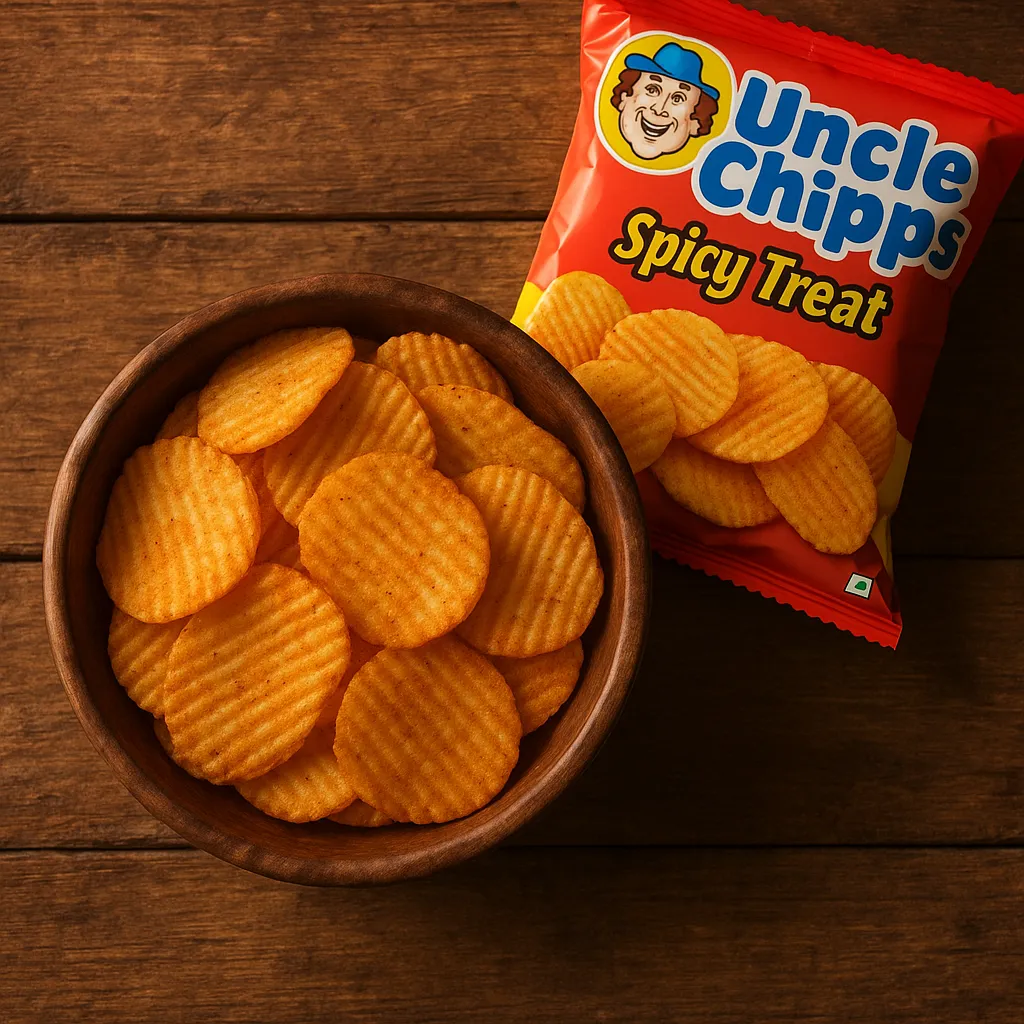
Datos Rápidos de Nutrición
Per 1 Serving (32g)
| Nutriente | Cantidad |
|---|---|
| Calorías | 154 kcal |
| Proteínas | 1.8g |
| Carbohidratos | 15g |
| Fibra | 0.6g |
| Azúcares | 0g |
| Grasas | 8.5g |
| Sodio | 240mg |
| Potasio | 340mg |
| Hierro | 0.4mg |
| Calcio | 8mg |
Desglose de Macronutrientes
 ChatGPT
  Claude
  AI Mode
  Perplexity
CONSEJO DEL NUTRICIONISTA
Uncle Chips Spicy Treat son thick-cut frito potato chips con 154 calorías, 8.5g grasas, and 240mg sodio per 32g porción. El thick-cut design absorbs más oil que thin chips, increasing calorie density. Minimal fibra (0.6g) and proteínas (1.8g) hacer este an empty-calorie processed snack unsuitable for regular consumption.
Mitos vs Realidad
MITO #1: "Thick-Cut Chips Son Más Filling"
REALIDAD: Thickness aumenta grasas absorption and calorías (154 per 32g), not satiety. El 0.6g fibra and minimal proteínas (1.8g) provide no fullness benefit. Potato chips rank among lowest satiety foods regardless of cut.
MITO #2: "Potatoes Son Saludable, So Potato Chips Son Saludable"
REALIDAD: Frying destroys la mayoría nutrientes and adds trans fats (hydrogenated oils). A whole potato (150g) proporciona 17g carbohidratos con 3g fibra and 2.5g proteínas; Uncle Chips (32g) proporciona 15g carbohidratos con 0.6g fibra and 1.8g proteínas—far inferior nutritional value.
MITO #3: "Spicy Flavor Burns Extra Calorías"
REALIDAD: Capsaicin in spicy foods slightly aumenta metabolismo (~3-5%), but el effect es negligible—burning ~10-20 extra calorías por porción. El 154 calorías far exceed cualquier metabolic boost.
MITO #4: "Potasio in Chips Offsets Sodio"
REALIDAD: Mientras 340mg potasio exists, sodio-to-potasio ratio matters más que absolute amounts. A 0.71 ratio (240mg Na : 340mg K) es unfavorable for salud del corazón; ideal es <1:2 (sodio half of potasio).
MITO #5: "One Pack Per Semana Es Harmless"
REALIDAD: Regular consumption, incluso weekly, aumenta hypertension risk. Cada porción uses 10% of diario sodio límite; weekly consumption uses 50% of weekly allowance. Combined con otro processed foods, cumulative sodio becomes harmful.
NutriScore por Objetivos de Salud
| Objetivo de Salud | NutriScore | ¿Por qué esta puntuación? |
|---|---|---|
| Pérdida de Peso |  | 154 calorías, minimal fibra (0.6g), alto grasas (8.5g). Bajo satiety per calorie. Extremely poor choice for pérdida de peso. |
| Ganancia Muscular | | Solo 1.8g proteínas per 32g. Insufficient for muscle recovery; elegir Griego yogurt, whey, or eggs for post-workout. |
| Control de Diabetes | | Frito potato (GI ~75-85), 15g carbohidratos con no fibra = azúcar en sangre spike. Harmful for diabetes. Evitar entirely. |
| Control del SOP | | Alto carb-to-fibra ratio worsens insulin resistance. Sodio causes fluid retention. Not suitable for SOP nutrition. |
| Nutrición en el Embarazo | | Lacks folate, hierro, calcio esencial for fetal development. Alto sodio aumenta blood pressure risk durante embarazo. Skip entirely. |
| Viral/Recuperación de Gripe | | No proteínas for immune function, no vitaminas/minerales for recovery. Alto sodio puede dehydrate. Elegir broths, whole foods, or fruits instead. |
NUTRICIÓN PERSONALIZADA
Registra tus comidas con NutriScan para personalizados NutriScores based on your specific health goals!
Respuesta de Azúcar en Sangre to Frito Potato Chips
Frito potatoes have a alto glycemic index (75-85), causing rapid glucosa en sangre elevation due to refined starch and lack of fibra.
Curva Típica de Respuesta de Glucosa
Este gráfico muestra respuesta típica de glucosa en sangre para individuos sanos en general. Las respuestas individuales pueden variar. No es consejo médico.
Prevent or Minimize Consumption
Pairing strategy ofrece minimal help porque frito potatoes trigger tal rapid glucose spikes ese incluso proteínas/grasas pairing cannot fully blunt el response. Prevention es superior to management aquí.
- Mejor approach - Evitar entirely or consume <1 per mes
- If consuming - Eat con proteínas (Griego yogurt con nuts) to slightly slow absorption
- Skip pairings - Combination foods won't meaningfully reduce azúcar en sangre spike
Importancia Cultural
Uncle Chips launched in India in 1979, capturing el growing demand for affordable, thick-cut potato chips con local masala flavors. El brand became iconic for budget-conscious Indian households, competing con premium Lay's through menor pricing and spicy flavor variants appealing to Indian palates.
In India:
- Uncle Chips positioned as el "everyman's snack"—accessible to middle-class and menor-income families
- Spicy Treat variant launched to compete con Lay's Magic Masala and otro regional favorites
- Thick-cut design became a signature brand trait, differentiating from thinner international chips
- Popular at roadside vendors, cinema halls, and casual family gatherings
Market Position:
- Second-largest potato chip brand in India (después Lay's)
- Emphasis on value-for-money versus premium positioning
- Regional masala flavors tailored to South Indian, North Indian, and East Indian preferences
Compara y Sustituye
Uncle Chips vs Similar Savory Snacks (Per 30-32g)
| Snack | 🥔 Uncle Chips Spicy | 🥔 Lay's Classic | 🥜 Mixed Nuts Tostado | 🍎 Apple + Peanut Butter |
|---|---|---|---|---|
| Calorías | 154 kcal | 155 kcal | 168 kcal | 180 kcal |
| Carbohidratos | 15g | 15g | 6g | 25g |
| Fibra | 0.6g | 1.4g | 2.5g | 4g |
| Proteínas | 1.8g | 2.3g | 5.5g | 4g |
| Grasas | 8.5g | 10g | 15g | 8g |
| Sodio | 240mg | 180mg | 0.5mg | 1.5mg |
| Mejor Para | Occasional indulgence | Occasional indulgence | Diario snacking | Peso loss, energy |
Preguntas Frecuentes
Son Uncle Chips bueno for pérdida de peso?
No. At 154 calorías con minimal fibra (0.6g) and alto grasas (8.5g), they provide poor satiety per calorie. Cada porción uses 2% of diario calorie allowance (2000 cal diet) mientras contributing nothing to fullness. Nuts or whole fruit con proteínas son superior choices.
Puede personas con diabetes eat Uncle Chips Spicy Treat?
Evitar. Frito potatoes have a glycemic index of 75-85, causing rapid azúcar en sangre spikes. El 15g carbohidratos con solo 0.6g fibra create steep glucose elevation harmful for control de diabetes. Incluso a single porción puede significativamente impact glucosa en sangre readings.
Por qué son Uncle Chips thick-cut?
Thick-cut potatoes (2-3mm) absorb más oil durante deep frying, creating heavier, crunchier textures. Este aumenta grasas content (8.5g per 32g vs ~6g for thin chips) and calorie density. Thickness es a marketing distinction and texture preference, not a health advantage.
Cómo mucho sodio es in Uncle Chips?
A 32g porción contiene 240mg sodio, representing 10% of el 2,300mg diario límite recomendado by WHO. Regular consumption (>2 packs weekly) contributes to cumulative sodio intake ese aumenta hypertension and cardiovascular disease risk.
Qué's el difference between Uncle Chips and Lay's?
Ambos son frito potato chips con similar calorie/grasas profiles (~150-155 cal, 8-10g grasas per 32g). Uncle Chips emphasize thick-cut texture and spicy Indian masala flavors at menor price; Lay's offer diverse international flavors. Nutritionally, Uncle Chips puede have slightly mayor sodio (240mg vs 180mg) and slightly menor fibra (0.6g vs 1.4g).
Son thick-cut chips healthier que thin-cut?
No. Thicker cuts absorb más oil, increasing grasas and calorías. Thin-cut chips (~1.5mm) contain less grasas (~6g per 30g) compared to thick-cut (~8.5g per 32g). Neither version qualifies as saludable; whole food snacks son superior regardless of chip thickness.


Similar Nutritivo Snacks
4505 Chicharrones Classic Chili Salt
7 Eleven Japan Crispy Corn Cheese
Explore Más Nutrition Tools & Resources
App de agua y calorías gratis con registro diario
App de ayuno intermitente gratis con temporizador
App de macros: NutriScan las rellena desde una foto
App de plan de comidas para volumen limpio
App de plan de comidas vegetariano con objetivo de proteína
App de Plan de Dieta India Vegetariana y No Vegetariana
App de plan de dieta mediterránea que cuenta el aceite
App nutricionista con IA que lee tus comidas
App para Subir de Peso: Plan de Dieta con IA
Ayuno Intermitente para Mujeres, Timer y Registro de Comidas
Coach de pérdida de peso ChatGPT: con registro
Contador de Calorías Activado por Voz - Di tus Comidas y Rastrea Nutrición Sin Manos — 2026
Contador de calorías ChatGPT: alternativa que no lo olvida
Contador de Calorías con IA: calorías con fotos, gratis
Contador de calorías de comida rápida con foto
Contador de calorías gratis con fotos | NutriScan
Contador de Calorías para Comida Española - Información Nutricional Instantánea — 2026
Escáner de Etiquetas Nutricionales para tu Ración Real
Generador Lista de Compras Keto
Generador Lista de Compras Mensual
Guía Proteína Tercer Trimestre
Plan de comidas semanal con calorías y lista de compras
Plan de dieta ChatGPT: alternativa que registra comidas
Plan de Dieta para Ganar Peso España