Veg Pulao: calorías, nutrición y beneficios para la salud
Aromatic Indian rice dish packed con vegetables, balanced nutrition, and authentic flavors for cada health goal.
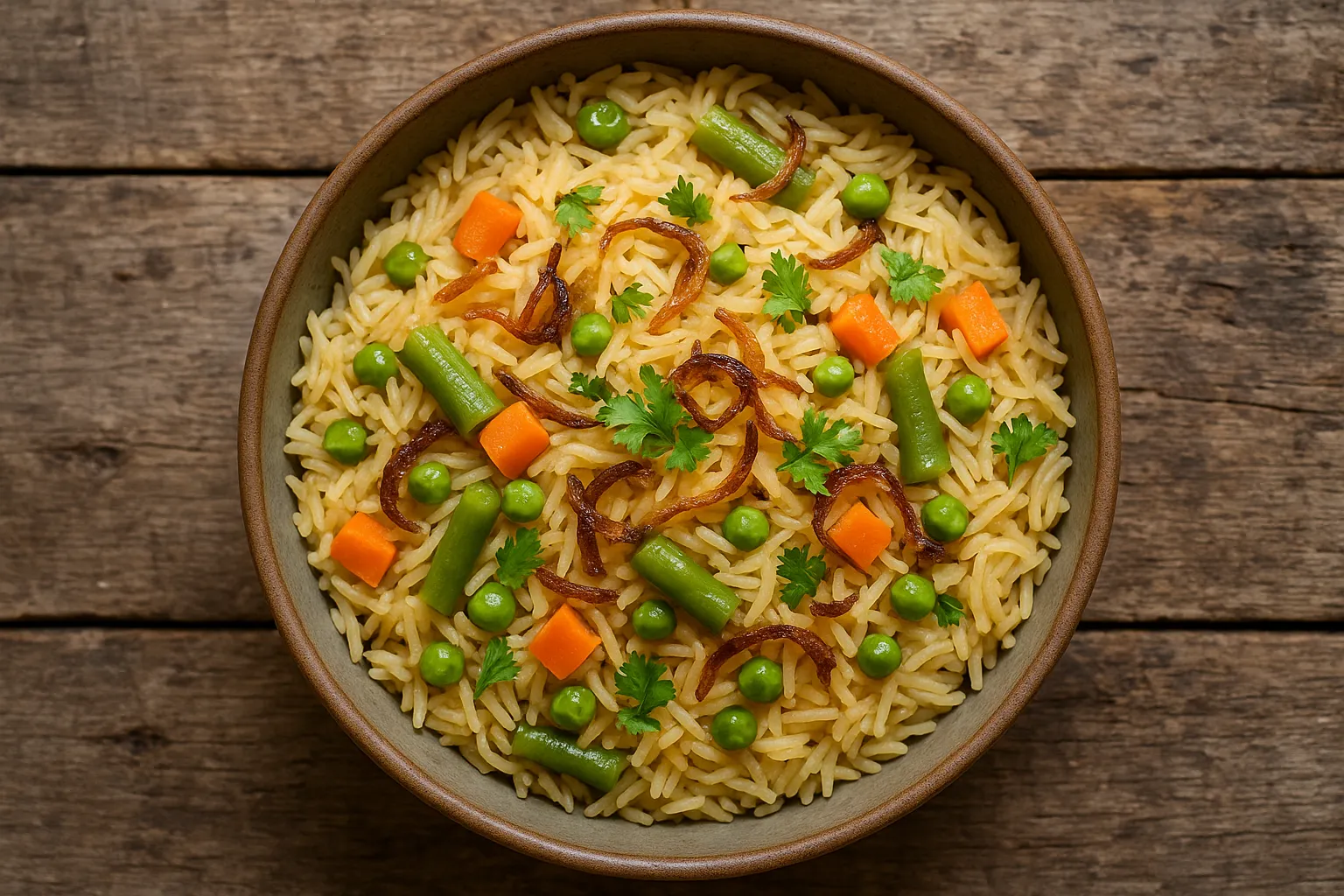
Datos Rápidos de Nutrición
Por 100g Serving (aproximadamente 1/2 cup)
| Nutriente | Cantidad |
|---|---|
| Calorías | 125 kcal |
| Proteínas | 3g |
| Carbohidratos | 20g |
| Fibra | 2g |
| Azúcares | 1.5g |
| Grasas | 3.5g |
| Sodio | 180mg |
| Potasio | 95mg |
| Vitamina A | 450 IU |
| Vitamina C | 8mg |
Desglose de Macronutrientes
 ChatGPT
  Claude
  AI Mode
  Perplexity
CONSEJO DEL NUTRICIONISTA
Veg pulao ofrece balanced nutrition con 20g carbohidratos for energy, 3g proteínas, and vegetables providing vitaminas A and C. El aromatic spices like cumin, cardamom, and bay leaf not solo enhance flavor but también aid digestion and provide anti-inflammatory benefits.
Mitos vs Realidad
MITO #1: Todo Rice Dishes Son Unhealthy
REALIDAD: Veg pulao es más nutritivo que plain rice due to mixed vegetables (carrots, peas, beans) adding fibra, vitaminas, and minerales. At 125 calorías por 100g, it's moderado cuando porción-controlled. Elegir brown rice or basmati for menor glycemic impact.
MITO #2: Diabetics Must Evitar Rice Completely
REALIDAD: Rice-based meals like pulao puede fit diabetic diets cuando porciones son controlled and paired con proteínas. El vegetables and moderado grasas in pulao reduce glycemic response. Límite to 100-150g and elegir basmati (GI 50-58) over white rice.
MITO #3: Pulao Es Too Alto in Calorías for Pérdida de Peso
REALIDAD: At 125 calorías por 100g, a 150-200g porción (187-250 calorías) fits pérdida de peso plans. El vegetables add volume and fibra for satiety. Key es control de porciones and minimal oil - usar 1 tablespoon oil per 4 porciones.
MITO #4: Vegetable Pulao Lacks Proteínas
REALIDAD: Mientras 3g proteínas por 100g es moderado, pulao es típicamente served con proteínas-rich sides. Traditional Indian thali balances rice con dal, raita, or paneer for complete nutrition. Add chickpeas or paneer to boost proteínas.
MITO #5: Spices in Pulao Cause Acidity
REALIDAD: Aromatic spices like cumin, cardamom, and bay leaf actually aid digestion and reduce gas. Solo excess chili or heavy oil puede cause acidity. Moderado spicing in pulao es digestive-friendly and anti-inflammatory.
MITO #6: Leftover Pulao Es Unsafe
REALIDAD: Properly stored pulao (refrigerated within 2 hours, consumed within 3-4 días) es safe. Reheated rice es safe if cooled and stored correctly. El resistant starch formed durante cooling puede incluso improve gut health and azúcar en sangre control.
NutriScore por Objetivos de Salud
| Objetivo de Salud | NutriScore | ¿Por qué esta puntuación? |
|---|---|---|
| Pérdida de Peso |  | 125 calorías por 100g es moderado. Control de porciones esencial - límite to 150-200g porciones. Vegetables add fibra but carbohidratos and oil increase calorie density. |
| Ganancia Muscular |  | Bueno post-workout carb source (20g por 100g) for glycogen replenishment. Pair con dal, paneer, or chicken to reach 20-30g proteínas per meal. |
| Control de Diabetes | | Moderado GI (58-65 depending on rice type). Elegir basmati or brown rice, límite to 100-150g, pair con proteínas and vegetables. |
| Control del SOP | | Moderado carbohidratos puede affect insulin sensitivity. Límite to 100-150g, elegir brown basmati, evitar evening consumption, pair con proteínas to minimize insulin spike. |
| Nutrición en el Embarazo | | Proporciona balanced energy, folate from vegetables, and easy digestibility. Bueno comfort food durante embarazo. Add proteínas (paneer, dal) for complete nutrition. |
| Viral/Recuperación de Gripe | | Easily digestible carbohidratos for energy, vegetables for vitaminas, aromatic spices aid digestion. Warm, comforting meal suitable for recovery phase. |
NUTRICIÓN PERSONALIZADA
Registra tus comidas con NutriScan para personalizados NutriScores based on your specific health goals!
Respuesta de Azúcar en Sangre to Veg Pulao
Understanding cómo veg pulao affects glucosa en sangre ayuda con control de porciones and meal pairing strategies.
Curva Típica de Respuesta de Glucosa
Este gráfico muestra respuesta típica de glucosa en sangre para individuos sanos en general. Las respuestas individuales pueden variar. No es consejo médico.
Cómo Aplanar el Pico
Pairing veg pulao con proteínas and fibra significativamente reduce azúcar en sangre spike:
- 🥘 Dal or sambar - Lentils add proteínas and fibra for slower glucose absorption
- 🥗 Raita con cucumber - Yogurt proporciona proteínas and probiotics; cooling effect
- 🧀 Paneer curry or tikka - Alto proteínas balances carbohidratos from rice
- 🥗 Mixed vegetable salad - Crudo vegetables add fibra and reduce glycemic load
Este traditional Indian thali approach naturally balances macros and extends energy release over 3-4 hours.
Importancia Cultural
Pulao (también pilaf, pilau) es an ancient rice dish con origins tracing atrás 2,000+ years to Persia and Central Asia.
In India:
- Arrived con Mughal Empire in 16th century; evolved into regional variations
- Cada region has unique version: Hyderabadi veg dum biryani, Bengali mishti pulao, Kashmiri yakhni pulao
- Vegetable pulao popular durante festivals, weddings, and family gatherings
- Considered auspicious for celebrations; simpler que biryani but equally beloved
- Veg pulao es India's answer to making rice nutritivo and flavorful sin meat
Global Impact:
- Found across Middle East, Central Asia, Mediterranean as pilaf variations
- Spanish paella, Turkish pilav, Iranian polo - todo share common ancestry
- One-pot cooking method makes it economical and practical worldwide
- Vegetarian versions gaining popularity globally as plant-based diets trend upward
Compara y Sustituye
Veg Pulao vs Similar Rice Dishes (Por 100g)
| Nutriente | 🍚 Veg Pulao | 🍛 Veg Biryani | 🍚 Plain Basmati Rice | 🍛 Frito Rice |
|---|---|---|---|---|
| Calorías | 125 kcal | 180 kcal | 130 kcal | 160 kcal |
| Carbohidratos | 20g | 25g | 28g | 22g |
| Fibra | 2g | 2.5g | 0.4g | 1.5g |
| Proteínas | 3g | 4.5g | 2.7g | 4g |
| Grasas | 3.5g | 7g | 0.3g | 6g |
| Sodio | 180mg | 350mg | 1mg | 420mg |
| Vitamina A | 450 IU | 600 IU | 0 IU | 380 IU |
| Mejor Para | Balanced meals | Special occasions | Bajo calorie, plain | Quick meals |
Preguntas Frecuentes
Es veg pulao bueno for pérdida de peso?
Veg pulao puede support pérdida de peso cuando porción-controlled. At 125 calorías por 100g, a 150-200g porción proporciona 187-250 calorías - reasonable for a meal component. El vegetables add fibra (2g por 100g) and volume for satiety.
Peso loss tips: Usar brown rice or cauliflower rice for menor calorías; límite oil to 1 tablespoon per 4 porciones; load con vegetables (50% of dish); pair con proteínas (dal, paneer); evitar evening consumption; límite to 150-200g porciones.
¿Pueden los diabéticos comer veg pulao?
Yes, diabetics puede eat veg pulao in moderación con strategic choices. El mixed vegetables and moderado grasas content help menor glycemic response compared to plain rice.
Diabetic guidelines:
- Elegir brown basmati (GI 50-55) over white rice (GI 70+)
- Límite porciones to 100-150g (1/2 to 3/4 cup)
- Siempre pair con proteínas (dal, paneer, chicken) and vegetables
- Mejor timing: lunch rather que dinner
- Monitor azúcar en sangre 2 hours post-meal
- Add extra vegetables to increase fibra-to-carb ratio
Cómo muchos calorías son in veg pulao?
Veg pulao contiene aproximadamente 125 calorías por 100g. Common porciones: Pequeño bowl (150g) = 187 calorías, Medium bowl (200g) = 250 calorías, Grande plate (300g) = 375 calorías.
Calorías vary based on: rice variety (white vs brown), oil quantity (major factor - 1 tbsp oil = 120 calorías), vegetable quantity (más veggies = menor calorie density), and cooking method (dum/steam vs sauté).
Es veg pulao saludable?
Yes, veg pulao es a saludable balanced meal offering several nutritional benefits. It's más nutritivo que plain rice due to mixed vegetables providing vitaminas A, C, fibra, and phytonutrients. El aromatic spices add anti-inflammatory compounds.
Health advantages: Balanced macros for sustained energy; vegetables provide micronutrients; one-pot meal incluye multiple food groups; aromatic spices aid digestion; customizable for dietary needs.
Healthier preparation: Usar brown rice (más fibra, B vitaminas); increase vegetable proportion to 50% of dish; usar minimal oil (1 tbsp per 4 porciones); add nuts (anacardos, almendras) for saludable fats; usar ghee instead of refined oils.
Qué's el difference between pulao and biryani?
Pulao:
- Lighter, one-pot cooking method
- Rice cooks con vegetables and mild spices together
- Simpler spice blend (cumin, bay leaf, cardamom)
- 125-150 calorías por 100g
- Vegetarian-friendly as standard
- Quicker preparation (25-30 minutes)
Biryani:
- Richer, layered cooking (dum technique)
- Rice and vegetables/meat cocido separately, entonces layered
- Complex spice mix con yogurt, saffron, frito onions
- 180-220 calorías por 100g
- Traditionally incluye meat; veg versions adapted
- Longer preparation (60-90 minutes)
Bottom line: Pulao es everyday comfort food; biryani es celebration feast food.
Es veg pulao bueno for ganancia muscular?
Yes, veg pulao es bueno for ganancia muscular as a post-workout carb source. El 20g carbohidratos por 100g effectively replenish muscle glycogen después training. El moderado proteínas (3g) es insufficient alone.
Muscle gain strategy: Consume 200-250g pulao (40-50g carbohidratos) post-workout; pair con alto-proteínas sides: dal (10g proteínas), paneer (14g proteínas por 100g), chicken (25g proteínas por 100g), Griego yogurt raita (10g proteínas por 100g); aim for 20-30g total proteínas per meal; add nuts like anacardos or almendras for saludable fats and extra calorías.
Puede I eat veg pulao cada día?
Yes, veg pulao puede be parte of a diario balanced diet con algunos considerations. Vary your grain choices throughout el semana (mix con quinoa, millets, whole wheat); rotate con otro dishes to ensure diverse nutrient intake; maintain control de porciones (150-200g porciones).
Diario consumption tips: Usar brown rice for más fibra and minerales; increase vegetable proportion; mantener oil minimal; pair con diferente proteínas sources diario; add variety con diferente vegetables and spices; ensure otro meals include non-rice carb sources for dietary diversity.
Cómo to hacer veg pulao healthier?
10 Ways to Boost Nutrition:
- Usar brown basmati or multigrain rice instead of white
- Double el vegetable quantity (carrots, peas, beans, bell peppers, broccoli)
- Límite oil to 1 tablespoon per 4 porciones
- Add proteínas: chickpeas, paneer cubes, or tofu
- Usar ghee instead of refined vegetable oils
- Add nuts (anacardos, almendras) for saludable fats
- Include fresco herbs (coriander, mint) for antioxidantes
- Usar homemade spice blend (evitar ready-hecho mixes con alto sodio)
- Cook con vegetable stock instead of water for added nutrientes
- Add a squeeze of lemon antes porción for vitamina C


Similar Nutritivo Indian Foods
4505 Chicharrones Classic Chili Salt
7 Eleven Japan Crispy Corn Cheese
Explore Más Nutrition Tools & Resources
App de agua y calorías gratis con registro diario
App de ayuno intermitente gratis con temporizador
App de macros: NutriScan las rellena desde una foto
App de plan de comidas para volumen limpio
App de plan de comidas vegetariano con objetivo de proteína
App de Plan de Dieta India Vegetariana y No Vegetariana
App de plan de dieta mediterránea que cuenta el aceite
App nutricionista con IA que lee tus comidas
App para Subir de Peso: Plan de Dieta con IA
Ayuno Intermitente para Mujeres, Timer y Registro de Comidas
Coach de pérdida de peso ChatGPT: con registro
Contador de Calorías Activado por Voz - Di tus Comidas y Rastrea Nutrición Sin Manos — 2026
Contador de calorías ChatGPT: alternativa que no lo olvida
Contador de Calorías con IA: calorías con fotos, gratis
Contador de calorías de comida rápida con foto
Contador de calorías gratis con fotos | NutriScan
Contador de Calorías para Comida Española - Información Nutricional Instantánea — 2026
Escáner de Etiquetas Nutricionales para tu Ración Real
Generador Lista de Compras Keto
Generador Lista de Compras Mensual
Guía Proteína Tercer Trimestre
Plan de comidas semanal con calorías y lista de compras
Plan de dieta ChatGPT: alternativa que registra comidas
Plan de Dieta para Ganar Peso España