Vegetable Biryani: calorías, nutrición y beneficios para la salud
A fragrant Indian rice dish layered con aromatic spices, colorful vegetables, and balanced nutrition for cada health goal.
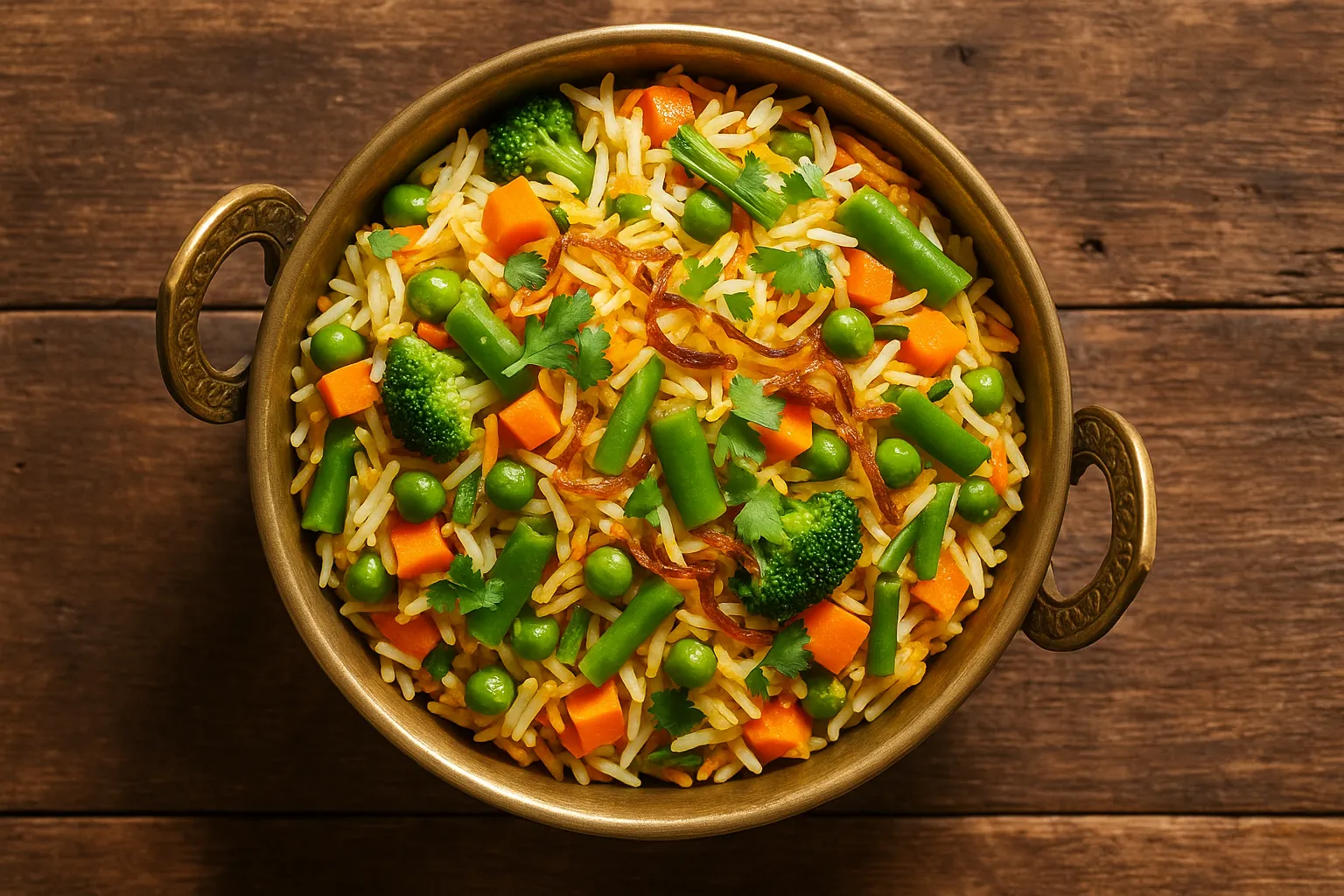
Datos Rápidos de Nutrición
Per 1 Cup (200g)
| Nutriente | Cantidad |
|---|---|
| Calorías | 300 kcal |
| Proteínas | 7g |
| Carbohidratos | 56g |
| Fibra | 5g |
| Azúcares | 4g |
| Grasas | 6g |
| Sodio | 450mg |
| Potasio | 280mg |
| Hierro | 2.5mg |
| Vitamina A | 850 IU |
Desglose de Macronutrientes
 ChatGPT
  Claude
  AI Mode
  Perplexity
CONSEJO DEL NUTRICIONISTA
Vegetable biryani combines complex carbohidratos con anti-inflammatory spices like turmeric, cumin, and coriander. El fibra from vegetables and basmati rice proporciona sustained energy mientras supporting salud digestiva.
Mitos vs Realidad
MITO #1: Biryani Es Siempre Unhealthy
REALIDAD: Homemade vegetable biryani con minimal oil es a balanced meal providing complex carbohidratos, fibra, and vegetables. Restaurant versions con excess ghee puede be calorie-dense (400-500 calorías por porción), but porción-controlled homemade biryani apoya saludable eating patterns.
MITO #2: Rice-Based Dishes Spike Blood Azúcar Too Mucho
REALIDAD: Basmati rice has a menor GI (50-58) compared to regular white rice (70+). El fibra from vegetables, proteínas pairing, and grasas from cooking oil further reduce el glycemic response. Elegir brown basmati for incluso menor GI (45-50).
MITO #3: Vegetable Biryani Has No Proteínas
REALIDAD: Mientras not a alto-proteínas food, one porción proporciona 7g proteínas from basmati rice, vegetables, and nuts. Boost proteínas by adding paneer (20g proteínas por 100g), chickpeas, or pairing con raita or dal.
MITO #4: Spices in Biryani Cause Digestive Issues
REALIDAD: Spices like turmeric, cumin, and jengibre aid digestion and have anti-inflammatory properties. Issues arise from excess oil or overeating, not el spices themselves. Traditional spice blends support gut health.
MITO #5: Biryani Es Too Heavy for Dinner
REALIDAD: Porción size matters. One cup (200g) con balanced ingredients proporciona appropriate dinner calorías (300 kcal). Pair con cucumber salad or raita to add volume sin excess calorías, improving satiety and digestion.
NutriScore por Objetivos de Salud
| Objetivo de Salud | NutriScore | ¿Por qué esta puntuación? |
|---|---|---|
| Pérdida de Peso |  | 300 calorías por taza, 5g fibra for fullness. Control de porciones esencial. Usar brown rice, extra vegetables, minimal oil. |
| Ganancia Muscular |  | 56g carbohidratos for glycogen replenishment, 7g proteínas. Add paneer or chickpeas for 20g+ proteínas por porción. |
| Control de Diabetes | | Basmati rice has moderado GI (50-58). Límite to 1 cup, usar brown basmati, pair con raita for azúcar en sangre control. |
| Control del SOP | | Complex carbohidratos con fibra support insulin sensitivity. Elegir brown rice version, control porciones to 1 cup, pair con alto-proteínas sides. |
| Nutrición en el Embarazo | | Proporciona hierro (2.5mg), folate from vegetables, and complex carbohidratos for energy. Ensure vegetables son thoroughly cocido. |
| Viral/Recuperación de Gripe | | Easy to digest, anti-inflammatory spices (turmeric, jengibre), proporciona energy and nutrientes. Elegir milder spice levels durante recovery. |
NUTRICIÓN PERSONALIZADA
Registra tus comidas con NutriScan para personalizados NutriScores based on your specific health goals!
Respuesta de Azúcar en Sangre to Vegetable Biryani
Understanding cómo biryani affects glucosa en sangre ayuda con control de porciones and meal timing.
Curva Típica de Respuesta de Glucosa
Este gráfico muestra respuesta típica de glucosa en sangre for saludable individuals. Individual responses vary. No es consejo médico.
Cómo Aplanar el Pico
Pairing biryani con proteínas and fibra slows glucose absorption:
- 🥛 Raita (yogurt con cucumber) - Adds proteínas and probiotics
- 🥘 Dal (lentils) - Proporciona proteínas and additional fibra
- 🥗 Cucumber salad - Adds fibra and volume sin calorías
- 🧀 Paneer tikka - Alto-proteínas side dish
Este combination extends energy release and mejora satiety.
Importancia Cultural
Biryani originated in Persia and was brought to el Indian subcontinent by Mughal emperors in el 15th-16th centuries.
In India:
- Over 20 regional varieties: Hyderabadi, Lucknowi, Kolkata, Malabar, Ambur
- Served at weddings, festivals, and celebrations across todo communities
- Cada region's spice blend reflects local culinary traditions
- Vegetable biryani popular among vegetarian communities across South India
Global Impact:
- One of el la mayoría searched Indian recipes worldwide
- Adapted globally con local vegetables and spice preferences
- Featured in street food culture and fine dining alike
- UNESCO recognition of biryani's cultural heritage value
Compara y Sustituye
Vegetable Biryani vs Similar Rice Dishes (Por 100g)
| Nutriente | 🍛 Veg Biryani | 🍚 Plain Rice | 🥘 Veg Pulao | 🍛 Chicken Biryani |
|---|---|---|---|---|
| Calorías | 150 kcal | 130 kcal | 140 kcal | 180 kcal |
| Carbohidratos | 28g | 28g | 26g | 25g |
| Fibra | 2.5g | 0.4g | 2g | 1.5g |
| Proteínas | 3.5g | 2.7g | 3g | 8g |
| Grasas | 3g | 0.3g | 3.5g | 6g |
| Sodio | 225mg | 5mg | 200mg | 280mg |
| Hierro | 1.25mg | 0.8mg | 1mg | 1.8mg |
| Vitamina A | 425 IU | 0 IU | 350 IU | 200 IU |
| Mejor Para | Balanced nutrition, flavor | Bajo-calorie, plain base | Lighter alternative | Alto proteínas, ganancia muscular |
Preguntas Frecuentes
Es vegetable biryani bueno for pérdida de peso?
Vegetable biryani puede support pérdida de peso cuando porción-controlled. One cup proporciona 300 calorías con 5g fibra for satiety, making it más filling que plain rice.
Tips for pérdida de peso: Límite to 1 cup per meal; usar brown basmati rice for mayor fibra; increase vegetable proportion to 50%; reduce oil to 1 tablespoon por porción; skip frito onions garnish; pair con cucumber salad for added volume.
¿Pueden los diabéticos comer vegetable biryani?
Diabetics puede enjoy vegetable biryani in moderación. Basmati rice has a menor GI (50-58) que regular white rice (70+).
Diabetes-friendly tips: Límite to 1 cup porción (28g carbohidratos por 100g); usar brown basmati rice for menor GI (45-50); pair con raita or dal for proteínas; add extra vegetables to reduce rice proportion; evitar sugary accompaniments; test azúcar en sangre 2 hours después eating.
Cómo muchos calorías son in vegetable biryani?
Vegetable biryani contiene aproximadamente 150 calorías por 100g or 300 calorías por taza (200g). Restaurant versions con extra ghee or frito ingredients puede have 400-500 calorías por porción. Homemade versions con controlled oil son menor in calorías.
Qué son el main beneficios para la salud of vegetable biryani?
Key Benefits:
- Sustained Energy: Complex carbohidratos from basmati rice provide largo-lasting fuel
- Digestive Health: 5g fibra por porción apoya regular bowel movements
- Anti-inflammatory: Turmeric, cumin, and coriander reduce inflamación
- Nutriente-Rich: Vitaminas A, C from vegetables; hierro from rice
- Heart Health: Potasio and minimal grasas saturadas support cardiovascular function
- Gut Support: Spices promote saludable digestion and gut microbiome
Es vegetable biryani healthier que chicken biryani?
Depends on your nutritional goals:
Vegetable Biryani Advantages:
- Menor calorías (150 vs 180 por 100g)
- Menor grasas saturadas
- Mayor fibra from vegetables
- Más vitamina A from colorful vegetables
Chicken Biryani Advantages:
- Mayor proteínas (8g vs 3.5g por 100g)
- Más complete amino acid profile
- Mayor hierro content
- Mejor for muscle maintenance
Recommendation: Peso loss = vegetable biryani; ganancia muscular or alto proteínas needs = chicken biryani.
Cómo to hacer vegetable biryani healthier?
Simple Swaps:
- Rice: Usar brown basmati instead of white for 2x fibra and menor GI
- Oil: Reduce from 3-4 tablespoons to 1-2 tablespoons total
- Vegetables: Increase proportion to 50% of total volume
- Garnish: Skip frito onions or usar air-frito for 70% fewer calorías
- Proteínas Boost: Add chickpeas (15g proteínas por 100g) or paneer
- Cooking Method: Usar pressure cooking or oven-baking instead of dum on stovetop
Result: Estos changes reduce calorías by 25-30% mientras improving nutritional density.
Qué es el mejor tiempo to eat vegetable biryani?
Depends on your goal:
- Pérdida de Peso: Lunch (cuando metabolismo es mayor), pair con salad, evitar dinner
- Ganancia Muscular: Post-workout within 2 hours or lunch for glycogen replenishment
- Diabetes: Lunch preferred over dinner for mejor glucose control
- General Health: Lunch or early dinner (antes 7 PM) for optimal digestion
IMPORTANT NOTE
Allow 3-4 hours between eating biryani and bedtime to prevent acid reflux and support digestion.
Puede I meal prep vegetable biryani?
Yes, vegetable biryani es excellent for meal prep. Tienda in airtight containers in el refrigerator for up to 4 días or freeze for up to 3 months.
Storage tips: Cool completely antes refrigerating to prevent moisture buildup; tienda in single-porción porciones for control de porciones; reheat con 1-2 tablespoons water to restore moisture; add fresco herbs and lemon juice después reheating for brightness.


Alimentos Nutritivos Similares
4505 Chicharrones Classic Chili Salt
7 Eleven Japan Crispy Corn Cheese
Explore Más Nutrition Tools & Resources
App de agua y calorías gratis con registro diario
App de ayuno intermitente gratis con temporizador
App de macros: NutriScan las rellena desde una foto
App de plan de comidas para volumen limpio
App de plan de comidas vegetariano con objetivo de proteína
App de Plan de Dieta India Vegetariana y No Vegetariana
App de plan de dieta mediterránea que cuenta el aceite
App nutricionista con IA que lee tus comidas
App para Subir de Peso: Plan de Dieta con IA
Ayuno Intermitente para Mujeres, Timer y Registro de Comidas
Coach de pérdida de peso ChatGPT: con registro
Contador de Calorías Activado por Voz - Di tus Comidas y Rastrea Nutrición Sin Manos — 2026
Contador de calorías ChatGPT: alternativa que no lo olvida
Contador de Calorías con IA: calorías con fotos, gratis
Contador de calorías de comida rápida con foto
Contador de calorías gratis con fotos | NutriScan
Contador de Calorías para Comida Española - Información Nutricional Instantánea — 2026
Escáner de Etiquetas Nutricionales para tu Ración Real
Generador Lista de Compras Keto
Generador Lista de Compras Mensual
Guía Proteína Tercer Trimestre
Plan de comidas semanal con calorías y lista de compras
Plan de dieta ChatGPT: alternativa que registra comidas
Plan de Dieta para Ganar Peso España