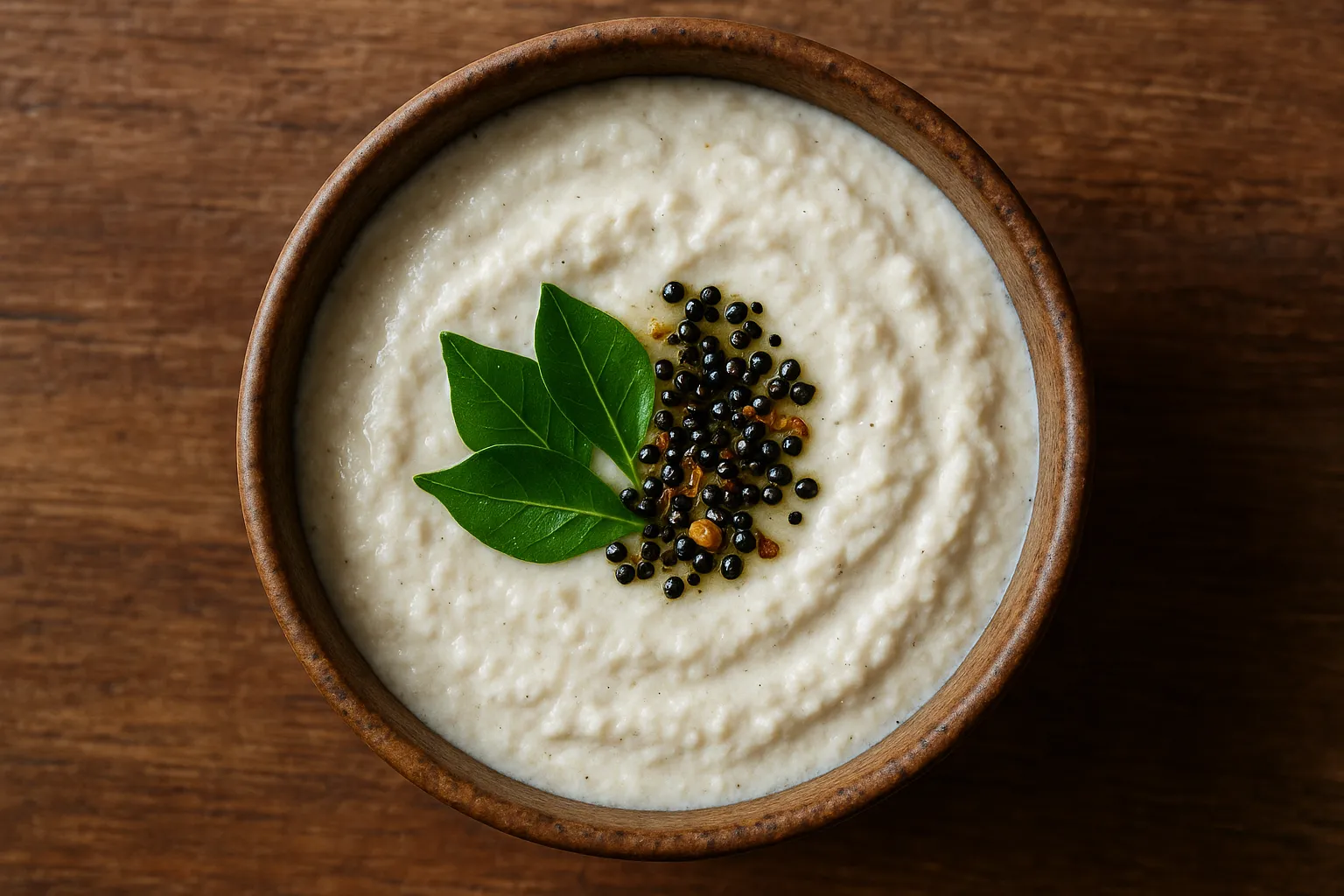
White Chutney (Coconut Chutney): calorías, nutrición y beneficios para la salud
A creamy South Indian condiment hecho from fresco coconut, packed con saludable fats and digestive benefits.
Datos Rápidos de Nutrición
Per 2 Tablespoons (30g)
| Nutriente | Cantidad |
|---|---|
| Calorías | 35 kcal |
| Proteínas | 1g |
| Carbohidratos | 3g |
| Fibra | 0.8g |
| Azúcares | 1g |
| Grasas | 2g |
| Hierro | 0.5mg |
| Potasio | 55mg |
| Calcio | 4mg |
| Vitamina C | 0.5mg |
Desglose de Macronutrientes
 ChatGPT
  Claude
  AI Mode
  Perplexity
CONSEJO DEL NUTRICIONISTA
White chutney hecho from fresco coconut proporciona medium-chain triglycerides (MCTs) ese son quickly absorbed for energy. El natural probiotics from fermentation support gut health—consume fresco within 4-6 hours for maximum benefits.
Mitos vs Realidad
MITO #1: Coconut Es Too Alto in Grasas to Be Saludable
REALIDAD: Coconut contiene primarily MCT fats ese son metabolized differently que otro grasas saturadass. MCTs boost metabolismo, support brain health, and don't contribute to heart disease cuando consumed in moderación (2-3 tbsp of chutney diario).
MITO #2: White Chutney Causes Peso Gain
REALIDAD: At solo 35 calorías per 2 tbsp, white chutney es a bajo-calorie condiment. Fresco coconut chutney hecho con minimal oil and consumed in appropriate porciones (2-4 tbsp) apoya peso management by adding flavor sin excess calorías.
MITO #3: Todo Chutneys Son el Mismo Nutritionally
REALIDAD: Coconut chutney differs significativamente from azúcar-laden tomato or mango chutneys. It's naturally bajo in azúcar (1g por porción), proporciona saludable fats instead of added azúcares, and contiene no preservatives cuando hecho fresco at hogar.
MITO #4: Chutney Has No Nutritional Value
REALIDAD: Fresco coconut chutney proporciona lauric acid (antimicrobial), hierro (0.5mg por porción), natural probiotics from fermentation, and saludable fats for satiety. Green chilies add vitamina C; curry leaves contribute antioxidantes and minerales.
MITO #5: Coconut Products Raise Colesterol
REALIDAD: Los estudios muestran coconut's MCT fats puede actually improve HDL (bueno) cholesterol. El lauric acid in coconut raises HDL más que LDL. Moderación es key—2-3 tbsp diario es safe for la mayoría personas.
MITO #6: Tienda-Bought Es el Mismo as Fresco
REALIDAD: Fresco homemade coconut chutney contiene live enzymes, más nutrientes, no preservatives, and beneficioso bacteria from natural fermentation. Tienda-bought versions frecuentemente have added oil, azúcar, and preservatives ese reduce beneficios para la salud.
NutriScore por Objetivos de Salud
| Objetivo de Salud | NutriScore | ¿Por qué esta puntuación? |
|---|---|---|
| Pérdida de Peso |  | Bajo-calorie (35 cal per 2 tbsp), proporciona satiety from saludable fats. MCTs puede boost metabolismo. Usar fresco coconut, límite to 2-3 tbsp diario, minimize tempering oil. |
| Ganancia Muscular | | Proporciona quick-absorbing MCT energy for workouts, pairs perfectly con proteínas-rich idli/dosa, apoya muscle recovery con anti-inflammatory properties. |
| Control de Diabetes |  | Bajo glycemic index, solo 3g carbohidratos por porción. Saludable fats slow glucose absorption. No added azúcar needed; fresco coconut naturally sweet. |
| Control del SOP | | Bajo carb, anti-inflammatory coconut apoya hormone balance. MCT fats don't spike insulin. Límite to 2-3 tbsp diario, pair con bajo-GI foods. |
| Nutrición en el Embarazo | | Proporciona saludable fats for fetal brain development, hierro for blood health, easy-to-digest. Ensure fresco preparation to evitar bacterial contamination. |
| Viral/Recuperación de Gripe | | Lauric acid has antimicrobial properties, easy to digest, proporciona quick MCT energy, apoya immune function. Jengibre and curry leaves add anti-inflammatory benefits. |
NUTRICIÓN PERSONALIZADA
Registra tus comidas con NutriScan para personalizados NutriScores based on your specific health goals!
Respuesta de Azúcar en Sangre to White Chutney
White chutney has minimal impact on glucosa en sangre due to its bajo carb content and saludable grasas composition.
Curva Típica de Respuesta de Glucosa
Este gráfico muestra respuesta típica de glucosa en sangre para individuos sanos en general. Las respuestas individuales pueden variar. No es consejo médico.
Perfect Pairings for Balanced Nutrition
Coconut chutney's saludable fats complement carb-rich South Indian foods, creating balanced meals:
- 🍛 Idli or Dosa - Fermented rice proporciona probiotics; chutney adds saludable fats
- 🥔 Vada (lentil fritters) - Proteínas from lentils + saludable coconut fats
- 🫓 Uttapam - Whole grain base balanced con coconut's MCTs
- 🥣 Upma - Semolina proporciona energy; chutney aids satiety
Este combination delivers sustained energy, improved digestion, and mejor nutrient absorption.
Importancia Cultural
Coconut chutney es a cornerstone of South Indian cuisine, representing tradition, hospitality, and balanced nutrition.
In South India:
- Diario breakfast esencial: served con idli, dosa, vada, uttapam across Tamil Nadu, Karnataka, Kerala, Andhra Pradesh
- Temple prasadam: offered to deities and distributed to devotees
- Regional variations: Kerala adds grated coconut and curry leaves; Karnataka uses tostado gram dal; Tamil Nadu incorporates onions
- Ayurvedic perspective: cooling effect balances spicy foods; aids digestive fire (agni)
Global Impact:
- Popularized worldwide through Indian restaurants and food blogs
- Vegan-friendly condiment gaining recognition in plant-based diets
- Demonstrates Indian cuisine's usar of fresco, whole-food ingredients
- Inspires fusion adaptations: coconut pesto, coconut hummus, salad dressings
Compara y Sustituye
White Chutney vs Otro Indian Condiments (Per 2 tbsp/30g)
| Nutriente | 🥥 White Chutney | 🌿 Green Chutney | 🍅 Tomato Chutney | 🥜 Peanut Chutney |
|---|---|---|---|---|
| Calorías | 35 kcal | 15 kcal | 25 kcal | 60 kcal |
| Carbohidratos | 3g | 2g | 5g | 3g |
| Fibra | 0.8g | 1g | 0.6g | 1.2g |
| Proteínas | 1g | 0.5g | 0.4g | 2.5g |
| Grasas | 2g | 0.5g | 0.3g | 5g |
| Hierro | 0.5mg | 0.3mg | 0.2mg | 0.8mg |
| Vitamina C | 0.5mg | 8mg | 2mg | 0.2mg |
| Mejor Para | Saludable fats | Bajo calorie | Tangy flavor | Alto proteínas |
Preguntas Frecuentes
Es white chutney bueno for pérdida de peso?
Yes, white chutney puede support pérdida de peso cuando usado in moderación. At 35 calorías per 2 tbsp, it's a bajo-calorie manera to add flavor and saludable fats to meals.
Peso loss benefits: MCT fats boost metabolismo and increase satiety; adds flavor sin azúcar; pairs con bajo-calorie fermented foods (idli, dosa); contiene no refined carbohidratos.
Mejor practices: Límite to 2-3 tbsp diario; usar fresco coconut (not dried); minimize tempering oil to 1 tsp; pair con al vapor idli rather que frito vada.
¿Pueden los diabéticos comer white chutney?
Diabetics puede safely enjoy white chutney. Con solo 3g carbohidratos per 2 tbsp porción and a bajo glycemic index, it has minimal azúcar en sangre impact.
Diabetes-friendly aspects: Saludable fats slow glucose absorption; naturally bajo in azúcar; no added azúcares needed; pairs bien con fermented foods ese support gut health.
Recommendations: Límite to 2-3 tbsp per meal; evitar azúcar in recipe; usar fresco coconut; pair con proteínas-rich accompaniments (sambar, dal); monitor azúcar en sangre if consuming larger porciones.
Cómo mucho proteínas es in white chutney?
White chutney contiene 1g proteínas per 2 tbsp. Mientras not a significant proteínas source, it complements proteínas-rich South Indian foods perfectly.
To increase proteínas: Pair con sambar (lentil soup, 3g proteínas per 1/2 cup); serve con idli hecho from urad dal (2g per idli); add to mixed lentil dosa; combine con vegetable kootu (lentil-vegetable stew).
Qué son el main beneficios para la salud of coconut chutney?
Key Benefits:
- Saludable MCT Fats: Quick energy for brain and body; puede boost metabolismo
- Antimicrobial Properties: Lauric acid fights bacteria and viruses
- Digestive Support: Natural probiotics from fermentation aid gut health
- Anti-inflammatory: Coconut, curry leaves, and jengibre reduce inflamación
- Hierro Content: 0.5mg por porción apoya blood health
- Immunity Boost: Lauric acid converts to monolaurin, supporting immune function
Cuando es el mejor tiempo to eat white chutney?
Traditional & Optimal Timing:
- Breakfast: Con idli, dosa, or uttapam for sustained morning energy
- Post-Workout: MCT fats provide quick energy; pair con proteínas-rich idli
- Lunch: As condiment con South Indian thali for balanced nutrition
- Evitar Dinner (if pérdida de peso goal): Fats metabolize slower at night
Freshness Matters: Consume within 4-6 hours of preparation for maximum probiotic benefits and safety. Refrigerate for up to 24 hours maximum.
Es coconut chutney saludable?
Coconut chutney es saludable cuando hecho fresco con quality ingredients:
Saludable Preparation:
- Usar fresco coconut (not dried or desiccated)
- Minimal tempering oil (1 tsp mustard seeds + curry leaves)
- No added azúcar (coconut es naturally sweet)
- Fresco green chilies and jengibre (anti-inflammatory)
- Consume within 4-6 hours (maximum probiotic benefit)
Less Saludable Versions:
- Tienda-bought con preservatives and added oils
- Hecho con dried coconut (mayor calorías, fewer nutrientes)
- Excessive tempering oil (3+ tsp)
- Added azúcar or artificial flavors
Track homemade vs. tienda-bought con NutriScan aplicación to compare nutritional differences.
Cómo largo does white chutney último?
Food Safety Guidelines:
- Room Temperature: 4-6 hours maximum (tropical climates: 2-3 hours)
- Refrigerated: Up to 24 hours in airtight container
- Not Recomendado: Freezing (texture and probiotic benefits degrade)
Freshness Indicators:
- ✅ Fresco: Creamy white, mild coconut aroma, smooth texture
- ❌ Spoiled: Sour smell, watery separation, yellowing, mold spots
Mejor Practice: Prepare fresco diario in pequeño batches for maximum nutrition and food safety, especialmente durante embarazo or for young children.
Puede I hacer white chutney sin oil?
Yes! Oil-gratis coconut chutney es healthier and menor in calorías:
Oil-Gratis Tempering Alternatives:
- Dry roast spices: Toast mustard seeds, curry leaves in a hot pan (no oil)
- Skip tempering: Blend coconut con chilies, jengibre, salt—naturally delicious
- Water-based: Usar 1 tbsp water instead of oil for tempering
Benefits: Reduce calorías by 40-50 por porción; focuses on coconut's natural MCT fats; suitable for oil-gratis diets; easier digestion.


Alimentos Nutritivos Similares
4505 Chicharrones Classic Chili Salt
7 Eleven Japan Crispy Corn Cheese
Explore Más Nutrition Tools & Resources
App de agua y calorías gratis con registro diario
App de ayuno intermitente gratis con temporizador
App de macros: NutriScan las rellena desde una foto
App de plan de comidas para volumen limpio
App de plan de comidas vegetariano con objetivo de proteína
App de Plan de Dieta India Vegetariana y No Vegetariana
App de plan de dieta mediterránea que cuenta el aceite
App nutricionista con IA que lee tus comidas
App para Subir de Peso: Plan de Dieta con IA
Ayuno Intermitente para Mujeres, Timer y Registro de Comidas
Coach de pérdida de peso ChatGPT: con registro
Contador de Calorías Activado por Voz - Di tus Comidas y Rastrea Nutrición Sin Manos — 2026
Contador de calorías ChatGPT: alternativa que no lo olvida
Contador de Calorías con IA: calorías con fotos, gratis
Contador de calorías de comida rápida con foto
Contador de calorías gratis con fotos | NutriScan
Contador de Calorías para Comida Española - Información Nutricional Instantánea — 2026
Escáner de Etiquetas Nutricionales para tu Ración Real
Generador Lista de Compras Keto
Generador Lista de Compras Mensual
Guía Proteína Tercer Trimestre
Plan de comidas semanal con calorías y lista de compras
Plan de dieta ChatGPT: alternativa que registra comidas
Plan de Dieta para Ganar Peso España