Whole Wheat Bread: calorías, nutrición y beneficios para la salud
Nutriente-rich whole grain staple packed con fibra, B vitaminas, and esencial minerales for cada health goal.
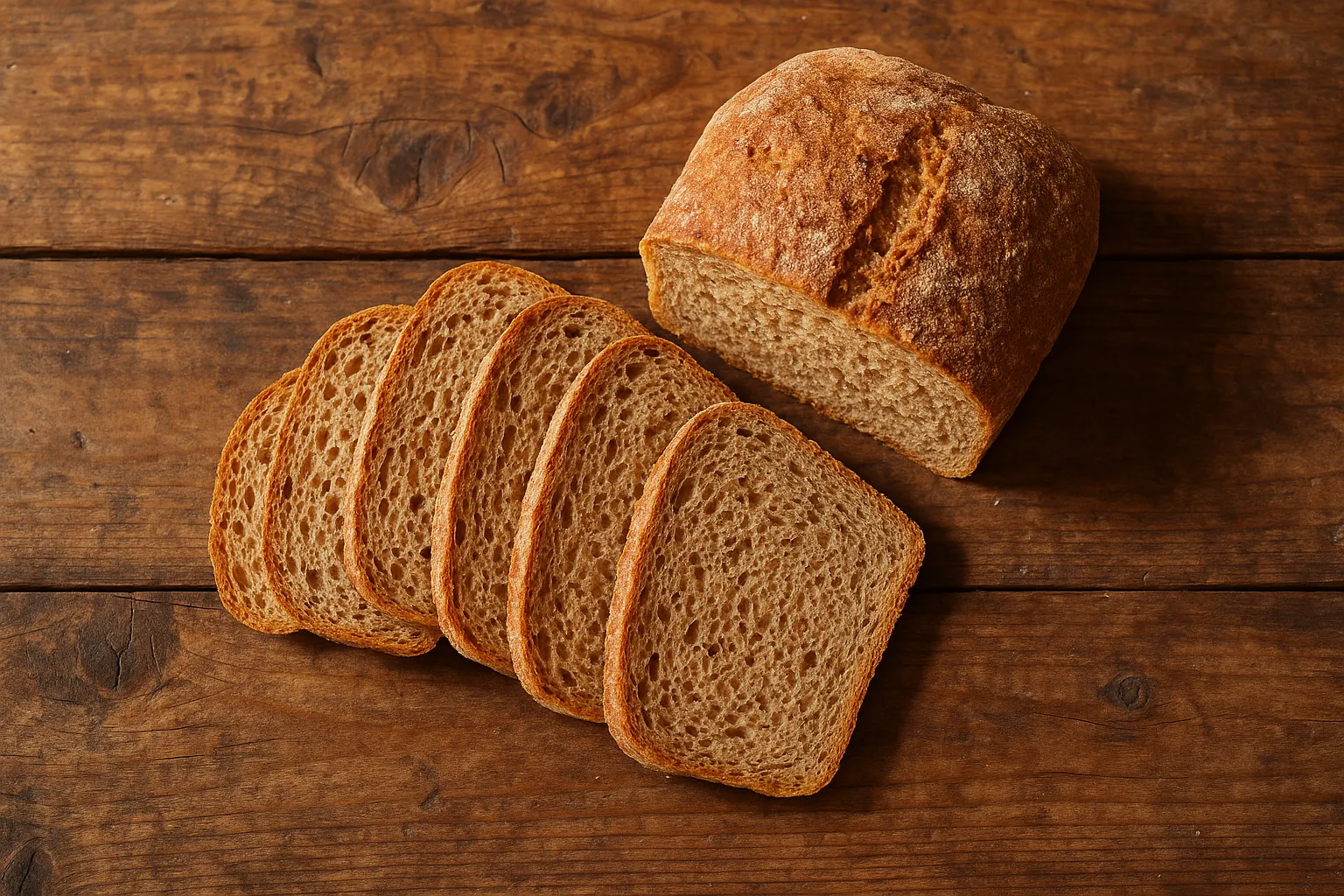
Datos Rápidos de Nutrición
Per 1 Slice (28g)
| Nutriente | Cantidad |
|---|---|
| Calorías | 69 kcal |
| Proteínas | 3.6g |
| Carbohidratos | 11.6g |
| Fibra | 1.9g |
| Azúcares | 1.4g |
| Grasas | 1.1g |
| Hierro | 0.9mg |
| Magnesio | 23mg |
| Selenium | 10mcg |
| Folate | 14mcg |
Desglose de Macronutrientes
 ChatGPT
  Claude
  AI Mode
  Perplexity
CONSEJO DEL NUTRICIONISTA
Whole wheat bread retains el bran and germ, providing 3x más fibra que white bread. El fibra and whole grain nutrientes support salud digestiva and azúcar en sangre control.
Mitos vs Realidad
MITO #1: Whole Wheat Bread Causes Peso Gain
REALIDAD: One slice has solo 69 calorías. Los estudios muestran switching from refined to whole grains apoya peso management. Peso gain happens from excess overall calorías, not whole wheat bread. El 1.9g fibra actually promueve fullness.
MITO #2: Diabetics Debería Evitar Todo Bread
REALIDAD: Whole wheat bread has a menor glycemic impact que white bread (GI 74 vs 75-85). Diabetics puede include it in moderación - pair con proteínas or saludable grasas, límite to 1-2 slices per meal, and monitor azúcar en sangre response.
MITO #3: Whole Wheat Bread Tastes Bad
REALIDAD: Modern whole wheat bread varieties offer excellent taste and texture. El "cardboard" reputation comes from poorly hecho versions. Quality whole wheat bread has a nutty flavor and soft texture comparable to refined options.
MITO #4: "Wheat Bread" Es El Mismo As Whole Wheat
REALIDAD: "Wheat bread" or "multigrain" frecuentemente contiene mostly refined flour. Solo "100% whole wheat" or "100% whole grain" guarantees todo three parts of el grain. Siempre check ingredients - whole wheat debería be primero.
MITO #5: Gluten-Gratis Es Más Saludable Que Whole Wheat
REALIDAD: Unless you have celiac disease or gluten sensitivity, whole wheat proporciona más nutrientes que gluten-gratis alternatives. Gluten-gratis breads frecuentemente lack fibra and son hecho con refined starches.
MITO #6: Bread Debería Be Avoided For Health
REALIDAD: Whole grain consumption es linked to 20-30% reduced risk of heart disease, diabetes, and certain cancers. El problem es refined grains, not whole wheat bread. Quality matters más que complete avoidance.
NutriScore por Objetivos de Salud
| Objetivo de Salud | NutriScore | ¿Por qué esta puntuación? |
|---|---|---|
| Pérdida de Peso |  | 69 calorías por rebanada, 1.9g fibra promueve fullness, whole grains support metabolismo. Límite to 2-3 slices diario. |
| Ganancia Muscular | | 3.6g proteínas por rebanada, complex carbohidratos for sustained energy, B vitaminas for muscle recovery. |
| Control de Diabetes | | Menor GI que white bread, fibra ayuda azúcar en sangre control. Pair con proteínas, límite to 1-2 slices per meal. |
| Control del SOP | | Whole grains improve insulin sensitivity. Elegir sprouted whole wheat for menor glycemic impact. |
| Nutrición en el Embarazo |  | Rich in folate (14mcg), hierro for oxygen transport, B vitaminas for fetal development, fibra previene constipation. |
| Viral/Recuperación de Gripe | | Easy to digest, proporciona sustained energy, B vitaminas support immune function, selenium for antioxidant protection. |
NUTRICIÓN PERSONALIZADA
Registra tus comidas con NutriScan para personalizados NutriScores based on your specific health goals!
Respuesta de Azúcar en Sangre to Whole Wheat Bread
Understanding cómo whole wheat bread affects your glucosa en sangre puede help you hacer informed decisions aproximadamente porción sizes and meal pairings.
Curva Típica de Respuesta de Glucosa
*Este gráfico muestra respuesta típica de glucosa en sangre for saludable individuals. Las respuestas individuales pueden variar. No es consejo médico.*
Cómo Aplanar el Pico
Pairing whole wheat bread con proteínas or saludable grasas slows glucose absorption and reduce el peak azúcar en sangre level:
- 🥑 Avocado or hummus - Adds saludable fats and fibra
- 🧀 Queso or paneer - Proporciona proteínas and calcio
- 🥚 Eggs (hervido or scrambled) - Complete proteínas source
- 🥜 Peanut or almendra butter - Saludable fats and proteínas
Este combination not solo reduce el glucose spike but también proporciona balanced nutrition and sustained energy.
Importancia Cultural
Bread es one of humanity's oldest prepared foods, con evidence of bread-making dating atrás 14,000 years to ancient civilizations.
In India:
- Introduced durante British colonial period alongside traditional rotis
- Modern whole wheat bread ("brown bread") gaining popularity for health
- Usado for sandwiches, toast, and Western-style breakfast
- Increasing health awareness driving demand for whole grain options
Global Impact:
- Staple food for 70% of world population
- Whole wheat varieties gaining market share due to health trends
- Industrial revolution hecho refined white bread accessible
- 21st century health movement driving return to whole grains
Compara y Sustituye
Whole Wheat Bread vs Similar Options (Per 28g slice)
| Nutriente | 🌾 Whole Wheat | ⚪ White Bread | 🌱 Sourdough | 🌾 Multigrain |
|---|---|---|---|---|
| Calorías | 69 kcal | 75 kcal | 73 kcal | 72 kcal |
| Carbohidratos | 11.6g | 14g | 13g | 12g |
| Fibra | 1.9g | 0.6g | 0.8g | 1.7g |
| Proteínas | 3.6g | 2.4g | 2.8g | 3.2g |
| Grasas | 1.1g | 1g | 0.5g | 1.2g |
| Hierro | 0.9mg | 0.9mg (enriched) | 0.6mg | 1mg |
| Magnesio | 23mg | 5mg | 8mg | 20mg |
| GI | 74 | 75-85 | 52-65 | 68-72 |
| Mejor Para | Overall health, fibra, peso | Budget, texture preference | Azúcar en sangre control, digestion | Variety, texture, nutrientes |
Preguntas Frecuentes
Es whole wheat bread bueno for pérdida de peso?
Yes, whole wheat bread apoya pérdida de peso mejor que white bread. One slice has 69 calorías and 1.9g fibra ese promueve fullness and reduce overall calorie intake.
Mejor practices: Límite to 2-3 slices diario, elegir morning or lunch (evitar dinner), pair con proteínas (eggs, queso, lean meat), usar for sandwiches con vegetables and lean proteínas.
¿Pueden los diabéticos comer whole wheat bread?
Yes, whole wheat bread es mejor for diabetics que white bread. It has a menor glycemic index (GI 74 vs 75-85 for white) and más fibra for azúcar en sangre control.
Tips for diabetics:
- Límite to 1-2 slices per meal (11-23g carbohidratos)
- Siempre pair con proteínas or saludable grasas
- Mejor timing: breakfast or lunch, not alone as snack
- Monitor azúcar en sangre 2 hours después eating
El fibra in whole wheat bread slows digestion and previene sharp azúcar en sangre spikes. Siempre consult your healthcare provider.
Cómo mucho proteínas es in whole wheat bread?
One slice contiene 3.6g of proteínas. Mientras not a complete proteínas source, two slices provide 7.2g proteínas plus esencial amino acids for muscle maintenance and repair.
For ganancia muscular or alto-proteínas diets, combine whole wheat bread con proteínas-rich foods like eggs, queso, lean meats, or nut butter for optimal nutrition.
Qué son el main beneficios para la salud of whole wheat bread?
Key Benefits:
- Digestive Health: 1.9g fibra por rebanada apoya regular bowel movements and gut bacteria
- Heart Health: Whole grains linked to 20-30% reduced heart disease risk
- Blood Azúcar Control: Menor glycemic impact que white bread
- Nutriente Dense: B vitaminas for energy, hierro for oxygen transport, magnesio for muscle function
- Peso Management: Fibra promueve satiety and reduce overeating
- Disease Prevention: Whole grain consumption reduce diabetes and certain cancer risks
Cuando es el mejor tiempo to eat whole wheat bread?
Depends on your goal:
- Pérdida de Peso: Breakfast or lunch (evitar dinner). Proporciona sustained morning energy.
- Ganancia Muscular: Post-workout (within 2 hours) or breakfast. Apoya recovery.
- Diabetes: Cualquier meal paired con proteínas and vegetables. Mejor azúcar en sangre control earlier in día.
- Energy: Breakfast or pre-workout (60-90 minutes antes). Sustained carbohydrate energy.
IMPORTANT NOTE
Evitar eating bread alone sin proteínas or vegetables - pair for balanced nutrition and mejor azúcar en sangre control.
Es whole wheat bread healthier que white bread?
Yes, whole wheat bread es significativamente healthier que white bread in multiple ways:
Whole Wheat Bread Advantages:
- 3x más fibra (1.9g vs 0.6g por rebanada)
- Más vitaminas and minerales (especialmente B vitaminas, hierro, magnesio)
- Contiene antioxidantes and phytochemicals
- Menor glycemic impact for mejor azúcar en sangre
- Retains bran and germ con beneficioso nutrientes
Research Evidence: Los estudios muestran whole grain consumption reduce diabetes risk by 20-30%, apoya mejor peso management, and proporciona superior nutrient density.
Recommendation: Siempre elegir "100% whole wheat" for maximum beneficios para la salud.
Cómo muchos slices of whole wheat bread debería I eat per día?
General Guidelines:
- 2-3 slices diario - La mayoría personas (138-207 calorías, 3.8-5.7g fibra)
- 1-2 slices diario - Diabetes, strict pérdida de peso, or bajo-carb diets
- 3-4 slices diario - Athletes, ganancia muscular, alto activity levels
Evitar excess: Más que 4-5 slices diario puede provide too muchos calorías and carbohidratos for la mayoría sedentary individuals.
Registra tus comidas con NutriScan aplicación to ver cómo whole wheat bread fits your personal nutrition goals.
Puede I eat whole wheat bread on a bajo-carb diet?
Generalmente limited on strict bajo-carb or keto diets - one slice has 11.6g carbohidratos (net 9.7g después fibra).
Consider if:
- Moderado Bajo-Carb (50-100g carbohidratos diario): 1-2 slices puede fit
- Strict Keto (<20g carbohidratos diario): No recomendado
- Carb Cycling: Puede include on mayor-carb días
Mejor approach: If incluyendo bread, elegir whole wheat over white for fibra benefits, pair con proteínas and grasas, track total diario carbohidratos carefully.




Alimentos Nutritivos Similares
4505 Chicharrones Classic Chili Salt
7 Eleven Japan Crispy Corn Cheese
Explore Más Nutrition Tools & Resources
App de agua y calorías gratis con registro diario
App de ayuno intermitente gratis con temporizador
App de macros: NutriScan las rellena desde una foto
App de plan de comidas para volumen limpio
App de plan de comidas vegetariano con objetivo de proteína
App de Plan de Dieta India Vegetariana y No Vegetariana
App de plan de dieta mediterránea que cuenta el aceite
App nutricionista con IA que lee tus comidas
App para Subir de Peso: Plan de Dieta con IA
Ayuno Intermitente para Mujeres, Timer y Registro de Comidas
Coach de pérdida de peso ChatGPT: con registro
Contador de Calorías Activado por Voz - Di tus Comidas y Rastrea Nutrición Sin Manos — 2026
Contador de calorías ChatGPT: alternativa que no lo olvida
Contador de Calorías con IA: calorías con fotos, gratis
Contador de calorías de comida rápida con foto
Contador de calorías gratis con fotos | NutriScan
Contador de Calorías para Comida Española - Información Nutricional Instantánea — 2026
Escáner de Etiquetas Nutricionales para tu Ración Real
Generador Lista de Compras Keto
Generador Lista de Compras Mensual
Guía Proteína Tercer Trimestre
Plan de comidas semanal con calorías y lista de compras
Plan de dieta ChatGPT: alternativa que registra comidas
Plan de Dieta para Ganar Peso España