Huile de Cuisson : calories, nutrition et bienfaits pour la santé
Essentiel cooking lipides ce delivers concentrated energy and crucial fatty acids for health—contrôle des portions est key.
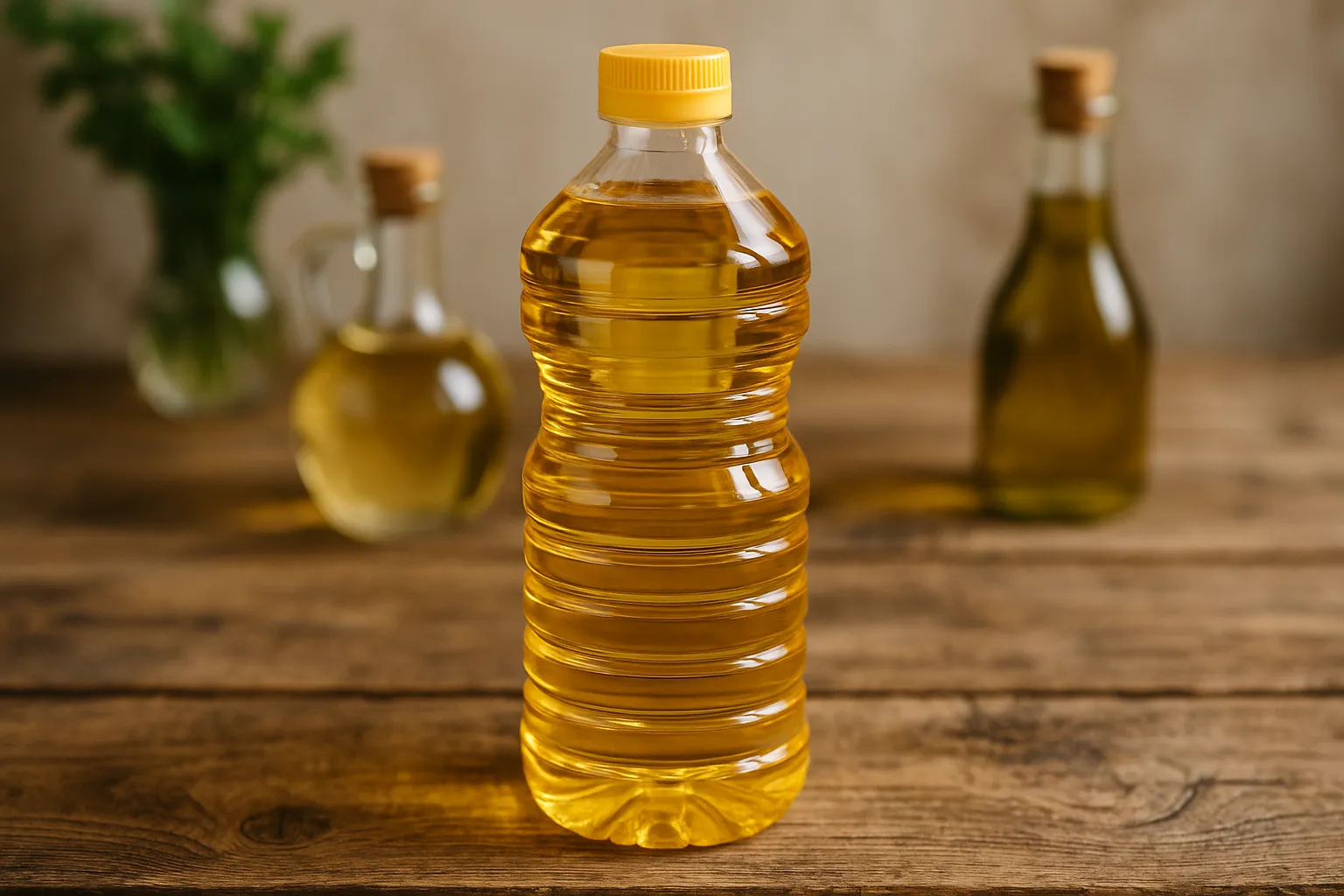
Faits Nutritionnels Rapides
Per 1 Tablespoon (15ml)
| Nutriment | Quantité |
|---|---|
| calories | 120 kcal |
| Total Lipides | 13.6g |
| Graisses Saturées | ~3g* |
| Monounsaturated Lipides | ~7g* |
| Polyunsaturated Lipides | ~2g* |
| Omega-6 Fatty Acids | ~2g* |
| Omega-3 Fatty Acids | ~0.1g* |
| Vitamine E | 1.9mg |
| Cholestérol | 0mg |
| Glucides | 0g |
*Values vary by oil type; shown for average vegetable oil
Ventilation des Macronutriments
 ChatGPT
  Claude
  AI Mode
  Perplexity
CONSEIL DU NUTRITIONNISTE
Tout Huile de Cuissons sont 100% lipides and provide 120 calories per tablespoon. Le health differences lie in fatty acid composition: olive oil's monounsaturated fats support santé cardiaque; coconut oil's MCTs peut boost métabolisme; omega-3 oils support brain function. Variety and contrôle des portions matter la plupart.
Briseur de Mythes
MYTHE #1: Tout Oils Sont Unhealthy and Cause Poids Gain
RÉALITÉ: Oils don't cause poids gain—excess calories do. Monounsaturated fats in olive oil reduce inflammation and support satiety. Le key est portion: 1-2 tablespoons quotidien est sain; exceeding ce causes excess calories.
MYTHE #2: Coconut Oil Est a Miracle Perte de Poids Food
RÉALITÉ: Coconut oil's medium-chain triglycerides (MCTs) peut marginally increase métabolisme by 3-4%, but le effect est modest. At 120 calories per tablespoon like autre oils, it seulement aids perte de poids through contrôle des portions and regular exercise.
MYTHE #3: Vegetable Oil Est Toujours Bad
RÉALITÉ: Vegetable oils vary greatly. Canola oil has sain omega-3s; soybean oil est élevé in omega-6 (fine in modération). Le ratio of omega-6 to omega-3 matters for inflammation contrôle. Utiliser variety and balance avec omega-3 sources.
MYTHE #4: Olive Oil Shouldn't Be Heated
RÉALITÉ: Extra virgin olive oil's smoke point (375°F) est inférieur, but refined olive oil reaches 465°F safely. Mediterranean cultures have cuit avec olive oil for millennia. Utiliser extra virgin for dressings; refined olive oil for cooking.
MYTHE #5: Huile de Cuisson Contient Cholestérol
RÉALITÉ: Pure Huile de Cuissons contain zero dietary cholesterol. Tout plant-based oils sont cholesterol-gratuit. Your body's cholesterol depends on saturated lipides intake and genetics, not dietary cholesterol. Choisir oils inférieur in saturated lipides for santé cardiaque.
NutriScore by Objectifs de Santé
| Objectif de Santé | NutriScore | Pourquoi ce score? |
|---|---|---|
| perte de poids |  | 120 calories per tablespoon est dense energy. Portion contrôle critical: utiliser 1 tsp, not 1 tbsp. Olive oil's satiety-promoting fats help manage hunger. |
| gain musculaire |  | Lipides-soluble vitamines support hormone production and muscle recovery. Essentiel for testosterone synthesis. 1-2 tablespoons quotidien soutient gain musculaires. |
| diabète Management | | Pure lipides doesn't spike glycémie, but calorie density requires careful portions. Monounsaturated fats improve insulin sensitivity; limite to 1 tablespoon. |
| SOPK Management | | Monounsaturated fats in olive oil reduce inflammation and support insulin function. Balance avec lean proteins and vegetables. 1-2 tablespoons quotidien optimal. |
| grossesse Nutrition |  | Omega-3 oils (flaxseed, walnut) critical for fetal brain development; olive oil fournit antioxydants. Vitamine E from oil soutient grossesse outcomes. |
| Viral/Flu Recovery | | Lipides-soluble vitamines (A, D, E) from oil support immune function and nutrient absorption pendant recovery. Essentiel for cellular repair. |
NUTRITION PERSONNALISÉE
Suivez vos repas avec NutriScan pour des NutriScores personnalisés selon tes objectifs santé !
Réponse glycémique
Pure lipides has zero impact on glucose sanguin quand consumed alone, but context matters for overall glucose management.
Courbe de Réponse Glycémique Typique
Ce graphique montre typical glucose sanguin response for general sain individuals quand oil est consumed avec glucides. Les réponses individuelles peuvent varier. Pas un conseil médical.
Comment to Utiliser Oil to Optimize Réponse de la Glycémie
Pairing oil avec meals strategically flattens glycémie spikes and améliore nutrient absorption:
- 🥗 Avec vegetables - Lipides-soluble vitamines (A, D, E, K) from oil absorb into greens; lipides aussi slows carb absorption
- 🌾 Avec whole grains - Oil delays glucose absorption, creating steadier energy
- 🥚 Avec protéines sources - Lipides enhances satiety and slows stomach emptying
- 🥑 Avec nutrient-dense foods - Oil améliore bioavailability of carotenoids, lycopene, and autre phytonutrients
Strategic oil utiliser enhances nutrient absorption and stabilizes energy sans spiking glycémie.
Importance Culturelle
Huile de Cuisson est foundational to global cuisines, avec deep cultural and health traditions.
In India:
- Ghee (clarified butter) sacred in Hindu rituals; used for cooking and medicine (Ayurveda) for millennia
- Coconut oil dominant in South India; mustard oil in Bengal and North India
- Groundnut oil (peanut oil) traditional in Maharashtra and Gujarat
- Sesame oil used for oil massage (abhyanga) for health and wellness
- Regional preferences reflect climate and crop cultivation traditions
Global Impact:
- Mediterranean diet built on olive oil for santé cardiaque and longevity
- Southeast Asia centers on coconut oil for tropical cuisine and wellness
- Modern nutrition emphasizes balanced omega-6 to omega-3 ratios
- Sustainable sourcing debates continue as global oils consumption grows
Comparer et Remplacer
Huile de Cuissons Comparison (Per 100ml)
| Oil Type | 🫒 Olive Oil | 🥥 Coconut Oil | 🌱 Canola Oil | 🥜 Peanut Oil |
|---|---|---|---|---|
| calories | 884 kcal | 884 kcal | 884 kcal | 884 kcal |
| Graisses Saturées | 14g (16%) | 82g (92%) | 7g (8%) | 17g (19%) |
| Mono Lipides | 73g (82%) | 6g (7%) | 64g (72%) | 46g (52%) |
| Poly Lipides | 10g (11%) | 1.7g (2%) | 20g (22%) | 28g (31%) |
| Smoke Point | 375°F (190°C) | 450°F (232°C) | 465°F (240°C) | 450°F (232°C) |
| Taste | Fruity, robust | Mild, coconut | Neutral, bland | Nutty, distinct |
| Idéal Pour | Salads, drizzling, medium | Baking, medium-élevé heat | Élevé-heat cooking, baking | Stir-fry, Asian cooking |
Questions Fréquemment Posées
Quel Huile de Cuisson est idéal pour perte de poids?
Olive oil est optimal for perte de poids. Its monounsaturated fats promote satiety and reduce inflammation, helping contrôle appetite. Coconut oil's MCTs peut marginally boost métabolisme. Crucial: contrôle des portions beats oil selection—utiliser 1 teaspoon (40 calories) per meal, not 1 tablespoon (120 calories).
Peut I utiliser Huile de Cuisson if I have diabète?
Yes, oils don't spike glycémie since they're pure lipides. Cependant, contrôle des portions est essentiel due to calorie density. Monounsaturated fats in olive oil actually improve insulin sensitivity. Limite to 1 tablespoon quotidien and pair avec élevé-fibres foods to manage overall meal impact.
Quoi's le healthiest Huile de Cuisson?
Olive oil ranks highest for santé cardiaque due to polyphenols and monounsaturated fats. Avocado oil offre similar benefits avec a supérieur smoke point. Canola oil fournit omega-3s. Optimal approach: rotate oils for diverse fatty acid profiles. Éviter oils élevé in omega-6 (corn, soybean) sans omega-3 balance.
Comment beaucoup Huile de Cuisson devrait I eat quotidien?
Nutrition guidelines recommend 25-35% of calories from lipides; for 2000 calories, ce's 55-78g total lipides. In Huile de Cuisson alone, limite to 1-2 tablespoons (120-240 calories) quotidien. Include autre lipides sources: nuts, seeds, avocado, fish. Ce balanced approach meets nutrient needs sans excess calories.
Est Huile de Cuisson safe pendant grossesse?
Yes, essentiel for fetal development. Omega-3 rich oils (flaxseed, walnut, chia) support fetal brain development; olive oil fournit antioxydants and vitamine E. Utiliser 1-2 tablespoons quotidien; éviter overheating as it destroys omega-3s. Variety ensures balanced fatty acid intake for optimal fetal health.
Quel Huile de Cuisson has le meilleur smoke point?
Avocado oil (520°F) and refined vegetable oils (450°F) handle élevé-heat cooking safely. Refined coconut oil reaches 450°F. Olive oil (375°F) suits medium heat. Jamais heat oil until smoking—ce destroys nutriments and creates toxic compounds. For deep frying, utiliser refined oils avec élevé smoke points.
Peut I reuse Huile de Cuisson?
Yes, but avec limits. Reusing oil augmente oxidative stress and lowers smoke point. Reuse once if strained bien (filter through cheesecloth); discard quand it foams, smokes easily, or smells off. Mieux approach: utiliser frais oil for deep frying, save slightly-used oil for sautéing vegetables or salads.


Aliments Nutritifs Similaires
4505 Chicharrones Classic Chili Salt
7 Eleven Japan Crispy Corn Cheese
Explore Plus Nutrition Tools & Resources
Alternative au plan alimentaire ChatGPT qui suit vos repas
Alternative ChatGPT coach perte de poids avec suivi
Alternative Foodvisor gratuite avec scan IA | NutriScan
App prise de poids : plan alimentaire 28 jours
Appli suivi macros qui remplit les chiffres depuis une photo
Application de jeûne intermittent : minuteur gratuit
Application Micronutriments pour Vitamines et Minéraux
Application Nutri-Score : note de chaque repas | NutriScan
Application plan alimentaire indien végé et non végé
Application plan repas prise de masse avec surplus calculé
Application suivi d'eau et de calories gratuite
Calculer les Calories des Aliments
Compteur de calories ChatGPT : alternative complète
Compteur de calories fast food qui lit le plateau
Compteur de calories gratuit avec scan photo IA | NutriScan
Compteur de Calories IA : une photo, vos macros
Compteur de Calories pour Cuisine Française - Informations Nutritionnelles Instantanées — 2026
Générateur Liste de Courses Keto
Générateur Liste de Courses Mensuelle
Jeûne intermittent femme, minuteur et suivi des repas
Nutriscan pour la Perte de Poids
Nutriscan pour le Gain de Masse Musculaire
Nutritionniste IA qui lit vos repas enregistrés
Plan alimentaire méditerranéen qui compte l'huile
Plan Alimentaire pour Hommes de 40 Ans
Plan de Régime Prise de Poids France
Plan de repas végétarien avec objectif protéines
Plan régime keto : appli 28 jours et suivi glucides
Planificateur de repas hebdomadaire avec calories