Poulet grillé : calories, nutrition et bienfaits pour la santé
Une portion rapide de protéines maigres, facile à assaisonner et adaptée à tous les objectifs : contrôle du poids, performance sportive et équilibre métabolique.
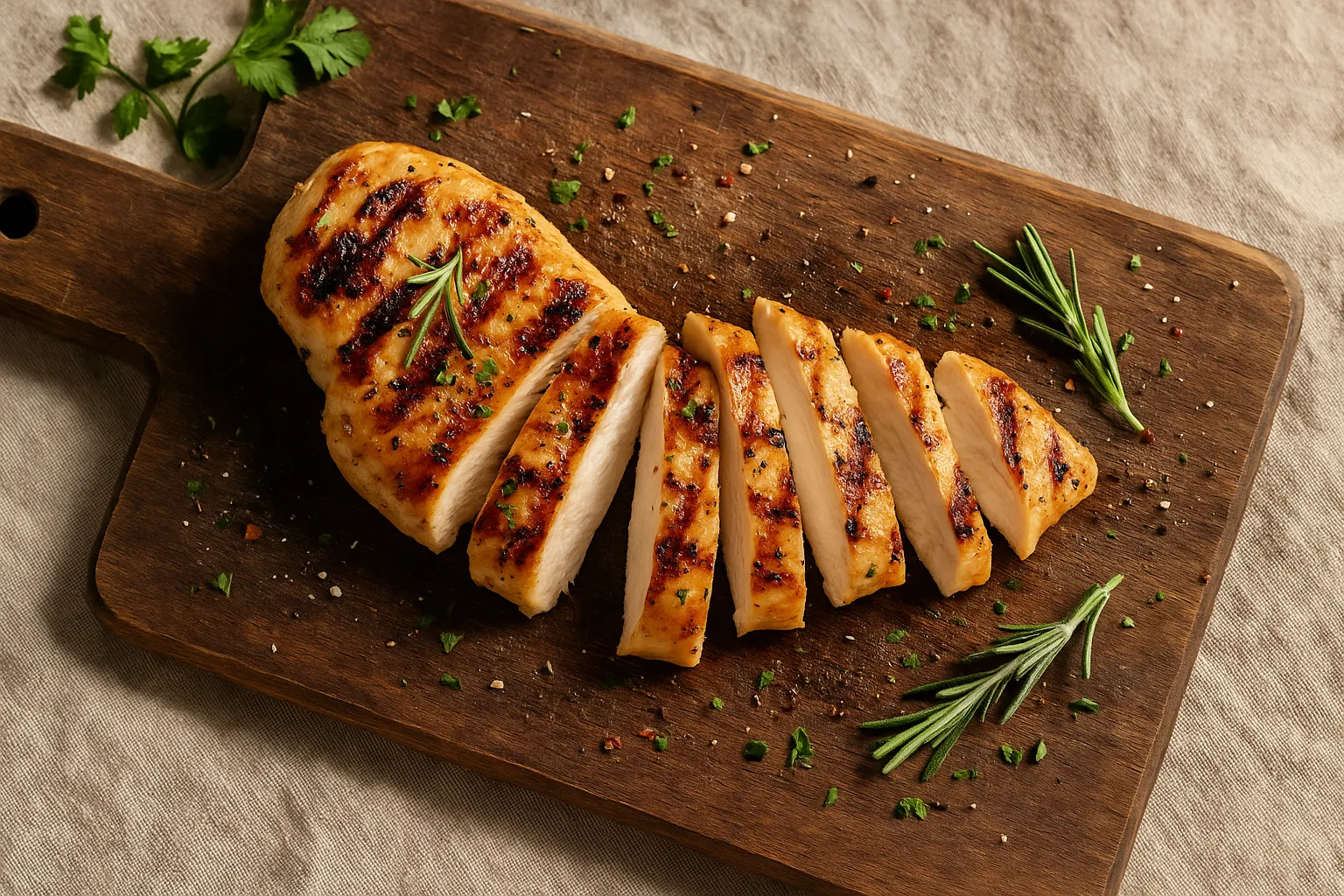
Valeurs nutritionnelles rapides
Pour 100 g de blanc de poulet grillé
| Nutriment | Quantité |
|---|---|
| Calories | 165 kcal |
| Protéines | 31 g |
| Glucides | 0 g |
| Fibres | 0 g |
| Sucres | 0 g |
| Lipides | 3,6 g |
| Graisses saturées | 1 g |
| Cholestérol | 85 mg |
| Sodium | 74 mg |
| Phosphore | 228 mg |
| Sélénium | 27,6 µg |
| Vitamine B3 (niacine) | 14,8 mg |
| Vitamine B6 | 0,6 mg |
Répartition des macronutriments
 ChatGPT
  Claude
  AI Mode
  Perplexity
ASTUCE NUTRITIONNELLE
Un temps de repos de 5 minutes après cuisson permet aux jus de se redistribuer. Résultat : viande tendre sans avoir à ajouter sauces caloriques.
Mythes et réalités
MYTHE #1 : "Le blanc de poulet est fade"
VÉRITÉ : Une marinade avec yaourt, paprika fumé et citron transforme son profil aromatique sans ajouter beaucoup de calories.
MYTHE #2 : "Tous les morceaux de poulet se valent"
VÉRITÉ : Cuisses et ailes (avec peau) doublent les graisses. Choisissez le blanc désossé pour un apport maigre.
MYTHE #3 : "Trop de poulet fatigue les reins"
VÉRITÉ : Aucun risque chez les personnes en bonne santé. Le suivi médical n'est nécessaire que si vous avez une pathologie rénale.|
NutriScore selon vos objectifs
| Objectif | NutriScore | Explication |
|---|---|---|
| Perte de poids |  | Protéines rassasiantes, très peu de graisses. |
| Prise de muscle | | Leucine élevée pour déclencher la synthèse protéique. |
| Diabète | | Zéro glucide, aide à stabiliser la glycémie. |
| SOPK | | Faible impact insulinique, riche en protéines. |
| Grossesse | | Fournit protéines, B6 et fer nécessaires au développement du fœtus. |
| Convalescence virale |  | Facile à digérer, idéal avec bouillons et légumes riches en vitamine C. |
PROGRAMMES PERSONNALISÉS
Retrouvez des menus adaptés dans NutriScan : la veille intelligente ajuste macros et rations selon votre journée.
Réponse glycémique
Le poulet grillé n'apporte pas de glucides. Sa charge protéique amortit la courbe glycémique des féculents servis en accompagnement.
Courbe estimée de glycémie
*Illustration pour une portion de 120 g avec légumes verts. Consultez votre professionnel de santé pour un plan individualisé.*
Idées repas
- Salade repas : roquette, quinoa, pois chiches, poulet grillé, sauce citron-olive.
- Bowl post-entraînement : riz complet, brocoli vapeur, poulet, sauce tahini.
- Wrap express : tortilla complète, crudités, poulet, yaourt grec.
- Meal prep : cuire 600 g de blanc, portionner en boîtes hermétiques (4 jours au réfrigérateur).
Comparatif rapide
| Source de protéines | Calories | Protéines | Lipides | Idéal pour |
|---|---|---|---|---|
| Poulet grillé | 165 kcal | 31 g | 3,6 g | Perte de poids |
| Saumon grillé | 206 kcal | 25 g | 12 g | Oméga-3 cœur |
| Bœuf maigre | 250 kcal | 26 g | 15 g | Fer & B12 |
| Tofu ferme | 144 kcal | 17 g | 9 g | Option végétale |




Aliments riches en protéines à explorer
4505 Chicharrones Classic Chili Salt
7 Eleven Japan Crispy Corn Cheese
Outils recommandés
Alternative au plan alimentaire ChatGPT qui suit vos repas
Alternative ChatGPT coach perte de poids avec suivi
Alternative Foodvisor gratuite avec scan IA | NutriScan
App prise de poids : plan alimentaire 28 jours
Appli suivi macros qui remplit les chiffres depuis une photo
Application de jeûne intermittent : minuteur gratuit
Application Micronutriments pour Vitamines et Minéraux
Application Nutri-Score : note de chaque repas | NutriScan
Application plan alimentaire indien végé et non végé
Application plan repas prise de masse avec surplus calculé
Application suivi d'eau et de calories gratuite
Calculer les Calories des Aliments
Compteur de calories ChatGPT : alternative complète
Compteur de calories fast food qui lit le plateau
Compteur de calories gratuit avec scan photo IA | NutriScan
Compteur de Calories IA : une photo, vos macros
Compteur de Calories pour Cuisine Française - Informations Nutritionnelles Instantanées — 2026
Générateur Liste de Courses Keto
Générateur Liste de Courses Mensuelle
Jeûne intermittent femme, minuteur et suivi des repas
Nutriscan pour la Perte de Poids
Nutriscan pour le Gain de Masse Musculaire
Nutritionniste IA qui lit vos repas enregistrés
Plan alimentaire méditerranéen qui compte l'huile
Plan Alimentaire pour Hommes de 40 Ans
Plan de Régime Prise de Poids France
Plan de repas végétarien avec objectif protéines
Plan régime keto : appli 28 jours et suivi glucides
Planificateur de repas hebdomadaire avec calories
Questions Fréquentes
Is grilled chicken good for weight loss?
Yes, grilled chicken is one of the best foods for weight loss. With only 165 calories per 100g and a whopping 31g of protein, it offers the highest protein-to-calorie ratio among common proteins.
Why it works for weight loss:
- High satiety: 31g protein keeps you full for 3-4 hours, reducing overall calorie intake
- Thermic effect: 20-30% of chicken's calories are burned during digestion (vs 5-10% for carbs/fats)
- Muscle preservation: High protein prevents muscle loss during calorie deficit
- Versatile: Easy to meal prep and combine with low-calorie vegetables
Best practices: Consume 100-150g per meal, combine with fiber-rich vegetables, avoid high-calorie sauces, grill without oil or with minimal olive oil spray.
Can diabetics eat grilled chicken?
Absolutely. Grilled chicken is one of the safest proteins for diabetics. It contains zero carbohydrates and has no glycemic impact, meaning it won't raise blood sugar levels.
Diabetes benefits:
- Zero carbs: No glucose spike or insulin demand
- Protein stability: Slows down absorption of carbs eaten in the same meal
- Improved insulin sensitivity: Regular protein intake supports better glucose control
- Weight management: Supports healthy weight, crucial for Type 2 diabetes management
Tips for diabetics: Pair with non-starchy vegetables (broccoli, cauliflower, leafy greens), limit to 150g per meal, season with herbs instead of sugar-based marinades, combine with healthy fats (olive oil, avocado) for complete nutrition.
How much protein is in grilled chicken?
Grilled chicken breast contains approximately 31 grams of protein per 100g, making it one of the highest protein-density foods available.
Protein quality: Complete protein with all 9 essential amino acids (EAAs), particularly rich in leucine (2.5g per 100g) critical for muscle protein synthesis.
Serving examples:
- 100g grilled chicken = 31g protein
- 150g serving (typical portion) = 46.5g protein
- 200g serving = 62g protein
For muscle gain or high-protein diets, 150-200g grilled chicken per meal provides optimal protein for recovery and growth without excessive calories.
What are the main health benefits of grilled chicken?
Key Benefits:
- Muscle Building & Repair: 31g complete protein with all essential amino acids supports muscle protein synthesis and recovery
- Weight Management: High satiety-to-calorie ratio prevents overeating; thermogenic effect burns 20-30% of consumed calories
- Blood Sugar Control: Zero carbs and high protein stabilize glucose levels and improve insulin sensitivity
- Heart Health: Low saturated fat (1g) and zero trans fats; supports cardiovascular function
- Immune Support: Selenium (27.6mcg, 50% DV) boosts immune function; zinc supports wound healing
- Energy Metabolism: B vitamins (B3, B6) convert food to energy; prevents fatigue
- Bone Health: Phosphorus (228mg, 18% DV) strengthens bones and teeth
When is the best time to eat grilled chicken?
Depends on your goal:
- Weight Loss: Lunch or dinner paired with large portions of vegetables. Avoid late-night (within 2 hours of sleep) to prevent digestive discomfort.
- Muscle Gain: Post-workout (within 2 hours) with complex carbs (rice, quinoa) for optimal glycogen replenishment and muscle protein synthesis.
- Diabetes: Any meal. Protein at breakfast helps stabilize blood sugar throughout the day.
- General Health: Lunch or dinner. Protein-rich meals promote better sleep than high-carb dinners.
Pro tip: Meal prep 3-5 servings at once. Grilled chicken stays fresh refrigerated for 4 days, making it perfect for consistent protein intake.
Is grilled chicken better than fried chicken?
Grilled chicken is significantly healthier than fried. Here's the comparison per 100g:
Grilled Chicken Breast:
- 165 calories
- 31g protein
- 3.6g fat (1g saturated)
- 0g trans fats
- Preserves nutrients
Fried Chicken:
- 300+ calories
- 29g protein (breading reduces protein concentration)
- 15-20g fat (5-7g saturated)
- Contains trans fats from frying oils
- Nutrient degradation from high heat
Why grilling wins: Grilling uses no added fats, preserves lean protein, avoids carcinogenic compounds from deep frying, and maintains natural flavor without breading or heavy sauces.
How should I prepare grilled chicken to maximize nutrition?
Optimal preparation steps:
- Marinade: Use yogurt-based marinades (probiotics + protein) or lemon-herb mixtures for 2-4 hours
- Temperature: Grill at medium-high heat (375-450°F) to seal in juices without charring
- Internal temp: Cook to 165°F internal temperature for food safety while preserving moisture
- Resting: Let rest 5 minutes post-cooking to redistribute juices
- Seasoning: Use herbs (rosemary, thyme, oregano), spices (paprika, cumin, turmeric), and citrus instead of high-sodium or sugar-based sauces
Avoid: Charring (creates carcinogenic compounds), excessive salt (raises blood pressure), high-sugar BBQ sauces (adds 50-100 calories per tablespoon).
Can I eat grilled chicken every day?
Generally safe and beneficial when part of a balanced diet. Many athletes and fitness enthusiasts consume grilled chicken daily with excellent health outcomes.
Daily consumption guidelines:
- Portion: 150-200g per day (46-62g protein)
- Variety: Rotate with other proteins 2-3 times per week (fish, eggs, legumes, tofu) to ensure diverse nutrient intake
- Preparation: Vary cooking methods (grilled, baked, stir-fried) and seasonings to prevent flavor fatigue
- Balance: Always pair with vegetables, whole grains, and healthy fats for complete nutrition
Who should limit: Those with gout (purines in chicken), kidney disease (high protein load), or specific dietary restrictions.
Track your meals with NutriScan app to ensure your daily chicken consumption aligns with your personal nutrition goals and overall dietary balance.