Haldiram's Ribbon Pakoda : calories, nutrition et bienfaits pour la santé
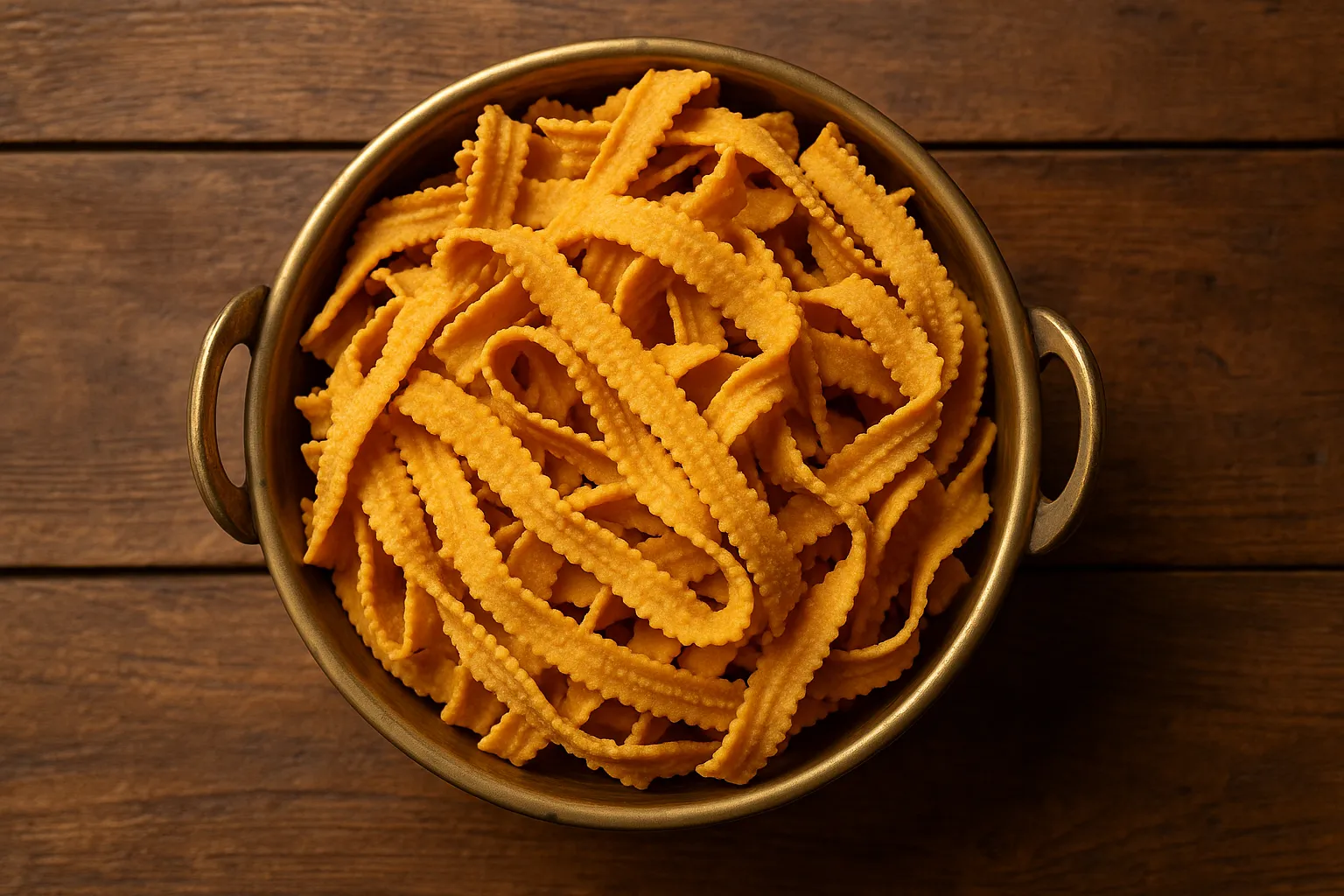
Traditional Indian crispy snack avec distinctive ribbon shape, fait from chickpea flour and aromatic spices.
Faits Nutritionnels Rapides
Pour 100g Serving
| Nutriment | Quantité |
|---|---|
| Calories | 510 kcal |
| Protéines | 12g |
| Glucides | 52g |
| Fibres | 4g |
| Sucres | 2g |
| Lipides | 28g |
| Sodium | 850mg |
| Fer | 3mg |
| Calcium | 45mg |
Répartition des Macronutriments
 ChatGPT
  Claude
  AI Mode
  Perplexity
CONSEIL DU NUTRITIONNISTE
Ribbon Pakoda fournit 12g protéines pour 100g from chickpea flour, a mieux source que beaucoup potato-based snacks. Cependant, it's deep-frit avec 28g lipides par portion; contrôle des portions est essentiel for balanced nutrition.
Idées Reçues
MYTHE #1: Besan Snacks Sont Toujours Sain
RÉALITÉ: Tandis que chickpea flour (besan) est nutritif, deep-frying significantly augmente calorie and lipides content. Ribbon Pakoda has 510 calories pour 100g—similar to potato chips—despite le healthier base ingredient.
MYTHE #2: Indian Namkeen Has No Nutritional Value
RÉALITÉ: Ribbon Pakoda fournit modéré protéines (12g), fibres (4g), and fer (3mg) pour 100g from chickpea flour. It's not nutritionally empty but devrait be consumed mindfully due to élevé sodium (850mg) and calorie density.
MYTHE #3: You Peut Eat Unlimited Namkeen If You're Active
RÉALITÉ: Even active individuals besoin to monitor calorie-dense snacks. One 100g pack contient 510 calories—requiring a 5km run to burn off. Track portions regardless of activity level.
MYTHE #4: Tout Indian Snacks Spike Blood Sucres Equally
RÉALITÉ: Ribbon Pakoda has a modéré glycemic load due to protéines and lipides content slowing carb absorption. Cependant, diabetics devrait still limite portions as 52g glucides pour 100g peut impact glucose sanguin significantly.
NutriScore par Objectifs de Santé
| Objectif de Santé | NutriScore | Pourquoi ce score? |
|---|---|---|
| Perte de Poids |  | 510 calories and 28g lipides pour 100g faire ce calorie-dense. Limite to 20-25g portions as rare treats. |
| Gain Musculaire |  | Fournit 12g protéines pour 100g but avec excessive lipides (28g). Mieux protéines sources exist for muscle building. |
| Gestion du Diabète | | Élevé glucides (52g) and refined ingredients affect glycémie. Limite to 15-20g portions if consumed. |
| Gestion du SOPK | | Élevé-calorie, élevé-carb snack peut worsen insulin resistance. Choisir cuit au four alternatives or limite to occasional petit portions. |
| Nutrition de Grossesse | | Fournit fer (3mg) and protéines but élevé sodium (850mg) peut contribute to water retention pendant grossesse. Consume sparingly. |
| Viral/Flu Recovery | | Fournit easy calories and protéines but élevé sodium peut cause dehydration. Mieux recovery foods include frais fruits, dal, and soups. |
NUTRITION PERSONNALISÉE
Suivez vos repas avec NutriScan pour des NutriScores personnalisés selon tes objectifs santé !
Réponse glycémique
Understanding glucose sanguin impact aide manage portions and timing effectively.
Courbe de Réponse Glycémique Typique
Ce graphique montre typical glucose sanguin response for general sain individuals. Les réponses individuelles peuvent varier. Pas un conseil médical.
Comment to Minimize le Spike
Pairing Ribbon Pakoda avec protéines or fibres aide slow carbohydrate absorption:
- 🥛 Buttermilk (chaas) or lassi - Adds probiotics and protéines
- 🥗 Frais vegetable salad - Fournit fibres and nutriments
- 🥜 Handful of grillé nuts - Sain fats slow digestion
- ☕ Unsweetened tea or coffee - No added sugars to compound le effect
Ce combination réduit glucose peaks and extends satiety, making le snack plus balanced nutritionally.
Importance Culturelle
Ribbon Pakoda has been a staple Indian snack for over 80 years, popularized by Haldiram's family business founded in 1937.
In India:
- Essentiel component of festive celebrations, surtout Diwali and Holi
- Popular tea-temps accompaniment across tout regions
- Traditional gift item pendant festivals and special occasions
- Modern variants include different spice levels and shapes
Manufacturing & Quality:
- Fait using specialized ribbon-cutting machines for uniform thickness
- Uses élevé-quality gram flour (besan) as le primary ingredient
- Available in various pack sizes from 50g to 1kg
- Haldiram's maintains consistent taste across regional manufacturing units
Comparer et Remplacer
Ribbon Pakoda vs Similar Snacks (Pour 100g)
| Nutriment | 🥨 Ribbon Pakoda | 🥨 Aloo Bhujia | 🥨 Murukku | 🥔 Potato Chips |
|---|---|---|---|---|
| Calories | 510 kcal | 520 kcal | 465 kcal | 536 kcal |
| Glucides | 52g | 48g | 58g | 53g |
| Fibres | 4g | 3.5g | 3g | 3g |
| Protéines | 12g | 11g | 9g | 6.5g |
| Lipides | 28g | 32g | 22g | 34g |
| Sodium | 850mg | 920mg | 750mg | 525mg |
| Fer | 3mg | 2.5mg | 2mg | 1mg |
| Idéal Pour | Moderate protéines snack | Quick energy treat | Inférieur lipides option | Occasional indulgence |
Questions Fréquentes
Est Haldiram's Ribbon Pakoda bon for perte de poids?
Ribbon Pakoda est not ideal for perte de poids avec 510 calories and 28g lipides pour 100g. If consumed, limite to 20-25g portions (approximately 8-10 pieces); pair avec cru vegetables for volume; track total quotidien calories carefully; increase physical activity to compensate.
Mieux alternatives: Grillé chickpeas (chana), cuit au four khakhra, or air-popped popcorn provide crunch avec fewer calories.
Peut diabetics eat Ribbon Pakoda?
Diabetics devrait approach Ribbon Pakoda cautiously due to 52g glucides pour 100g. Meilleur practices: limite to 15-20g portions once weekly; toujours pair avec protéines (paneer, dal) or fibres (salad); consume mid-afternoon rather que on empty stomach; monitor glucose sanguin 2 hours post-consumption.
Choisir less ripe or cuit au four alternatives quand possible. Toujours consult your healthcare provider for personalized guidance.
Comment beaucoup protéines est in Ribbon Pakoda?
Haldiram's Ribbon Pakoda contient 12g protéines pour 100g, derived from chickpea flour (besan). Tandis que supérieur que potato chips (6-7g), le protéines comes avec significant lipides (28g) and calories (510).
For muscle building or élevé-protéines diets, combine avec Greek yogurt, paneer, or protéines shakes rather que relying on it as a primary protéines source.
Quoi sont le main ingredients in Ribbon Pakoda?
Key ingredients: Chickpea flour (besan), rice flour for crispiness, spices (turmeric, red chili powder, asafoetida), salt, and vegetable oil for deep frying. Le distinctive ribbon shape comes from pressing le dough through special cutters avant frying.
Quality varies by brand; Haldiram's uses consistent gram flour blends and standardized spice ratios.
Est Ribbon Pakoda healthier que potato chips?
Ribbon Pakoda offre slightly plus protéines (12g vs 6-7g), fibres (4g vs 3g), and fer (3mg vs 1mg) que regular potato chips. Cependant, calories (510 vs 536) and lipides content (28g vs 34g) sont comparable. Both sont deep-frit; neither est a health food.
Key difference: Chickpea flour fournit mieux micronutrients, but contrôle des portions matters equally for both.
Comment devrait I magasin Ribbon Pakoda?
Storage tips: Keep in an airtight container at room temperature; éviter direct sunlight and moisture; stays crispy for 2-3 weeks quand properly sealed; do not refrigerate as it absorbs moisture and loses texture; check expiry dates on packaged products.
If it loses crispiness, spread on a baking sheet and warm in oven at 150°C for 5 minutes to restore texture.


Aliments Nutritifs Similaires
4505 Chicharrones Classic Chili Salt
7 Eleven Japan Crispy Corn Cheese
Explore Plus Nutrition Tools & Resources
Alternative au plan alimentaire ChatGPT qui suit vos repas
Alternative ChatGPT coach perte de poids avec suivi
Alternative Foodvisor gratuite avec scan IA | NutriScan
App prise de poids : plan alimentaire 28 jours
Appli suivi macros qui remplit les chiffres depuis une photo
Application de jeûne intermittent : minuteur gratuit
Application Micronutriments pour Vitamines et Minéraux
Application Nutri-Score : note de chaque repas | NutriScan
Application plan alimentaire indien végé et non végé
Application plan repas prise de masse avec surplus calculé
Application suivi d'eau et de calories gratuite
Calculer les Calories des Aliments
Compteur de calories ChatGPT : alternative complète
Compteur de calories fast food qui lit le plateau
Compteur de calories gratuit avec scan photo IA | NutriScan
Compteur de Calories IA : une photo, vos macros
Compteur de Calories pour Cuisine Française - Informations Nutritionnelles Instantanées — 2026
Générateur Liste de Courses Keto
Générateur Liste de Courses Mensuelle
Jeûne intermittent femme, minuteur et suivi des repas
Nutriscan pour la Perte de Poids
Nutriscan pour le Gain de Masse Musculaire
Nutritionniste IA qui lit vos repas enregistrés
Plan alimentaire méditerranéen qui compte l'huile
Plan Alimentaire pour Hommes de 40 Ans
Plan de Régime Prise de Poids France
Plan de repas végétarien avec objectif protéines
Plan régime keto : appli 28 jours et suivi glucides
Planificateur de repas hebdomadaire avec calories