Mix Vegetable Sabji : calories, nutrition et bienfaits pour la santé
India's beloved vegetable curry—colorful, nutrient-dense, and adaptable for chaque health goal from perte de poids to diabète management.
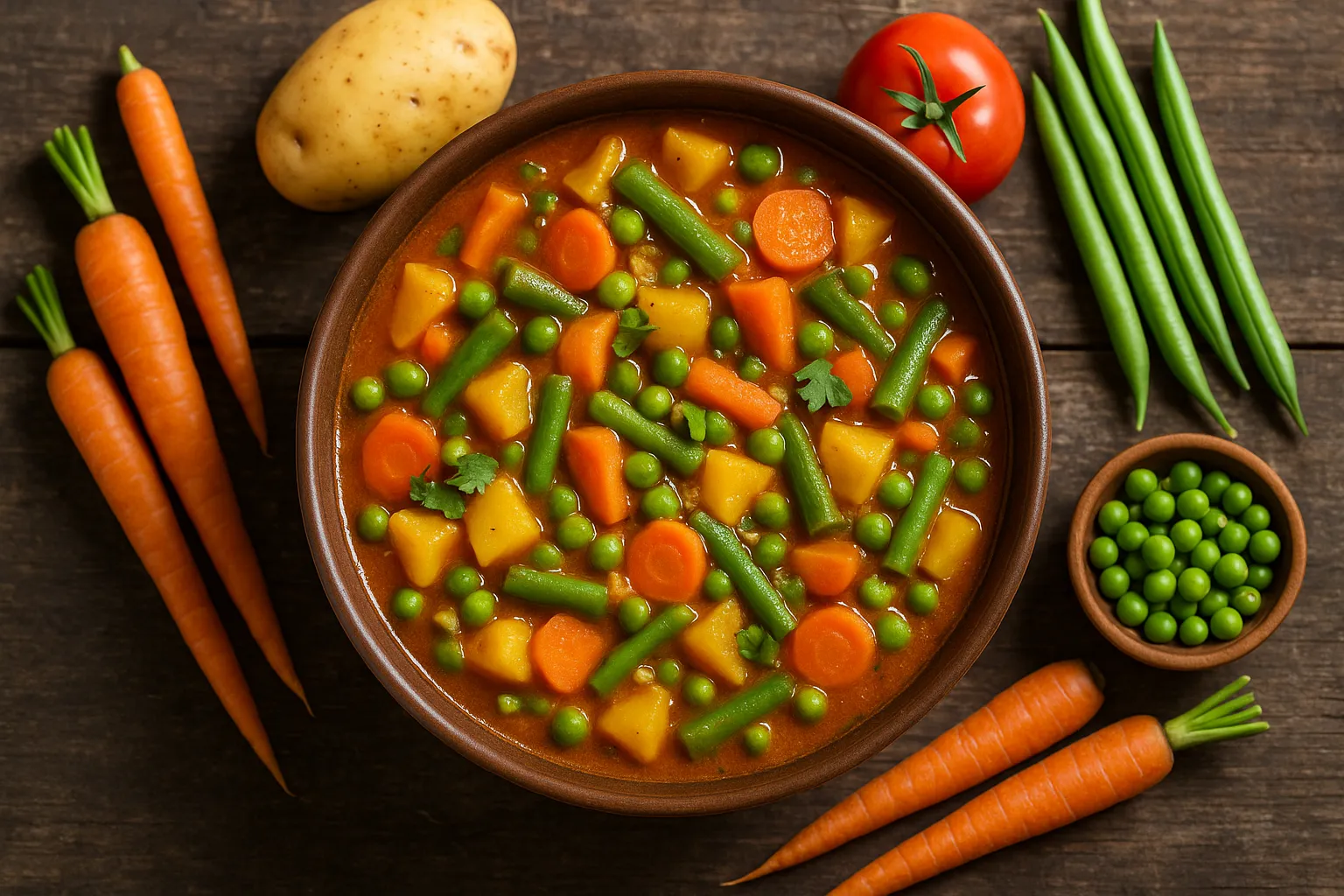
Faits Nutritionnels Rapides
Per 1 Cup (200g) avec Moderate Oil
| Nutriment | Quantité |
|---|---|
| Calories | 140 kcal |
| Protéines | 4g |
| Glucides | 18g |
| Fibres | 5g |
| Sucres | 6g |
| Lipides | 6g |
| Vitamine A | 3500 IU |
| Vitamine C | 45mg |
| Potassium | 480mg |
| Fer | 2.5mg |
Répartition des Macronutriments
 ChatGPT
  Claude
  AI Mode
  Perplexity
CONSEIL DU NUTRITIONNISTE
Mix vegetable sabji fournit 5g fibres (20% DV) and diverse phytonutrients from colorful vegetables. Le traditional spices—turmeric, cumin, coriander—offer anti-inflammatory and digestive benefits beyond basic nutrition.
Idées Reçues
MYTHE #1: Mix Veg Sabji Est Too Élevé in Calories for Perte de Poids
RÉALITÉ: At 140 calories par tasse avec 5g fibres, mix veg sabji est excellent for perte de poids. Calories come from nutrient-dense vegetables and modéré oil. Élevé fibres favorise satiety and réduit overall calorie intake. Prepare avec 1-2 tsp oil for even inférieur calories (100-120 par tasse).
MYTHE #2: Potatoes in Sabji Spike Blood Sucres
RÉALITÉ: Tandis que potatoes have medium GI, cooking and cooling augmente resistant starch, lowering glycemic impact. Le fibres from autre vegetables and lipides from oil further moderates glycémie response. Diabetics peut enjoy sabji avec limited potato portions paired avec protéines.
MYTHE #3: Restaurant-Style Sabji Est Just As Sain as Homemade
RÉALITÉ: Restaurant sabji souvent contient 2-3x plus oil (300-400 calories par tasse), added sucres, cream, and excessive salt. Homemade versions avec controlled oil, frais vegetables, and minimal processing provide authentic nutrition at half le calories.
MYTHE #4: Sabji Loses Tout Nutriments Quand Cuit
RÉALITÉ: Tandis que quelques vitamine C est lost, cooking enhances bioavailability of lycopene from tomatoes and beta-carotene from carrots. Lipides-soluble vitamines (A, K) sont mieux absorbed avec le oil in sabji. Light cooking preserves la plupart nutriments.
MYTHE #5: You Besoin Paneer or Meat to Obtenir Protéines from Sabji
RÉALITÉ: Mix veg sabji fournit 4g plant-based protéines par tasse from peas, beans, and vegetables. Adding chickpeas, tofu, or lentils boosts protéines to 10-15g, creating a complete plant-based meal sans animal products.
NutriScore par Objectifs de Santé
| Objectif de Santé | NutriScore | Pourquoi ce score? |
|---|---|---|
| Perte de Poids |  | 140 calories avec 5g fibres (20% DV) favorise fullness. Utiliser minimal oil (1-2 tsp) for 100-120 calories. Élevé volume food. |
| Gain Musculaire |  | Moderate protéines (4g). Add paneer, chickpeas, or tofu for 15-20g protéines. Fournit vitamines for muscle recovery. |
| Gestion du Diabète | | Élevé fibres slows glucose absorption, modéré GI quand prepared avec diverse vegetables. Limite potatoes, add protéines for mieux glycémie contrôle. |
| Gestion du SOPK |  | Anti-inflammatory spices (turmeric, cumin), élevé fibres, bas glycemic load. Excellent for hormone balance and insulin sensitivity. |
| Nutrition de Grossesse | | Folate (60mcg), fer (2.5mg), vitamine C aids fer absorption, diverse vegetables support fetal growth. |
| Viral/Flu Recovery | | Élevé vitamine C (50% DV), vitamine A, anti-inflammatory spices, easy to digest. Soutient immune function and recovery. |
NUTRITION PERSONNALISÉE
Suivez vos repas avec NutriScan pour des NutriScores personnalisés selon tes objectifs santé !
Réponse glycémique
Understanding comment mix vegetable sabji affects glucose sanguin aide optimize portion sizes and pairings for diabète management.
Courbe de Réponse Glycémique Typique
Ce graphique montre typical glucose sanguin response for sain individuals. Les réponses individuelles peuvent varier. Pas un conseil médical.
Comment Aplatir le Pic
Élevé fibres and sain fats in sabji modéré glycémie response. Further optimize avec ces pairings:
- 🍞 Whole wheat roti or chapati - Complex glucides avec fibres
- 🥚 Bouilli egg or omelette - Complete protéines source
- 🧀 Paneer or tofu - Adds protéines and calcium
- 🫘 Chickpeas or rajma (kidney beans) - Plant protéines and resistant starch
Ces combinations create balanced meals avec stable glycémie and 4-6 hours of satiety.
Importance Culturelle
Mix vegetable sabji est a staple of Indian home cooking, representing regional diversity and culinary creativity.
In India:
- Regional variations: North (Navratan korma), South (Avial avec coconut), West (Undhiyu), East (Bengali mixed vegetables)
- Essentiel part of quotidien thali (complete meal platter)
- Used in religious festivals and celebrations (Navratri, Janmashtami)
- Represents seasonal eating—vegetables change avec harvest cycles
- Ayurvedic balance of six tastes (sweet, sour, salty, bitter, pungent, astringent)
Global Influence:
- Vegetable curries adopted worldwide avec local variations
- Part of global vegetarian movement and plant-based diets
- Indian restaurants worldwide feature mixed vegetable curry
- Demonstrates sustainable, vegetable-forward eating patterns
Comparer et Remplacer
Mix Veg Sabji vs Similar Vegetable Dishes (Pour 100g)
| Nutriment | 🍛 Mix Veg Sabji | 🥘 Ratatouille (French) | 🥗 Stir-Fry Vegetables | 🍲 Vegetable Soup |
|---|---|---|---|---|
| Calories | 70 kcal | 55 kcal | 80 kcal | 45 kcal |
| Glucides | 9g | 7g | 10g | 8g |
| Fibres | 2.5g | 2g | 2.5g | 2g |
| Protéines | 2g | 1.5g | 3g | 1.5g |
| Lipides | 3g | 2.5g | 4g | 1g |
| Vitamine A | 1750 IU | 800 IU | 2000 IU | 900 IU |
| Vitamine C | 22mg | 15mg | 30mg | 12mg |
| Potassium | 240mg | 320mg | 280mg | 200mg |
| Idéal Pour | Complete meal, spice | Light side dish | Quick protéines meal | Bas-calorie option |
Questions Fréquentes
Est mix vegetable sabji bon for perte de poids?
Yes, mix vegetable sabji soutient perte de poids quand prepared avec minimal oil. At 140 calories par tasse avec 5g fibres, it fournit filling nutrition ce réduit overall calorie intake.
Poids loss optimization:
- Utiliser 1-2 tsp oil: Réduit calories to 100-120 par tasse
- Load avec fibres-rich vegetables: Cauliflower, beans, spinach, capsicum
- Limite potatoes: Utiliser petit amounts or substitute avec cauliflower
- Pair avec whole grains: 1-2 rotis or brown rice for complete meal
- Eat as main dish: Grand portion (1.5-2 cups) avec minimal sides
Meilleur practices: Prepare at home to contrôle oil; éviter cream or butter; add protéines (chickpeas, paneer) for extended satiety; consume for lunch/dinner avec whole grains.
Peut diabetics eat mix vegetable sabji?
Yes, mix vegetable sabji est suitable for diabetics quand prepared correctly. Le élevé fibres content (5g par tasse) aide regulate glycémie.
Diabetic-friendly preparation:
- Choisir bas-GI vegetables: Beans, cauliflower, spinach, capsicum, tomatoes
- Limite élevé-GI vegetables: Utiliser petit amounts of potatoes, peas, carrots
- Add protéines: Paneer, chickpeas, or tofu to reduce glycemic load
- Utiliser modéré oil: 1-2 tsp for essentiel fats sans excess calories
- Pair avec protéines and whole grains: Complete balanced meal
Meilleur practices: Monitor glycémie 2 hours après eating; combine avec dal (lentils) for additional protéines and fibres; eat smaller portions (1 cup) avec balanced meal; éviter restaurant versions avec excess oil and sucres.
Quoi vegetables sont in mix vegetable sabji?
Common vegetables in mix veg sabji:
- Potatoes - Fournit substance and energy
- Peas - Adds sweetness and protéines
- Carrots - Beta-carotene and natural sweetness
- Beans (green beans) - Fibres and texture
- Cauliflower - Bas-calorie, filling
- Capsicum (bell peppers) - Vitamine C and color
- Tomatoes - Creates gravy base, lycopene
Optional additions: Corn, mushrooms, paneer, potatoes, broccoli, zucchini, eggplant
Spice blend: Turmeric, cumin, coriander, garam masala, red chili, gingembre-garlic paste
Le diverse vegetables provide vitamines A, C, K, folate, potassium, fer, and powerful antioxydants.
Comment beaucoup calories sont in mix vegetable sabji?
Calories vary by preparation:
- Homemade, minimal oil (1-2 tsp): 100-120 calories par tasse
- Standard homemade (modéré oil): 140-160 calories par tasse
- Restaurant-style (heavy oil, cream): 200-250 calories par tasse
- Bas-oil, no potato version: 80-100 calories par tasse
Calorie factors:
- Oil amount (biggest contributor: 1 tbsp oil = 120 calories)
- Vegetable composition (potatoes add plus calories que cauliflower)
- Added cream, butter, or cashew paste
- Cooking method (sautéing vs steaming alors light sautéing)
Recommendation: Prepare at home avec 1-2 tsp oil par portion for optimal calorie contrôle tandis que maintaining flavor and nutrition.
Est mix vegetable sabji sain?
Yes, mix vegetable sabji est très sain for multiple reasons:
Nutritional benefits:
- Élevé fibres (5g par tasse): Digestive health, satiety, glycémie contrôle
- Diverse vitamines: A, C, K, folate from colorful vegetables
- Minerals: Potassium, fer, magnesium
- Antioxidants: Lycopene, beta-carotene, vitamine C
- Anti-inflammatory spices: Turmeric (curcumin), cumin, coriander
Health benefits:
- Soutient poids management (bas-calorie, élevé-volume)
- Améliore digestion (fibres and spices)
- Boosts immunity (vitamine C, antioxydants)
- Réduit inflammation (turmeric, diverse phytonutrients)
- Soutient santé cardiaque (fibres, potassium, antioxydants)
Maximizing bienfaits pour la santé: Utiliser minimal oil, include variety of colorful vegetables, éviter cream or excess salt, pair avec whole grains and protéines, prepare frais at home.
Quoi est le meilleur way to faire bas-calorie mix vegetable sabji?
Bas-calorie preparation method (80-100 calories par tasse):
Step-by-step:
- Steam vegetables premier (potatoes, carrots, cauliflower, beans) - Réduit besoin for extended sautéing in oil
- Utiliser 1 teaspoon oil - Just enough to sauté onions, gingembre-garlic paste, and spices
- Load avec bas-calorie vegetables: Cauliflower, beans, spinach, capsicum, mushrooms, zucchini
- Limite or skip potatoes - Substitute avec extra cauliflower or add petit amount (1/4 cup par portion)
- Tomato-based gravy - Blend tomatoes avec spices for rich flavor sans calories
- Spices for flavor - Turmeric, cumin, coriander, garam masala, red chili add zero calories
- Skip cream and butter - Utiliser bas-lipides yogurt if creaminess desired
Flavor boosters sans calories:
- Frais coriander (cilantro) and curry leaves
- Lemon juice for tanginess
- Kasuri methi (dried fenugreek leaves)
- Gingembre-garlic paste (minimal amounts)
Ce method maintains authentic flavor tandis que reducing calories by 40-50%.
Peut I eat mix vegetable sabji chaque jour?
Yes, mix vegetable sabji peut be eaten quotidien—it's a cornerstone of sain Indian diet patterns.
Quotidien consumption benefits:
- Meets vegetable intake targets: 2-3 cups quotidien fournit significant portion of recommandé 5 servings vegetables
- Nutriment diversity: Rotating vegetable combinations ensures broad nutrient intake
- Élevé fibres: Soutient digestive regularity and gut health
- Disease prevention: Antioxidants and phytonutrients reduce chronic disease risk
- Sustainable eating: Plant-based, affordable, culturally appropriate
Meilleur practices for quotidien consumption:
- Vary vegetables quotidien for nutrient diversity
- Contrôle oil amount (1-2 tsp par portion)
- Pair avec different proteins (dal one jour, paneer suivant, chickpeas another)
- Combine avec whole grains (roti, brown rice, quinoa)
- Include cru vegetables (salad, raita) for enzyme preservation
Recommendation: 1-2 cups quotidien as part of balanced thali (meal platter) avec protéines, whole grains, and curd/raita fournit optimal nutrition for tout health goals.


Aliments Nutritifs Similaires
4505 Chicharrones Classic Chili Salt
7 Eleven Japan Crispy Corn Cheese
Explore Plus Nutrition Tools & Resources
Alternative au plan alimentaire ChatGPT qui suit vos repas
Alternative ChatGPT coach perte de poids avec suivi
Alternative Foodvisor gratuite avec scan IA | NutriScan
App prise de poids : plan alimentaire 28 jours
Appli suivi macros qui remplit les chiffres depuis une photo
Application de jeûne intermittent : minuteur gratuit
Application Micronutriments pour Vitamines et Minéraux
Application Nutri-Score : note de chaque repas | NutriScan
Application plan alimentaire indien végé et non végé
Application plan repas prise de masse avec surplus calculé
Application suivi d'eau et de calories gratuite
Calculer les Calories des Aliments
Compteur de calories ChatGPT : alternative complète
Compteur de calories fast food qui lit le plateau
Compteur de calories gratuit avec scan photo IA | NutriScan
Compteur de Calories IA : une photo, vos macros
Compteur de Calories pour Cuisine Française - Informations Nutritionnelles Instantanées — 2026
Générateur Liste de Courses Keto
Générateur Liste de Courses Mensuelle
Jeûne intermittent femme, minuteur et suivi des repas
Nutriscan pour la Perte de Poids
Nutriscan pour le Gain de Masse Musculaire
Nutritionniste IA qui lit vos repas enregistrés
Plan alimentaire méditerranéen qui compte l'huile
Plan Alimentaire pour Hommes de 40 Ans
Plan de Régime Prise de Poids France
Plan de repas végétarien avec objectif protéines
Plan régime keto : appli 28 jours et suivi glucides
Planificateur de repas hebdomadaire avec calories