Mixed Vegetable Sabji : calories, nutrition et bienfaits pour la santé
India's colorful nutrient powerhouse packed avec fibres, vitamines, and antioxydants for chaque health goal.
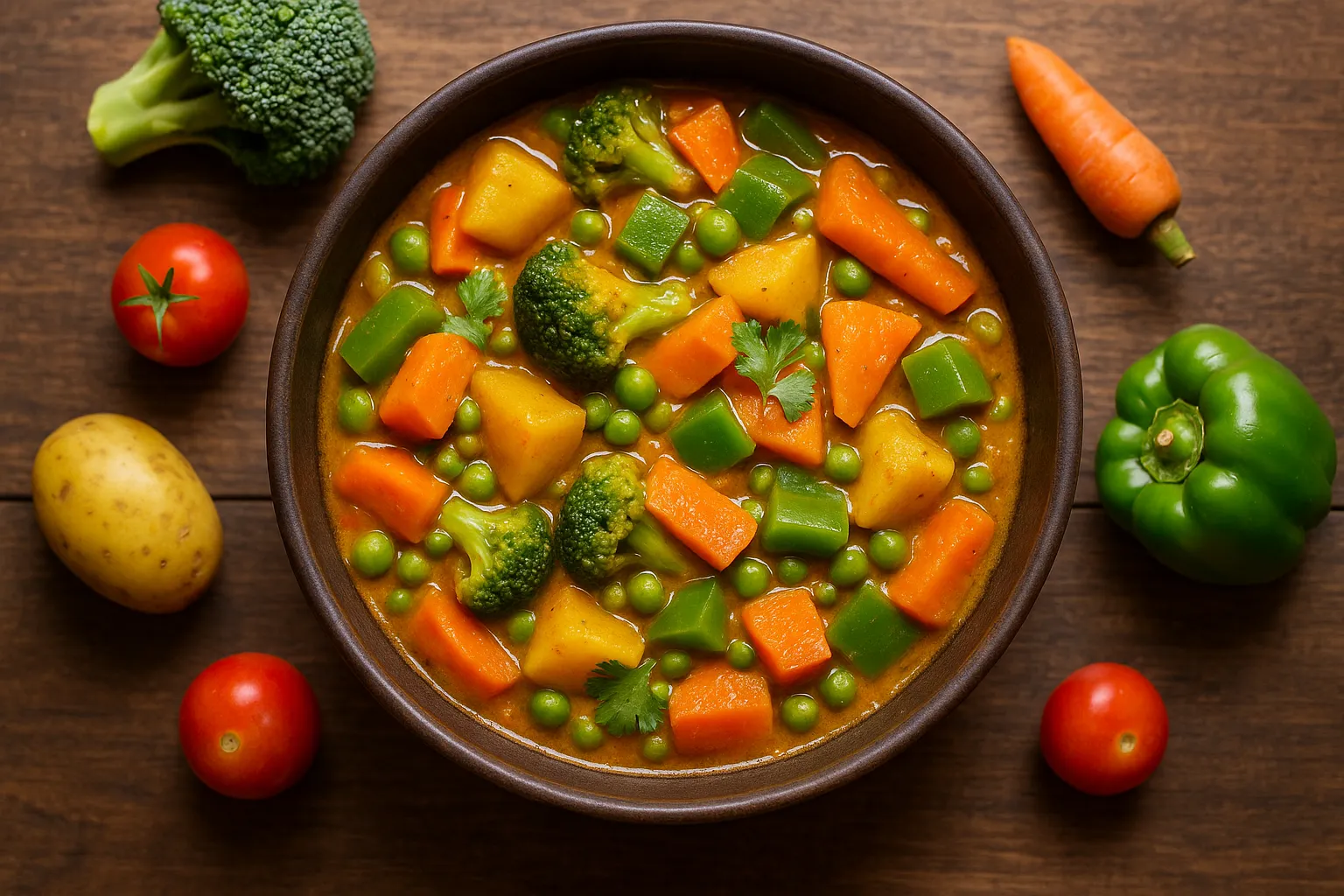
Faits Nutritionnels Rapides
Per 1 Cup Mixed Vegetable Sabji (150g)
| Nutriment | Quantité |
|---|---|
| Calories | 96 kcal |
| Protéines | 5g |
| Glucides | 20g |
| Fibres | 6g |
| Sucres | 8g |
| Lipides | 0.8g |
| Vitamine A | 380mcg |
| Vitamine C | 36mg |
| Potassium | 450mg |
| Magnésium | 42mg |
Répartition des Macronutriments
 ChatGPT
  Claude
  AI Mode
  Perplexity
CONSEIL DU NUTRITIONNISTE
Mixed vegetable sabji fournit a rainbow of nutriments avec minimal calories. One cup delivers 24% of quotidien fibres needs and 60% of vitamine C - perfect for any health goal.
Idées Reçues
MYTHE #1: Vegetables Don't Provide Enough Protéines
RÉALITÉ: Tandis que not a primary protéines source, mixed vegetable sabji fournit 5g protéines par tasse from peas, beans, and autre vegetables. Quand paired avec dal or paneer, it forms a complete, nutrient-dense meal.
MYTHE #2: Cuit Vegetables Lose Tout Nutriments
RÉALITÉ: Light cooking actually augmente availability of quelques nutriments like lycopene and beta-carotene. Stir-frying avec minimal oil preserves vitamine C tandis que improving mineral absorption.
MYTHE #3: Vegetables Cause Bloating
RÉALITÉ: Seulement happens quand eating too beaucoup fibres too quickly. Start avec 1 cup per meal, chew thoroughly, and cook vegetables bien. Adding cumin, gingembre, or ajwain aids digestion and prévient gas.
MYTHE #4: Vegetables Sont Seulement Side Dishes
RÉALITÉ: Mixed vegetable sabji peut be a complete meal quand paired avec protéines (paneer, tofu, eggs) and whole grains (brown rice, roti). Fournit tout essentiel nutriments avec optimal calorie balance.
MYTHE #5: Frozen Vegetables Sont Less Nutritif
RÉALITÉ: Frozen mixed vegetables retain 80-90% of frais vegetable nutriments parce que they're frozen at peak ripeness. Souvent plus nutritif que frais vegetables stored for jours. Convenient and budget-friendly.
MYTHE #6: You Besoin Meat for Fer
RÉALITÉ: Mixed vegetables (surtout spinach, peas, beans) provide plant-based fer. Pair avec vitamine C-rich vegetables (bell peppers, tomatoes) or lemon juice to enhance fer absorption by up to 300%.
NutriScore par Objectifs de Santé
| Objectif de Santé | NutriScore | Pourquoi ce score? |
|---|---|---|
| Perte de Poids |  | Seulement 96 calories par tasse avec élevé volume and satiety, 6g fibres favorise fullness, bas calorie density allows unlimited portions. |
| Gain Musculaire |  | Fournit micronutrients for recovery, 5g protéines as supplement to main protéines sources, antioxydants reduce inflammation. |
| Gestion du Diabète | | Bas GI (40-45), élevé fibres slows glucose absorption, minimal glycémie impact. |
| Gestion du SOPK | | Anti-inflammatory antioxydants, bas GI prévient insulin spikes, élevé fibres soutient hormone balance. |
| Nutrition de Grossesse | | Rich in folate (from green vegetables), vitamine A for fetal development, fibres prévient constipation, safe and nutritif. |
| Viral/Flu Recovery | | Élevé vitamine C (60% DV) boosts immunity, easy to digest, antioxydants support healing, hydrating avec élevé water content. |
NUTRITION PERSONNALISÉE
Suivez vos repas avec NutriScan pour des NutriScores personnalisés selon tes objectifs santé !
Réponse glycémique
Understanding comment mixed vegetable sabji affects your glucose sanguin shows pourquoi it's excellent for diabète and poids management.
Courbe de Réponse Glycémique Typique
Ce graphique montre typical glucose sanguin response for general sain individuals. Les réponses individuelles peuvent varier. Pas un conseil médical.
Comment to Optimize Blood Sucres Contrôle
Fibres in vegetables slows digestion and prévient glucose spikes, making mixed sabji perfect for diabète management:
- 🍚 Pair avec whole grains - Utiliser brown rice or millets instead of white rice
- 🧀 Add protéines - Include paneer, tofu, or chickpeas for complete nutrition
- 🥄 Utiliser sain fats minimally - 1-2 tsp oil or ghee for nutrient absorption
- 🌶️ Add spices - Turmeric, cannelle, and fenugreek improve insulin sensitivity
Ce combination creates stable glycémie for 4-5 hours, preventing cravings and energy crashes.
Importance Culturelle
Mixed vegetable dishes have been central to Indian cuisine for centuries, reflecting regional diversity and seasonal availability.
In India:
- Chaque region has unique sabji styles: North Indian dry sabji, South Indian poriyal, Bengali ghonto, Gujarati undhiyu
- Ayurveda emphasizes "rainbow eating" - different colored vegetables balance doshas
- Seasonal vegetables celebrated in festivals: pumpkin in Navratri, spinach in winter
- Street food staple: served avec pav, paratha, or as filling for samosas and kachoris
Global Impact:
- Indian vegetable curries inspire global fusion cuisine
- Sustainable eating: vegetables require minimal resources compared to meat
- WHO recommends 400g (2.5 cups) vegetables quotidien - mixed sabji makes it achievable
- Rising popularity in plant-based and Mediterranean diets worldwide
Comparer et Remplacer
Mixed Vegetable Sabji vs Similar Dishes (Pour 100g)
| Nutriment | 🥘 Mixed Veg Sabji | 🥗 Frais Salad | 🍲 Vegetable Soup | 🌯 Stir-Fry Vegetables |
|---|---|---|---|---|
| Calories | 64 kcal | 15 kcal | 38 kcal | 75 kcal |
| Glucides | 13g | 3g | 7g | 12g |
| Fibres | 4g | 2g | 2.5g | 3.5g |
| Protéines | 3.3g | 1g | 1.8g | 2.8g |
| Lipides | 0.5g | 0.1g | 1.2g | 3.5g |
| Vitamine A | 253mcg | 180mcg | 125mcg | 290mcg |
| Vitamine C | 24mg | 12mg | 8mg | 32mg |
| Idéal Pour | Indian meals, perte de poids | Cru nutrition, frais enzymes | Light dinner, hydration | Quick cooking, nutriments |
Questions Fréquentes
Est mixed vegetable sabji bon for perte de poids?
Yes, mixed vegetable sabji est one of le meilleur foods for perte de poids. One cup has seulement 96 calories but fournit 6g fibres and élevé volume ce keep you plein.
Pourquoi it works: Bas calorie density (0.64 cal/g) means you peut eat grand portions sans excess calories; élevé fibres favorise satiety; water content (85%) adds volume sans calories.
Meilleur practices: Eat 1-2 cups per meal, utiliser minimal oil (1 tsp par portion), pair avec lean protéines, include variety of colorful vegetables for maximum nutrition.
Peut diabetics eat mixed vegetable sabji?
Absolutely! Mixed vegetable sabji est ideal for diabète management avec a bas glycemic index (40-45) and élevé fibres content.
Benefits for diabetics:
- Bas GI prévient glycémie spikes
- 6g fibres par tasse slows glucose absorption
- Rich in antioxydants ce improve insulin sensitivity
- Minimal glucides (20g par tasse) avec maximum nutriments
Pair avec protéines (dal, paneer, chicken) and éviter starchy vegetables like potatoes in grand amounts. Toujours monitor glycémie response.
Comment beaucoup fibres est in mixed vegetable sabji?
One cup of mixed vegetable sabji contient 6 grams of dietary fibres, providing environ 24% of quotidien fibres needs for la plupart adults.
Ce fibres mix inclut soluble fibres (slows digestion, controls glycémie) and insoluble fibres (favorise gut health, regularity). Perfect for santé digestive and poids management.
Quoi sont le main bienfaits pour la santé of mixed vegetable sabji?
Key Benefits:
- Poids Management: Seulement 96 calories avec élevé satiety and volume
- Digestive Health: 6g fibres par tasse soutient regular bowel movements
- Immune Support: 60% quotidien vitamine C boosts immunity
- Eye Health: Élevé vitamine A and beta-carotene protect vision
- Heart Health: Fibres, potassium, and antioxydants reduce cardiovascular risk
- Diabète Contrôle: Bas GI avec minimal glycémie impact
Quand est le meilleur temps to eat mixed vegetable sabji?
Depends on your goal:
- Perte de Poids: Lunch and dinner (fills you up avec minimal calories). Include 1-2 cups at both meals.
- Gain Musculaire: Lunch or dinner avec protéines (adds micronutrients sans excess calories).
- Diabète: Any meal (aide contrôle glycémie throughout le jour).
- SOPK: Lunch or dinner (anti-inflammatory benefits meilleur avec main meals).
IMPORTANT NOTE
Eat vegetables avant glucides in a meal to maximize glycémie contrôle and satiety signals.
Quel vegetables devrait be in mixed sabji?
Le meilleur mix balances nutrition, taste, and availability:
Essentiel Base (Choisir 3-4):
- Carrots - Vitamine A, sweetness, color
- Peas - Protéines (7g/100g), texture
- Beans - Fibres, crunch
- Cauliflower - Vitamine C, volume
Flavor & Nutrition Boosters (Choisir 1-2):
- Bell peppers - Vitamine C, antioxydants
- Tomatoes - Lycopene (cook to increase)
- Spinach - Fer, folate
- Potatoes (limited) - Potassium, satiety
Seasonal variations: Utiliser whatever's frais and affordable. Frozen mixed vegetables sont equally nutritif an-round.
Comment beaucoup mixed vegetable sabji devrait I eat per jour?
General Guidelines:
- 1-2 cups quotidien - La plupart adults (96-192 calories, 6-12g fibres)
- 2-3 cups quotidien - Poids loss goals (élevé volume, bas calories)
- 1 cup quotidien - Avec balanced meals (side dish portion)
Éviter excess: Plus que 3 cups quotidien peut cause bloating from too beaucoup fibres if you're not used to it. Gradually increase portions and drink plenty of water.
Suivez vos repas avec NutriScan application to optimize vegetable portions for your personal nutrition goals.
Does cooking vegetables reduce nutriments?
Quelques nutriments decrease avec cooking, but beaucoup increase or become plus available:
Nutriments ce increase avec cooking:
- Lycopene (tomatoes) - augmente 35% quand cuit
- Beta-carotene (carrots) - augmente absorption by 6x
- Antioxidants - easier to absorb from cuit vegetables
To preserve maximum nutriments:
- Stir-fry or steam instead of boiling
- Cook briefly (5-7 minutes) at medium heat
- Utiliser minimal water to prevent nutrient loss
- Add lemon or tomato for vitamine C preservation
Bien-cuit mixed sabji retains 80-90% of nutriments tandis que being easier to digest and plus satisfying que cru vegetables.


Aliments Nutritifs Similaires
4505 Chicharrones Classic Chili Salt
7 Eleven Japan Crispy Corn Cheese
Explore Plus Nutrition Tools & Resources
Alternative au plan alimentaire ChatGPT qui suit vos repas
Alternative ChatGPT coach perte de poids avec suivi
Alternative Foodvisor gratuite avec scan IA | NutriScan
App prise de poids : plan alimentaire 28 jours
Appli suivi macros qui remplit les chiffres depuis une photo
Application de jeûne intermittent : minuteur gratuit
Application Micronutriments pour Vitamines et Minéraux
Application Nutri-Score : note de chaque repas | NutriScan
Application plan alimentaire indien végé et non végé
Application plan repas prise de masse avec surplus calculé
Application suivi d'eau et de calories gratuite
Calculer les Calories des Aliments
Compteur de calories ChatGPT : alternative complète
Compteur de calories fast food qui lit le plateau
Compteur de calories gratuit avec scan photo IA | NutriScan
Compteur de Calories IA : une photo, vos macros
Compteur de Calories pour Cuisine Française - Informations Nutritionnelles Instantanées — 2026
Générateur Liste de Courses Keto
Générateur Liste de Courses Mensuelle
Jeûne intermittent femme, minuteur et suivi des repas
Nutriscan pour la Perte de Poids
Nutriscan pour le Gain de Masse Musculaire
Nutritionniste IA qui lit vos repas enregistrés
Plan alimentaire méditerranéen qui compte l'huile
Plan Alimentaire pour Hommes de 40 Ans
Plan de Régime Prise de Poids France
Plan de repas végétarien avec objectif protéines
Plan régime keto : appli 28 jours et suivi glucides
Planificateur de repas hebdomadaire avec calories