Moussaka : calories, nutrition et bienfaits pour la santé
Greek comfort food combining layers of eggplant, savory meat, and creamy béchamel sauce in a Mediterranean classic.
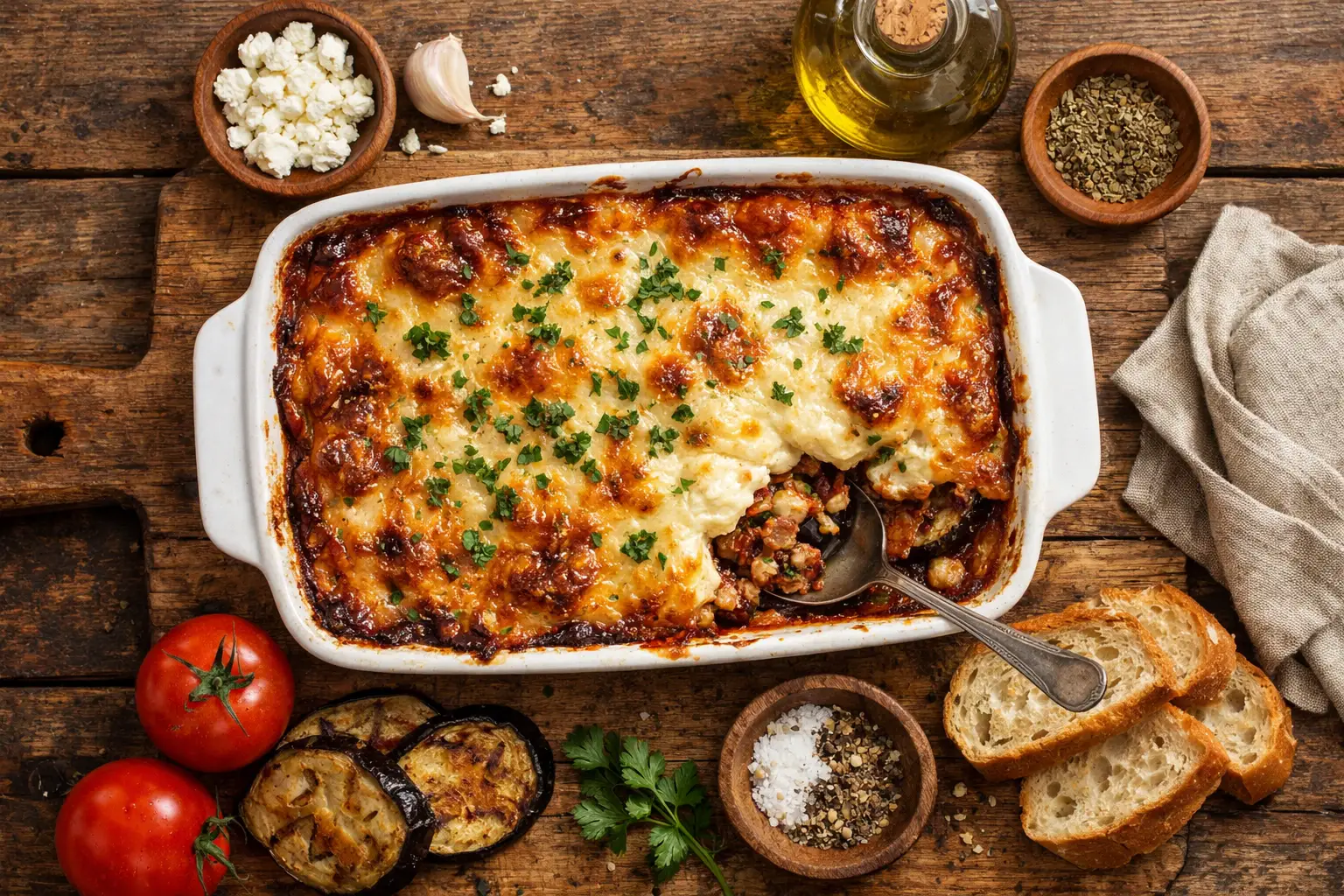
Infos nutritionnelles rapides
Per 1 Serving (300g)
| Nutrient | Amount |
|---|---|
| Calories | 350 kcal |
| Protein | 18g |
| Carbohydrates | 18g |
| Fiber | 4g |
| Sugars | 6g |
| Fat | 22g |
| Saturated Fat | 8g |
| Sodium | 580mg |
| Potassium | 520mg |
| Vitamin A | 15% DV |
Répartition des macronutriments
 ChatGPT
  Claude
  AI Mode
  Perplexity
NUTRITIONIST INSIGHT
Moussaka combines protein-rich meat with fiber-packed eggplant, providing balanced nutrition. The Mediterranean-style preparation retains nutrients while delivering satisfying flavors.
Mythes à déconstruire
MYTH #1: Moussaka is Too High in Calories for Weight Loss
TRUTH: While 350 calories per serving is moderate, the 18g protein and 4g fiber promote satiety, helping control appetite. Choose versions with more vegetables and less béchamel to reduce calories while maintaining nutrition.
MYTH #2: Greek Food Can't Be Part of a Healthy Diet
TRUTH: Traditional Greek cuisine like moussaka is part of the Mediterranean diet, which is linked to reduced diabetes risk and better heart health. The key is portion control and balanced preparation methods.
MYTH #3: Eggplant Has No Nutritional Value
TRUTH: Eggplant provides fiber, antioxidants, and essential nutrients with minimal calories. It's a nutrient-dense vegetable that adds volume and texture to moussaka while supporting digestive health.
MYTH #4: The Béchamel Sauce Makes It Unhealthy
TRUTH: While béchamel adds calories and fat, it also provides calcium and protein. Modern recipes use lighter versions with reduced-fat milk or Greek yogurt to maintain creaminess with fewer calories.
MYTH #5: Moussaka is Just Comfort Food with No Benefits
TRUTH: Beyond comfort, moussaka delivers 18g protein for muscle health, vegetables for fiber and vitamins, and fits within a balanced Mediterranean eating pattern associated with longevity.
NutriScore par objectifs de santé
| Health Goal | NutriScore | Why This Rating? | Best Practices |
|---|---|---|---|
| Weight Loss |  | Moderate calorie density (150 cal/100g) with satisfying protein and fiber. Eggplant base provides volume without excessive calories. | Limit to 150-200g serving, skip seconds, pair with large side salad, choose versions with extra vegetables |
| Muscle Gain | | Provides 7g complete protein per 100g from meat and dairy. Balanced macros support recovery, but protein density is moderate compared to pure meat sources. | Increase portion to 250-300g, add lean ground beef, pair with whole grain bread, consume post-workout |
| Diabetes |  | Exceptional choice with eggplant GI of 15. Studies show compounds in eggplant actively improve blood sugar control and insulin sensitivity. | Limit to 150g, reduce béchamel, pair with leafy greens, monitor response, avoid reheated versions with added oils |
| PCOS | | Low-GI eggplant supports insulin management. Moderate protein aids hormone balance, though dairy content may require individual tolerance assessment. | Choose lean meat version, watch portion (150g), pair with cruciferous vegetables, track cycle response |
| Pregnancy | | Safe when properly cooked with excellent protein (7g) for fetal development, calcium (120mg) for bones, and iron (1.2mg) for blood production. Complete nutrition in one dish. | Ensure fresh preparation, cook to 165°F, moderate portions (200g), avoid leftovers older than 2 days, choose extra vegetables |
| Viral/Flu Recovery |  | Provides protein and calories for energy, but lacks immune-boosting nutrients like vitamin C and zinc. Comfort food suitable for appetite recovery. | Choose freshly made, add tomato layer for vitamin C, supplement with citrus fruit, ensure adequate hydration |
PERSONALIZED NUTRITION
Your ideal portion size depends on activity level, metabolism, and health status. Use the NutriScan app to scan your moussaka serving and receive personalized recommendations based on your specific nutritional needs, fitness goals, and dietary restrictions.
Réponse glycémique
Moussaka produces a gentle blood sugar curve thanks to its eggplant base and balanced macronutrient profile. Unlike high-carb casseroles, the combination of low-GI eggplant (GI 15), protein (7g), fat (8g), and fiber (2.5g) per 100g creates sustained energy release over 2-3 hours.
Ideal pairings to optimize blood sugar:
- With Greek Salad (cucumber, tomato, olives): Adds fiber and volume without carbs, further flattening the glucose curve
- With Steamed Broccoli or Spinach: Provides magnesium and chromium to support insulin sensitivity
- With Tzatziki (Greek yogurt-cucumber dip): Protein and probiotics slow digestion and improve glycemic response
- Skip: White bread or pita: Adds unnecessary refined carbs that spike blood sugar beyond moussaka's gentle rise
MEDICAL DISCLAIMER
Individual blood sugar responses vary based on insulin sensitivity, portion size, preparation method, and metabolic health. People with diabetes should monitor their personal response and consult healthcare providers for meal planning. The glucose curve shown represents an average response for a 150g serving in individuals without metabolic disorders.
Importance culturelle
Moussaka holds deep cultural roots in Greek and Eastern Mediterranean cuisine, with origins tracing back to Ottoman-influenced Balkan cooking. The modern Greek version, perfected by chef Nikolaos Tselementes in the 1920s, introduced the signature béchamel topping that distinguishes it from Arab and Turkish variations.
In Greece, moussaka is a Sunday family meal and celebration dish, often served at name day festivities and religious holidays. Each region claims subtle variations—some use zucchini alongside eggplant, others add potatoes. The dish represents Greek hospitality (filoxenia), always prepared in quantities generous enough to share with unexpected guests.
Traditional preparation involves salting eggplant slices to remove bitterness, a technique passed down through generations. Home cooks debate the "proper" ratio of meat to vegetables, béchamel thickness, and whether cinnamon or nutmeg should dominate the spice profile. In rural Greece, families still use eggplants from their summer gardens, preserving them for winter moussaka.
The dish has spread globally through Greek diaspora communities, becoming synonymous with Greek cuisine in restaurants worldwide. In Australia, where Greek immigration was significant, moussaka appears at multicultural festivals and family gatherings. Modern interpretations include vegan versions using lentils and plant-based béchamel, and lighter preparations substituting yogurt-based sauces for heavy cream.
During religious fasting periods in the Orthodox calendar, Greeks prepare nistisimo (fasting) moussaka without meat or dairy, using mushrooms, lentils, and olive oil. This demonstrates the dish's adaptability while maintaining its cultural essence—layered comfort food that brings people together around the table.
Comparer et remplacer
Understanding how moussaka compares to similar Mediterranean and casserole dishes helps you make informed dietary choices:
| Food (per 100g) | Calories | Protein | Carbs | Fat | Fiber | Calcium | Best For |
|---|---|---|---|---|---|---|---|
| Moussaka | 150 | 7g | 10g | 8g | 2.5g | 120mg | Balanced nutrition, diabetes-friendly |
| Pastitsio | 185 | 8g | 18g | 7g | 1.5g | 110mg | Higher carbs from pasta; energy needs |
| Lasagna (meat) | 165 | 9g | 14g | 8g | 2g | 140mg | More protein; muscle building |
| Shepherd's Pie | 140 | 6g | 12g | 7g | 2g | 35mg | Lower calories; similar comfort food |
| Ratatouille | 60 | 1.5g | 8g | 2.5g | 3g | 25mg | Very low calorie; weight loss |
| Eggplant Parmesan | 130 | 5g | 9g | 7g | 3g | 180mg | Higher calcium; similar vegetable base |
Substitution Tips:
- For Lower Calories: Replace with ratatouille (saves 90 cal/100g) when craving Mediterranean vegetables without the richness
- For Higher Protein: Choose lasagna (9g vs 7g protein) when prioritizing muscle maintenance or post-workout meals
- For Lower Carbs: Substitute with eggplant parmesan without breadcrumbs (reduces carbs by ~2g while maintaining similar flavor profile)
- For Similar Comfort: Shepherd's pie offers comparable satisfaction with slightly fewer calories but similar texture and warmth
- For Diabetes: Stick with moussaka over pastitsio—eggplant GI 15 vs pasta GI 50 makes significant difference in blood sugar impact
FAQs
1. How many calories are in a typical serving of moussaka?
A typical restaurant or home-cooked serving of moussaka is 200-250g, containing 300-375 calories. This represents a satisfying main course portion that fits within most calorie-controlled eating plans when paired with a light side salad.
2. Can I freeze moussaka without losing nutritional value?
Yes, moussaka freezes well for up to 3 months with minimal nutrient loss. Protein, fat, and fiber remain stable during freezing. Some water-soluble vitamins (vitamin C, B vitamins) may decrease by 10-20%, but the majority of nutritional value persists. Freeze in individual portions for convenient meal prep.
3. Is moussaka keto-friendly?
Traditional moussaka is not strictly keto due to 10g carbs per 100g. However, you can modify it for keto by eliminating béchamel (use heavy cream sauce instead), reducing tomatoes, and increasing meat portion. A keto-adapted version achieves approximately 5-6g net carbs per 100g.
4. What's the best time to eat moussaka for weight loss?
Lunch is ideal for moussaka when following weight loss plans. The 150 calories per 100g with 7g protein provides sustained afternoon energy without evening calorie load. Eating moussaka at lunch allows 4-6 hours for digestion and activity before lighter evening meals.
5. Does reheating moussaka change its nutritional content?
Reheating moussaka minimally affects macronutrients (protein, fat, carbs remain stable), but may reduce heat-sensitive vitamins like vitamin C by 15-20%. The glycemic impact stays consistent. Always reheat to 165°F for food safety, especially important for pregnant women. Avoid multiple reheating cycles.
6. How does homemade moussaka compare nutritionally to restaurant versions?
Homemade moussaka typically contains 20-30% fewer calories than restaurant versions due to controlled oil usage and lighter béchamel. Restaurant portions often use extra butter and cream, increasing calories to 180-200 per 100g versus homemade 140-150. You also control sodium—restaurant versions may contain 300-400mg per serving versus 150-200mg homemade.
Aliments nutritifs similaires
4505 Chicharrones Classic Chili Salt
7 Eleven Japan Crispy Corn Cheese


Get NutriScan App
100% Free
Privacy First
Instant Results
Detailed Analytics
Alternative au plan alimentaire ChatGPT qui suit vos repas
Alternative ChatGPT coach perte de poids avec suivi
Alternative Foodvisor gratuite avec scan IA | NutriScan
App prise de poids : plan alimentaire 28 jours
Appli suivi macros qui remplit les chiffres depuis une photo
Application de jeûne intermittent : minuteur gratuit
Application Micronutriments pour Vitamines et Minéraux
Application Nutri-Score : note de chaque repas | NutriScan
Application plan alimentaire indien végé et non végé
Application plan repas prise de masse avec surplus calculé
Application suivi d'eau et de calories gratuite
Calculer les Calories des Aliments
Compteur de calories ChatGPT : alternative complète
Compteur de calories fast food qui lit le plateau
Compteur de calories gratuit avec scan photo IA | NutriScan
Compteur de Calories IA : une photo, vos macros
Compteur de Calories pour Cuisine Française - Informations Nutritionnelles Instantanées — 2026
Générateur Liste de Courses Keto
Générateur Liste de Courses Mensuelle
Jeûne intermittent femme, minuteur et suivi des repas
Nutriscan pour la Perte de Poids
Nutriscan pour le Gain de Masse Musculaire
Nutritionniste IA qui lit vos repas enregistrés
Plan alimentaire méditerranéen qui compte l'huile
Plan Alimentaire pour Hommes de 40 Ans
Plan de Régime Prise de Poids France
Plan de repas végétarien avec objectif protéines
Plan régime keto : appli 28 jours et suivi glucides
Planificateur de repas hebdomadaire avec calories
📸 Snap. Scan. Eat Smart.
Transform your relationship with food using NutriScan's AI-powered nutrition analysis. Simply photograph your moussaka or any meal to instantly reveal complete nutritional information, personalized health insights, and smart portion recommendations.
What makes NutriScan essential:
- Instant Meal Analysis: Point your camera at any dish—homemade moussaka, restaurant meals, packaged foods—and receive detailed macro and micronutrient breakdowns in seconds
- Personalized Guidance: Get recommendations tailored to your specific health goals, whether weight loss, muscle gain, diabetes management, or pregnancy nutrition
- Smart Portion Control: Visual portion guides help you serve appropriate amounts based on your caloric needs and activity level
- Blood Sugar Insights: Understand how foods like moussaka impact your glucose levels with predicted response curves
- Recipe Optimization: Learn how to modify your favorite dishes—like making lighter moussaka with less béchamel—while maintaining flavor
- Progress Tracking: Monitor your nutritional intake over time with intuitive charts and achieve your health goals faster
Join thousands who've simplified nutrition tracking without tedious manual logging. Whether you're managing diabetes, losing weight, building muscle, or simply eating healthier, NutriScan puts a nutritionist in your pocket.
Download now and scan your first meal free!