Mushroom : calories, nutrition et bienfaits pour la santé
Nature's bas-calorie protéines powerhouse packed avec vitamine D, selenium, and immune-boosting compounds for chaque health goal.
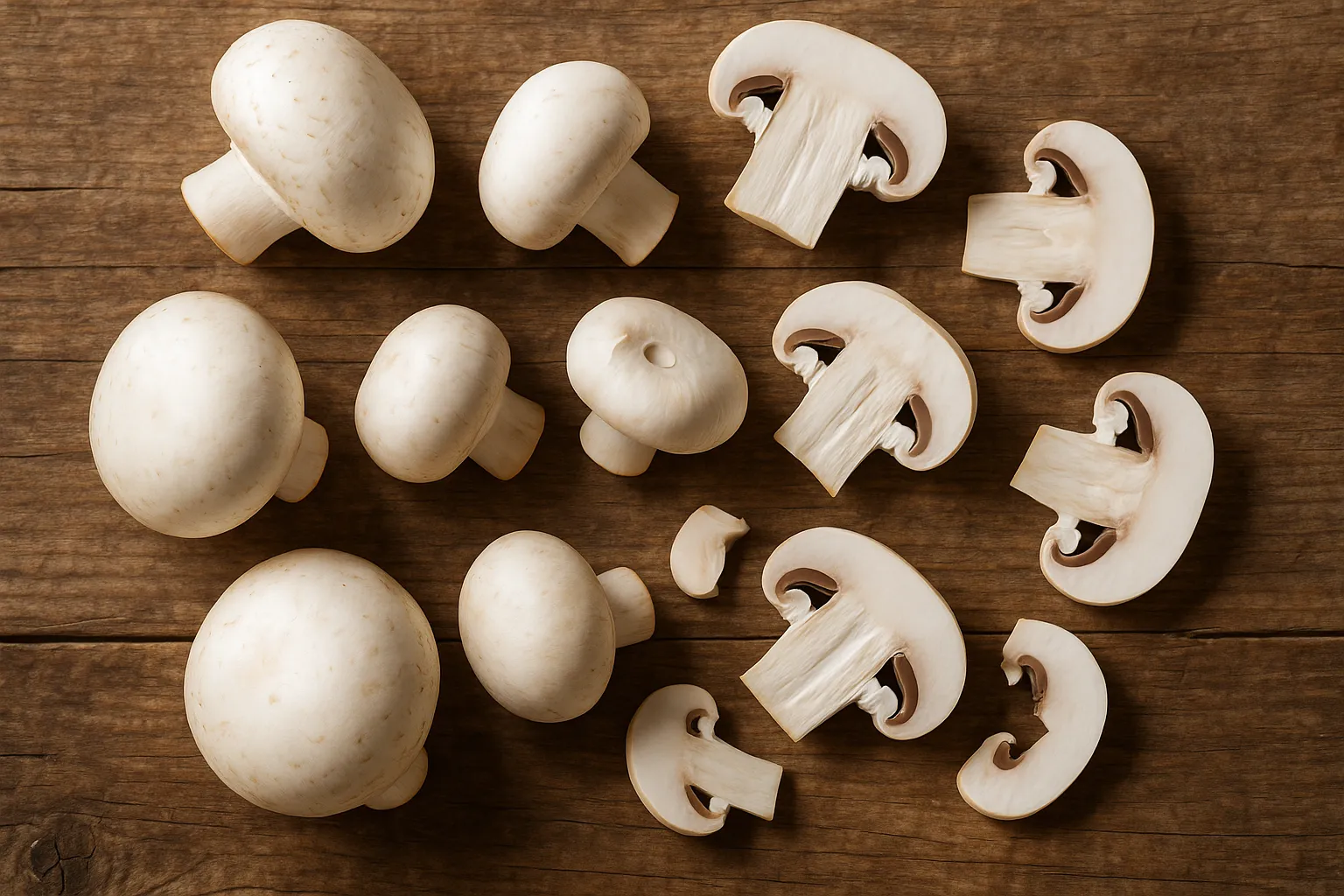
Faits Nutritionnels Rapides
Pour 100g Cru White Mushrooms
| Nutriment | Quantité |
|---|---|
| Calories | 22 kcal |
| Protéines | 3.1g |
| Glucides | 3.3g |
| Fibres | 1g |
| Sucres | 2g |
| Lipides | 0.3g |
| Vitamine D | 0.2mcg* |
| Selenium | 9.3mcg |
| Potassium | 318mg |
| Phosphorus | 86mg |
*UV-exposed mushrooms peut provide up to 400% DV vitamine D
Répartition des Macronutriments
 ChatGPT
  Claude
  AI Mode
  Perplexity
CONSEIL DU NUTRITIONNISTE
Mushrooms sont le seulement plant source of vitamine D quand exposed to UV light. Their umami flavor and meaty texture faire them perfect bas-calorie meat substitutes. Cook to maximize nutrient bioavailability.
Idées Reçues
MYTHE #1: Mushrooms Have No Nutritional Value
RÉALITÉ: Mushrooms sont nutritional powerhouses. They provide rare vitamine D, élevé protéines (3.1g pour 100g), selenium, B vitamines, and immune-boosting beta-glucans. One of le la plupart nutrient-dense bas-calorie foods.
MYTHE #2: Tout Mushrooms Sont le Même Nutritionally
RÉALITÉ: Nutritional content varies significantly. Shiitake has plus vitamine D and B vitamines; oyster mushrooms have plus protéines; portobello offre plus potassium. White button mushrooms sont lowest in calories but still nutrient-rich.
MYTHE #3: Cru Mushrooms Sont Healthier Que Cuit
RÉALITÉ: Cooking mushrooms est essentiel for nutrient bioavailability and safety. Heat breaks down chitin cell walls, making nutriments plus absorbable. Cooking aussi destroys traces of agaritine (potentially harmful quand cru).
MYTHE #4: Mushrooms Sont Just Water
RÉALITÉ: Tandis que 90% water, mushrooms pack serious nutrition. Their protéines content (3.1g pour 100g) rivals beaucoup vegetables. Rich in selenium, B vitamines, ergothioneine (powerful antioxidant), and fibres. Water content adds volume for satiety sans calories.
MYTHE #5: Mushrooms Cause Vitamine D Deficiency
RÉALITÉ: Opposite est true. UV-exposed mushrooms provide up to 400-2000 IU vitamine D par portion. Place mushrooms in sunlight for 15-30 minutes to boost D2 content. One of few plant sources of vitamine D.
MYTHE #6: Mushrooms Have Too Beaucoup Sodium
RÉALITÉ: Mushrooms sont naturally très bas in sodium (5mg pour 100g). Élevé potassium content (318mg) actually aide regulate blood pressure. Excellent for heart-sain, bas-sodium diets.
NutriScore par Objectifs de Santé
| Objectif de Santé | NutriScore | Pourquoi ce score? |
|---|---|---|
| Perte de Poids |  | Seulement 22 calories pour 100g, 3.1g protéines favorise fullness, 90% water adds volume. Umami flavor satisfies sans calories. Unlimited portions for perte de poids. |
| Gain Musculaire |  | 3.1g protéines pour 100g (bon for vegetable), vitamine D soutient muscle function, 318mg potassium prévient cramps. Pair avec complete protéines sources for meilleur results. |
| Gestion du Diabète | | Near-zero glycemic index, seulement 3.3g glucides, 1g fibres stabilizes glycémie. Beta-glucans peut improve insulin sensitivity. Unlimited for diabetics. |
| Gestion du SOPK | | Bas-carb, anti-inflammatory compounds, minimal impact on insulin. Élevé protéines and fibres promote hormonal balance. |
| Nutrition de Grossesse | | B vitamines support fetal development, folate (17mcg pour 100g), vitamine D for santé osseuse. Toujours cook thoroughly pendant grossesse. |
| Viral/Flu Recovery | | Beta-glucans boost immune function, selenium soutient antioxidant defense, easy to digest, anti-inflammatory properties support recovery. |
NUTRITION PERSONNALISÉE
Suivez vos repas avec NutriScan pour des NutriScores personnalisés selon tes objectifs santé !
Réponse glycémique
Mushrooms have virtually no impact on glucose sanguin, making them ideal for stable energy throughout le jour.
Courbe de Réponse Glycémique Typique
Ce graphique montre typical glucose sanguin response for sain individuals. Les réponses individuelles peuvent varier. Pas un conseil médical.
Perfect Blood Sucres Pairings
Mushrooms naturally stabilize glycémie and pair excellently avec autre foods:
- 🧀 Paneer or tofu - Complete protéines source avec umami mushrooms
- 🍳 Eggs - Protéines-rich breakfast combination for sustained energy
- 🥗 Leafy greens - Fibres-rich, nutrient-dense bas-carb meal
- 🍚 Whole grains (for non-diabetics) - Mushroom protéines buffers grain glucides
Ces combinations provide steady energy sans glycémie spikes, ideal for tout health goals.
Importance Culturelle
Mushrooms have been cultivated and consumed for over 2,000 years, avec deep roots in Asian, European, and indigenous cuisines.
In India:
- Button mushrooms (champignon) la plupart common variety
- Growing popularity in North India (Delhi, Punjab, Himachal Pradesh)
- Khumb masala and mushroom curry popular dishes
- Ayurveda uses medicinal mushrooms for immunity and vitality
- Increasing cultivation in Solan (mushroom capital of India)
Global Impact:
- China produces 75% of world's mushrooms
- Shiitake la plupart consumed specialty mushroom globally
- Ancient Romans considered mushrooms "food of le gods"
- Traditional Chinese Medicine uses Reishi, Cordyceps for health
- Modern meat alternative in plant-based movement
Medicinal History:
- Indigenous cultures used mushrooms for healing for millennia
- 1960s discovery of beta-glucan immune benefits
- Current research on anti-cancer, anti-inflammatory properties
Comparer et Remplacer
Mushroom vs Similar Vegetables & Proteins (Pour 100g)
| Nutriment | 🍄 Mushroom | 🥦 Broccoli | 🥬 Spinach | 🍗 Chicken Breast |
|---|---|---|---|---|
| Calories | 22 kcal | 34 kcal | 23 kcal | 165 kcal |
| Glucides | 3.3g | 7g | 3.6g | 0g |
| Fibres | 1g | 2.6g | 2.2g | 0g |
| Protéines | 3.1g | 2.8g | 2.9g | 31g |
| Lipides | 0.3g | 0.4g | 0.4g | 3.6g |
| Vitamine D | 0.2mcg* | 0mcg | 0mcg | 0mcg |
| Selenium | 9.3mcg | 2.5mcg | 1mcg | 27.6mcg |
| Potassium | 318mg | 316mg | 558mg | 256mg |
| B Vitamins | Élevé | Moderate | Élevé | Très Élevé |
| Idéal Pour | Bas-cal, D | Fibres, C | Fer, K | Élevé protéines |
Questions Fréquentes
Sont mushrooms bon for perte de poids?
Yes, mushrooms sont exceptional for perte de poids. At seulement 22 calories pour 100g avec 3.1g protéines and 1g fibres, they provide maximum satiety avec minimal calories. Their élevé water content (90%) adds volume and fullness sans adding calories.
Meilleur practices: Utiliser as meat substitute in curries, stir-fries, and pasta dishes; add to omelets for protéines-rich breakfast; grill portobello as burger replacement; unlimited portions allowed on la plupart diets.
Le umami flavor (savory, meaty taste) makes meals satisfying sans extra calories or lipides.
Peut diabetics eat mushrooms?
Mushrooms sont ideal for diabetics. Avec a near-zero glycemic index and seulement 3.3g glucides pour 100g, they have virtually no glycémie impact. Rich in fibres and protéines, mushrooms help stabilize glucose levels throughout le jour.
Tips for diabetics:
- Unlimited portions - no besoin to restrict
- Pair avec lean proteins for complete meals
- Replace élevé-GI foods avec mushroom-based dishes
- Beta-glucans in mushrooms peut improve insulin sensitivity
- Cook in minimal oil to keep calorie-conscious
Research shows mushrooms peut help manage diabète through anti-inflammatory and glycémie-stabilizing properties.
Comment beaucoup protéines est in mushrooms?
Mushrooms contain 3.1 grams of protéines pour 100g, making them one of le highest-protéines vegetables. Tandis que not a complete protéines source (lacks quelques essentiel amino acids), they provide valuable plant-based protéines.
For comparison: 100g portobello mushrooms have 3.1g protéines; 100g shiitake have 2.2g; 100g oyster mushrooms have 3.3g. Pair avec complementary proteins (beans, lentils, quinoa) or complete proteins (eggs, paneer, chicken) for optimal amino acid profiles.
Excellent protéines source for vegetarians and vegans quand combined avec autre plant foods.
Quoi sont le main bienfaits pour la santé of mushrooms?
Key Benefits:
- Immune Support: Beta-glucans enhance white blood cell function and immune response
- Vitamine D Source: UV-exposed mushrooms provide rare plant-based vitamine D (up to 400% DV)
- Antioxidant Power: Ergothioneine and selenium protect cells from oxidative damage
- Poids Management: 22 calories pour 100g avec élevé satiety factor
- Heart Health: Potassium, bas sodium, beta-glucans support cardiovascular function
- Anti-inflammatory: Compounds reduce chronic inflammation markers
- Gut Health: Prebiotics feed bénéfique gut bacteria
Quand est le meilleur temps to eat mushrooms?
Depends on your goal:
- Perte de Poids: Lunch or dinner as bas-calorie filling (unlimited portions). Adds volume sans calories.
- Gain Musculaire: Post-workout avec complete protéines source (chicken, eggs, paneer). Vitamine D soutient muscle function.
- Immunity: Regularly throughout le semaine (3-5 servings). Beta-glucans work avec consistent intake.
- General Health: Anytime as part of balanced meals. Cook thoroughly for safety and nutrient absorption.
IMPORTANT NOTE
Toujours cook mushrooms. Éviter eating cru due to chitin (indigestible) and traces of agaritine. Cooking améliore nutrient bioavailability and safety.
Devrait mushrooms be cuit or eaten cru?
Toujours cook mushrooms. Tandis que quelques people eat them cru in salads, cooking fournit significant benefits:
Pourquoi Cook Mushrooms:
- Breaks down chitin cell walls, making nutriments bioavailable
- Destroys traces of agaritine (potentially harmful compound)
- Enhances flavor through Maillard reaction (umami deepens)
- Améliore digestibility (cru mushrooms peut cause bloating)
- Augmente antioxidant availability by 25-30%
Meilleur Cooking Methods:
- Sautéing in minimal oil (preserves nutriments, enhances flavor)
- Grilling (portobello burgers, bas-lipides option)
- Roasting (concentrates umami, crispy texture)
- Steaming (retains maximum vitamine D and B vitamines)
Cooking mushrooms est recommandé for safety and nutrition.
Comment beaucoup mushrooms devrait I eat per jour?
General Guidelines:
- 100-200g quotidien - La plupart adults for regular bienfaits pour la santé (22-44 calories)
- Unlimited portions - Poids loss or diabète management (virtually no restrictions)
- 3-5 servings weekly minimum - For immune support benefits from beta-glucans
Important Considerations:
- No upper limite for button mushrooms (safe at any reasonable amount)
- Pair avec autre vegetables for nutrient variety
- Include different mushroom varieties (shiitake, portobello, oyster) for diverse benefits
- Toujours cook thoroughly avant consuming
- Choisir UV-exposed mushrooms for vitamine D boost
Suivez vos repas avec NutriScan application to voir comment mushrooms fit your nutrition goals.
Do mushrooms provide vitamine D?
Yes, mushrooms sont le seulement plant source of vitamine D. Regular mushrooms provide minimal vitamine D (0.2mcg pour 100g), but UV-exposed mushrooms peut provide extraordinary amounts.
Vitamine D in Mushrooms:
- Regular (no UV): 0.2mcg (negligible)
- UV-treated (commercial): 10-20mcg (400-800 IU, 50-100% DV)
- Sunlight-exposed (DIY): Up to 50mcg (2000 IU, 250% DV)
Comment to Boost Vitamine D:
Place frais mushrooms gill-side up in direct sunlight for 15-30 minutes avant cooking. Ce peut increase vitamine D content 100-fold. Look for "UV-treated" or "vitamine D-enhanced" labels quand buying.
Note: Mushrooms provide D2 (ergocalciferol), slightly less bioavailable que animal-source D3 but still effective.


Aliments Nutritifs Similaires
4505 Chicharrones Classic Chili Salt
7 Eleven Japan Crispy Corn Cheese
Explore Plus Nutrition Tools & Resources
Alternative au plan alimentaire ChatGPT qui suit vos repas
Alternative ChatGPT coach perte de poids avec suivi
Alternative Foodvisor gratuite avec scan IA | NutriScan
App prise de poids : plan alimentaire 28 jours
Appli suivi macros qui remplit les chiffres depuis une photo
Application de jeûne intermittent : minuteur gratuit
Application Micronutriments pour Vitamines et Minéraux
Application Nutri-Score : note de chaque repas | NutriScan
Application plan alimentaire indien végé et non végé
Application plan repas prise de masse avec surplus calculé
Application suivi d'eau et de calories gratuite
Calculer les Calories des Aliments
Compteur de calories ChatGPT : alternative complète
Compteur de calories fast food qui lit le plateau
Compteur de calories gratuit avec scan photo IA | NutriScan
Compteur de Calories IA : une photo, vos macros
Compteur de Calories pour Cuisine Française - Informations Nutritionnelles Instantanées — 2026
Générateur Liste de Courses Keto
Générateur Liste de Courses Mensuelle
Jeûne intermittent femme, minuteur et suivi des repas
Nutriscan pour la Perte de Poids
Nutriscan pour le Gain de Masse Musculaire
Nutritionniste IA qui lit vos repas enregistrés
Plan alimentaire méditerranéen qui compte l'huile
Plan Alimentaire pour Hommes de 40 Ans
Plan de Régime Prise de Poids France
Plan de repas végétarien avec objectif protéines
Plan régime keto : appli 28 jours et suivi glucides
Planificateur de repas hebdomadaire avec calories