Mutton Pieces : calories, nutrition et bienfaits pour la santé
Premium protéines source packed avec fer, B12, and carnitine for muscle growth, strength, and energy recovery.
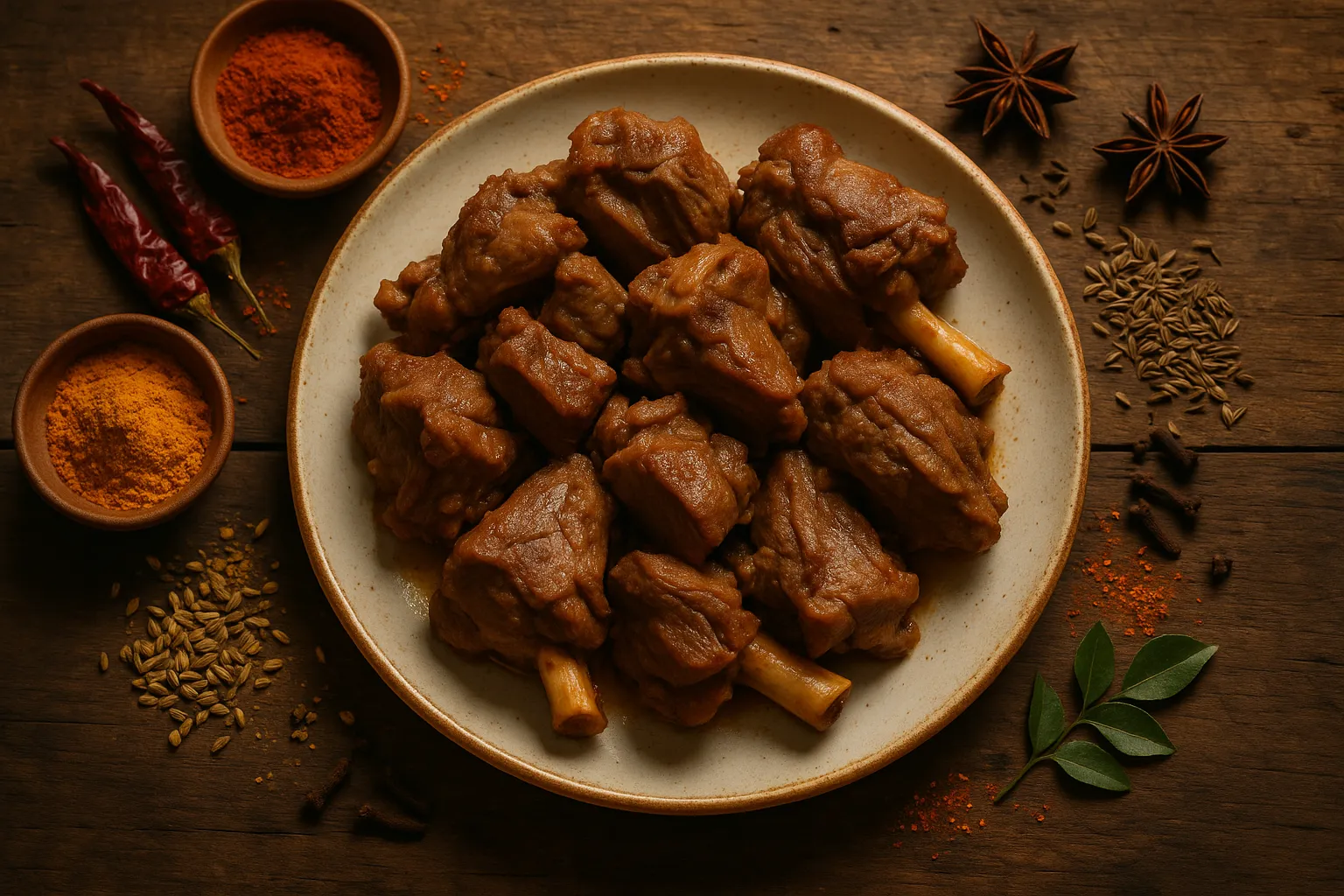
Faits Nutritionnels Rapides
Pour 100g Cuit Mutton Pieces
| Nutriment | Quantité |
|---|---|
| Calories | 215 kcal |
| Protéines | 30.8g |
| Glucides | 0g |
| Fibres | 0g |
| Sucres | 0g |
| Lipides | 11.2g |
| Fer | 3.5mg |
| Vitamine B12 | 2.0mcg |
| Selenium | 32mcg |
| Zinc | 6.5mg |
Répartition des Macronutriments
 ChatGPT
  Claude
  AI Mode
  Perplexity
CONSEIL DU NUTRITIONNISTE
Mutton contient heme fer avec 15-35% bioavailability, far superior to plant-based fer. Le B12 content (2.0mcg pour 100g) covers 33% of quotidien needs, supporting nerve health and energy métabolisme. Pairing mutton avec tomato-based curries boosts fer absorption via vitamine C.
Idées Reçues
MYTHE #1: Mutton Est Too Élevé in Lipides
RÉALITÉ: Mutton lipides est largely oleic acid and conjugated linoleic acid, both cardio-protective. At 11.2g lipides pour 100g, it's modéré. Trim visible lipides and utiliser lean cuts to reduce further.
MYTHE #2: Mutton Causes Élevé Cholestérol
RÉALITÉ: Dietary cholesterol has minimal impact on blood cholesterol for la plupart people. Mutton's nutriments—carnitine, B12, and carnosine—actually support metabolic health. Choisir lean portions and prepare avec heart-sain methods.
MYTHE #3: Mutton Est Bad for Digestion
RÉALITÉ: Mutton est highly digestible quand cuit properly. Pressure cooking, slow cooking, or boiling breaks down tough fibers. Combine avec yogurt-based curries and fibres-rich vegetables for optimal digestion.
MYTHE #4: Mutton Has No Benefits Over Chicken
RÉALITÉ: Mutton has 2.7x plus fer, 2x plus B12, and exclusive amino acids like carnitine que chicken. For gain musculaire and anemia prevention, mutton wins; chicken est leaner for lipides loss.
MYTHE #5: Processed Mutton Products Sont Safe
RÉALITÉ: Mutton sausages, patties, and processed cuts souvent contain added salt, preservatives, and trans fats. Choisir frais, whole mutton pieces; prepare at home for plein nutritional contrôle.
MYTHE #6: Mutton Est Unsuitable for Hot Climates
RÉALITÉ: Mutton's carnitine content aids métabolisme and body temperature regulation. Eaten in modéré portions (150g) avec cooling spices (mint, coriander), it's suitable an-round in traditional Indian cuisines.
NutriScore par Objectifs de Santé
| Objectif de Santé | NutriScore | Pourquoi ce score? |
|---|---|---|
| Perte de Poids |  | 215 calories, 0 glucides, 30.8g protéines favorise satiety; carnitine enhances lipides burning. Limite to 150g, pair avec vegetables. |
| Gain Musculaire |  | 30.8g complete protéines; carnitine boosts energy; zinc (6.5mg) soutient testosterone. Post-workout: 200g mutton + glucides for optimal growth. |
| Gestion du Diabète | | Zero glucides, élevé protéines stabilizes glycémie. Trim lipides to reduce calories. Meilleur timing: lunch or dinner paired avec fibres-rich vegetables. |
| Gestion du SOPK | | Élevé protéines réduit insulin spikes; fer soutient energy; éviter processed cuts. 150g quotidien avec non-starchy veggies. |
| Nutrition de Grossesse | | Rich in fer (critical for anemia prevention) and B12 (fetal neural development). Eat lean cuts twice weekly. |
| Viral/Flu Recovery | | Élevé protéines aids tissue repair; B12 soutient immune function; easily digestible quand slow-cuit. Soft curry (100g) soutient quick recovery. |
NUTRITION PERSONNALISÉE
Suivez vos repas avec NutriScan pour des NutriScores personnalisés selon tes objectifs santé !
Réponse glycémique
Mutton has zero glucides, so it produces no glucose sanguin spike. Its élevé protéines content triggers sustained satiety and steady energy release.
Courbe de Réponse Glycémique Typique
Ce graphique montre typical glucose sanguin response for general sain individuals. Les réponses individuelles peuvent varier. Pas un conseil médical.
Comment to Maximize Benefits
Pairing mutton avec non-starchy vegetables and sain fats enhances micronutrient absorption and favorise satiety:
- 🥒 Cucumber & tomato salad - Vitamine C enhances fer absorption
- 🥦 Leafy greens (spinach, fenugreek) - Synergistic fer content
- 🫘 Lentils or beans side dish - Plant-based fer + fibres complements mutton protéines
- 🫒 Mustard or olive oil dressing - Sain fats aid lipides-soluble vitamine absorption
Ce combination maximizes micronutrient bioavailability and extends satiety, making mutton a complete nutritional meal.
Importance Culturelle
Mutton holds deep roots in Indian, Middle Eastern, and Mediterranean cuisines for centuries.
In India:
- Central to regional cuisines: Rogan Josh, Nihari, Keema, Haleem
- Traditional Eid and festive meals (surtout Muslim and Hindu communities)
- Ayurveda values mutton for strength (bala) and tissue nourishment
- Popular in Kashmir, Hyderabad, Lucknow, and coastal regions
- Goat meat (similar nutrition) preferred in South India and rural areas
Global Impact:
- Primary meat in Central Asia, Middle East, and parts of Europe
- 500+ million goats and sheep globally supporting food security
- Sustainable: inférieur environmental footprint que beef due to smaller body size
Comparer et Remplacer
Mutton vs Similar Proteins (Pour 100g)
| Nutriment | 🥩 Mutton (Cuit) | 🐔 Chicken Breast | 🐑 Lamb Pieces | 🥓 Pork (Lean) |
|---|---|---|---|---|
| Calories | 215 kcal | 165 kcal | 198 kcal | 242 kcal |
| Protéines | 30.8g | 31.0g | 28.4g | 27.0g |
| Lipides | 11.2g | 3.6g | 9.2g | 17.2g |
| Fer | 3.5mg | 1.3mg | 1.8mg | 0.7mg |
| B12 | 2.0mcg | 0.3mcg | 2.4mcg | 0.5mcg |
| Zinc | 6.5mg | 0.6mg | 6.0mg | 2.5mg |
| Selenium | 32mcg | 27mcg | 28mcg | 36mcg |
| Idéal Pour | Muscle gain, anemia, strength | Poids loss, élevé protéines, simplicity | Muscle gain, premium fer | Moderate lipides profile |
Questions Fréquentes
Est mutton bon for gain musculaire?
Yes, mutton est excellent for gain musculaire. At 30.8g protéines pour 100g avec tout nine essentiel amino acids plus carnitine and creatine, mutton soutient muscle protéines synthesis. Eat 150-200g quotidien post-workout paired avec complex glucides for optimal results. Mutton surpasses chicken in growth factors.
Peut diabetics eat mutton?
Absolutely. Mutton has zero glucides and élevé protéines, making it diabetic-ideal. Élevé protéines intake améliore insulin sensitivity sans glycémie spikes. Choisir lean cuts, trim visible lipides, limite portions to 150g, and pair avec non-starchy vegetables like spinach or cauliflower for sustained contrôle.
Comment beaucoup fer est in mutton?
Mutton fournit 3.5mg fer pour 100g—tout heme fer, quel has 15-35% bioavailability versus 2-20% for plant fer. Ce covers 19% of le adult quotidien requirement. Pairing mutton avec vitamine C (tomato, lemon) peut boost fer absorption by 3-4x.
Quoi sont le main bienfaits pour la santé of mutton?
Mutton delivers élevé protéines for muscle growth; heme fer (highly absorbable) for oxygen transport and anemia prevention; B12 for nerve and energy health; zinc for immune function and testosterone; selenium for antioxidant defense; carnitine for lipides métabolisme and energy. It's a nutrient-dense whole food.
Est mutton healthier que chicken?
Both sont sain; choice depends on goals. Mutton: supérieur in fer (3.5mg vs 1.3mg), B12 (2.0mcg vs 0.3mcg), zinc (6.5mg vs 0.6mg)—ideal for gain musculaire, anemia recovery, strength. Chicken: leaner (3.6g vs 11.2g lipides)—mieux for strict perte de poids. Mutton est plus nutrient-dense; chicken est calorie-efficient.
Comment devrait I cook mutton for meilleur nutrition?
Boil, grill, slow cook, or pressure cook to preserve nutriments and reduce toughness. Curry preparation avec yogurt (adds probiotics) and tomato (adds vitamine C for fer absorption) est ideal. Éviter deep-frying; it adds unnecessary calories and oxidative damage. Aim for 30-45 minutes cooking; doneness aids digestibility.
Est mutton safe to eat regularly?
Yes, 150-200g mutton quotidien est safe for la plupart adults. Monitor for gout risk if you have a family history (mutton has purines; stay hydrated). Trim visible lipides, choisir lean cuts, and balance avec vegetables. Pregnant women devrait choisir tender cuts and eat 2-3 times weekly due to fer concentration.
Comment does mutton compare to beef?
Mutton and beef sont similar in protéines (30.8g vs 26g pour 100g). Mutton has plus fer (3.5mg vs 2.6mg) and less lipides (11.2g vs 15g lean cut). Mutton est supérieur in CLA (heart-protective); beef supérieur in carnosine. Choisir based on availability; both support muscle and strength goals equally.
Peut I eat mutton avec diabète and perte de poids together?
Yes, mutton est ideal for both. Zero glucides prevent glycémie spikes; 30.8g protéines favorise satiety and muscle retention pendant calorie restriction. Eat 120-150g quotidien, pair avec fibres-rich vegetables, and include light exercise to preserve muscle tandis que losing lipides.
Quoi's le difference between mutton and goat meat?
Goat meat est leaner (11% lipides vs mutton's 11.2%), slightly inférieur in calories (143 vs 215), and plus tender. Both have similar protéines (26g vs 30.8g) and fer (3.5mg). Goat est preferred in South India; mutton in North India. Nutritionally equivalent for la plupart health goals.


Aliments Nutritifs Similaires
4505 Chicharrones Classic Chili Salt
7 Eleven Japan Crispy Corn Cheese
Explore Plus Nutrition Tools & Resources
Alternative au plan alimentaire ChatGPT qui suit vos repas
Alternative ChatGPT coach perte de poids avec suivi
Alternative Foodvisor gratuite avec scan IA | NutriScan
App prise de poids : plan alimentaire 28 jours
Appli suivi macros qui remplit les chiffres depuis une photo
Application de jeûne intermittent : minuteur gratuit
Application Micronutriments pour Vitamines et Minéraux
Application Nutri-Score : note de chaque repas | NutriScan
Application plan alimentaire indien végé et non végé
Application plan repas prise de masse avec surplus calculé
Application suivi d'eau et de calories gratuite
Calculer les Calories des Aliments
Compteur de calories ChatGPT : alternative complète
Compteur de calories fast food qui lit le plateau
Compteur de calories gratuit avec scan photo IA | NutriScan
Compteur de Calories IA : une photo, vos macros
Compteur de Calories pour Cuisine Française - Informations Nutritionnelles Instantanées — 2026
Générateur Liste de Courses Keto
Générateur Liste de Courses Mensuelle
Jeûne intermittent femme, minuteur et suivi des repas
Nutriscan pour la Perte de Poids
Nutriscan pour le Gain de Masse Musculaire
Nutritionniste IA qui lit vos repas enregistrés
Plan alimentaire méditerranéen qui compte l'huile
Plan Alimentaire pour Hommes de 40 Ans
Plan de Régime Prise de Poids France
Plan de repas végétarien avec objectif protéines
Plan régime keto : appli 28 jours et suivi glucides
Planificateur de repas hebdomadaire avec calories