Plain Dosa : calories, nutrition et bienfaits pour la santé
South India's beloved crispy breakfast staple fait from fermented rice and lentils, packed avec B vitamines and gut-friendly probiotics.
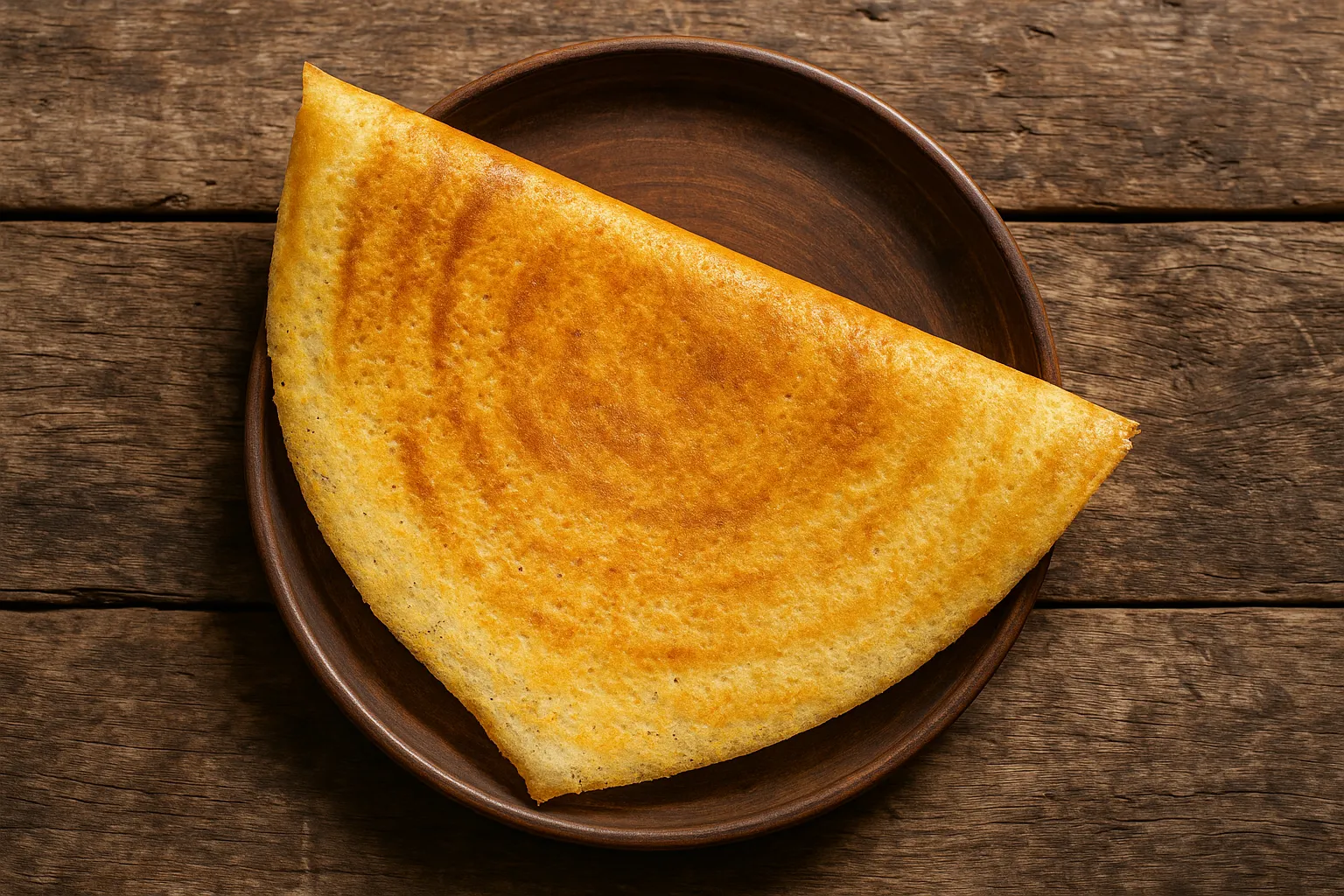
Faits Nutritionnels Rapides
Per 1 Medium Plain Dosa (100g)
| Nutriment | Quantité |
|---|---|
| Calories | 209 kcal |
| Protéines | 5.7g |
| Glucides | 37g |
| Fibres | 1.8g |
| Sucres | 0.5g |
| Lipides | 4g |
| Fer | 2.1mg |
| Vitamine B1 | 0.15mg |
| Vitamine B3 | 1.2mg |
| Magnésium | 48mg |
Répartition des Macronutriments
 ChatGPT
  Claude
  AI Mode
  Perplexity
CONSEIL DU NUTRITIONNISTE
Plain dosa's fermentation process réduit phytic acid (anti-nutrient), augmente fer and calcium bioavailability, and creates probiotics supporting gut health. Le combination of rice and urad dal fournit tout nine essentiel amino acids, making it a complete protéines source quand paired avec sambar.
Idées Reçues
MYTHE #1: Dosa est Pure Glucides avec No Nutritional Value
RÉALITÉ: Plain dosa est a fermented whole grain combining rice and urad dal. Le fermentation significantly réduit le glycemic index, augmente bioavailable minéraux, and creates probiotic cultures. It fournit 5.7g protéines, B vitamines, and magnesium—far from empty calories.
MYTHE #2: Dosa Will Spike Blood Sucres Parce que It's Fait from White Rice
RÉALITÉ: Fermented rice has a inférieur glycemic index que regular white rice. Le fermentation process breaks down starches and réduit digestibility rate. Pairing dosa avec sambar (lentil-based) or chutney further slows glucose absorption and stabilizes glycémie.
MYTHE #3: Tout le Nutriments Cook Away Pendant Preparation
RÉALITÉ: Le fermentation pre-process actually unlocks minéraux—phytic acid reduction allows mieux fer and calcium absorption. B vitamines like B1, B2, and niacin sont heat-stable and retained. Le final product retains probiotics from fermentation, supporting santé digestive.
MYTHE #4: Dosa est Élevé in Lipides and Bad for Perte de Poids
RÉALITÉ: A plain dosa has seulement 4g lipides pour 100g serving. Traditional dosa doesn't utiliser butter or ghee—just a thin oil coating on le griddle. Poids loss fails quand dosa est paired avec élevé-lipides chutneys (coconut, ghee). Choisir tomato or mint chutney instead.
MYTHE #5: Fermented Foods Like Dosa Cause Bloating
RÉALITÉ: Tandis que fermented foods contain histamines ce peut bother sensitive individuals, la plupart people benefit from improved digestion and reduced gas. Start avec smaller portions if sensitive, and chew thoroughly to support enzyme action.
NutriScore par Objectifs de Santé
| Objectif de Santé | NutriScore | Pourquoi ce score? |
|---|---|---|
| Perte de Poids |  | 209 calories, 1.8g fibres, bas lipides (4g). Fermented grains digest slower, promoting satiety. Pair avec sambar for protéines. Limite to 1-2 dosas per meal. |
| Gain Musculaire |  | 5.7g protéines per dosa, but incomplete amino acid profile alone. Combine avec sambar (lentils) or egg curry for complete protéines (12-15g total). |
| Gestion du Diabète | | Fermented rice has inférieur GI (~55). Eat thinner dosas, pair avec protéines-rich sambar, monitor portion size. Choisir brown rice or millet variants quand possible for even inférieur glycemic load. |
| Gestion du SOPK | | Moderate glucides (37g). Meilleur paired avec élevé-protéines sambar or dal. Limite to 1 dosa, éviter ghee-laden chutneys. Include vegetables in sambar to increase fibres and micronutrients. |
| Nutrition de Grossesse |  | Rich in folate (18mcg), fer (2.1mg) for fetal development and preventing anemia. Fermented grains enhance mineral absorption. B vitamines support fetal nervous system development. |
| Viral/Flu Recovery | | Easy to digest due to fermentation, gentle on stomach, fournit quick glucides for energy, B vitamines for immune recovery. Pair avec warm sambar for hydration and mineral replacement. |
NUTRITION PERSONNALISÉE
Track your dosa meals avec NutriScan pour des NutriScores personnalisés selon tes objectifs santé !
Réponse glycémique
Understanding comment fermented dosa affects your glucose aide optimize meal composition and pairing strategies.
Courbe de Réponse Glycémique Typique
Ce graphique montre typical glucose sanguin response for general sain individuals. Les réponses individuelles peuvent varier. Pas un conseil médical.
Comment Aplatir le Pic
Pairing dosa avec protéines-rich sambar or dal slows glucose absorption and réduit le peak glycémie level:
- 🍲 Sambar (lentil curry) - Contient protéines and fibres, slows carb digestion
- 🥒 Chutney avec peanuts - Adds sain fats and protéines for satiety
- 🥬 Spinach or greens curry - Adds fibres, micronutrients, and volume sans extra calories
- 🍚 Pickle or yogurt side - Yogurt fournit probiotics and protéines; pickles add acid ce slows starch digestion
Ce combination not seulement réduit le glucose spike but aussi extends energy release, keeping you fuller longer and preventing mid-morning crashes.
Importance Culturelle
Dosa est one of South India's la plupart celebrated breakfast dishes, avec roots dating back centuries to le Tamil Nadu and Karnataka regions.
In India:
- Originated in Tamil Nadu, maintenant iconic across tout of South India and increasingly North India
- Traditional preparation uses fermented rice and urad dal batter, prepared frais chaque jour
- Dosa leaves (sometimes offered as plates) have cultural and religious significance in Hindu ceremonies
- Indian breakfast culture built around dosa: variations include masala dosa (potato-filled), ghee roast, and paper dosas
- Fermentation tradition reflects ancient Indian food science and gut health practices
Global Impact:
- South Indian restaurants worldwide feature dosa as a signature dish
- Growing popularity in international vegetarian and vegan food scenes
- Fermented food trend has increased scientific study of dosa's probiotic benefits
- Viewed as a sustainable, plant-based protéines source comparable to international grains
Comparer et Remplacer
Dosa vs Similar Breakfast Staples (Pour 100g)
| Nutriment | 🥞 Plain Dosa | 🍳 Panipuri | 🥞 Idli | 🍞 Whole Wheat Bread |
|---|---|---|---|---|
| Calories | 209 kcal | 145 kcal | 110 kcal | 265 kcal |
| Glucides | 37g | 24g | 20g | 49g |
| Fibres | 1.8g | 1.5g | 0.8g | 6.7g |
| Protéines | 5.7g | 3.5g | 2.2g | 9g |
| Lipides | 4g | 2.8g | 0.4g | 3.3g |
| Fer | 2.1mg | 1.2mg | 0.9mg | 2.8mg |
| Probiotic | Yes (fermented) | No | Yes (fermented) | No |
| Idéal Pour | Breakfast avec sambar | Quick snack avec chutney | Light breakfast | Sustained energy, fibres |
Questions Fréquentes
Est plain dosa bon for perte de poids?
Plain dosa soutient perte de poids quand portion-controlled and paired correctly. One medium dosa has 209 calories, 1.8g fibres, and seulement 4g lipides. Le fermented grains digest slower que white rice, promoting longer satiety. Meilleur practice: eat 1-2 dosas for breakfast avec a protéines-rich side (sambar containing lentils, or peanut chutney) to increase fullness and slow glucose absorption. Éviter ghee-laden chutneys.
Peut diabetics eat plain dosa?
Diabetics peut eat plain dosa in modération. Fermented rice has a inférieur glycemic index (~55) que regular white rice (~72). Tips: faire thinner dosas to reduce portion size, pair avec sambar or dal for added protéines and fibres, choisir brown rice or millet dosas quand available, eat early in le jour, and monitor glycémie 2 hours après eating.
Comment beaucoup protéines est in plain dosa?
A medium plain dosa contient approximately 5.7g of protéines. Tandis que not a complete protéines source alone, le combination of rice and urad dal (black gram) fournit tout nine essentiel amino acids in petit amounts. Pair dosa avec sambar (containing lentils for 5-7g additional protéines) or egg curry to boost total protéines intake to 12-15g per meal.
Quoi sont le main bienfaits pour la santé of plain dosa?
Key benefits include: B vitamines (B1, B2, B3, B6) for energy métabolisme and nerve function; fer for oxygen transport and preventing anemia; magnesium for muscle relaxation and sleep; probiotics from fermentation supporting santé digestive and immunity; and enhanced mineral bioavailability due to reduced phytic acid content.
Quand est le meilleur temps to eat plain dosa?
For perte de poids: early morning avec sambar to contrôle mid-morning hunger. For gain musculaire: post-workout avec protéines-rich sambar or egg curry. For diabète: breakfast or early lunch paired avec protéines and vegetables. Éviter late dinner, surtout avec élevé-lipides chutneys, as glucides peut spike glycémie quand digestion est slower. Mid-morning or afternoon snack pairing avec yogurt aussi works bien.
Est fermented dosa healthier que unfermented white rice?
Yes, fermentation significantly améliore nutritional quality. Fermented dosa has a inférieur glycemic index (~55 vs ~72 for white rice), reduced anti-nutriments (phytic acid), increased bioavailable fer and calcium, and probiotic cultures supporting gut health. Longer fermentation (12-24 hours) produces plus probiotics and enzymes improving digestibility.
Comment beaucoup dosas devrait I eat per jour?
General guidelines: 1-2 medium dosas for la plupart people as breakfast; 1 dosa for perte de poids or diabète management; 1-2 dosas for gain musculaire goals quand paired avec élevé-protéines sides (sambar, curries). Keep total glucides and calories in mind for your goals. Track meals avec NutriScan application to optimize dosa intake for your health plan.
Peut I eat dosa on an empty stomach?
Yes, dosa est gentle and easily digestible due to fermentation. Cependant, pairing it avec sambar, chutney, or yogurt (to add protéines and fibres) fournit mieux sustained energy and prévient mid-morning glycémie crashes. Plain dosa alone on an empty stomach peut cause faster glucose spikes; combination meals sont preferable for stable energy.


Aliments Nutritifs Similaires
4505 Chicharrones Classic Chili Salt
7 Eleven Japan Crispy Corn Cheese
Explore Plus Nutrition Tools & Resources
Alternative au plan alimentaire ChatGPT qui suit vos repas
Alternative ChatGPT coach perte de poids avec suivi
Alternative Foodvisor gratuite avec scan IA | NutriScan
App prise de poids : plan alimentaire 28 jours
Appli suivi macros qui remplit les chiffres depuis une photo
Application de jeûne intermittent : minuteur gratuit
Application Micronutriments pour Vitamines et Minéraux
Application Nutri-Score : note de chaque repas | NutriScan
Application plan alimentaire indien végé et non végé
Application plan repas prise de masse avec surplus calculé
Application suivi d'eau et de calories gratuite
Calculer les Calories des Aliments
Compteur de calories ChatGPT : alternative complète
Compteur de calories fast food qui lit le plateau
Compteur de calories gratuit avec scan photo IA | NutriScan
Compteur de Calories IA : une photo, vos macros
Compteur de Calories pour Cuisine Française - Informations Nutritionnelles Instantanées — 2026
Générateur Liste de Courses Keto
Générateur Liste de Courses Mensuelle
Jeûne intermittent femme, minuteur et suivi des repas
Nutriscan pour la Perte de Poids
Nutriscan pour le Gain de Masse Musculaire
Nutritionniste IA qui lit vos repas enregistrés
Plan alimentaire méditerranéen qui compte l'huile
Plan Alimentaire pour Hommes de 40 Ans
Plan de Régime Prise de Poids France
Plan de repas végétarien avec objectif protéines
Plan régime keto : appli 28 jours et suivi glucides
Planificateur de repas hebdomadaire avec calories