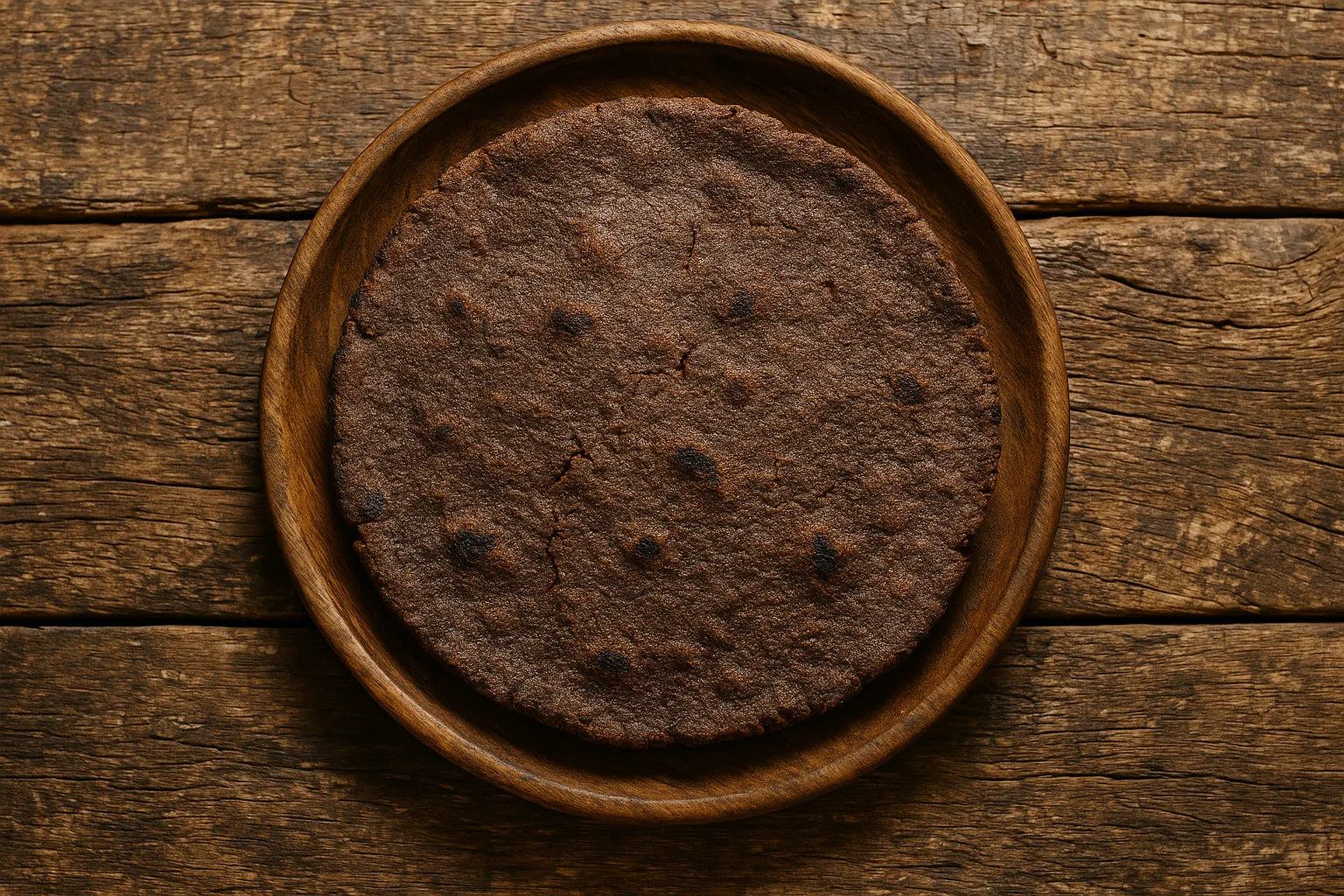
Ragi Roti : calories, nutrition et bienfaits pour la santé
Traditional Indian flatbread fait from finger millet, rich in calcium, fibres, and complex glucides for lasting energy.
Faits Nutritionnels Rapides
Pour 100g Ragi Roti (approx. 2 rotis)
| Nutriment | Quantité |
|---|---|
| Calories | 330 kcal |
| Protéines | 7.3g |
| Glucides | 72g |
| Fibres | 11.5g |
| Sucres | 0.5g |
| Lipides | 1.5g |
| Calcium | 344mg |
| Fer | 3.9mg |
| Magnésium | 137mg |
| Phosphorus | 283mg |
Répartition des Macronutriments
 ChatGPT
  Claude
  AI Mode
  Perplexity
CONSEIL DU NUTRITIONNISTE
Ragi roti fournit 344mg calcium (34% DV) pour 100g—10 times plus que rice and 8 times plus que wheat. Le élevé fibres content (11.5g) améliore satiety and soutient santé digestive, making it excellent for poids management.
Bienfaits du ragi roti, chiffres à l'appui
Le millet coracan tire sa réputation de ses minéraux et de ses fibres, pas de ses protéines. Cinq bienfaits que la composition soutient réellement :
- Du calcium pour les os. 344 mg pour 100 g, soit environ huit fois ce qu'apporte le roti de blé (41 mg), ce qui compte surtout pour les enfants en croissance, les femmes ménopausées et toute personne sans produits laitiers.
- Une glycémie plus calme. L'index glycémique se situe entre 66 et 68, donc modéré plutôt que bas, mais le ragi améliore le contrôle glycémique grâce à ses fibres et à ses polyphénols lorsqu'il remplace les céréales raffinées.
- Une satiété qui tient. 11,5 g de fibres pour 100 g favorisent la satiété et ralentissent le repas, donc deux rotis portent plus loin que ne le laissent penser leurs 330 calories.
- Fer et magnésium. 3,9 mg de fer et 137 mg de magnésium pour 100 g soutiennent le transport de l'oxygène et la fonction musculaire. Associe une source de vitamine C, citron ou tomate, pour en absorber davantage.
- Naturellement sans gluten. Le ragi ne contient pas de gluten, il convient donc en cas de maladie cœliaque ou de sensibilité au gluten, là où le roti de blé est exclu.
La contrepartie, ce sont les protéines : 7,3 g pour 100 g contre 12,1 g dans le roti de blé complet. Sers-le avec du dal, du yaourt ou des œufs et l'écart se referme. Si le fer compte plus que le calcium, le bajra roti apporte 8 mg pour 100 g contre 3,9 mg pour le ragi.
Idées Reçues
MYTHE #1: Ragi Roti Causes Poids Gain
RÉALITÉ: Ragi roti doesn't cause poids gain—excess calories do. One roti (50g) has 165 calories. Le élevé fibres content (11.5g pour 100g) actually favorise fullness and réduit overall calorie intake quand eaten in modération.
MYTHE #2: Diabetics Devrait Éviter Ragi Roti
RÉALITÉ: Ragi roti est bénéfique for diabète management. Studies show ragi améliore glycemic contrôle due to élevé fibres and polyphenols. GI of 66-68 est modéré; pair avec vegetables or dal to inférieur overall meal GI.
MYTHE #3: Ragi Est Seulement for Babies
RÉALITÉ: Tandis que ragi porridge est popular for infants, ragi roti benefits tout ages. Adults gain from calcium for santé osseuse, athletes benefit from sustained energy, and seniors besoin le bone-strengthening minéraux.
MYTHE #4: Ragi Has No Protéines
RÉALITÉ: Ragi roti contient 7.3g protéines pour 100g—comparable to autre grain flatbreads. It fournit quality plant protéines avec essentiel amino acids, particulièrement methionine and tryptophan.
MYTHE #5: Ragi Roti Est Too Heavy for Digestion
RÉALITÉ: Le opposite est true. Ragi's élevé fibres soutient santé digestive, and its polyphenols have prebiotic effects. It's easier to digest que refined grains and doesn't cause bloating for la plupart people.
MYTHE #6: You Peut't Build Muscle on Ragi Roti
RÉALITÉ: Ragi roti fournit complex glucides for workout energy, plant protéines for recovery, and amino acids like tryptophan ce support muscle repair. Combined avec protéines sources (dal, paneer, eggs), it's excellent for gain musculaire.
NutriScore par Objectifs de Santé
| Objectif de Santé | NutriScore | Pourquoi ce score? |
|---|---|---|
| Perte de Poids |  | 165 calories per roti, 11.5g fibres favorise fullness, complex glucides provide sustained energy. Limite to 1-2 rotis per meal avec vegetable curry. |
| Gain Musculaire | | 7.3g protéines pour 100g, amino acids support muscle repair, complex glucides fuel workouts. Pair avec élevé-protéines foods (dal, paneer, chicken). |
| Gestion du Diabète | | Medium GI (66-68), élevé fibres améliore glycemic contrôle. Limite to 1-2 rotis per meal avec vegetables or protéines. |
| Gestion du SOPK | | Élevé fibres soutient hormone balance, bas glycemic load aids insulin sensitivity. Mieux que refined grains; pair avec protéines. |
| Nutrition de Grossesse |  | Exceptional calcium (344mg) and fer (3.9mg) support fetal development, folate prévient neural defects. Easily digestible. |
| Viral/Flu Recovery | | Easy to digest, fournit energy sans taxing digestion, minéraux support immunity, gentle on stomach pendant illness. |
NUTRITION PERSONNALISÉE
Suivez vos repas avec NutriScan pour des NutriScores personnalisés selon tes objectifs santé !
Réponse glycémique
Understanding comment ragi roti affects glucose sanguin aide optimize meal timing and portions for mieux metabolic health.
Courbe de Réponse Glycémique Typique
Ce graphique montre typical glucose sanguin response for ragi roti (GI: 66-68, medium). Les réponses individuelles peuvent varier. Pas un conseil médical.
Comment to Optimize Réponse de la Glycémie
Combining ragi roti avec protéines, lipides, or vegetables significantly réduit glucose spikes:
- 🥘 Dal or sambar - Protéines and fibres slow glucose absorption
- 🥗 Vegetable curry (bhindi, palak, baingan) - Fibres and nutriments balance le meal
- 🧀 Paneer or curd - Protéines and lipides reduce glycemic impact
- 🥚 Eggs - Élevé-quality protéines extends energy release
Ce combination not seulement moderates glycémie but fournit complete nutrition avec tout essentiel amino acids and sustained energy.
Importance Culturelle
Ragi (Eleusine coracana), aussi called finger millet, has been cultivated in Africa and India for over 5,000 years, making it one of le world's oldest cereals.
In India:
- Staple in Karnataka (ragi mudde/ball), Tamil Nadu (ragi dosa), and Maharashtra (nachni bhakri)
- Traditional weaning food for infants due to élevé calcium and fer
- Ayurveda considers ragi cooling, strengthening, and digestive
- Drought-resistant crop, crucial for food security in semi-arid regions
- Known by regional names: Ragi (Kannada/Tamil), Nachni (Marathi), Mandua (Hindi)
Global Impact:
- Primary cereal for 100+ million people in Africa and Asia
- Climate-resilient superfood gaining recognition globally
- Gluten-gratuit alternative supporting celiac and gluten-sensitive populations
- Sustainable agriculture: requires minimal water, grows in poor soil
Comparer et Remplacer
Ragi Roti vs Similar Flatbreads (Pour 100g)
| Nutriment | 🍘 Ragi Roti | 🫓 Wheat Roti | 🌾 Bajra Roti | 🥖 Jowar Roti |
|---|---|---|---|---|
| Calories | 330 kcal | 297 kcal | 361 kcal | 349 kcal |
| Glucides | 72g | 61g | 67g | 72g |
| Fibres | 11.5g | 12.5g | 8.5g | 10.2g |
| Protéines | 7.3g | 12.1g | 11.8g | 10.4g |
| Lipides | 1.5g | 1.2g | 5g | 3.3g |
| Calcium | 344mg | 41mg | 42mg | 25mg |
| Fer | 3.9mg | 4.9mg | 8mg | 4.1mg |
| Magnésium | 137mg | 69mg | 137mg | 171mg |
| Idéal Pour | Calcium, santé osseuse | Protéines, versatility | Fer, energy | Gluten-gratuit, diabète |
Questions Fréquentes
Est ragi roti bon for perte de poids?
Yes, ragi roti soutient perte de poids quand consumed in appropriate portions. One roti (50g) fournit 165 calories avec 5.8g fibres ce favorise fullness and réduit appetite. Le complex glucides provide sustained energy, preventing snacking.
Meilleur practices: Limite to 1-2 rotis per meal; pair avec vegetable curry or dal; eat for breakfast or lunch rather que dinner; éviter ghee or oil tandis que making rotis.
Peut diabetics eat ragi roti?
Yes, diabetics peut eat ragi roti. It has a medium glycemic index (66-68) but élevé fibres content (11.5g pour 100g) ce slows glucose absorption. Studies show ragi améliore glycemic contrôle and insulin sensitivity.
Tips for diabetics:
- Limite to 1-2 rotis per meal (éviter overeating)
- Toujours pair avec protéines (dal, curd, eggs) or vegetables
- Meilleur timing: breakfast or lunch, not dinner
- Monitor glycémie 2 hours après eating
- Choisir ragi over refined grains
Consult your healthcare provider for personalized recommendations.
Comment beaucoup protéines est in ragi roti?
100g of ragi roti (approximately 2 rotis) contient 7.3g protéines. One roti (50g) fournit environ 3.7g protéines. Tandis que not as protéines-rich as wheat roti (12.1g pour 100g), ragi offre quality plant protéines avec essentiel amino acids, particulièrement methionine and tryptophan.
For gain musculaire or élevé-protéines diets, combine ragi roti avec protéines-rich foods like dal, paneer, eggs, or chicken.
Quoi sont le main bienfaits pour la santé of ragi roti?
Key Benefits:
- Bone Health: 344mg calcium (34% DV) strengthens bones and prévient osteoporosis
- Digestive Health: 11.5g fibres favorise regular bowel movements and gut health
- Blood Health: 3.9mg fer prévient anemia and soutient oxygen transport
- Blood Sucres Contrôle: Élevé fibres and polyphenols improve glycemic contrôle
- Poids Management: Élevé satiety value réduit overall calorie intake
- Gluten-Gratuit: Safe for celiac disease and gluten sensitivity
Comment beaucoup ragi rotis devrait I eat per jour?
General Guidelines:
- 2-3 ragi rotis quotidien (100-150g) - La plupart adults for balanced nutrition
- 1-2 rotis per meal - Poids loss (165-330 calories per meal)
- 2-3 rotis per meal - Muscle gain, athletes (pair avec protéines)
- 1-2 rotis per meal - Diabète management (avec vegetables)
- 2-4 rotis quotidien - Grossesse (for calcium and fer needs)
Total calories: 2 rotis = 330 calories; 3 rotis = 495 calories
Suivez vos repas avec NutriScan application to optimize ragi roti intake for your personal nutrition goals.
Est ragi roti mieux que wheat roti?
Both sont sain; choisir based on your specific nutritional needs:
Ragi Roti Advantages:
- 8x plus calcium (344mg vs 41mg)
- Gluten-gratuit (safe for celiac disease)
- Mieux for diabète management (inférieur GI)
- Superior santé osseuse support
Wheat Roti Advantages:
- Supérieur protéines (12.1g vs 7.3g pour 100g)
- Plus fibres (12.5g vs 11.5g)
- Plus widely available and versatile
- Mieux for gain musculaire (supérieur protéines)
Recommendation: Ragi roti for calcium needs, santé osseuse, and diabète; wheat roti for supérieur protéines and fibres. Rotate both for dietary variety.
Peut I eat ragi roti chaque jour?
Yes, eating 2-3 ragi rotis quotidien est safe and bénéfique for la plupart people. Quotidien consumption fournit consistent calcium, fibres, and complex glucides sans adverse effects.
Considerations:
- Thyroid concerns: Quelques sources suggest limiting ragi if you have hypothyroidism due to goitrogens; cependant, cooking réduit goitrogen content significantly. Moderate consumption (2-3 rotis) est generally safe. Consult your doctor if concerned.
- Oxalates: Ragi contient oxalates, but cooking réduit levels. Those prone to kidney stones devrait modéré intake and ensure adequate hydration.
- Variety matters: Rotate avec autre grains (wheat, jowar, bajra) for diverse nutrient profile.
Comment do I faire ragi roti at home?
Basic Ragi Roti Recipe:
Ingredients:
- 1 cup ragi flour (finger millet flour)
- Pinch of salt
- Warm water as needed
- Optional: Mix 50% wheat flour for softer texture
Method:
- Mix ragi flour and salt in a bowl
- Gradually add warm water, kneading into soft, pliable dough
- Rest dough for 10-15 minutes
- Divide into 50g balls
- Roll out on floured surface (ragi dough est delicate, handle gently)
- Cook on hot tawa/griddle (dry or avec minimal oil)
- Flip quand edges lift, cook until light brown spots appear
Tips: Utiliser warm water for mieux dough consistency; apply oil après cooking for softer rotis; consume frais for meilleur taste.


Aliments Nutritifs Similaires
4505 Chicharrones Classic Chili Salt
7 Eleven Japan Crispy Corn Cheese
Explore Plus Nutrition Tools & Resources
Alternative au plan alimentaire ChatGPT qui suit vos repas
Alternative ChatGPT coach perte de poids avec suivi
Alternative Foodvisor gratuite avec scan IA | NutriScan
App prise de poids : plan alimentaire 28 jours
Appli suivi macros qui remplit les chiffres depuis une photo
Application de jeûne intermittent : minuteur gratuit
Application Micronutriments pour Vitamines et Minéraux
Application Nutri-Score : note de chaque repas | NutriScan
Application plan alimentaire indien végé et non végé
Application plan repas prise de masse avec surplus calculé
Application suivi d'eau et de calories gratuite
Calculer les Calories des Aliments
Compteur de calories ChatGPT : alternative complète
Compteur de calories fast food qui lit le plateau
Compteur de calories gratuit avec scan photo IA | NutriScan
Compteur de Calories IA : une photo, vos macros
Compteur de Calories pour Cuisine Française - Informations Nutritionnelles Instantanées — 2026
Générateur Liste de Courses Keto
Générateur Liste de Courses Mensuelle
Jeûne intermittent femme, minuteur et suivi des repas
Nutriscan pour la Perte de Poids
Nutriscan pour le Gain de Masse Musculaire
Nutritionniste IA qui lit vos repas enregistrés
Plan alimentaire méditerranéen qui compte l'huile
Plan Alimentaire pour Hommes de 40 Ans
Plan de Régime Prise de Poids France
Plan de repas végétarien avec objectif protéines
Plan régime keto : appli 28 jours et suivi glucides
Planificateur de repas hebdomadaire avec calories