Assaisonnement Spices : calories, nutrition et bienfaits pour la santé
Powerful anti-inflammatory plant compounds ce add flavor tandis que reducing calories, boosting métabolisme, and supporting chaque health goal avec negligible caloric impact.
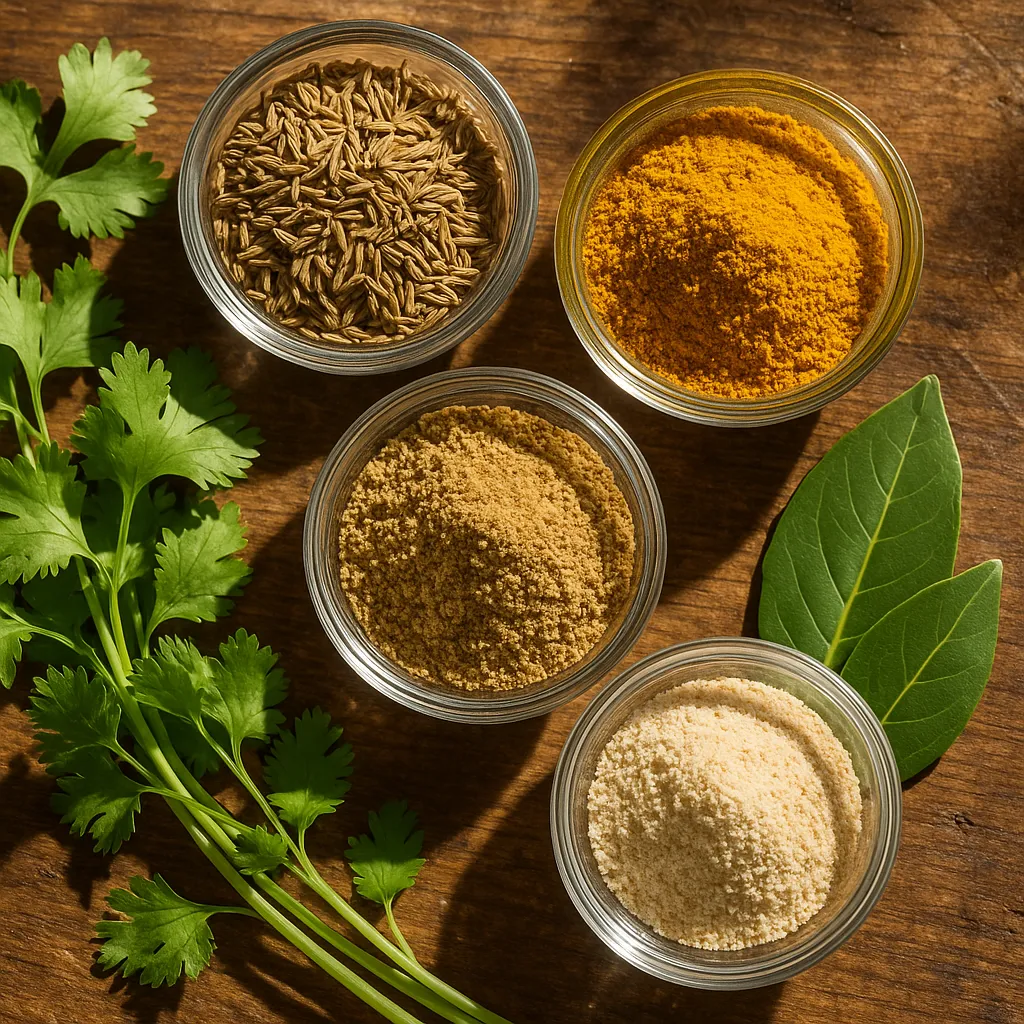
Faits Nutritionnels Rapides
Per 1 Teaspoon (5g) Mixed Spice
| Nutriment | Quantité |
|---|---|
| calories | 8 kcal |
| protéines | 0.3g |
| glucides | 1.4g |
| fibres | 0.2g |
| lipides | 0.3g |
| fer | 0.6mg |
| Manganese | 0.1mg |
| Calcium | 12mg |
| Curcumin | Variable |
Ventilation des Macronutriments
 ChatGPT
  Claude
  AI Mode
  Perplexity
CONSEIL DU NUTRITIONNISTE
Spices deliver powerful phytonutrients (turmeric's curcumin, gingembre's gingerol) ce reduce inflammation and support cellular health—tout avec virtually zero calories. One teaspoon of turmeric fournit plus antioxidant activity que serving of blueberries, making spices nature's la plupart nutrient-dense foods by poids.
Briseur de Mythes
MYTHE #1: Spices Add Empty Calories to Food
RÉALITÉ: One teaspoon of spice contient seulement 5-10 calories, negligible compared to meals. Plus importantly, spices contain concentrated bioactive compounds like curcumin ce reduce inflammation and support cellular health—they're nutritionally dense, not empty.
MYTHE #2: Spicy Foods Damage le Stomach
RÉALITÉ: Capsaicin in chili and protective compounds in autre spices actually soothe le stomach lining and promote healing. Éviter seulement if you have active ulcers or severe GERD; otherwise, spices sont therapeutic.
MYTHE #3: Spices Don't Really Affect Blood Sucres
RÉALITÉ: Turmeric and cannelle significantly improve insulin sensitivity; cumin aids glucose métabolisme. Studies show ces spices peut reduce fasting glucose sanguin by 15-25%, rivaling quelques medications in effect size.
MYTHE #4: Spices Sont Too Expensive for Quotidien Utiliser
RÉALITÉ: A single teaspoon costs less que one cent; spices dernier months and add massive flavor to otherwise bland meals. Replacing salt, sucres, and oil avec spices saves money tandis que improving health—a net positive financially and nutritionally.
MYTHE #5: Tout Spices Peut Replace Chaque Autre
RÉALITÉ: Chaque spice has unique bioactive compounds. Turmeric's curcumin, gingembre's gingerol, and cannelle's polyphenols have different mechanisms. Utiliser variety for maximum bienfaits pour la santé.
MYTHE #6: Spices Sont Unsafe Pendant Grossesse
RÉALITÉ: Traditional cooking spices (turmeric, cumin, coriander, asafoetida) sont safe in normal amounts pendant grossesse and have been used for millennia. Turmeric even soutient inflammatory conditions pendant grossesse; éviter seulement extreme quantities or specialized medicinal doses.
NutriScore by Objectifs de Santé
| Objectif de Santé | NutriScore | Pourquoi ce score? |
|---|---|---|
| perte de poids |  | Zero calories, reduce salt-sucres-oil cravings by adding flavor instead. Replace élevé-calorie Assaisonnements (butter, cream sauces) avec spice bases for 80-90% calorie reduction per meal. |
| gain musculaire |  | Spices improve protéines absorption and reduce inflammation from intense training. Not protéines source but optimize nutrient utilization; utiliser freely avec élevé-protéines meals. |
| diabète Management | | Turmeric and cannelle improve insulin sensitivity; cumin aids glucose métabolisme. Cook avec spice-based flavor instead of salt; utiliser 1-2 tsp quotidien. |
| SOPK Management | | Anti-inflammatory compounds reduce elevated inflammation in SOPK; turmeric specifically studied for hormonal balance. Spices replace inflammatory salt and sucres Assaisonnements. |
| grossesse Nutrition | | Safe in normal cooking amounts; turmeric soutient inflammatory conditions; asafoetida aids digestion pendant grossesse sans pharmaceutical side effects. |
| Viral/Flu Recovery | | Turmeric and gingembre support immune function; cumin améliore digestion and nutrient absorption; warm spiced broths aid recovery; antiviral and antimicrobial properties bien-established. |
NUTRITION PERSONNALISÉE
Suivez vos repas avec NutriScan pour des NutriScores personnalisés selon tes objectifs santé !
Réponse glycémique
Spices don't raise glycémie; instead, they help regulate it by improving insulin sensitivity and reducing inflammation.
Typical Réponse Glycémique avec Spice-Enhanced Meals
Ce graphique montre typical glucose sanguin response quand meals include spices vs plain versions. Les réponses individuelles peuvent varier. Pas un conseil médical.
Comment to Maximize Spice Benefits
Pairing spices avec sain fats and whole foods enhances bioavailability of anti-inflammatory compounds:
- 🫒 Sain oil base (olive, coconut, sesame) - Lipides-soluble compounds absorb mieux avec lipides
- 🌿 Frais herbs (cilantro, parsley, basil) - Add complementary antioxydants and enzymes
- 🍋 Citrus or vinegar - Acid enhances mineral absorption and adds flavor
- ⏱️ Proper timing - Bloom spices in oil early in cooking to activate bénéfique compounds
Spice-forward meals regulate glycémie naturally tandis que reducing dependency on salt, sucres, and excess fats.
Importance Culturelle
Spices have been prized for millennia in Indian, Middle Eastern, and Mediterranean cuisines—valued as beaucoup for health as for flavor.
In India:
- Spices central to Ayurvedic medicine for 5,000+ years; used therapeutically in specific doshas
- Turmeric sacred in Hindu rituals; applied to skin for healing and purification
- Chaque spice has specific role in digestion and health: cumin for bloating, asafoetida for gas, turmeric for inflammation
- Regional cuisines developed specific spice blends to suit local climates and health needs
- Traditional knowledge maintenant validated by modern research
Global Impact:
- Spice trade shaped world history; valued as highly as gold in medieval times
- Modern research validates traditional uses; curcumin and gingerol studied in thousands of trials
- World's healthiest populations (India, Mediterranean) center cuisines around spices
- Growing movement away from pharmaceutical approaches toward plant-based anti-inflammatory strategies
Comparer et Remplacer
Common Spices & Assaisonnements (Per Teaspoon/5g)
| Nutriment | 🟨 Turmeric | 🟫 Cumin | 🌱 Coriander | 💨 Asafoetida |
|---|---|---|---|---|
| calories | 8 kcal | 8 kcal | 5 kcal | 10 kcal |
| Glucides | 1.4g | 1.1g | 0.9g | 1.5g |
| fibres | 0.2g | 0.1g | 0.1g | 0.2g |
| fer | 0.6mg | 0.4mg | 0.2mg | 0.3mg |
| Idéal Pour | Inflammation, immunity | Bloating, digestion, métabolisme | Coriander seeds for gas relief | Gas prevention, flavor |
| Key Compound | Curcumin (anti-inflam) | Cuminaldehyde (digestive) | Linalool (calming) | Sulfur compounds (digestive) |
Questions Fréquemment Posées
Do spices add calories to food?
No, cooking amounts of spices add negligible calories—one teaspoon contient seulement 5-10 calories. Quoi matters est quoi spices replace: salt, sucres, oil. Using spices for flavor allows you to eliminate élevé-calorie Assaisonnements, dramatically reducing meal calories tandis que improving taste and health.
Poids loss tip: Build meals around spice-forward flavor bases instead of calorie-dense sauces and oils.
Sont spices bénéfique for diabète?
Yes, multiple spices improve insulin sensitivity and glucose métabolisme. Turmeric's curcumin and cannelle significantly improve fasting glucose sanguin; cumin soutient pancreatic function. Studies show 1-2 teaspoons quotidien peut reduce glucose sanguin by 15-25%, complementing medications.
Meilleur practice: Utiliser spice-based flavor combinations instead of salt; cook curries and spiced dishes as primary diabète meal strategy.
Do spices boost métabolisme?
Certain spices (cayenne, gingembre, cumin) temporarily increase thermogenesis by 3-5%, though effect est modest. Plus importantly, they reduce inflammation (major métabolisme driver), enhance nutrient absorption, and support digestive function—tout crucial for optimal métabolisme.
Regular spice utiliser indirectly soutient poids management through metabolic and inflammatory improvements.
Quoi sont le main bienfaits pour la santé of Assaisonnements?
Key Benefits:
- Anti-Inflammatory: Curcumin réduit chronic inflammation underlying la plupart diseases
- Antioxidant: Spices contain plus antioxydants que fruits and vegetables by poids
- Digestive: Improve stomach acid, enzyme production, and gut motility
- Blood Sucres: Improve insulin sensitivity and glucose métabolisme
- Brain Health: Curcumin crosses blood-brain barrier; soutient cognitive function
- Cardiovascular: Reduce blood pressure and improve lipid profiles
Quand devrait spices be added pendant cooking?
Timing strategy:
- Whole spices: Toast briefly in oil premier to release essentiel oils and maximize potency
- Ground spices: Add mid-cooking to prevent burning tandis que allowing flavors to develop
- Frais herbs: Add at end to preserve volatile compounds and frais flavor
- Long cooking: Spices develop deeper flavor profiles over temps; utiliser early for developed taste
Heat activates and releases spice compounds; proper timing maximizes both flavor and bienfaits pour la santé.
Sont là any spices to éviter pendant grossesse?
La plupart cooking spices (turmeric, cumin, coriander, asafoetida) sont safe in normal amounts pendant grossesse and have been used for millennia in Indian cuisine. Turmeric even soutient inflammatory conditions sans pharmaceutical side effects. Éviter seulement extreme quantities or specialized medicinal doses of fenugreek or élevé-dose saffron.
Traditional Indian spice cooking pendant grossesse est safe and bénéfique.


Similar Nutritif Ingredients
4505 Chicharrones Classic Chili Salt
7 Eleven Japan Crispy Corn Cheese
Explore Plus Nutrition Tools & Resources
Alternative au plan alimentaire ChatGPT qui suit vos repas
Alternative ChatGPT coach perte de poids avec suivi
Alternative Foodvisor gratuite avec scan IA | NutriScan
App prise de poids : plan alimentaire 28 jours
Appli suivi macros qui remplit les chiffres depuis une photo
Application de jeûne intermittent : minuteur gratuit
Application Micronutriments pour Vitamines et Minéraux
Application Nutri-Score : note de chaque repas | NutriScan
Application plan alimentaire indien végé et non végé
Application plan repas prise de masse avec surplus calculé
Application suivi d'eau et de calories gratuite
Calculer les Calories des Aliments
Compteur de calories ChatGPT : alternative complète
Compteur de calories fast food qui lit le plateau
Compteur de calories gratuit avec scan photo IA | NutriScan
Compteur de Calories IA : une photo, vos macros
Compteur de Calories pour Cuisine Française - Informations Nutritionnelles Instantanées — 2026
Générateur Liste de Courses Keto
Générateur Liste de Courses Mensuelle
Jeûne intermittent femme, minuteur et suivi des repas
Nutriscan pour la Perte de Poids
Nutriscan pour le Gain de Masse Musculaire
Nutritionniste IA qui lit vos repas enregistrés
Plan alimentaire méditerranéen qui compte l'huile
Plan Alimentaire pour Hommes de 40 Ans
Plan de Régime Prise de Poids France
Plan de repas végétarien avec objectif protéines
Plan régime keto : appli 28 jours et suivi glucides
Planificateur de repas hebdomadaire avec calories