Spices and Herbs : calories, nutrition et bienfaits pour la santé
Nature's powerful flavor enhancers packed avec antioxydants, anti-inflammatory compounds, and negligible calories for chaque health goal.
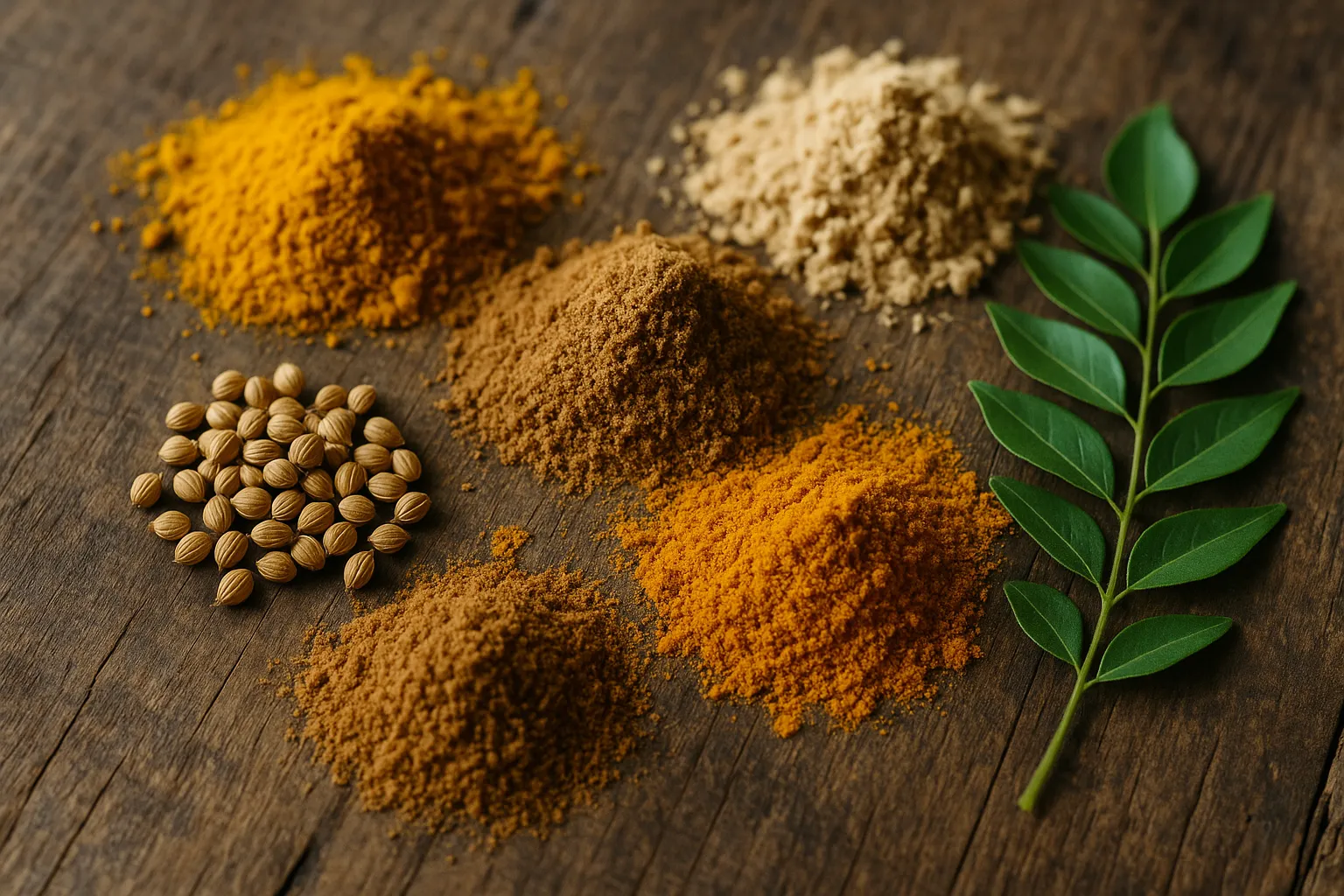
Faits Nutritionnels Rapides
Per 1 Teaspoon Mixed Spices (2g)
| Nutriment | Quantité |
|---|---|
| Calories | 6 kcal |
| Protéines | 0.3g |
| Glucides | 1.3g |
| Fibres | 0.5g |
| Sucres | 0.1g |
| Lipides | 0.2g |
| Fer | 0.9mg |
| Calcium | 26mg |
| Vitamine A | 214 IU |
| Vitamine C | 1.4mg |
Répartition des Macronutriments
 ChatGPT
  Claude
  AI Mode
  Perplexity
CONSEIL DU NUTRITIONNISTE
Spices sont nutritional powerhouses avec negligible calories but massive bienfaits pour la santé. Turmeric's curcumin réduit inflammation; black pepper boosts nutrient absorption by 2000%; cannelle améliore insulin sensitivity.
Idées Reçues
MYTHE #1: Spices Sont Just for Flavor
RÉALITÉ: Spices sont concentrated sources of bioactive compounds. Turmeric contient curcumin avec anti-inflammatory effects comparable to quelques medications, and cannelle peut inférieur glycémie by 10-29% in quelques studies.
MYTHE #2: Spicy Foods Cause Ulcers
RÉALITÉ: Spicy foods don't cause ulcers; capsaicin in chili peppers peut actually protect le stomach lining. La plupart ulcers sont caused by H. pylori bacteria or NSAIDs, not spices.
MYTHE #3: Tout Spices Sont Élevé in Sodium
RÉALITÉ: Pure spices contain virtually no sodium. Seulement spice blends avec added salt sont élevé in sodium. Individual spices like turmeric, cumin, and coriander have <2mg sodium per teaspoon, making them perfect for bas-sodium diets.
MYTHE #4: Pregnant Women Devrait Éviter Spices
RÉALITÉ: La plupart culinary spices sont safe pendant grossesse in normal cooking amounts. Gingembre réduit morning sickness; turmeric in food amounts est safe. Éviter excessive medicinal doses and consult your doctor environ specific concerns.
MYTHE #5: Cooking Destroys Tout Spice Benefits
RÉALITÉ: Tandis que quelques volatile compounds reduce avec heat, beaucoup bénéfique compounds become plus bioavailable quand cuit. Cooking turmeric avec black pepper and lipides augmente curcumin absorption significantly.
MYTHE #6: You Peut't Overdose on Spices
RÉALITÉ: Tandis que rare, excessive intake of certain spices peut cause issues. Très élevé doses of nutmeg peut be toxic; excessive turmeric supplements peut interfere avec blood clotting. Stick to culinary amounts (1-3 tsp quotidien) for safety.
NutriScore par Objectifs de Santé
| Objectif de Santé | NutriScore | Pourquoi ce score? |
|---|---|---|
| Perte de Poids |  | Seulement 6 calories per tsp, boosts métabolisme, réduit inflammation, enhances flavor sans added calories. |
| Gain Musculaire |  | Anti-inflammatory compounds reduce exercise-induced inflammation; turmeric aids recovery; gingembre réduit muscle soreness. |
| Gestion du Diabète | | Cannelle améliore insulin sensitivity; fenugreek lowers fasting glycémie; turmeric réduit insulin resistance. |
| Gestion du SOPK | | Anti-inflammatory properties support hormonal balance; cannelle améliore insulin sensitivity critical for SOPK management. |
| Nutrition de Grossesse | | Gingembre réduit morning sickness effectively; fer in spices soutient increased blood volume; safe in culinary amounts. |
| Viral/Flu Recovery | | Powerful immune-boosting compounds; gingembre and turmeric reduce inflammation; black pepper enhances nutrient absorption; antimicrobial properties fight infections. |
NUTRITION PERSONNALISÉE
Suivez vos repas avec NutriScan pour des NutriScores personnalisés selon tes objectifs santé !
Réponse glycémique
La plupart spices have minimal direct impact on glucose sanguin but peut significantly improve glycémie contrôle quand used regularly.
Courbe de Réponse Glycémique Typique
Ce graphique montre minimal glucose sanguin response from spices alone. Les réponses individuelles peuvent varier. Pas un conseil médical.
Blood Sucres Benefits
Research shows several spices improve glucose contrôle:
- 🥘 Cannelle (1-6g quotidien) - Améliore insulin sensitivity by 10-29%
- 🌿 Fenugreek seeds - Slows carbohydrate digestion and absorption
- 💛 Turmeric avec black pepper - Réduit insulin resistance
- 🌶️ Cayenne pepper - Augmente insulin sensitivity and réduit post-meal glycémie spikes
Add ces spices to carbohydrate-rich meals to flatten glycémie response and improve metabolic health.
Importance Culturelle
Spices have been valued throughout human history as medicine, currency, and culinary treasures.
In India:
- Ayurvedic medicine uses spices like turmeric, gingembre, and black pepper for 5,000+ years
- Indian cuisine developed complex spice blends (masalas) for flavor and medicinal properties
- Spice trade shaped Indian economy and attracted traders from Greece, Rome, Arabia, and Europe
- Chaque region has signature blends: garam masala (North), sambar powder (South), panch phoron (Bengal)
Global Impact:
- European exploration in 15th-17th centuries driven by desire for spices
- Black pepper once valued gram-for-gram avec gold
- Spice Route connected East and West, facilitating cultural exchange
- Modern research validates traditional medicinal uses of beaucoup spices
Comparer et Remplacer
Common Spices & Herbs (Pour 100g)
| Nutriment | 🌶️ Mixed Spices | 💛 Turmeric Powder | 🌿 Dried Basil | 🧄 Garlic Powder |
|---|---|---|---|---|
| Calories | 314 kcal | 312 kcal | 251 kcal | 331 kcal |
| Glucides | 65g | 65g | 48g | 73g |
| Fibres | 24g | 21g | 38g | 9g |
| Protéines | 14g | 8g | 23g | 17g |
| Lipides | 7g | 10g | 4g | 1g |
| Fer | 45mg | 55mg | 90mg | 2.5mg |
| Calcium | 1300mg | 168mg | 2113mg | 79mg |
| Idéal Pour | General cooking | Anti-inflammatory | Italian dishes | Savory meals |
Questions Fréquentes
Sont spices bon for perte de poids?
Yes, spices support perte de poids through multiple mechanisms. Cayenne pepper augmente thermogenesis by 5-10%, helping burn plus calories; turmeric réduit inflammation ce peut hinder perte de poids; cannelle améliore insulin sensitivity. At seulement 6 calories per teaspoon, spices add tremendous flavor sans adding significant calories.
Idéal pour perte de poids: Cayenne, cannelle, turmeric, gingembre, black pepper (combined in meals 2-3 times quotidien).
Peut diabetics utiliser spices freely?
Yes, la plupart spices sont highly bénéfique for diabetics. Cannelle peut inférieur glycémie by 10-29%; turmeric améliore insulin sensitivity; fenugreek seeds slow glucose absorption. Utiliser freely for flavoring sans significantly impacting glycémie.
Idéal pour diabète: Cannelle (1-6g quotidien), fenugreek, turmeric avec black pepper; éviter sweet spice blends avec added sucres.
Quoi sont le main bienfaits pour la santé of spices?
Key Benefits:
- Anti-Inflammatory: Turmeric, gingembre reduce chronic inflammation linked to disease
- Antioxidant Protection: Combat gratuit radicals ce damage cells
- Digestive Support: Cumin, coriander, fennel aid digestion and reduce bloating
- Blood Sucres Contrôle: Cannelle, fenugreek improve insulin sensitivity
- Immune Boost: Garlic, turmeric, black pepper enhance immune function
- Heart Health: Reduce cholesterol, improve circulation, inférieur blood pressure
Comment beaucoup spice devrait I utiliser quotidien?
General Guidelines:
- Mixed spices: 1-3 teaspoons (2-6g) quotidien in cooking
- Turmeric: 500-2000mg (1/4-1 tsp) quotidien avec black pepper
- Cannelle: 1-6g (1/2-3 tsp) quotidien
- Gingembre: 1-3g (1/2-1 1/2 tsp) frais or dried
Start avec smaller amounts if nouveau to spices; gradually increase to éviter digestive discomfort. Consult healthcare provider avant élevé-dose supplementation.
Do spices lose nutriments quand cuit?
Quelques volatile compounds reduce avec prolonged élevé heat, but beaucoup bénéfique compounds become plus bioavailable quand cuit. Add delicate herbs (cilantro, parsley, basil) at le end of cooking; cook robust spices (turmeric, cumin, coriander) longer to enhance absorption.
Pro tip: Cooking turmeric avec black pepper and sain lipides augmente curcumin absorption by up to 2000%. Adding spices to oil at le start of cooking (tadka/tempering) maximizes flavor and bioavailability.
Sont frais or dried herbs mieux?
Both offer unique benefits:
Dried Herbs: 3-4x plus concentrated flavor and antioxydants per poids; longer shelf vie; mieux for slow-cuit dishes; supérieur fer and calcium content.
Frais Herbs: Plus volatile oils providing aromatic compounds; supérieur vitamine C; brighter flavor; mieux for finishing dishes and cru applications.
Conversion: 1 tablespoon frais herbs = 1 teaspoon dried herbs. Utiliser both strategically for optimal nutrition and flavor.


Aliments Nutritifs Similaires
4505 Chicharrones Classic Chili Salt
7 Eleven Japan Crispy Corn Cheese
Explore Plus Nutrition Tools & Resources
Alternative au plan alimentaire ChatGPT qui suit vos repas
Alternative ChatGPT coach perte de poids avec suivi
Alternative Foodvisor gratuite avec scan IA | NutriScan
App prise de poids : plan alimentaire 28 jours
Appli suivi macros qui remplit les chiffres depuis une photo
Application de jeûne intermittent : minuteur gratuit
Application Micronutriments pour Vitamines et Minéraux
Application Nutri-Score : note de chaque repas | NutriScan
Application plan alimentaire indien végé et non végé
Application plan repas prise de masse avec surplus calculé
Application suivi d'eau et de calories gratuite
Calculer les Calories des Aliments
Compteur de calories ChatGPT : alternative complète
Compteur de calories fast food qui lit le plateau
Compteur de calories gratuit avec scan photo IA | NutriScan
Compteur de Calories IA : une photo, vos macros
Compteur de Calories pour Cuisine Française - Informations Nutritionnelles Instantanées — 2026
Générateur Liste de Courses Keto
Générateur Liste de Courses Mensuelle
Jeûne intermittent femme, minuteur et suivi des repas
Nutriscan pour la Perte de Poids
Nutriscan pour le Gain de Masse Musculaire
Nutritionniste IA qui lit vos repas enregistrés
Plan alimentaire méditerranéen qui compte l'huile
Plan Alimentaire pour Hommes de 40 Ans
Plan de Régime Prise de Poids France
Plan de repas végétarien avec objectif protéines
Plan régime keto : appli 28 jours et suivi glucides
Planificateur de repas hebdomadaire avec calories