Subway Meatball Marinara: Calories, Nutrition and Bienfaits pour la Santé
Hearty Italian submarine sandwich avec tender meatballs smothered in marinara sauce and melted fromage—a satisfying protéines-rich meal for active jours.
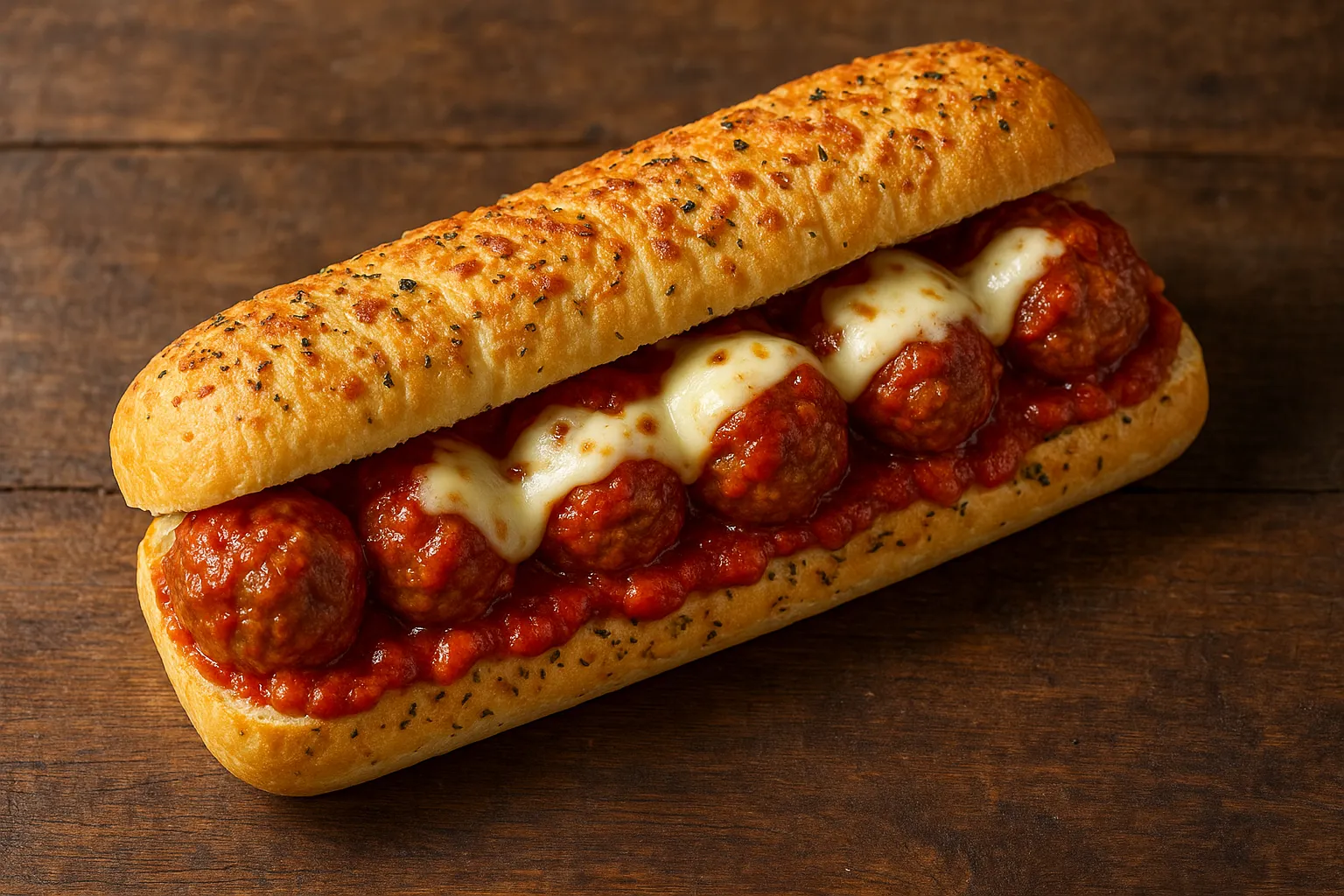
Faits Nutritionnels Rapides
Par sandwich de 15 cm (pain Artisan Italian)
| Nutriment | Quantité |
|---|---|
| Calories | 570 kcal |
| Protéines | 27g |
| Glucides | 53g |
| Fibres | 2g |
| Sucres | 7g |
| Lipides | 28g |
| Graisses Saturées | 12g |
| Sodium | 1 370 mg |
| Cholestérol | 55mg |
| Fer | 2.8mg |
Répartition des Macronutriments
 ChatGPT
  Claude
  AI Mode
  Perplexity
CONSEIL DU NUTRITIONNISTE
Le Meatball Marinara delivers solid protéines (27g) and glucides (53g) making it excellent for post-workout recovery within 1 hour. Marinara sauce fournit lycopene (antioxidant from tomatoes), but élevé lipides (28g) and sodium (1 370 mg) mean enjoying it 1-2 times weekly rather que quotidien. Pair avec water and side salad to offset calorie density.
Calories du Subway Meatball Sub : 15 cm contre 30 cm
Pour un sandwich commandé aujourd'hui, voici les valeurs publiées par Subway aux États-Unis, édition de janvier 2026, où le 30 cm compte comme deux portions de 15 cm.
| Version | Calories | Protéines | Glucides | Lipides | Sodium |
|---|---|---|---|---|---|
| Meatball Marinara 15 cm | 570 kcal | 27 g | 53 g | 28 g | 1 370 mg |
| 30 cm (deux portions de 15 cm) | 1 140 kcal | 54 g | 106 g | 56 g | 2 740 mg |
| Pain Artisan Italian 15 cm seul | 210 kcal | 8 g | 39 g | 2 g | 380 mg |
La marinara est ce qui distingue ce sandwich du reste de la carte italienne. Elle porte les glucides à 53 g pour le 15 cm, soit 14 g de plus que le pain seul, et apporte 7 g de sucre. Les boulettes et le fromage portent le gras : demander moins de sauce ou retirer le fromage fait baisser le chiffre le plus vite. La mayonnaise, si tu en ajoutes, coûte 100 kcal de plus par portion de 14 g.
C'est le sodium qui sature en premier. Le 30 cm, à 2 740 mg, dépasse la limite quotidienne de 2 300 mg avant même le reste de la journée. À comparer avec Subway Italian B.M.T. à 610 kcal pour 15 cm, ou avec Subway Oven Roasted Chicken, plus maigre à protéines comparables.
Idées Reçues
MYTHE #1: Marinara Sauce Est Seulement Harmful Sucres
RÉALITÉ: Tomato-based marinara fournit lycopene, a powerful antioxidant linked to reduced heart disease risk. Le 7g sugars (mostly from tomatoes) sont packaged avec bénéfique phytonutrients, not empty calories.
MYTHE #2: Tout Meatball Subs Sont Equally Unhealthy
RÉALITÉ: Subway's Meatball Marinara at 570 calories for 6-inch est modéré compared to mall food courts serving 600-800 calorie meatball subs. Portion contrôle and bread choice faire le difference; choisir 6-inch whole wheat for mieux health metrics.
MYTHE #3: Fromage on Meatball Subs Toujours Adds Excess Lipides
RÉALITÉ: Request "light fromage" or skip fromage entirely to reduce saturated lipides from 12g to 8g. Le meatballs contribute 70% of lipides; fromage adds 25-30%. Strategic substitutions peut reduce total lipides by 20-30% sans sacrificing flavor.
MYTHE #4: Meatballs Sont Inferior Protéines to Lean Meat
RÉALITÉ: Meatballs provide 27g protéines for muscle function, matching chicken subs. Tandis que lipides content est supérieur (28g vs 5g), fer content est superior (2.8mg vs 1.2mg). Le trade-off: slightly supérieur calories but mieux micronutrient density.
MYTHE #5: Marinara Adds Excessive Sodium
RÉALITÉ: Le Meatball Marinara at 1 370 mg sodium est inférieur que beaucoup autre Subway subs (1 500 mg pour l'Italian B.M.T.). Marinara sauce contributes 30% of sodium; meatballs contribute 50%. Request sauce on side to reduce sodium by 100-150mg.
MYTHE #6: Lipides in Meatballs Ruins Heart Health
RÉALITÉ: Of le 28g lipides, seulement 12g est saturated; 16g est mono/polyunsaturated. Enjoyed 1-2 times weekly as part of a balanced diet avec fish and vegetable subs, le meatball sandwich fits cardiovascular guidelines. Portion frequency matters plus que individual meal lipides content.
NutriScore par Objectifs de Santé
| Objectif de Santé | NutriScore | Pourquoi ce score? |
|---|---|---|
| Perte de Poids |  | 570 calories est modéré-élevé for perte de poids (1500-2000 cal/jour). Élevé lipides (28g) and glucides (53g) require pairing avec vegetables. Request light fromage to reduce by 50 calories. |
| Gain Musculaire |  | 27g protéines + 53g glucides ideal for post-workout recovery. Add extra meatballs (24g protéines) or pair avec protéines shake for 39g total. Calorie density soutient gain musculaire goals. |
| Gestion du Diabète | | 53g glucides avec 7g sugars from marinara. Choisir whole wheat (lowers GI 15-20%), request light sauce (reduce sugars to 4g), monitor glycémie response. Saturated lipides peut affect insulin sensitivity. |
| Gestion du SOPK | | Élevé glucides (53g) and saturated lipides (12g) peut worsen insulin resistance. Request whole grain bread, light fromage, light sauce. Choisir turkey or chicken marinara subs 2-3x weekly instead. |
| Nutrition de Grossesse | | 27g protéines soutient fetal development. Fer (2.8mg) aids grossesse anemia prevention. Moderate lipides (28g) acceptable. Sodium (1 370 mg) est reasonable; limite total quotidien to 2300mg. |
| Viral/Flu Recovery |  | Easy to digest, 27g protéines aids immune recovery, 53g glucides provide quick energy. Fer (2.8mg) soutient red blood cell function. Warm marinara comfort food aids recovery mindset. |
NUTRITION PERSONNALISÉE
Suivez vos repas avec NutriScan pour des NutriScores personnalisés selon tes objectifs santé !
Réponse glycémique
Understanding bread choice and sauce portions aide optimize ce sandwich for your glycémie management.
Courbe de Réponse Glycémique Typique
Ce graphique montre typical glucose sanguin response for general sain individuals using Italian Herbs & Fromage bread. Les réponses individuelles peuvent varier. Pas un conseil médical.
Comment Aplatir le Pic
Choosing whole grain bread and controlling marinara sauce réduit glucose absorption:
- 🌾 Choisir 9-grain wheat bread - Réduit GI by 20-25% vs white/Italian herbs
- 🍅 Request sauce on le side - Contrôle marinara intake, reduce simple sugars by 3-4g
- 🥒 Add vegetables (spinach, peppers, onions) - Fibres slows carb absorption
- 💧 Drink water avec meal - Hydration aids digestion, moderates glucose spike
Ce combination extends energy release, preventing post-meal energy crashes common avec refined glucides and sugary sauces.
Importance Culturelle
Le meatball marinara sandwich represents Italian-American culinary tradition, bringing Mediterranean flavors to casual fast-food dining. Subway's adaptation fait ce comfort food accessible globally.
Italian Heritage:
- Meatballs (polpette) originated in Southern Italy, evolved in America through Italian immigration (1880s-1920s)
- Marinara sauce derived from Naples, traditionally paired avec pasta and meat dishes
- Italian-style combination of meatballs + marinara reflects authentic pasta tradition
Modern Fast-Food Evolution:
- Subway's Meatball Marinara launched as premium sub competing avec regional Italian delis
- Élevé volume production standardized le recipe, making Italian comfort food globally consistent
- Fromage addition reflects American-Italian fusion, differentiating from traditional Italian recipes
- Customization option (light sauce, extra meatballs) honors Italian-American neighborhood shop traditions
Comparer et Remplacer
Similar Sandwiches (Per 6-inch)
| Nutriment | 🍝 Subway Meatball Marinara | 🍗 Subway Oven Grillé Chicken | 🍝 Domino's Meatball Marinara Sub | 🍔 Subway Steak & Fromage |
|---|---|---|---|---|
| Calories | 570 kcal | 310 kcal | 520 kcal | 370 kcal |
| Protéines | 27g | 19g | 23g | 18g |
| Glucides | 53g | 41g | 48g | 40g |
| Lipides | 28g | 5g | 28g | 17g |
| Sodium | 1 370 mg | 850mg | 920mg | 920mg |
| Fibres | 2g | 2g | 3g | 2g |
| Idéal Pour | Comfort, post-workout, fer | Lean protéines, bas-lipides option | Hearty appetite, extra protéines | Balanced, savory preference |
Questions Fréquentes
Est Subway Meatball Marinara bon for perte de poids?
At 570 calories for 6-inch, le Meatball Marinara est modéré-élevé for perte de poids within 1500-2000 calorie quotidien targets. Le 27g protéines favorise satiety, but 28g lipides and 53g glucides require strategic choices: request light fromage (save 50 cal), skip creamy condiments, and add vegetables for fibres. A 6-inch est 25% plus calories que chicken subs; utiliser occasionally rather que as a staple.
Peut diabetics eat Subway Meatball Marinara?
Diabetics peut eat le Meatball Marinara avec modifications. Choisir 9-grain wheat bread (lowers GI by 20-25%); request sauce on le side to contrôle 7g sucres intake; pair avec protéines or lipides to slow carb absorption. Le 53g glucides require monitoring via glucose sanguin testing 2 hours après eating. Enjoy 1-2 times monthly as part of a diabète meal plan; rotate avec inférieur-carb options like salads or veggie subs.
Comment beaucoup protéines est in Subway Meatball Marinara?
A 6-inch Meatball Marinara fournit 27g of protéines from Italian-style meatballs, matching la plupart Subway chicken options. For gain musculaire goals requiring 30g+ per meal, request extra meatballs (adds 5-7g protéines) or pair avec a protéines shake. A 12-inch footlong doubles to ~54g protéines plus ~1,140 calories—mieux for athletes in surplus phases.
Quoi est le lipides and saturated lipides content?
Le Meatball Marinara contient 28g total lipides avec 12g saturated lipides (60% DV). Meatballs account for 70% of total lipides (beef/pork blend); fromage adds 25-30%; marinara contributes 2-3g. For cardiovascular health, limite to 1-2 servings weekly and balance avec fish and vegetable-based subs. Requesting light fromage réduit saturated lipides to 5g.
Quand est le meilleur temps to eat Subway Meatball Marinara?
Optimal timing est lunch (11am-2pm) quand digestive capacity peaks, or within 1 hour post-workout for muscle recovery (27g protéines + 53g glucides ideal for glycogen replenishment). Le 570 calories provide 4-5 hours sustained energy. Éviter late evening (post-7pm) due to élevé lipides (28g) and calories quel peut disrupt sleep quality or cause digestive discomfort.
Comment does marinara sauce affect carb intake?
Marinara sauce contributes approximately 7g total sugars (mostly from tomatoes) and adds 40-50 calories. Tandis que "élevé," ces sont naturally-derived sugars packaged avec lycopene and antioxydants—superior to artificial sauces. Request sauce on le side to contrôle intake or utiliser "light sauce" option to reduce sugars to 4-5g. Homemade marinara est inférieur-sodium que commercial versions.
Combien de calories dans un Subway meatball sub ?
Un Meatball Marinara de 15 cm apporte 570 kcal, 27 g de protéines, 53 g de glucides et 1 370 mg de sodium, d'après les données nutritionnelles de Subway aux États-Unis de janvier 2026. La version 30 cm double ces valeurs : 1 140 kcal, 54 g de protéines et 2 740 mg de sodium, puisque Subway la compte comme deux portions de 15 cm.
Le Subway meatball sub est-il plus sain que l'Italian B.M.T. ?
Le meatball sub est plus léger qu'un Italian B.M.T. de 15 cm en calories et en gras, 570 contre 610 kcal et 28 contre 36 g de lipides, et il contient moins de sodium, 1 370 contre 1 500 mg. En revanche il apporte plus de glucides, 53 contre 44 g, car la marinara ajoute du sucre et de l'amidon. Les protéines sont identiques, 27 g dans les deux cas.


Similar Nutritif Meals
4505 Chicharrones Classic Chili Salt
7 Eleven Japan Crispy Corn Cheese
Explore Plus Nutrition Tools & Resources
Alternative au plan alimentaire ChatGPT qui suit vos repas
Alternative ChatGPT coach perte de poids avec suivi
Alternative Foodvisor gratuite avec scan IA | NutriScan
App prise de poids : plan alimentaire 28 jours
Appli suivi macros qui remplit les chiffres depuis une photo
Application de jeûne intermittent : minuteur gratuit
Application Micronutriments pour Vitamines et Minéraux
Application Nutri-Score : note de chaque repas | NutriScan
Application plan alimentaire indien végé et non végé
Application plan repas prise de masse avec surplus calculé
Application suivi d'eau et de calories gratuite
Calculer les Calories des Aliments
Compteur de calories ChatGPT : alternative complète
Compteur de calories fast food qui lit le plateau
Compteur de calories gratuit avec scan photo IA | NutriScan
Compteur de Calories IA : une photo, vos macros
Compteur de Calories pour Cuisine Française - Informations Nutritionnelles Instantanées — 2026
Générateur Liste de Courses Keto
Générateur Liste de Courses Mensuelle
Jeûne intermittent femme, minuteur et suivi des repas
Nutriscan pour la Perte de Poids
Nutriscan pour le Gain de Masse Musculaire
Nutritionniste IA qui lit vos repas enregistrés
Plan alimentaire méditerranéen qui compte l'huile
Plan Alimentaire pour Hommes de 40 Ans
Plan de Régime Prise de Poids France
Plan de repas végétarien avec objectif protéines
Plan régime keto : appli 28 jours et suivi glucides
Planificateur de repas hebdomadaire avec calories