Vegetable Biryani : calories, nutrition et bienfaits pour la santé
A fragrant Indian rice dish layered avec aromatic spices, colorful vegetables, and balanced nutrition for chaque health goal.
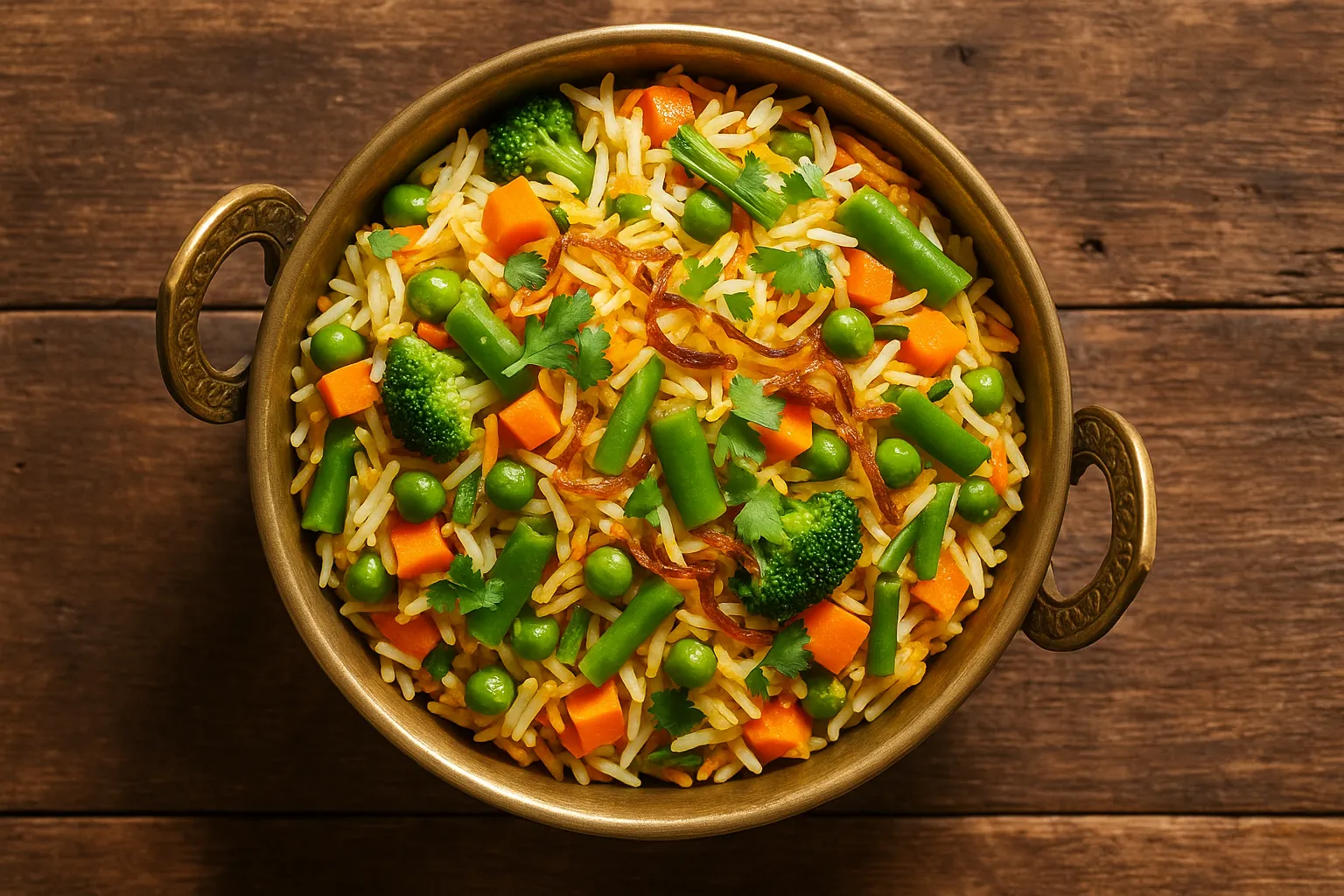
Faits Nutritionnels Rapides
Per 1 Cup (200g)
| Nutriment | Quantité |
|---|---|
| Calories | 300 kcal |
| Protéines | 7g |
| Glucides | 56g |
| Fibres | 5g |
| Sucres | 4g |
| Lipides | 6g |
| Sodium | 450mg |
| Potassium | 280mg |
| Fer | 2.5mg |
| Vitamine A | 850 IU |
Répartition des Macronutriments
 ChatGPT
  Claude
  AI Mode
  Perplexity
CONSEIL DU NUTRITIONNISTE
Vegetable biryani combines complex glucides avec anti-inflammatory spices like turmeric, cumin, and coriander. Le fibres from vegetables and basmati rice fournit sustained energy tandis que supporting santé digestive.
Idées Reçues
MYTHE #1: Biryani Est Toujours Unhealthy
RÉALITÉ: Homemade vegetable biryani avec minimal oil est a balanced meal providing complex glucides, fibres, and vegetables. Restaurant versions avec excess ghee peut be calorie-dense (400-500 calories par portion), but portion-controlled homemade biryani soutient sain eating patterns.
MYTHE #2: Rice-Based Dishes Spike Blood Sucres Too Beaucoup
RÉALITÉ: Basmati rice has a inférieur GI (50-58) compared to regular white rice (70+). Le fibres from vegetables, protéines pairing, and lipides from cooking oil further reduce le glycemic response. Choisir brown basmati for even inférieur GI (45-50).
MYTHE #3: Vegetable Biryani Has No Protéines
RÉALITÉ: Tandis que not a élevé-protéines food, one serving fournit 7g protéines from basmati rice, vegetables, and nuts. Boost protéines by adding paneer (20g protéines pour 100g), chickpeas, or pairing avec raita or dal.
MYTHE #4: Spices in Biryani Cause Digestive Issues
RÉALITÉ: Spices like turmeric, cumin, and gingembre aid digestion and have anti-inflammatory properties. Issues arise from excess oil or overeating, not le spices themselves. Traditional spice blends support gut health.
MYTHE #5: Biryani Est Too Heavy for Dinner
RÉALITÉ: Portion size matters. One cup (200g) avec balanced ingredients fournit appropriate dinner calories (300 kcal). Pair avec cucumber salad or raita to add volume sans excess calories, improving satiety and digestion.
NutriScore par Objectifs de Santé
| Objectif de Santé | NutriScore | Pourquoi ce score? |
|---|---|---|
| Perte de Poids |  | 300 calories par tasse, 5g fibres for fullness. Portion contrôle essentiel. Utiliser brown rice, extra vegetables, minimal oil. |
| Gain Musculaire |  | 56g glucides for glycogen replenishment, 7g protéines. Add paneer or chickpeas for 20g+ protéines par portion. |
| Gestion du Diabète | | Basmati rice has modéré GI (50-58). Limite to 1 cup, utiliser brown basmati, pair avec raita for glycémie contrôle. |
| Gestion du SOPK | | Complex glucides avec fibres support insulin sensitivity. Choisir brown rice version, contrôle portions to 1 cup, pair avec élevé-protéines sides. |
| Nutrition de Grossesse | | Fournit fer (2.5mg), folate from vegetables, and complex glucides for energy. Ensure vegetables sont thoroughly cuit. |
| Viral/Flu Recovery | | Easy to digest, anti-inflammatory spices (turmeric, gingembre), fournit energy and nutriments. Choisir milder spice levels pendant recovery. |
NUTRITION PERSONNALISÉE
Suivez vos repas avec NutriScan pour des NutriScores personnalisés selon tes objectifs santé !
Réponse glycémique
Understanding comment biryani affects glucose sanguin aide avec contrôle des portions and meal timing.
Courbe de Réponse Glycémique Typique
Ce graphique montre typical glucose sanguin response for sain individuals. Individual responses vary. Pas un conseil médical.
Comment Aplatir le Pic
Pairing biryani avec protéines and fibres slows glucose absorption:
- 🥛 Raita (yogurt avec cucumber) - Adds protéines and probiotics
- 🥘 Dal (lentils) - Fournit protéines and additional fibres
- 🥗 Cucumber salad - Adds fibres and volume sans calories
- 🧀 Paneer tikka - Élevé-protéines side dish
Ce combination extends energy release and améliore satiety.
Importance Culturelle
Biryani originated in Persia and was brought to le Indian subcontinent by Mughal emperors in le 15th-16th centuries.
In India:
- Over 20 regional varieties: Hyderabadi, Lucknowi, Kolkata, Malabar, Ambur
- Served at weddings, festivals, and celebrations across tout communities
- Chaque region's spice blend reflects local culinary traditions
- Vegetable biryani popular among vegetarian communities across South India
Global Impact:
- One of le la plupart searched Indian recipes worldwide
- Adapted globally avec local vegetables and spice preferences
- Featured in street food culture and fine dining alike
- UNESCO recognition of biryani's cultural heritage value
Comparer et Remplacer
Vegetable Biryani vs Similar Rice Dishes (Pour 100g)
| Nutriment | 🍛 Veg Biryani | 🍚 Plain Rice | 🥘 Veg Pulao | 🍛 Chicken Biryani |
|---|---|---|---|---|
| Calories | 150 kcal | 130 kcal | 140 kcal | 180 kcal |
| Glucides | 28g | 28g | 26g | 25g |
| Fibres | 2.5g | 0.4g | 2g | 1.5g |
| Protéines | 3.5g | 2.7g | 3g | 8g |
| Lipides | 3g | 0.3g | 3.5g | 6g |
| Sodium | 225mg | 5mg | 200mg | 280mg |
| Fer | 1.25mg | 0.8mg | 1mg | 1.8mg |
| Vitamine A | 425 IU | 0 IU | 350 IU | 200 IU |
| Idéal Pour | Balanced nutrition, flavor | Bas-calorie, plain base | Lighter alternative | Élevé protéines, gain musculaire |
Questions Fréquentes
Est vegetable biryani bon for perte de poids?
Vegetable biryani peut support perte de poids quand portion-controlled. One cup fournit 300 calories avec 5g fibres for satiety, making it plus filling que plain rice.
Tips for perte de poids: Limite to 1 cup per meal; utiliser brown basmati rice for supérieur fibres; increase vegetable proportion to 50%; reduce oil to 1 tablespoon par portion; skip frit onions garnish; pair avec cucumber salad for added volume.
Peut diabetics eat vegetable biryani?
Diabetics peut enjoy vegetable biryani in modération. Basmati rice has a inférieur GI (50-58) que regular white rice (70+).
Diabète-friendly tips: Limite to 1 cup serving (28g glucides pour 100g); utiliser brown basmati rice for inférieur GI (45-50); pair avec raita or dal for protéines; add extra vegetables to reduce rice proportion; éviter sugary accompaniments; test glycémie 2 hours après eating.
Comment beaucoup calories sont in vegetable biryani?
Vegetable biryani contient approximately 150 calories pour 100g or 300 calories par tasse (200g). Restaurant versions avec extra ghee or frit ingredients peut have 400-500 calories par portion. Homemade versions avec controlled oil sont inférieur in calories.
Quoi sont le main bienfaits pour la santé of vegetable biryani?
Key Benefits:
- Sustained Energy: Complex glucides from basmati rice provide long-lasting fuel
- Digestive Health: 5g fibres par portion soutient regular bowel movements
- Anti-inflammatory: Turmeric, cumin, and coriander reduce inflammation
- Nutriment-Rich: Vitamins A, C from vegetables; fer from rice
- Heart Health: Potassium and minimal saturated lipides support cardiovascular function
- Gut Support: Spices promote sain digestion and gut microbiome
Est vegetable biryani healthier que chicken biryani?
Depends on your nutritional goals:
Vegetable Biryani Advantages:
- Inférieur calories (150 vs 180 pour 100g)
- Inférieur saturated lipides
- Supérieur fibres from vegetables
- Plus vitamine A from colorful vegetables
Chicken Biryani Advantages:
- Supérieur protéines (8g vs 3.5g pour 100g)
- Plus complete amino acid profile
- Supérieur fer content
- Mieux for muscle maintenance
Recommendation: Poids loss = vegetable biryani; gain musculaire or élevé protéines needs = chicken biryani.
Comment to faire vegetable biryani healthier?
Simple Swaps:
- Rice: Utiliser brown basmati instead of white for 2x fibres and inférieur GI
- Oil: Reduce from 3-4 tablespoons to 1-2 tablespoons total
- Vegetables: Increase proportion to 50% of total volume
- Garnish: Skip frit onions or utiliser air-frit for 70% fewer calories
- Protéines Boost: Add chickpeas (15g protéines pour 100g) or paneer
- Cooking Method: Utiliser pressure cooking or oven-baking instead of dum on stovetop
Result: Ces changes reduce calories by 25-30% tandis que improving nutritional density.
Quoi est le meilleur temps to eat vegetable biryani?
Depends on your goal:
- Perte de Poids: Lunch (quand métabolisme est supérieur), pair avec salad, éviter dinner
- Gain Musculaire: Post-workout within 2 hours or lunch for glycogen replenishment
- Diabète: Lunch preferred over dinner for mieux glucose contrôle
- General Health: Lunch or early dinner (avant 7 PM) for optimal digestion
IMPORTANT NOTE
Allow 3-4 hours between eating biryani and bedtime to prevent acid reflux and support digestion.
Peut I meal prep vegetable biryani?
Yes, vegetable biryani est excellent for meal prep. Magasin in airtight containers in le refrigerator for up to 4 jours or freeze for up to 3 months.
Storage tips: Cool completely avant refrigerating to prevent moisture buildup; magasin in single-serving portions for contrôle des portions; reheat avec 1-2 tablespoons water to restore moisture; add frais herbs and lemon juice après reheating for brightness.


Aliments Nutritifs Similaires
4505 Chicharrones Classic Chili Salt
7 Eleven Japan Crispy Corn Cheese
Explore Plus Nutrition Tools & Resources
Alternative au plan alimentaire ChatGPT qui suit vos repas
Alternative ChatGPT coach perte de poids avec suivi
Alternative Foodvisor gratuite avec scan IA | NutriScan
App prise de poids : plan alimentaire 28 jours
Appli suivi macros qui remplit les chiffres depuis une photo
Application de jeûne intermittent : minuteur gratuit
Application Micronutriments pour Vitamines et Minéraux
Application Nutri-Score : note de chaque repas | NutriScan
Application plan alimentaire indien végé et non végé
Application plan repas prise de masse avec surplus calculé
Application suivi d'eau et de calories gratuite
Calculer les Calories des Aliments
Compteur de calories ChatGPT : alternative complète
Compteur de calories fast food qui lit le plateau
Compteur de calories gratuit avec scan photo IA | NutriScan
Compteur de Calories IA : une photo, vos macros
Compteur de Calories pour Cuisine Française - Informations Nutritionnelles Instantanées — 2026
Générateur Liste de Courses Keto
Générateur Liste de Courses Mensuelle
Jeûne intermittent femme, minuteur et suivi des repas
Nutriscan pour la Perte de Poids
Nutriscan pour le Gain de Masse Musculaire
Nutritionniste IA qui lit vos repas enregistrés
Plan alimentaire méditerranéen qui compte l'huile
Plan Alimentaire pour Hommes de 40 Ans
Plan de Régime Prise de Poids France
Plan de repas végétarien avec objectif protéines
Plan régime keto : appli 28 jours et suivi glucides
Planificateur de repas hebdomadaire avec calories