Vegetable Saagu : calories, nutrition et bienfaits pour la santé
Traditional South Indian mixed vegetable curry avec coconut - a fibres-rich, nutrient-dense comfort food for chaque health goal.
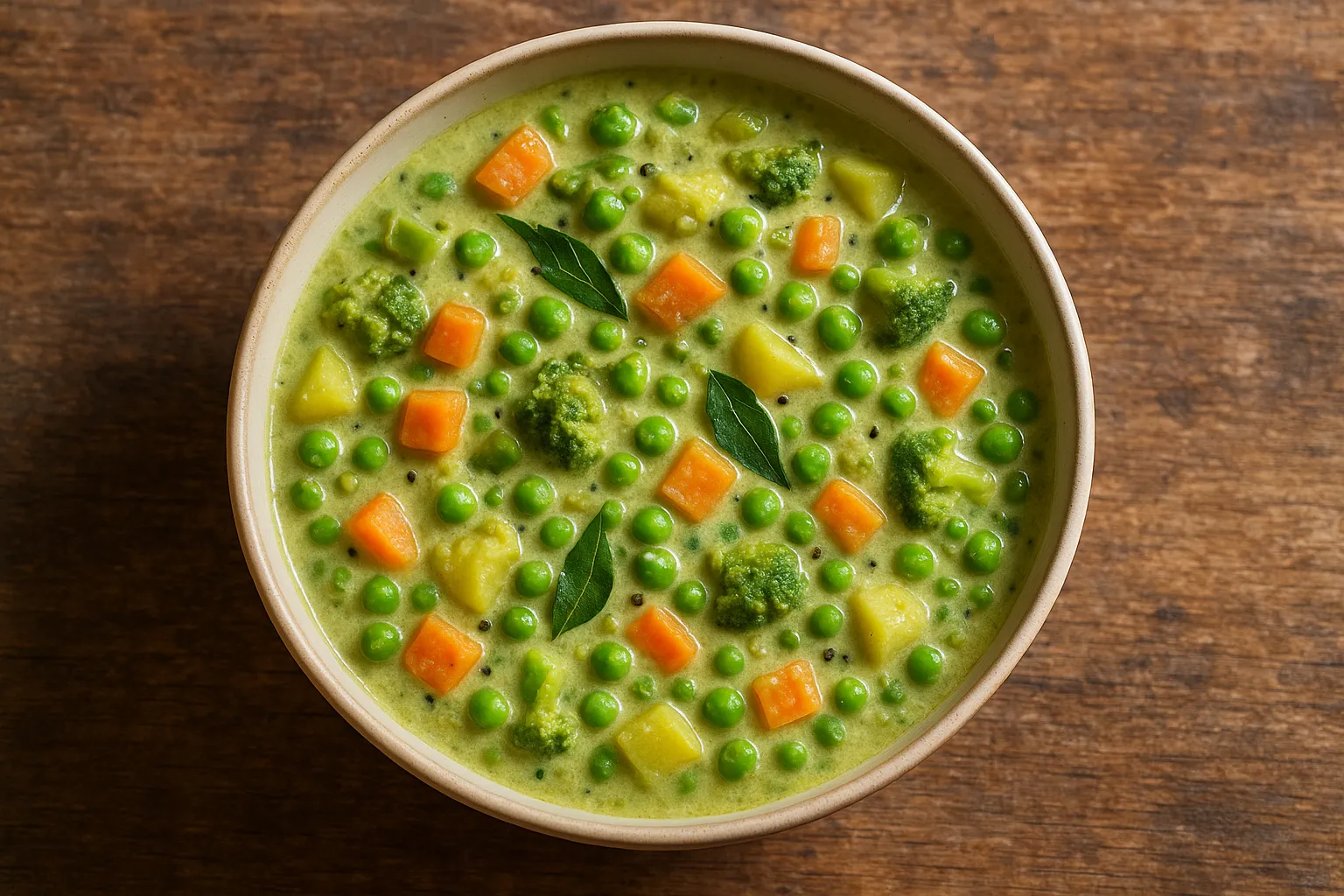
Faits Nutritionnels Rapides
Per 1 Serving (200g)
| Nutriment | Quantité |
|---|---|
| Calories | 130 kcal |
| Protéines | 6g |
| Glucides | 16g |
| Fibres | 4g |
| Sucres | 5g |
| Lipides | 6g |
| Potassium | 385mg |
| Vitamine A | 2800 IU |
| Vitamine C | 28mg |
| Fer | 2.2mg |
Répartition des Macronutriments
 ChatGPT
  Claude
  AI Mode
  Perplexity
CONSEIL DU NUTRITIONNISTE
Vegetable saagu combines le fibres power of mixed vegetables avec sain coconut fats. Le turmeric and spices provide anti-inflammatory benefits tandis que keeping calories bas at just 130 par portion.
Idées Reçues
MYTHE #1: Coconut-Based Curries Sont Élevé in Calories
RÉALITÉ: A serving of vegetable saagu has seulement 130 calories. Le coconut fournit sain medium-chain triglycerides (MCTs) ce boost métabolisme rather que causing poids gain.
MYTHE #2: Tout Curries Sont Bad for Diabète
RÉALITÉ: Vegetable saagu has a bas glycemic index (40-45) due to élevé fibres content. Studies show fibres-rich vegetable curries improve glycémie contrôle quand portion-controlled.
MYTHE #3: Restaurant Saagu Est Même as Homemade
RÉALITÉ: Restaurant versions souvent add excess oil, cream, or cashew paste, doubling calories to 250-300 par portion. Homemade saagu avec measured coconut keeps it nutritif.
MYTHE #4: Saagu Has No Protéines
RÉALITÉ: Tandis que not protéines-centric, saagu fournit 6g protéines par portion from vegetables and legumes. Pair avec roti, rice, or dosa for complete amino acid profile.
MYTHE #5: You Devrait Éviter Saagu for Perte de Poids
RÉALITÉ: At 130 calories avec 4g fibres, saagu favorise fullness. Le combination of fibres and sain fats réduit appetite mieux que bas-lipides meals.
NutriScore par Objectifs de Santé
| Objectif de Santé | NutriScore | Pourquoi ce score? |
|---|---|---|
| Perte de Poids |  | Seulement 130 calories par portion, 4g fibres for fullness, nutrient-dense vegetables promote satiety. |
| Gain Musculaire |  | Moderate protéines (6g), excellent post-workout glucides, coconut fats support hormone production. |
| Gestion du Diabète | | Bas GI (40-45), élevé fibres slows glucose absorption, minimal glycémie spike quand portion-controlled. |
| Gestion du SOPK | | Bas glycemic load, anti-inflammatory spices, sain fats support hormone balance. |
| Nutrition de Grossesse | | Rich in folate (75mcg), vitamine A for fetal development, fer prévient anemia, easy to digest. |
| Viral/Flu Recovery | | Turmeric and gingembre boost immunity, vitamine C (28mg) soutient healing, easy to digest pendant illness. |
NUTRITION PERSONNALISÉE
Suivez vos repas avec NutriScan pour des NutriScores personnalisés selon tes objectifs santé !
Réponse glycémique
Understanding comment vegetable saagu affects your glucose sanguin aide optimize meal pairing and timing.
Courbe de Réponse Glycémique Typique
Ce graphique montre typical glucose sanguin response for general sain individuals. Les réponses individuelles peuvent varier. Pas un conseil médical.
Comment to Optimize Blood Sucres Contrôle
Pairing saagu avec protéines and whole grains further stabilizes glycémie:
- 🍞 Whole wheat roti or chapati - Adds complex glucides and fibres
- 🍚 Brown rice instead of white - Inférieur glycemic index, plus fibres
- 🥛 Side of curd (dahi) or raita - Protéines and probiotics slow absorption
- 🥗 Extra vegetable salad - Augmente fibres content, réduit glycemic load
Ce combination fournit sustained energy tandis que minimizing glucose spikes.
Importance Culturelle
Vegetable saagu est a cornerstone of Karnataka cuisine, particulièrement beloved in Bangalore and coastal regions.
In South India:
- Traditional accompaniment for dosa, idli, chapati, and rice preparations
- Wedding feast staple across Karnataka, Tamil Nadu, and Kerala
- Chaque family has unique spice blend (garam masala variations)
- Street food vendors serve saagu masala dosa as signature dish
Regional Variations:
- Mysore Style: Richer coconut gravy avec extra cashews
- Mangalore Style: Tamarind-tinged tanginess
- Udupi Style: Jain-friendly sans onion/garlic
- Hotel Style: Cream and butter added for richness
Modern Adaptations:
- Vegan restaurants worldwide feature saagu as sain curry option
- Instant pot and pressure cooker versions for quick weeknight meals
- Food trucks popularizing "saagu bowls" avec quinoa or cauliflower rice
Comparer et Remplacer
Vegetable Saagu vs Similar Curries (Pour 100g)
| Nutriment | 🥣 Veg Saagu | 🍛 Mixed Veg Curry | 🥘 Vegetable Korma | 🍲 Sambar |
|---|---|---|---|---|
| Calories | 65 kcal | 85 kcal | 110 kcal | 45 kcal |
| Glucides | 8g | 11g | 9g | 9g |
| Fibres | 2g | 2.5g | 1.8g | 2.8g |
| Protéines | 3g | 3.5g | 3.2g | 2.5g |
| Lipides | 3g | 4g | 6g | 0.8g |
| Sodium | 320mg | 450mg | 380mg | 340mg |
| Vitamine A | 1400 IU | 1800 IU | 900 IU | 650 IU |
| Vitamine C | 14mg | 18mg | 11mg | 8mg |
| Idéal Pour | Poids loss | Balanced nutrition | Special occasions | Bas-lipides diet |
Questions Fréquentes
Est vegetable saagu bon for perte de poids?
Yes, vegetable saagu est excellent for perte de poids at seulement 130 calories par portion. Le 4g fibres favorise fullness; coconut-based sain fats increase satiety; élevé vegetable content fournit volume sans excess calories.
Poids loss tips: Serve avec 1-2 rotis instead of rice; skip potatoes for inférieur glucides; add extra beans for plus fibres; utiliser light coconut milk to reduce lipides to 3g par portion.
Peut diabetics eat vegetable saagu?
Yes, vegetable saagu has a bas glycemic index (40-45). Élevé fibres (4g) and vegetable content slow glucose absorption; coconut fats further modéré glycémie response; minimal impact quand portion-controlled.
Diabète-friendly serving: Limite to 1 cup (200g); pair avec whole wheat roti or brown rice; remove élevé-GI vegetables like potatoes; measure glycémie 2 hours après eating.
Quoi vegetables sont traditionally in saagu?
Core vegetables: Carrots, green beans, green peas, cauliflower, potatoes. Gravy base: Frais coconut, onions, tomatoes, gingembre-garlic paste. Spices: Turmeric, garam masala, coriander powder, cumin seeds.
Optional additions: Capsicum, mushrooms, baby corn, broccoli for variety and nutrition boost.
Est vegetable saagu vegan?
Traditional saagu est 100% vegan - contient seulement vegetables, coconut, and spices. No dairy, eggs, or animal products. Quelques restaurant versions peut add cream or butter.
Vegan verification: Check for ghee (utiliser coconut oil instead); éviter paneer additions; skip cream garnish; ensure garam masala est dairy-gratuit.
Comment beaucoup calories in vegetable saagu avec rice?
Combination totals: Saagu (200g) = 130 calories; White rice (1 cup) = 200 calories; Total = 330 calories. Inférieur-calorie options: Brown rice instead (215 cal); 2 whole wheat rotis (140-160 cal); Cauliflower rice (50 cal).
Peut I eat vegetable saagu on a keto diet?
Modified saagu peut fit keto: Remove potatoes, peas, carrots (élevé carb); keep cauliflower, green beans, coconut; add extra coconut oil or cream for lipides; net glucides drop to ~6g par portion vs standard 14g.
Keto macros per modified serving: 8g total glucides - 2g fibres = 6g net glucides; 15g lipides; 5g protéines.
Comment long does vegetable saagu dernier in le fridge?
Storage: Refrigerate in airtight container for 3-4 jours. Freezer storage up to 2 months. Coconut-based curries maintain texture mieux que cream-based.
Reheating tips: Add splash of water to restore consistency; reheat gently to prevent coconut separation; meilleur consumed within 48 hours for optimal flavor.
Quoi est le difference between saagu and kurma?
Saagu: Lighter coconut gravy, vegetable-forward, inférieur calories (130 par portion), everyday comfort food. Kurma: Richer cashew-coconut gravy, creamier texture, supérieur calories (180-220 par portion), special occasion dish.
Both sont South Indian; kurma typiquement plus aromatic avec cardamom, saffron.


Aliments Nutritifs Similaires
4505 Chicharrones Classic Chili Salt
7 Eleven Japan Crispy Corn Cheese
Explore Plus Nutrition Tools & Resources
Alternative au plan alimentaire ChatGPT qui suit vos repas
Alternative ChatGPT coach perte de poids avec suivi
Alternative Foodvisor gratuite avec scan IA | NutriScan
App prise de poids : plan alimentaire 28 jours
Appli suivi macros qui remplit les chiffres depuis une photo
Application de jeûne intermittent : minuteur gratuit
Application Micronutriments pour Vitamines et Minéraux
Application Nutri-Score : note de chaque repas | NutriScan
Application plan alimentaire indien végé et non végé
Application plan repas prise de masse avec surplus calculé
Application suivi d'eau et de calories gratuite
Calculer les Calories des Aliments
Compteur de calories ChatGPT : alternative complète
Compteur de calories fast food qui lit le plateau
Compteur de calories gratuit avec scan photo IA | NutriScan
Compteur de Calories IA : une photo, vos macros
Compteur de Calories pour Cuisine Française - Informations Nutritionnelles Instantanées — 2026
Générateur Liste de Courses Keto
Générateur Liste de Courses Mensuelle
Jeûne intermittent femme, minuteur et suivi des repas
Nutriscan pour la Perte de Poids
Nutriscan pour le Gain de Masse Musculaire
Nutritionniste IA qui lit vos repas enregistrés
Plan alimentaire méditerranéen qui compte l'huile
Plan Alimentaire pour Hommes de 40 Ans
Plan de Régime Prise de Poids France
Plan de repas végétarien avec objectif protéines
Plan régime keto : appli 28 jours et suivi glucides
Planificateur de repas hebdomadaire avec calories