Haldiram's Peanut Masala: कैलोरी, पोषण और स्वास्थ्य लाभ
भुना हुआ peanuts coated with spicy gram flour masala. High प्रोटीन, satisfying crunch, calorie-dense but पौष्टिक.
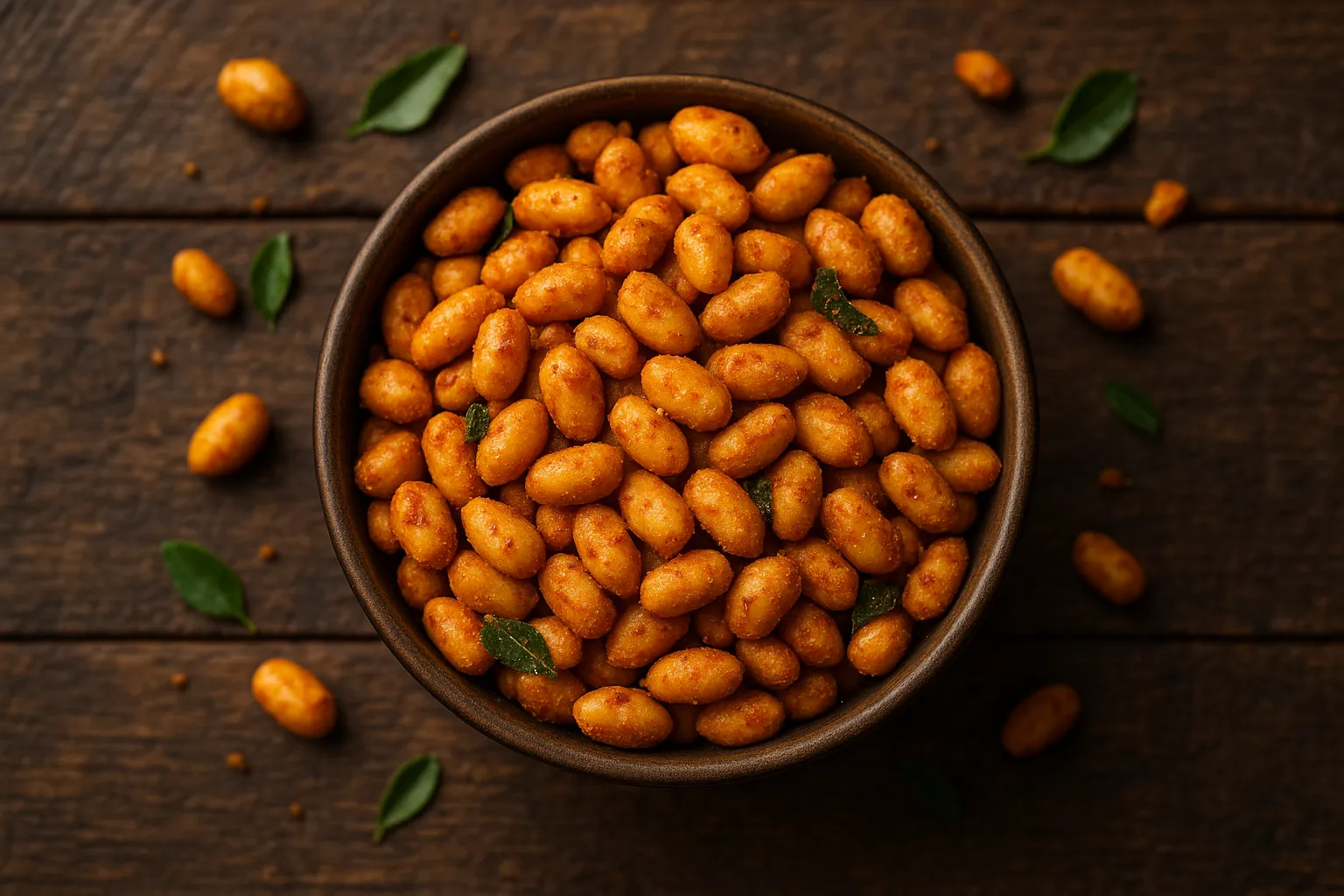
झटपट न्यूट्रिशन फैक्ट्स
प्रति 100g (approximately 3/4 cup)
| पोषक तत्व | मात्रा |
|---|---|
| कैलोरी | 567 kcal |
| प्रोटीन | 24g |
| कार्बोहाइड्रेट | 28g |
| फाइबर | 8.5g |
| शुगर | 4.2g |
| वसा | 42g |
| संतृप्त वसा | 6.5g |
| सोडियम | 680mg |
| मैग्नीशियम | 168mg |
| विटामिन E | 8.3mg |
मैक्रोन्यूट्रिएंट ब्रेकडाउन
 ChatGPT
  Claude
  AI Mode
  Perplexity
पोषण विशेषज्ञ की सलाह
Peanut masala प्रदान करता है 24g प्रोटीन प्रति 100g, making it one of the most प्रोटीन-rich Indian snacks. The 8.5g फाइबर and heart-स्वस्थ monounsaturated fats support satiety and cardiovascular health. Portion control is critical—pre-measure 30g servings (170 कैलोरी) to prevent overeating.
मिथक बनाम सच
मिथक #1: Peanuts Cause Weight Gain
सच्चाई: Despite being calorie-dense (567 kcal/100g), peanuts don't cause weight gain जब हिस्सा-controlled. The 24g प्रोटीन and 8.5g फाइबर increase satiety, and studies show peanut consumers अक्सर have lower BMIs. The key is limiting हिस्से to 30-40g दैनिक.
मिथक #2: भुना हुआ Peanuts Lose All पोषक तत्व
सच्चाई: Roasting preserves most पोषक तत्व in peanuts. विटामिन E decreases by 10-15%, but प्रोटीन, फाइबर, and खनिज remain intact. Roasting actually बढ़ाता है antioxidant activity by creating लाभदायक compounds. The masala coating adds minimal nutritional impact.
मिथक #3: Peanuts Are High in Bad कोलेस्ट्रॉल
सच्चाई: Peanuts contain zero cholesterol (it's plant-based). The 42g वसा प्रति 100g is primarily heart-स्वस्थ monounsaturated and polyunsaturated fats that can actually improve cholesterol profiles by raising HDL (good cholesterol) and lowering LDL (bad cholesterol).
मिथक #4: Peanuts Aren't Real Nuts, So They're Less पौष्टिक
सच्चाई: जबकि botanically legumes, peanuts match tree nuts nutritionally. They provide similar प्रोटीन (24-26g प्रति 100g), स्वस्थ fats, and micronutrients. The "nut vs legume" distinction doesn't affect nutritional value.
मिथक #5: Spicy Masala Coating Cancels Out Peanut Benefits
सच्चाई: The gram flour and spice coating adds 80-100 कैलोरी प्रति 100g but also प्रदान करता है extra प्रोटीन and एंटीऑक्सीडेंट from turmeric and chili. The main concern is added सोडियम (680mg प्रति 100g); choose low-सोडियम versions or plain भुना हुआ peanuts for better health.
मिथक #6: Eating Peanuts at Night Causes Digestive Issues
सच्चाई: Peanuts are easily digestible for most people. The high वसा content may slow digestion, which can cause discomfort if eaten in large amounts पहले bed. Moderate हिस्से (30g) 2-3 hours पहले sleep are generally well-tolerated.
हेल्थ गोल्स के हिसाब से न्यूट्रीस्कोर
| स्वास्थ्य लक्ष्य | NutriScore | यह स्कोर क्यों? |
|---|---|---|
| वजन घटाना |  | 567 कैलोरी प्रति 100g, but 24g प्रोटीन + 8.5g फाइबर promote fullness. Portion-control to 30g (170 kcal) as pre-measured snack. |
| मांसपेशी वृद्धि |  | Excellent plant-based प्रोटीन (24g प्रति 100g). 50g प्रदान करता है 12g प्रोटीन post-workout. स्वस्थ fats support hormone production for muscle building. |
| डायबिटीज प्रबंधन | | Low glycemic index (14), high फाइबर (8.5g) stabilizes ब्लड शुगर. Monounsaturated fats improve insulin sensitivity. Limit to 30-40g हिस्से; watch सोडियम. |
| पीसीओएस प्रबंधन | | प्रोटीन and फाइबर help regulate insulin resistance in पीसीओएस. स्वस्थ fats support hormone balance. Moderate हिस्से (30g) 1-2 times दैनिक as snack. |
| गर्भावस्था पोषण | | प्रदान करता है folate (68mcg प्रति 100g), प्रोटीन for fetal growth, magnesium (168mg) for bone development. Monitor सोडियम; choose low-salt versions. |
| Viral/Flu Recovery | | प्रोटीन सहायता करता है immune recovery, विटामिन E acts as antioxidant. Easy to eat जब appetite is low. Avoid if experiencing digestive upset; choose plain peanuts. |
व्यक्तिगत पोषण
अपने भोजन को ट्रैक करें with NutriScan for personalized NutriScores based on your specific health goals!
ब्लड शुगर रेस्पॉन्स to Peanut Masala
Peanuts have one of the lowest glycemic index values among snacks, making them excellent for ब्लड शुगर control.
सामान्य ग्लूकोज प्रतिक्रिया वक्र
यह चार्ट दिखाता है typical रक्त ग्लूकोज response for general स्वस्थ individuals. व्यक्तिगत प्रतिक्रियाएं भिन्न हो सकती हैं. यह मेडिकल सलाह नहीं है.
Why Peanuts Stabilize Blood शुगर
Peanuts' low GI (14) and high फाइबर (8.5g) create minimal glucose spike:
- 🥜 High प्रोटीन (24g) - Slows carb digestion and extends energy release
- 🫘 Rich फाइबर (8.5g) - कम करता है glucose absorption rate
- 🫒 स्वस्थ fats (42g) - Further slow digestion and improve insulin sensitivity
- ⚡ Low net कार्ब्स - Only 19.5g net कार्ब्स (28g total - 8.5g फाइबर)
Best pairing for balanced energy: Combine 30g peanut masala with ताज़ा vegetables (cucumber, carrot sticks) for added फाइबर and volume without extra कैलोरी.
सांस्कृतिक महत्व
Peanuts were introduced to India by Portuguese traders in the 16th century and quickly became a staple crop.
In India:
- Major kharif (monsoon) crop in Gujarat, Andhra Pradesh, Tamil Nadu
- Groundnut oil (peanut oil) is traditional cooking medium in South India
- Street vendors sell भुना हुआ peanuts (masala mungfali) across the country
- Festival food के दौरान Makar Sankranti and Diwali
- Haldiram's modernized traditional भुना हुआ peanut recipes with spice blends
Nutritional Impact:
- India is world's 2nd largest peanut producer (9+ million tons annually)
- Affordable plant प्रोटीन for vegetarian population
- Peanut-based chikkis (brittle) provide energy-dense traditional sweets
तुलना और विकल्प
Peanut Masala vs Similar Snacks (प्रति 100g)
| पोषक तत्व | 🥜 Peanut Masala | 🌰 कच्चा Peanuts | 🥜 Almonds | 🌻 Sunflower Seeds |
|---|---|---|---|---|
| कैलोरी | 567 kcal | 567 kcal | 576 kcal | 584 kcal |
| कार्ब्स | 28g | 16g | 22g | 20g |
| फाइबर | 8.5g | 8.5g | 12.5g | 8.6g |
| प्रोटीन | 24g | 26g | 21g | 21g |
| वसा | 42g | 49g | 49g | 51g |
| सोडियम | 680mg | 18mg | 1mg | 9mg |
| मैग्नीशियम | 168mg | 168mg | 270mg | 325mg |
| विटामिन E | 8.3mg | 8.3mg | 25.6mg | 35.2mg |
| सबसे अच्छा | Flavor + प्रोटीन | Pure nutrition | हृदय स्वास्थ्य | विटामिन E boost |
अक्सर पूछे सवाल
Are Haldiram's Peanut Masala good for वजन घटाना?
Peanut masala can support वजन घटाना जब हिस्सा-controlled. जबकि calorie-dense (567 kcal प्रति 100g), the 24g प्रोटीन and 8.5g फाइबर promote satiety and reduce overall calorie intake.
Weight loss strategy: Pre-measure 30g हिस्से (170 कैलोरी) in small containers; eat as mid-afternoon snack to prevent dinner overeating; track कैलोरी in your दैनिक budget; combine with vegetables for volume; limit to once दैनिक.
Evidence: Studies show regular nut consumers have lower BMIs despite higher calorie intake from nuts, likely due to increased satiety and incomplete calorie absorption.
Can diabetics eat Haldiram's Peanut Masala?
Yes, peanut masala is excellent for diabetics due to low glycemic index (14) and high फाइबर that stabilizes ब्लड शुगर.
Diabetic guidelines:
- Portion size: 30-40g प्रति सर्विंग (170-227 कैलोरी)
- Timing: Mid-morning or mid-afternoon snack
- Pairing: Combine with vegetables (cucumber, tomatoes) for added फाइबर
- Monitoring: Check ब्लड शुगर 2 hours बाद में to confirm individual response
- सोडियम concern: High सोडियम (680mg प्रति 100g); choose low-salt versions or plain भुना हुआ peanuts if managing blood pressure
Research shows peanuts improve glycemic control and reduce डायबिटीज risk.
How much प्रोटीन is in Haldiram's Peanut Masala?
Haldiram's Peanut Masala शामिल है approximately 24g प्रोटीन प्रति 100g. A 30g हिस्सा प्रदान करता है 7.2g प्रोटीन, equivalent to one small egg.
प्रोटीन quality: Peanuts provide incomplete प्रोटीन (lacking some आवश्यक amino acids). Pair with whole grains (rotis, brown rice) or dairy (yogurt) throughout the day to ensure complete amino acid profile.
For मांसपेशी वृद्धि: 50g serving प्रदान करता है 12g प्रोटीन; combine with other प्रोटीन sources (dal, paneer, eggs) to reach दैनिक targets.
What are the स्वास्थ्य लाभ of Peanut Masala?
Key benefits:
- Heart Health: Monounsaturated fats (26g प्रति 100g) reduce LDL cholesterol and cardiovascular disease risk
- Muscle Maintenance: 24g प्रोटीन सहायता करता है muscle repair and growth
- Digestive Health: 8.5g फाइबर बढ़ावा देता है regular bowel movements and gut bacteria
- Bone Strength: मैग्नीशियम (168mg, 40% DV) and phosphorus support bone density
- Antioxidant Protection: विटामिन E (8.3mg) and polyphenols fight cellular damage
- Blood शुगर Control: Low GI and फाइबर stabilize glucose levels
जब is the best time to eat Peanut Masala?
Optimal timing:
- Mid-morning (10-11 AM): रोकता है pre-lunch energy crashes; sustains through afternoon
- Mid-afternoon (3-4 PM): Controls evening hunger and रोकता है dinner overeating
- Pre-workout (30-60 min पहले): प्रदान करता है sustained energy from प्रोटीन + स्वस्थ fats
- Avoid late night: High calorie density and वसा content may disrupt sleep; eat 3+ hours पहले bed
Frequency: 1-2 times दैनिक in controlled हिस्से (30-40g each).
Are भुना हुआ peanuts healthier than तला हुआ peanuts?
Yes, भुना हुआ peanuts are significantly healthier than deep-तला हुआ versions.
भुना हुआ advantages:
- Requires minimal added oil (5-10% vs 30-40% for तला हुआ)
- Preserves 85-90% of विटामिन E and other एंटीऑक्सीडेंट
- Lower overall calorie density
- कम करता है acrylamide formation compared to high-heat frying
Haldiram's Peanut Masala: Uses भुना हुआ peanuts with gram flour coating; healthier than तला हुआ but adds ~80-100 कैलोरी and सोडियम compared to plain भुना हुआ.
Healthiest option: Plain dry-भुना हुआ peanuts without salt (approximately 567 kcal, 18mg सोडियम vs 680mg in masala version). Make homemade version with minimal oil and spices for better control.
How many Peanut Masala should I eat per day?
General guidelines:
- Weight loss: 30g (1/4 cup, 170 कैलोरी) once दैनिक
- Maintenance: 40-50g (1/3 cup, 227-284 कैलोरी) 1-2 times दैनिक
- डायबिटीज: 30-40g प्रति सर्विंग, monitor ब्लड शुगर response
- Muscle gain: 50-100g (284-567 कैलोरी) post-workout or as प्रोटीन-rich snack
- Children: 20-30g depending on age and activity level
Caution: Exceeding 100g दैनिक प्रदान करता है 680mg+ सोडियम (30% DV) and may contribute excess कैलोरी. Pre-measure हिस्से to prevent mindless overeating.
Can pregnant women eat Peanut Masala?
Yes, pregnant women can eat peanut masala in संयम (30-40g दैनिक) unless allergic.
गर्भावस्था benefits:
- Folate (68mcg प्रति 100g) सहायता करता है fetal neural tube development
- प्रोटीन (24g) aids fetal growth
- मैग्नीशियम (168mg) रोकता है leg cramps and सहायता करता है bone formation
- स्वस्थ fats support brain development
Precautions:
- High सोडियम (680mg प्रति 100g) may worsen swelling; choose low-salt versions
- Eating peanuts के दौरान गर्भावस्था may reduce child's peanut allergy risk (consult doctor if family history)
- Ensure ताज़ा product; aflatoxin in moldy peanuts is harmful के दौरान गर्भावस्था


समान पौष्टिक खाद्य पदार्थ
4505 Chicharrones Classic Chili Salt
7 Eleven Japan Crispy Corn Cheese
Explore More Nutrition Tools & Resources
40 साल के Male के लिए Diet Plan
AI Calorie Counter App: photo लो, calories देखो, free
AI Nutritionist App: Monika से meals पर बात करो
Best Protein Supplements Women के लिए
Bulking Meal Plan App: surplus और protein एक साथ
ChatGPT Calorie Counter Alternative: जो total भी याद रखे
ChatGPT Diet Plan Alternative: जो खाया वो track भी करे
ChatGPT Weight Loss Coach Alternative: वज़न भी track करे
Fast Food Calorie Counter App: burger की calories photo से
Indian Diet Plan App: dal, roti, sabzi का सही हिसाब
Indian Food Calorie Calculator
Indian Food Calorie Calculator - भारतीय खाने के लिए तुरंत Nutrition Facts — 2026
Intermittent Fasting App for Women: timer साथ meal log भी
Intermittent Fasting Tracker App - Free Timer, बिना Trial
Macro Tracker App: फोटो से भरें protein, carb, fat
Mediterranean Diet Meal Plan App: तेल भी गिने
Monthly Grocery List Generator
Nutrition Label Scanner App: आपके खाए हिस्से का हिसाब
Vegetarian Meal Plan App: protein target वाला 28 दिन का plan
Voice-Activated Calorie Counter - बोलकर Log करें Meals और Track करें Nutrition Hands-Free — 2026
Water Tracker App: free पानी और Calorie Log