Papad: कैलोरी, पोषण और स्वास्थ्य लाभ
Traditional Indian lentil cracker packed with प्रोटीन, फाइबर, and authentic flavor - a पौष्टिक snack जब enjoyed mindfully.
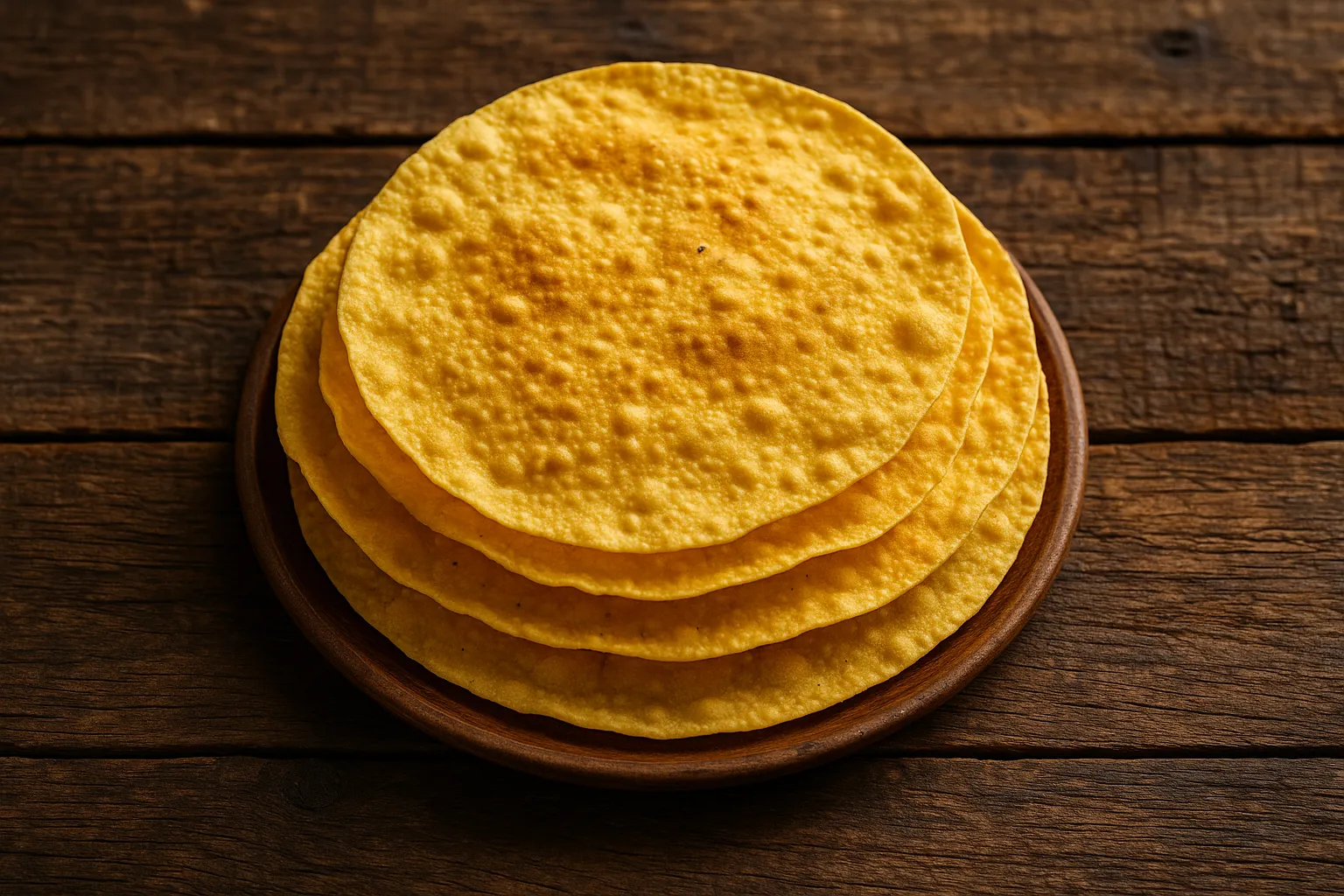
झटपट न्यूट्रिशन फैक्ट्स
Per 1 Piece (15g, भुना हुआ)
| पोषक तत्व | मात्रा |
|---|---|
| कैलोरी | 56 kcal |
| प्रोटीन | 3.8g |
| कार्बोहाइड्रेट | 9g |
| फाइबर | 2.8g |
| शुगर | 0g |
| वसा | 0.5g |
| सोडियम | 262mg |
| आयरन | 1.2mg |
| पोटैशियम | 150mg |
| कैल्शियम | 21mg |
मैक्रोन्यूट्रिएंट ब्रेकडाउन
 ChatGPT
  Claude
  AI Mode
  Perplexity
पोषण विशेषज्ञ की सलाह
Papad delivers impressive 25g प्रोटीन प्रति 100g, making it one of the most प्रोटीन-rich traditional Indian snacks. The high फाइबर content (18g प्रति 100g) सहायता करता है पाचन स्वास्थ्य. Choose भुना हुआ over तला हुआ to save 50-100 कैलोरी प्रति टुकड़ा.
मिथक बनाम सच
मिथक #1: Papad Is Unhealthy Junk Food
सच्चाई: Lentil-based papad प्रदान करता है quality प्रोटीन (25g प्रति 100g) and फाइबर (18g), offering स्वास्थ्य लाभ जब consumed in संयम. The issue is excessive सोडियम and frying method, not the papad itself. Choose भुना हुआ varieties for a पौष्टिक snack.
मिथक #2: Papad Causes Weight Gain
सच्चाई: One भुना हुआ papad has only 56 कैलोरी and 3.8g प्रोटीन that बढ़ावा देता है satiety. Weight gain comes from eating multiple तला हुआ papads with oil. Limit to 1-2 भुना हुआ pieces per meal as part of a balanced diet.
मिथक #3: All Papad Is the Same
सच्चाई: Nutrition varies significantly by type and preparation. Urad dal papad has more प्रोटीन; rice papad has more कार्ब्स. भुना हुआ papad has 50-60% fewer कैलोरी than तला हुआ. हमेशा check ingredients and choose भुना हुआ preparation.
मिथक #4: Papad Has No Nutritional Value
सच्चाई: Beyond प्रोटीन and फाइबर, papad प्रदान करता है आयरन (7.8mg प्रति 100g), पोटैशियम (1000mg), and calcium (143mg). The only concern is high सोडियम content (1745mg प्रति 100g), which requires पोर्शन कंट्रोल.
मिथक #5: Diabetics Should Avoid Papad
सच्चाई: Lentils have a lower glycemic impact and फाइबर that slows carb absorption. Diabetics can enjoy 1-2 भुना हुआ papads with meals, विशेष रूप से जब paired with vegetables and प्रोटीन sources. Monitor ब्लड शुगर response.
मिथक #6: Papad Is Bad for Heart Health
सच्चाई: The lentils in papad support हृदय स्वास्थ्य. The सोडियम is the concern. Choose low-सोडियम varieties, limit intake to 1-2 pieces, and balance with पोटैशियम-rich foods like vegetables and fruits to maintain स्वस्थ blood pressure.
हेल्थ गोल्स के हिसाब से न्यूट्रीस्कोर
| स्वास्थ्य लक्ष्य | NutriScore | यह स्कोर क्यों? |
|---|---|---|
| वजन घटाना |  | 56 कैलोरी प्रति टुकड़ा, 3.8g प्रोटीन बढ़ावा देता है fullness. High सोडियम requires संयम. Limit to 1-2 भुना हुआ pieces per meal. |
| मांसपेशी वृद्धि |  | Excellent प्रोटीन density (25g प्रति 100g), convenient vegetarian प्रोटीन snack. Low वसा content. Choose भुना हुआ for clean प्रोटीन. |
| डायबिटीज प्रबंधन | | Lentil फाइबर slows carb absorption. Moderate glycemic impact. Pair with vegetables, limit to 1-2 pieces, choose भुना हुआ. |
| पीसीओएस प्रबंधन | | High प्रोटीन and फाइबर support ब्लड शुगर balance. सोडियम may cause water retention. Limit to 1 piece दैनिक, choose low-सोडियम varieties. |
| गर्भावस्था पोषण | | प्रदान करता है प्रोटीन and आयरन for fetal development. High सोडियम (262mg प्रति टुकड़ा) requires caution, विशेष रूप से with गर्भावस्था-related blood pressure concerns. |
| Viral/Flu Recovery | | Easy to digest, प्रदान करता है प्रोटीन for healing. High सोडियम may worsen dehydration. Better options: ताज़ा proteins and hydrating foods. Limit to 1 piece only. |
व्यक्तिगत पोषण
अपने भोजन को ट्रैक करें with NutriScan for personalized NutriScores based on your specific health goals!
ब्लड शुगर रेस्पॉन्स to Papad
Understanding how papad affects रक्त ग्लूकोज मदद करता है you incorporate it wisely into your diet.
सामान्य ग्लूकोज प्रतिक्रिया वक्र
यह चार्ट दिखाता है typical रक्त ग्लूकोज response for general स्वस्थ individuals. व्यक्तिगत प्रतिक्रियाएं भिन्न हो सकती हैं. यह मेडिकल सलाह नहीं है.
कैसे करें: Minimize the Spike
Pairing papad with प्रोटीन, vegetables, or स्वस्थ fats कम करता है ब्लड शुगर impact:
- 🥗 ताज़ा vegetable salad - फाइबर slows carb absorption
- 🥣 Dal or lentil curry - Adds प्रोटीन and additional फाइबर
- 🥒 Cucumber raita or yogurt - Probiotics and प्रोटीन balance
- 🍛 Vegetable sabzi - पोषक तत्व and फाइबर for better glycemic control
हमेशा consume papad as part of a balanced meal, not as a standalone snack, for optimal ब्लड शुगर management.
सांस्कृतिक महत्व
Papad has been a staple in Indian cuisine for over 500 years, dating back to ancient times जब food preservation was आवश्यक.
In India:
- Made from lentils (urad dal, moong dal) or rice flour with spices
- Sun-dried on rooftops के दौरान summer months - a traditional family activity
- आवश्यक accompaniment to Indian thalis (complete meals)
- Different regions have unique varieties: Kerala's appalam, Gujarat's papad, Rajasthan's mangodi
- Served at festivals, weddings, and दैनिक meals across all social classes
Preparation Methods:
- Roasting: Directly over flame or in microwave, healthiest method
- Frying: Deep-तला हुआ in oil, traditional but adds 50-100 कैलोरी
- Grilling: Modern method using electric grills or air fryers
Global Impact:
- Exported worldwide as "poppadoms" or "papads"
- Popular in UK, US, Australia as appetizers in Indian restaurants
- Gluten-free, vegetarian प्रोटीन snack gaining recognition internationally
तुलना और विकल्प
Papad vs Similar Snacks (प्रति 100g)
| पोषक तत्व | 🥖 Papad (भुना हुआ) | 🍪 Crackers | 🥨 Pretzels | 🌾 Khakhra |
|---|---|---|---|---|
| कैलोरी | 371 kcal | 502 kcal | 381 kcal | 360 kcal |
| कार्ब्स | 60g | 62g | 80g | 65g |
| फाइबर | 18.6g | 2.1g | 3.0g | 12g |
| प्रोटीन | 25.6g | 8.9g | 10.3g | 13g |
| वसा | 3.3g | 23g | 3.5g | 8g |
| सोडियम | 1745mg | 698mg | 1266mg | 950mg |
| आयरन | 7.8mg | 3.7mg | 4.2mg | 5.2mg |
| सबसे अच्छा | High प्रोटीन, low वसा | Flavor variety (higher वसा) | Low वसा (very high कार्ब्स) | Balanced nutrition |
अक्सर पूछे सवाल
Is papad स्वस्थ for वजन घटाना?
Papad can fit into a वजन घटाना diet जब consumed mindfully. One भुना हुआ piece has only 56 कैलोरी and प्रदान करता है 3.8g प्रोटीन that बढ़ावा देता है satiety.
Key considerations: High सोडियम (262mg प्रति टुकड़ा) can cause water retention; frying adds 50-100 कैलोरी प्रति टुकड़ा.
Best practices for वजन घटाना: Limit to 1-2 भुना हुआ pieces per meal; avoid तला हुआ papad entirely; pair with फाइबर-rich vegetables; don't use as a standalone snack; choose low-सोडियम varieties जब available.
Can diabetics eat papad?
Yes, diabetics can eat papad in संयम. Lentil-based papad शामिल है फाइबर that slows carbohydrate absorption and प्रदान करता है steady energy.
Tips for diabetics: Choose भुना हुआ over तला हुआ; limit to 1-2 pieces per meal; हमेशा pair with vegetables and प्रोटीन; eat as part of a complete meal, not alone; monitor ब्लड शुगर 2 hours बाद में eating; prefer urad dal or moong dal papad over rice papad.
Lentils have लाभदायक effects on ब्लड शुगर management, but पोर्शन कंट्रोल remains आवश्यक.
How much प्रोटीन is in papad?
Papad is surprisingly प्रोटीन-rich for a traditional snack. प्रति 100g: 25.6g प्रोटीन (higher than many meats). Per piece (15g): 3.8g प्रोटीन.
This makes papad an excellent vegetarian प्रोटीन source, विशेष रूप से for those following plant-based diets. Urad dal papad आमतौर पर has the highest प्रोटीन content among varieties.
For मांसपेशी वृद्धि or high-प्रोटीन diets, 2-3 भुना हुआ papads can contribute meaningful प्रोटीन जबकि keeping कैलोरी मध्यम.
Is papad high in सोडियम?
Yes, papad is very high in सोडियम. One piece शामिल है 262mg सोडियम (11% दैनिक मूल्य). 100g शामिल है 1745mg सोडियम (76% दैनिक मूल्य).
Health implications: Excessive सोडियम intake is linked to high blood pressure and cardiovascular disease. Most adults should limit सोडियम to 2300mg दैनिक; those with hypertension to 1500mg दैनिक.
How to manage: Limit to 1-2 pieces per meal; choose low-सोडियम varieties if available; balance with पोटैशियम-rich foods (vegetables, fruits); drink plenty of water; avoid other high-सोडियम foods in the same meal.
Is भुना हुआ papad healthier than तला हुआ?
Absolutely. भुना हुआ papad is significantly healthier than तला हुआ:
Calorie difference: भुना हुआ: ~370 kcal प्रति 100g; तला हुआ: 500-550 kcal प्रति 100g (saves 50-100 कैलोरी प्रति टुकड़ा).
वसा content: भुना हुआ: 3g प्रति 100g; तला हुआ: 25-30g प्रति 100g.
Nutritional preservation: Roasting maintains प्रोटीन and फाइबर; frying can degrade some पोषक तत्व; भुना हुआ avoids unhealthy trans fats from repeated oil use.
Best roasting methods: Direct flame (traditional); microwave (30-45 seconds); air fryer (2-3 minutes at 180°C); electric roaster.
Can I eat papad every day?
दैनिक papad consumption depends on your health status and overall diet:
For स्वस्थ individuals: 1-2 भुना हुआ pieces दैनिक is generally acceptable as part of a balanced diet. Ensure adequate hydration and पोटैशियम intake to balance सोडियम.
With hypertension or heart disease: Limit to 2-3 times per week. Choose low-सोडियम varieties. Monitor blood pressure regularly.
For वजन घटाना: 1 piece दैनिक maximum. हमेशा भुना हुआ, कभी नहीं तला हुआ. Include as part of meal, not extra.
General guidelines: Vary your snacks; don't rely on papad alone; increase vegetable and fruit intake to balance सोडियम; stay well-hydrated; choose भुना हुआ preparation हमेशा.
Track your complete diet with NutriScan app to ensure papad fits your दैनिक सोडियम and calorie targets.
क्या है: the best time to eat papad?
Lunch or dinner with main meal - Best option. Papad complements dal, rice, sabzi, and प्रदान करता है digestive benefits.
As a pre-workout snack - 1-2 pieces provide quick energy and प्रोटीन. Consume 30-45 minutes पहले exercise with water.
Avoid at night - High सोडियम may cause morning puffiness and disrupt sleep quality due to increased thirst.
Not as standalone snack - हमेशा pair with vegetables, dal, or yogurt for balanced nutrition and better ब्लड शुगर control.
Best practice: Eat papad as a traditional meal accompaniment rather than a standalone snack for optimal nutrition and satisfaction.


समान पौष्टिक खाद्य पदार्थ
4505 Chicharrones Classic Chili Salt
7 Eleven Japan Crispy Corn Cheese
Explore More Nutrition Tools & Resources
40 साल के Male के लिए Diet Plan
AI Calorie Counter App: photo लो, calories देखो, free
AI Nutritionist App: Monika से meals पर बात करो
Best Protein Supplements Women के लिए
Bulking Meal Plan App: surplus और protein एक साथ
ChatGPT Calorie Counter Alternative: जो total भी याद रखे
ChatGPT Diet Plan Alternative: जो खाया वो track भी करे
ChatGPT Weight Loss Coach Alternative: वज़न भी track करे
Fast Food Calorie Counter App: burger की calories photo से
Indian Diet Plan App: dal, roti, sabzi का सही हिसाब
Indian Food Calorie Calculator
Indian Food Calorie Calculator - भारतीय खाने के लिए तुरंत Nutrition Facts — 2026
Intermittent Fasting App for Women: timer साथ meal log भी
Intermittent Fasting Tracker App - Free Timer, बिना Trial
Macro Tracker App: फोटो से भरें protein, carb, fat
Mediterranean Diet Meal Plan App: तेल भी गिने
Monthly Grocery List Generator
Nutrition Label Scanner App: आपके खाए हिस्से का हिसाब
Vegetarian Meal Plan App: protein target वाला 28 दिन का plan
Voice-Activated Calorie Counter - बोलकर Log करें Meals और Track करें Nutrition Hands-Free — 2026
Water Tracker App: free पानी और Calorie Log