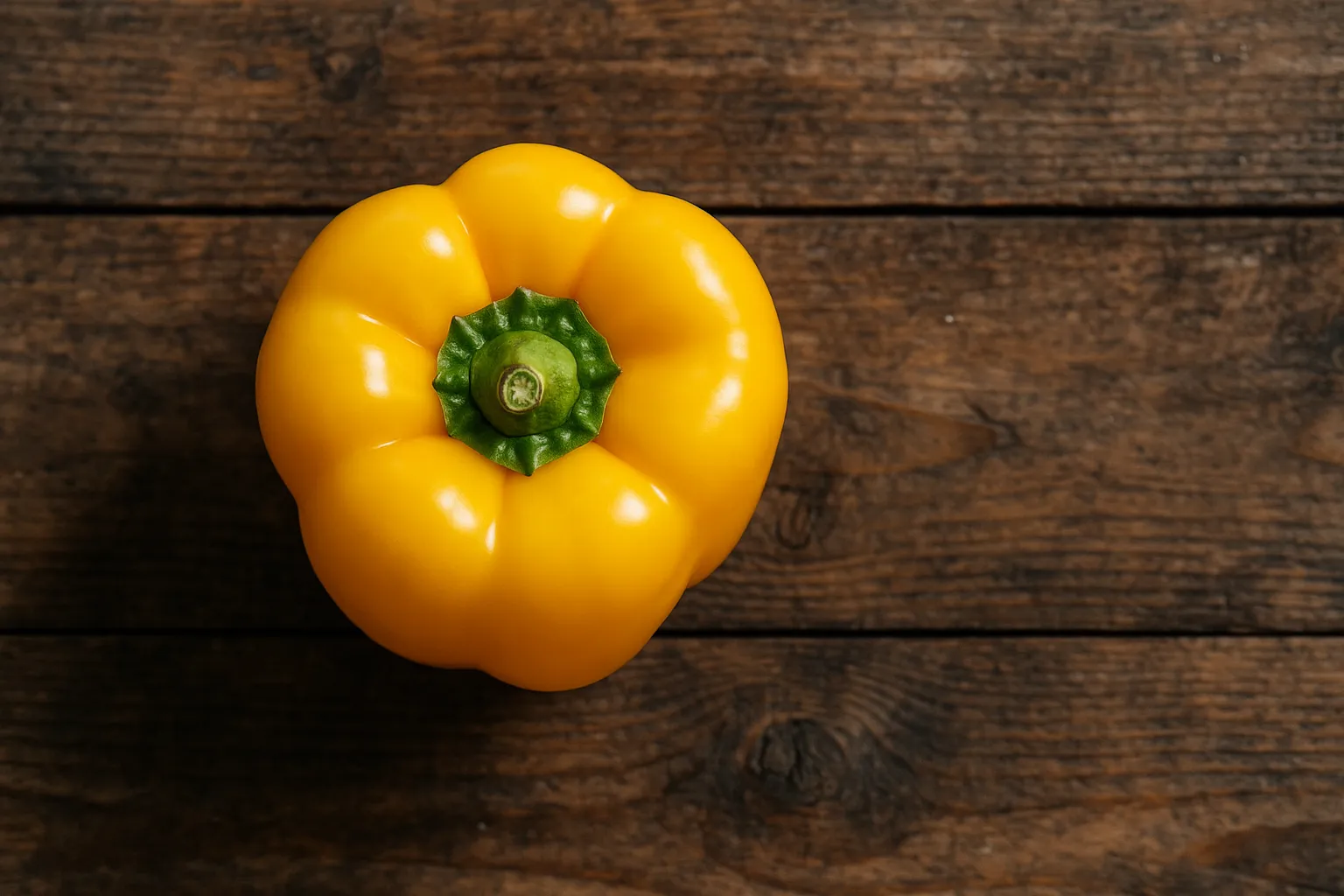
Yellow Bell Pepper: कैलोरी, पोषण और स्वास्थ्य लाभ
Sunshine-colored powerhouse packed with विटामिन C, एंटीऑक्सीडेंट, and hydration for vibrant health and effortless weight management.
झटपट न्यूट्रिशन फैक्ट्स
प्रति 100g (1 Medium Pepper)
| पोषक तत्व | मात्रा |
|---|---|
| कैलोरी | 27 kcal |
| प्रोटीन | 1g |
| कार्बोहाइड्रेट | 6.3g |
| फाइबर | 0.9g |
| शुगर | 5.3g |
| वसा | 0.2g |
| विटामिन C | 183mg |
| विटामिन A | 37mcg |
| पोटैशियम | 212mg |
| Folate | 26mcg |
मैक्रोन्यूट्रिएंट ब्रेकडाउन
 ChatGPT
  Claude
  AI Mode
  Perplexity
पोषण विशेषज्ञ की सलाह
Yellow bell peppers provide 203% of your दैनिक विटामिन C in just 27 कैलोरी. The combination of lutein and zeaxanthin सहायता करता है eye health, जबकि the high water content (92%) बढ़ावा देता है hydration and fullness.
मिथक बनाम सच
मिथक #1: Bell Peppers Are High in कार्ब्स
सच्चाई: Yellow bell peppers contain only 6.3g कार्ब्स प्रति 100g, making them suitable for low-carb and keto diets. The glycemic index is very low (15-30), causing minimal ब्लड शुगर impact.
मिथक #2: You Shouldn't Eat Peppers at Night
सच्चाई: Unlike hot peppers, sweet bell peppers don't cause digestive issues at night. They're low in capsaicin and high in water, making them gentle on digestion. No scientific evidence सहायता करता है avoiding them पहले bed.
मिथक #3: Cooking Destroys All पोषक तत्व in Bell Peppers
सच्चाई: जबकि विटामिन C decreases by 25-30% with cooking, carotenoid absorption actually सुधारता है. Light sautéing balances nutrient retention with enhanced bioavailability. Both कच्चा and पका हुआ forms offer benefits.
मिथक #4: Yellow Peppers Are Just Unripe Red Peppers
सच्चाई: Yellow, red, and green bell peppers are अक्सर different varieties or ripeness stages. Yellow peppers have distinct flavor profiles and higher विटामिन C than red (183mg vs 127mg प्रति 100g). Each color प्रदान करता है unique nutritional advantages.
मिथक #5: Bell Peppers Cause Inflammation
सच्चाई: Despite being in the nightshade family, bell peppers contain anti-inflammatory compounds and powerful एंटीऑक्सीडेंट. Only a small subset of people with specific sensitivities need to avoid nightshades.
मिथक #6: You Need to Remove Seeds and Membranes
सच्चाई: Seeds and white membranes are edible and contain concentrated पोषक तत्व. They have slightly bitter taste but provide extra फाइबर and एंटीऑक्सीडेंट. Remove only for texture preferences, not health reasons.
हेल्थ गोल्स के हिसाब से न्यूट्रीस्कोर
| स्वास्थ्य लक्ष्य | NutriScore | यह स्कोर क्यों? |
|---|---|---|
| वजन घटाना |  | Only 27 कैलोरी प्रति 100g, 92% water content, satisfying crunch बढ़ावा देता है fullness. Unlimited consumption for वजन घटाना. |
| मांसपेशी वृद्धि |  | High विटामिन C (203% DV) सहायता करता है collagen formation and recovery, but low प्रोटीन (1g). Excellent nutrient-dense side for muscle-building meals. |
| डायबिटीज प्रबंधन | | Very low GI (15-30), only 6.3g कार्ब्स, high फाइबर and water content. Antioxidants support ब्लड शुगर control. Eat freely. |
| पीसीओएस प्रबंधन | | Anti-inflammatory एंटीऑक्सीडेंट, low glycemic impact, high विटामिन C सहायता करता है hormone balance. Ideal for पीसीओएस meal plans. |
| गर्भावस्था पोषण | | Rich in folate (26mcg) आवश्यक for fetal development, विटामिन C for आयरन absorption, hydration support. |
| Viral/Flu Recovery | | Exceptional विटामिन C (203% DV) boosts immune function, एंटीऑक्सीडेंट reduce सूजन, easy to digest, hydrating. |
व्यक्तिगत पोषण
अपने भोजन को ट्रैक करें with NutriScan for personalized NutriScores based on your specific health goals!
ब्लड शुगर रेस्पॉन्स to Yellow Bell Pepper
Understanding how yellow bell peppers affect रक्त ग्लूकोज can help optimize meal planning for stable energy.
सामान्य ग्लूकोज प्रतिक्रिया वक्र
यह चार्ट दिखाता है typical रक्त ग्लूकोज response for general स्वस्थ individuals. व्यक्तिगत प्रतिक्रियाएं भिन्न हो सकती हैं. यह मेडिकल सलाह नहीं है.
कैसे करें: Maintain Stable Blood शुगर
Yellow bell peppers already have minimal glucose impact, but pairing with प्रोटीन or स्वस्थ वसा ensures sustained energy:
- 🥑 Hummus or guacamole - स्वस्थ fats and प्रोटीन stabilize ब्लड शुगर
- 🧀 Cheese slices or cubes - प्रोटीन and वसा slow digestion
- 🥜 Almond butter or peanut butter - पोषक तत्व-dense spread
- 🍗 ग्रिल्ड chicken or turkey - Complete प्रोटीन source
These combinations not only maintain stable ब्लड शुगर but also enhance nutrient absorption and provide longer-lasting satiety.
सांस्कृतिक महत्व
Bell peppers originated in Central and South America over 7,000 years ago and were cultivated by indigenous peoples पहले spreading globally through Spanish and Portuguese explorers.
In India:
- Known as "Shimla Mirch" (Shimla pepper) बाद में the hill station where they grow abundantly
- आवश्यक in Indo-Chinese cuisine: Chilli Paneer, Manchurian, तला हुआ Rice
- Used in North Indian curries: Kadhai Paneer, Mix Veg, Jalfrezi
- Ayurveda considers bell peppers cooling (unlike hot peppers) and लाभदायक for Pitta balance
- Available year-round but peak season: October-March
Global Impact:
- 40+ million tons produced annually worldwide
- China, Mexico, and Turkey are top producers
- Sweet (bell) peppers are one of the most consumed vegetables globally
- Available in 7+ colors: green, yellow, red, orange, purple, white, brown
- Selective breeding over centuries created sweet varieties from originally spicy wild peppers
तुलना और विकल्प
Yellow Bell Pepper vs Similar Vegetables (प्रति 100g)
| पोषक तत्व | 🟡 Yellow Bell Pepper | 🔴 Red Bell Pepper | 🟢 Green Bell Pepper | 🥒 Cucumber |
|---|---|---|---|---|
| कैलोरी | 27 kcal | 31 kcal | 20 kcal | 15 kcal |
| कार्ब्स | 6.3g | 6g | 4.6g | 3.6g |
| फाइबर | 0.9g | 2.1g | 1.7g | 0.5g |
| प्रोटीन | 1g | 1g | 0.9g | 0.7g |
| वसा | 0.2g | 0.3g | 0.2g | 0.1g |
| विटामिन C | 183mg (203% DV) | 127mg | 80mg | 2.8mg |
| विटामिन A | 37mcg | 157mcg | 18mcg | 5mcg |
| पोटैशियम | 212mg | 211mg | 175mg | 147mg |
| सबसे अच्छा | विटामिन C, eye health | विटामिन A, variety | Low-calorie snacking | Hydration, crunch |
अक्सर पूछे सवाल
Are yellow bell peppers good for वजन घटाना?
Yes, yellow bell peppers are exceptional for वजन घटाना. With only 27 कैलोरी प्रति 100g and 92% water content, they add volume and crunch to meals without excess कैलोरी. The high विटामिन C content (203% DV) सहायता करता है चयापचय and collagen production के दौरान वजन घटाना.
Best practices: Eat कच्चा for maximum crunch and satiety; pair with प्रोटीन-rich dips like hummus or Greek yogurt; use as pizza topping, salad base, or snack alternative to chips.
Can diabetics eat yellow bell peppers?
Yes, yellow bell peppers are ideal for diabetics with a very low glycemic index (15-30) and only 6.3g कार्ब्स प्रति 100g. They provide powerful एंटीऑक्सीडेंट that support ब्लड शुगर management without causing spikes.
Tips for diabetics:
- Unlimited consumption allowed (very low carb impact)
- Combine with प्रोटीन and स्वस्थ fats for balanced meals
- कच्चा or lightly पका हुआ preserve most पोषक तत्व
- Track हिस्से in NutriScan app for precise carb counting
The एंटीऑक्सीडेंट in yellow peppers may improve insulin sensitivity and reduce oxidative stress associated with डायबिटीज.
How much विटामिन C is in a yellow bell pepper?
A medium yellow bell pepper (100g) शामिल है 183mg of विटामिन C, providing 203% of the दैनिक अनुशंसित value. This is:
- 3.5× more than oranges (53mg प्रति 100g)
- 1.4× more than red peppers (127mg प्रति 100g)
- 2.3× more than green peppers (80mg प्रति 100g)
For maximum विटामिन C retention, eat yellow peppers कच्चा or lightly भाप में पका for less than 5 minutes. विटामिन C is heat-sensitive and water-soluble.
What are the main स्वास्थ्य लाभ of yellow bell peppers?
Key Benefits:
- Immune Support: 203% DV विटामिन C boosts white blood cell function and antibody production
- Eye Health: Lutein and zeaxanthin protect against macular degeneration and cataracts
- Skin Health: विटामिन C सहायता करता है collagen synthesis for firm, youthful skin
- Heart Health: पोटैशियम, फाइबर, and एंटीऑक्सीडेंट support cardiovascular function
- Weight Management: Ultra-low कैलोरी, high water content, satisfying crunch
- Anti-Inflammatory: Powerful एंटीऑक्सीडेंट reduce chronic सूजन
Are yellow bell peppers better than other colors?
Yellow bell peppers excel in specific areas:
Yellow Advantages:
- Highest विटामिन C content (183mg vs 127mg red, 80mg green)
- More lutein and zeaxanthin for eye health
- Sweeter, milder flavor preferred by children
- Bright color adds visual appeal to dishes
जब to Choose Other Colors:
- Red: Highest विटामिन A (157mcg), more lycopene, sweetest flavor
- Green: Lowest कैलोरी (20 kcal), slight bitterness, budget-friendly
- Orange: Balance of विटामिन A and C, vibrant color
Recommendation: Rotate colors for diverse nutrient profiles. Yellow excels for विटामिन C and eye health goals.
Can I eat yellow bell peppers कच्चा?
Yes, कच्चा yellow bell peppers are अनुशंसित for:
Benefits of कच्चा:
- Maximum विटामिन C preservation (heat degrades up to 30%)
- Satisfying crunch बढ़ावा देता है mindful eating and fullness
- Convenient snack requiring no preparation
- Cooling effect in hot weather
Benefits of पका हुआ:
- Enhanced absorption of carotenoids (lutein, zeaxanthin)
- Softer texture easier for some digestive systems
- Concentrated flavor in पका हुआ dishes
Best Practice: Eat कच्चा for snacking and salads; lightly sauté (3-5 minutes) for stir-fries to balance nutrient retention with bioavailability. Both forms provide excellent nutrition.
How many yellow bell peppers should I eat per day?
General Guidelines:
- 1-2 peppers दैनिक - Most people (प्रदान करता है 200-400% विटामिन C)
- Unlimited - Weight loss goals (ultra-low calorie)
- 1/2 to 1 pepper दैनिक - Part of balanced meal plans
No upper limit concerns: Yellow bell peppers are extremely safe. Even 3-4 दैनिक won't cause issues.
Variety tip: Rotate with other colorful vegetables for diverse phytonutrients. अपने भोजन को ट्रैक करें with NutriScan app to see how yellow peppers fit your personal nutrition goals.
Are bell pepper seeds safe to eat?
Yes, yellow bell pepper seeds are completely safe and edible. They contain concentrated पोषक तत्व सहित फाइबर, एंटीऑक्सीडेंट, and लाभदायक plant compounds. The slight bitterness comes from natural phytochemicals.
To eat or not:
- Remove: Smoother texture for sauces, purees, fine dining
- Keep: Extra फाइबर, zero waste, nutrient density
Most people remove seeds purely for textural preferences, not health reasons. Seeds pose no digestive or safety concerns.


Similar पौष्टिक Vegetables
4505 Chicharrones Classic Chili Salt
7 Eleven Japan Crispy Corn Cheese
Explore More Nutrition Tools & Resources
40 साल के Male के लिए Diet Plan
AI Calorie Counter App: photo लो, calories देखो, free
AI Nutritionist App: Monika से meals पर बात करो
Best Protein Supplements Women के लिए
Bulking Meal Plan App: surplus और protein एक साथ
ChatGPT Calorie Counter Alternative: जो total भी याद रखे
ChatGPT Diet Plan Alternative: जो खाया वो track भी करे
ChatGPT Weight Loss Coach Alternative: वज़न भी track करे
Fast Food Calorie Counter App: burger की calories photo से
Indian Diet Plan App: dal, roti, sabzi का सही हिसाब
Indian Food Calorie Calculator
Indian Food Calorie Calculator - भारतीय खाने के लिए तुरंत Nutrition Facts — 2026
Intermittent Fasting App for Women: timer साथ meal log भी
Intermittent Fasting Tracker App - Free Timer, बिना Trial
Macro Tracker App: फोटो से भरें protein, carb, fat
Mediterranean Diet Meal Plan App: तेल भी गिने
Monthly Grocery List Generator
Nutrition Label Scanner App: आपके खाए हिस्से का हिसाब
Vegetarian Meal Plan App: protein target वाला 28 दिन का plan
Voice-Activated Calorie Counter - बोलकर Log करें Meals और Track करें Nutrition Hands-Free — 2026
Water Tracker App: free पानी और Calorie Log