नारियल तेल: कैलोरी, पोषण और स्वास्थ्य तथ्य
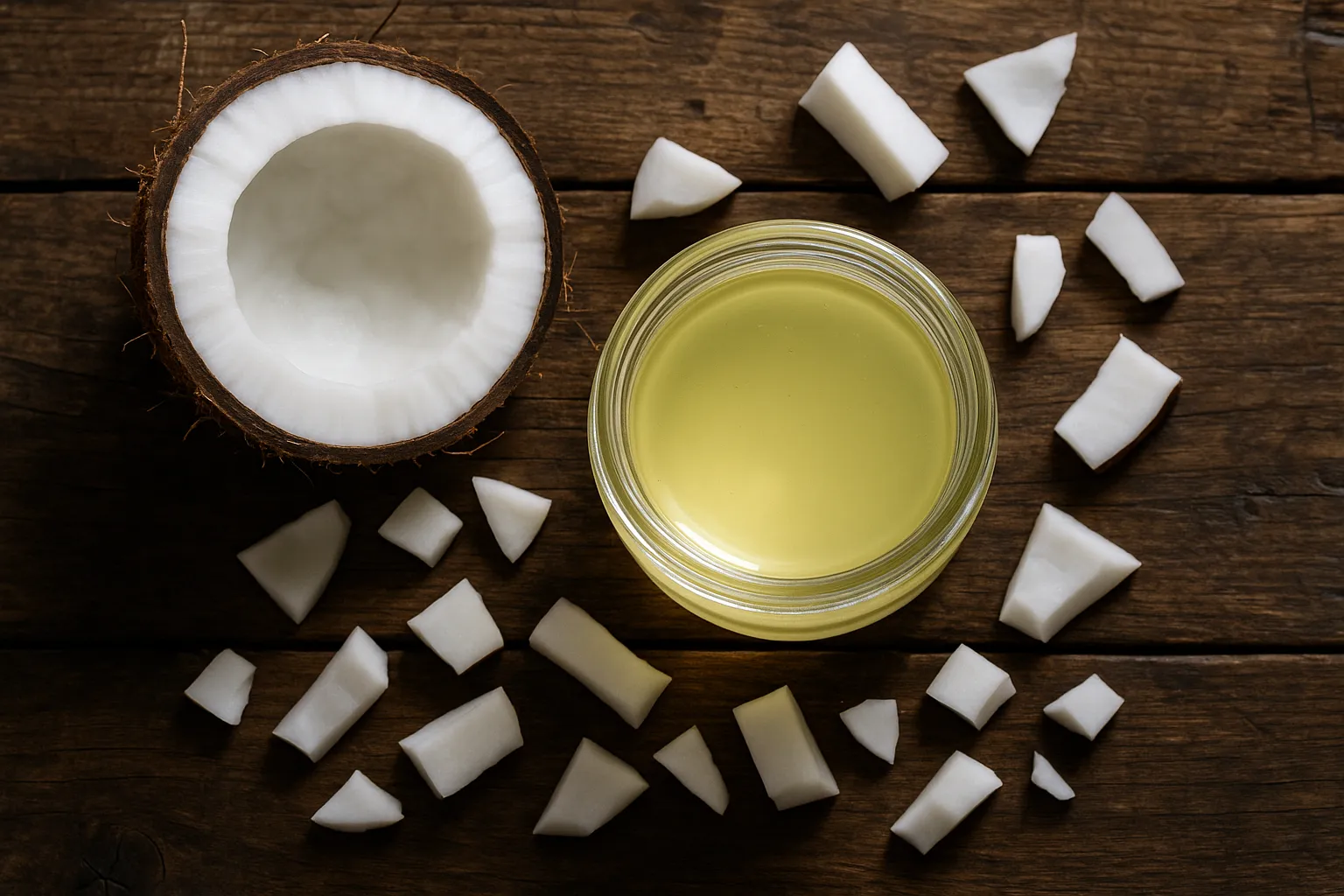
मीठी खुशबू और क्रीमी टेक्सचर वाला यह तेल दक्षिणी भारत से लेकर ट्रॉपिकल किचन तक लोकप्रिय है, लेकिन 90% सैचुरेटेड फैट होने के कारण इसे समझदारी से यूज़ करना ज़रूरी है।
त्वरित पोषण तथ्य
प्रति 1 टेबलस्पून (14 g)
| पोषक तत्व | मात्रा |
|---|---|
| कैलोरी | 120 kcal |
| प्रोटीन | 0 g |
| कार्बोहाइड्रेट | 0 g |
| कुल फैट | 14 g |
| सैचुरेटेड फैट | 12 g |
| मोनोअनसैचुरेटेड | 0.8 g |
| पॉलीअनसैचुरेटेड | 0.2 g |
| MCT कंटेंट | 7-9 g |
| स्मोक पॉइंट | 177 °C (350 °F) |
| विटामिन E | 0.01 mg |
मैक्रोन्यूट्रिएंट ब्रेकडाउन
 ChatGPT
  Claude
  AI Mode
  Perplexity
न्यूट्रिशनिस्ट इनसाइट
नारियल तेल किसी भी कुकिंग ऑयल से सबसे ज़्यादा सैचुरेटेड फैट देता है। 55-65% MCTs होते हैं, लेकिन American Heart Association LDL बढ़ने की वजह से इसका सीमित उपयोग सुझाती है। इसे कम मात्रा में रखें और unsaturated fats से बैलेंस करें।
मिथक बनाम सच्चाई
मिथक #1: नारियल तेल दिल के लिए बेस्ट है
सच्चाई: यह ऑलिव, कैनोला या सोया ऑयल की तुलना में LDL (bad) कोलेस्ट्रॉल ज़्यादा बढ़ाता है। 2020 की समीक्षा में औसतन 10.47 mg/dL LDL वृद्धि मिली।
मिथक #2: यह पेट की चर्बी गलाता है
सच्चाई: रिसर्च में सिर्फ 0.5-1 kg वजन घटा, वो भी 12 हफ्तों में। हर टेबलस्पून 120 कैलोरी जोड़ता है इसलिए ओवरईट करने पर वजन बढ़ेगा, घटेगा नहीं।
मिथक #3: MCT होने से यह अनोखा फैट है
सच्चाई: नारियल तेल में 35-45% long-chain saturated fat (palmitic, stearic) भी है जो LDL बढ़ाता है। Pure MCT oil में 95-100% MCT मिलता है इसलिए टारगेटेड फायदा वहीं से लें।
मिथक #4: यह मेटाबॉलिज्म तेज कर देता है
सच्चाई: MCTs से energy expenditure लगभग 5% (≈48 कैलोरी) बढ़ती है, लेकिन एक टेबलस्पून 120 कैलोरी जोड़ देता है। नेट बैलेंस पॉज़िटिव रहता है।
मिथक #5: सभी न्यूट्रिशनिस्ट इसे recommend करते हैं
सच्चाई: 2016 सर्वे में 72% अमेरिकन ने इसे हेल्दी माना, जबकि सिर्फ 37% एक्सपर्ट्स सहमत थे। मार्केटिंग बनाम विज्ञान का गैप साफ दिखता है।
मिथक #6: बटर से बेहतर विकल्प है
सच्चाई: दोनों में सैचुरेटेड फैट हाई है। बटर 7 g (51%) देता है, नारियल तेल 12 g (86%)। रोजमर्रा के लिए ऑलिव या एवोकाडो ऑयल ज्यादा बेहतर हैं।
अलग-अलग हेल्थ गोल के लिए NutriScore
| हेल्थ गोल | NutriScore | कारण |
|---|---|---|
| वजन घटाना |  | 120 कैलोरी/टेबलस्पून, कम सैटायटी; आसानी से ओवरईटिंग। कोई प्रूव्ड फैट-बर्न प्रभाव नहीं। |
| मसल गेन |  | कैलोरी डेंस तो है लेकिन प्रोटीन और माइक्रोन्यूट्रिएंट्स नहीं। बेहतर है इसे प्रोटीन सोर्स के साथ पेयर करें। |
| डायबिटीज मैनेजमेंट | | कार्ब नहीं, इसलिए इंस्टेंट ग्लूकोज़ स्पाइक नहीं; पर ज्यादा सैचुरेटेड फैट इंसुलिन सेंसिटिविटी कम कर सकता है। |
| PCOS / हार्मोन बैलेंस | | PCOS में एंटी-इन्फ्लेमेटरी फैट (ऑलिव, ओमेगा-3) बेहतर रहते हैं। सैचुरेटेड फैट इन्फ्लेमेशन बढ़ा सकता है। |
| प्रेग्नेंसी न्यूट्रिशन | | थोड़ी मात्रा सुरक्षित है पर DHA या जरूरी माइक्रोन्यूट्रिएंट्स नहीं मिलते। |
| वायरस/फ्लू रिकवरी | | लॉरिक एसिड के एंटीमाइक्रोबियल दावे बहुत स्ट्रॉन्ग नहीं हैं। इम्यून सपोर्ट के लिए विटामिन C, जिंक, हाई-प्रोटीन डाइट बेहतर है। |
पर्सनलाइज़्ड न्यूट्रिशन
NutriScan ऐप के साथ अपनी फैट इनटेक ट्रैक करें और सैचुरेटेड बनाम अनसैचुरेटेड फैट को लक्ष्य के हिसाब से बैलेंस करें।
ब्लड शुगर प्रतिक्रिया
नारियल तेल में कार्बोहाइड्रेट शून्य है, इसलिए यह ब्लड शुगर तुरंत नहीं बढ़ाता। लेकिन लंबे समय तक सैचुरेटेड फैट ज़्यादा लेने से इंसुलिन सेंसिटिविटी प्रभावित हो सकती है।
ब्लड ग्लूकोज़ असर
नारियल तेल तुरंत ग्लूकोज़ नहीं बढ़ाता, इसलिए चार्ट फ्लैट है। फिर भी व्यक्तिगत मेटाबोलिक प्रतिक्रिया अलग हो सकती है। यह मेडिकल सलाह नहीं है।
बेहतर फैट बैलेंस कैसे करें
- 🫒 ऑलिव ऑयल: मोनोअनसैचुरेटेड फैट से हार्ट हेल्थ सपोर्ट।
- 🥑 एवोकाडो ऑयल: हाइ smoke point (271 °C), न्यूट्रल फ्लेवर।
- 🌰 नट ऑयल्स (अखरोट, बादाम): ओमेगा-3 और विटामिन E।
- 🐟 फैटी फिश: EPA/DHA से इन्फ्लेमेशन कंट्रोल।
किचन टिप्स:
- बेकिंग: हल्की नारियल फ्लेवर वाली कुकीज़, बार्स के लिए परफेक्ट।
- स्टर-फ्राई: मीडियम हीट तक सीमा रखें और 1 टेबलस्पून से ज्यादा न लें।
- हाई-हीट फ्राइंग: एवोकाडो ऑयल या घी बेहतर हैं।
- सलाद/फिनिशिंग: ऑलिव ऑयल चुनें।
निष्कर्ष: स्वाद के लिए कभी-कभी ठीक, लेकिन डेली कुकिंग ऑयल नहीं।
क्या नारियल तेल कोलेस्ट्रॉल बढ़ाता है?
हाँ। रिसर्च के अनुसार LDL लगभग 10.47 mg/dL तक बढ़ सकता है जब इसे unsaturated ऑयल से compare किया गया। HDL थोड़ा बढ़ेगा, लेकिन हाई LDL ज्यादा चिंता देता है।
क्या करें: जिनका कोलेस्ट्रॉल या हार्ट जोखिम हाई है वे रेगुलर यूज़ से बचें और ऑलिव/एवोकाडो ऑयल अपनाएं।
त्वचा और बालों के लिए कैसा है?
टॉपिकल यूज़ से मॉइस्चर और शाइन मिलता है, खासकर ड्राई स्किन/हेयर में।
ध्यान दें:
- एक्ने-प्रोन स्किन पर पोर्स बंद कर सकता है।
- फाइन हेयर पर हेवी फील दे सकता है।
- पहले पैच टेस्ट करें।
यह गाइड खाने पर फोकस करती है; ब्यूटी यूज़ के लिए अपनी स्किन-टाइप के हिसाब से एडजस्ट करें।


समान पोषण वाले खाद्य विकल्प
4505 Chicharrones Classic Chili Salt
7 Eleven Japan Crispy Corn Cheese
और भी हेल्थ टूल्स और रिसोर्स
40 साल के Male के लिए Diet Plan
AI Calorie Counter App: photo लो, calories देखो, free
AI Nutritionist App: Monika से meals पर बात करो
Best Protein Supplements Women के लिए
Bulking Meal Plan App: surplus और protein एक साथ
ChatGPT Calorie Counter Alternative: जो total भी याद रखे
ChatGPT Diet Plan Alternative: जो खाया वो track भी करे
ChatGPT Weight Loss Coach Alternative: वज़न भी track करे
Fast Food Calorie Counter App: burger की calories photo से
Indian Diet Plan App: dal, roti, sabzi का सही हिसाब
Indian Food Calorie Calculator
Indian Food Calorie Calculator - भारतीय खाने के लिए तुरंत Nutrition Facts — 2026
Intermittent Fasting App for Women: timer साथ meal log भी
Intermittent Fasting Tracker App - Free Timer, बिना Trial
Macro Tracker App: फोटो से भरें protein, carb, fat
Mediterranean Diet Meal Plan App: तेल भी गिने
Monthly Grocery List Generator
Nutrition Label Scanner App: आपके खाए हिस्से का हिसाब
Vegetarian Meal Plan App: protein target वाला 28 दिन का plan
Voice-Activated Calorie Counter - बोलकर Log करें Meals और Track करें Nutrition Hands-Free — 2026
Water Tracker App: free पानी और Calorie Log
अक्सर पूछे जाने वाले प्रश्न
क्या coconut oil स्वास्थ्य के लिए अच्छा है?
Coconut oil is 90% saturated fat, which raises LDL (bad) cholesterol. While it contains MCTs that may have modest benefits, the American Heart Association does not recommend it as a healthy oil.
Evidence summary: Multiple studies show coconut oil increases LDL cholesterol by 10-15 mg/dL compared to unsaturated oils; no studies show cardiovascular benefits.
Better alternatives: Olive oil (monounsaturated), avocado oil (high smoke point), canola oil (budget-friendly).
Does coconut oil help with weight loss?
Very limited evidence. Studies show 0.5-1 kg loss over 12 weeks - barely significant and likely due to overall diet changes, not coconut oil itself.
Reality check: One tablespoon has 120 calories. If you add coconut oil to your diet without reducing other calories, you'll gain weight. No oil burns fat on its own; calorie deficit is required for weight loss.
What are MCTs and why do they matter?
MCTs (medium-chain triglycerides) make up 55-65% of coconut oil. They're absorbed faster than long-chain fats and go directly to the liver for energy, potentially providing quicker fuel.
Key facts:
- Coconut oil: 55-65% MCTs (mostly lauric acid, which behaves more like long-chain fat)
- Pure MCT oil: 95-100% MCTs (mostly C8 and C10)
- Benefits: Modest energy boost, slight metabolism increase (5%)
If targeting MCT benefits specifically, pure MCT oil supplements are more effective than coconut oil.
Can I use coconut oil for cooking?
Yes, but sparingly. Coconut oil has a smoke point of 350°F (177°C), suitable for low-medium heat sautéing and baking.
Recommendations:
- Baking: Works well, adds coconut flavor
- Sautéing: Acceptable for medium heat, strong flavor
- High heat: Use avocado oil (520°F) instead
- Salads/finishing: Use olive oil for heart health
Bottom line: Fine for occasional use or flavor, but not your everyday cooking oil.
Is virgin coconut oil better than refined?
Virgin (unrefined) coconut oil retains more antioxidants, natural coconut flavor, and is cold-pressed from fresh coconut meat. Refined is processed, bleached, and deodorized with a neutral taste.
Nutritionally: Both have the same calories (120), fat (14g), and saturated fat (12g) per tablespoon.
Choose virgin if: You want coconut flavor and antioxidants Choose refined if: You want neutral flavor for baking
Neither changes the saturated fat concern.
How much coconut oil per day is safe?
General recommendation: Limit to 1-2 tablespoons daily if using, and balance with unsaturated fats.
Context:
- American Heart Association recommends keeping saturated fat to 5-6% of total calories
- For a 2,000 calorie diet: max 120-140 calories from saturated fat = ~13g
- One tablespoon coconut oil = 12g saturated fat (nearly your entire daily limit)
Better approach: Use coconut oil occasionally for flavor; rely on olive, avocado, and nut oils for everyday cooking and health benefits.
Does coconut oil raise cholesterol?
Yes. Research shows coconut oil raises LDL (bad) cholesterol by 10.47 mg/dL compared to unsaturated fats. It also raises HDL (good) cholesterol, but the LDL increase is concerning for heart health.
What this means: If you have high cholesterol, heart disease risk, or family history of cardiovascular issues, avoid regular coconut oil use. Choose olive or avocado oil instead.
Can I use coconut oil for skin and hair?
Topical use is generally safe and popular in beauty routines. Coconut oil can moisturize skin and add shine to hair.
However:
- May clog pores for acne-prone skin
- Heavy for fine hair; can cause buildup
- Patch test before full application
This FAQ focuses on nutritional/dietary use. For beauty applications, individual tolerance varies.