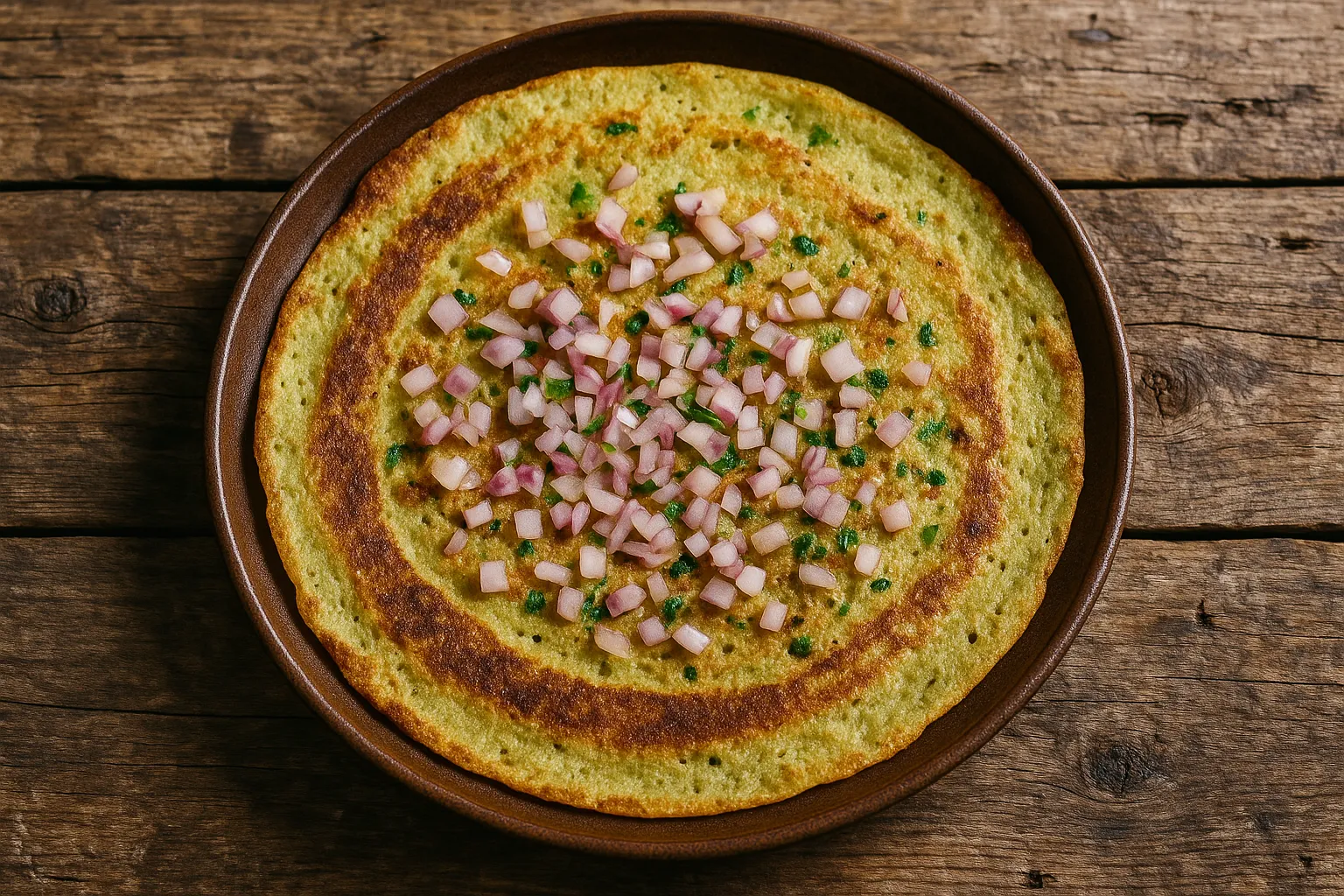
Onion Peserattu: कैलोरी, पोषण और स्वास्थ्य लाभ
Traditional Andhra breakfast powerhouse made from whole green gram, delivering high प्रोटीन, फाइबर, and sustained energy in every crispy dosa.
झटपट न्यूट्रिशन फैक्ट्स
Per 1 Peserattu Dosa (50g)
| पोषक तत्व | मात्रा |
|---|---|
| कैलोरी | 102 kcal |
| प्रोटीन | 6g |
| कार्बोहाइड्रेट | 19g |
| फाइबर | 3.5g |
| शुगर | 1.5g |
| वसा | 0.5g |
| आयरन | 1mg |
| कैल्शियम | 23mg |
| Folate | 80µg |
| मैग्नीशियम | 28mg |
मैक्रोन्यूट्रिएंट ब्रेकडाउन
 ChatGPT
  Claude
  AI Mode
  Perplexity
पोषण विशेषज्ञ की सलाह
Peserattu delivers 6g complete plant प्रोटीन per dosa from whole green gram, making it superior to regular rice dosas. The combination of प्रोटीन and फाइबर प्रदान करता है 4-5 hours of sustained energy, ideal for active mornings.
मिथक बनाम सच
मिथक #1: Peserattu Is Too Heavy for वजन घटाना
सच्चाई: Peserattu is excellent for वजन घटाना despite seeming filling. At 102 कैलोरी with 6g प्रोटीन and 3.5g फाइबर, it बढ़ावा देता है satiety and रोकता है overeating later. The high प्रोटीन मदद करता है maintain muscle mass के दौरान calorie deficit, crucial for स्वस्थ वजन घटाना.
मिथक #2: Diabetics Should Avoid Peserattu Due to कार्ब्स
सच्चाई: Peserattu is actually डायबिटीज-friendly. Moong dal has a low glycemic index (38), and the 6g प्रोटीन and 3.5g फाइबर slow glucose absorption. जब paired with sambar or chutney, ब्लड शुगर impact is minimal.
मिथक #3: Peserattu Must Be Fermented Like Regular Dosa
सच्चाई: Traditional peserattu requires NO fermentation, unlike rice-urad dal dosa. Simply soak green gram for 4-6 hours, grind, and make dosas immediately. This makes it quicker to prepare and easier to digest for those sensitive to fermented foods.
मिथक #4: Moong Dal Lacks Complete प्रोटीन
सच्चाई: जबकि individual plant proteins may lack certain amino acids, moong dal प्रदान करता है a well-balanced amino acid profile. जब combined with onions and served with rice or roti throughout the day, it delivers complete प्रोटीन nutrition comparable to animal sources.
मिथक #5: Peserattu Causes Gas and Bloating
सच्चाई: Properly soaked and ground green gram is generally well-tolerated. If you experience gas, ensure adequate soaking time (6+ hours), add ginger and cumin to the batter, and start with one dosa दैनिक. Most people adapt well within a week.
मिथक #6: Onions in Peserattu Reduce Nutritional Value
सच्चाई: Onions enhance peserattu's nutrition by adding quercetin (antioxidant), विटामिन C, and prebiotic fibers. They improve flavor without significantly impacting कैलोरी or macros, making the dosa more enjoyable and पौष्टिक.
हेल्थ गोल्स के हिसाब से न्यूट्रीस्कोर
| स्वास्थ्य लक्ष्य | NutriScore | यह स्कोर क्यों? |
|---|---|---|
| वजन घटाना |  | 102 कैलोरी, 6g प्रोटीन, 3.5g फाइबर promote fullness for 4-5 hours. रोकता है snacking. |
| मांसपेशी वृद्धि | | Excellent plant प्रोटीन (6g), complete amino acids from moong dal. Ideal pre/post-workout meal. |
| डायबिटीज प्रबंधन | | Low GI (38), high प्रोटीन and फाइबर stabilize ब्लड शुगर. Safe for regular consumption. |
| पीसीओएस प्रबंधन | | Low glycemic impact, high प्रोटीन सहायता करता है hormone balance, anti-inflammatory moong dal properties. |
| गर्भावस्था पोषण | | Rich in folate (80µg) for fetal development, आयरन for blood health, प्रोटीन for growth, easy to digest. |
| Viral/Flu Recovery |  | Easy to digest, प्रदान करता है प्रोटीन for healing, sustained energy. Light yet nourishing. |
व्यक्तिगत पोषण
अपने भोजन को ट्रैक करें with NutriScan for personalized NutriScores based on your specific health goals!
ब्लड शुगर रेस्पॉन्स to Peserattu
Understanding how peserattu affects your रक्त ग्लूकोज demonstrates its superiority over regular rice dosa for ब्लड शुगर management.
सामान्य ग्लूकोज प्रतिक्रिया वक्र
यह चार्ट दिखाता है typical रक्त ग्लूकोज response for general स्वस्थ individuals. व्यक्तिगत प्रतिक्रियाएं भिन्न हो सकती हैं. यह मेडिकल सलाह नहीं है.
कैसे करें: Optimize ब्लड शुगर रेस्पॉन्स
Pairing peserattu with प्रोटीन-rich sides further stabilizes glucose levels:
- 🥥 Coconut chutney - स्वस्थ fats slow carb absorption
- 🥘 Sambar or dal - Additional प्रोटीन and फाइबर
- 🥄 Tomato-onion chutney - Low-calorie, nutrient-rich
- 🥗 Mixed vegetable curry - Adds volume and micronutrients
This combination creates a complete, balanced meal with stable ब्लड शुगर levels lasting 5-6 hours, preventing mid-morning energy crashes.
सांस्कृतिक महत्व
Peserattu (also spelled Pesarattu) is the iconic breakfast of Andhra Pradesh and Telangana, dating back several centuries.
In Andhra & Telangana:
- Considered the ultimate comfort breakfast food
- अक्सर served with upma (a savory semolina dish) on the side
- Traditional accompaniments: allam chutney (ginger chutney) or coconut chutney
- Variations include onion peserattu, upma pesarattu, and rava peserattu
- Symbol of Telugu culture and hospitality
- Green gram (pesara pappu) is considered highly auspicious
Modern Adaptations:
- Available in cafés worldwide as "green gram dosa"
- Health-conscious variations with quinoa, oats, or millets
- Popular among vegans and fitness enthusiasts for high प्रोटीन
- Featured in Ayurvedic diets for easy digestion and cooling properties
तुलना और विकल्प
Peserattu vs Similar Indian Breakfast Items (Per 1 Dosa/Serving)
| पोषक तत्व | 🥞 Peserattu | 🥞 Rice Dosa | 🍞 Idli (2 pcs) | 🥪 Poha |
|---|---|---|---|---|
| कैलोरी | 102 kcal | 86 kcal | 78 kcal | 158 kcal |
| कार्ब्स | 19g | 17g | 16g | 30g |
| फाइबर | 3.5g | 1g | 1.5g | 2g |
| प्रोटीन | 6g | 2g | 3g | 3g |
| वसा | 0.5g | 0.3g | 0.2g | 5g |
| आयरन | 1mg | 0.3mg | 0.5mg | 1.2mg |
| GI | 38 (Low) | 60-75 (Medium-High) | 60 (Medium) | 55-60 (Medium) |
| सबसे अच्छा | High प्रोटीन, वजन घटाना | Light, easy digestion | Low-calorie, quick energy | Quick prep, comfort food |
अक्सर पूछे सवाल
Is peserattu good for वजन घटाना?
Yes, peserattu is excellent for वजन घटाना. One dosa has 102 कैलोरी but delivers 6g प्रोटीन and 3.5g फाइबर that keep you full for 4-5 hours. The high प्रोटीन content मदद करता है preserve muscle mass के दौरान calorie restriction.
Best practices: Limit to 2 dosas with chutney for breakfast (total 250 कैलोरी); avoid adding excessive oil जबकि cooking; pair with sambar for added vegetables and फाइबर; skip cheese or paneer toppings if watching कैलोरी strictly.
Can diabetics eat peserattu?
Absolutely. Peserattu is one of the best South Indian breakfast options for diabetics due to its low glycemic index (38) from whole green gram.
Tips for diabetics:
- Eat 1-2 dosas with vegetable sambar or chutney
- Pair with प्रोटीन (paneer, egg) for better ब्लड शुगर control
- Best timing: breakfast or lunch, not dinner
- Monitor हिस्सा sizes (1-2 dosas maximum)
The 6g प्रोटीन and 3.5g फाइबर per dosa slow glucose absorption, preventing ब्लड शुगर spikes common with regular rice dosas.
How much प्रोटीन is in peserattu?
One peserattu dosa शामिल है 6g of complete plant प्रोटीन from whole green gram (moong dal). Two dosas provide 12g प्रोटीन, which is substantial for a vegetarian breakfast.
For मांसपेशी वृद्धि or high-प्रोटीन diets, combine peserattu with प्रोटीन-rich sides like paneer curry, egg burji, or mixed dal for 20-25g total प्रोटीन per meal.
What are the main स्वास्थ्य लाभ of peserattu?
Key Benefits:
- High-Quality प्रोटीन: 6g complete amino acids from moong dal
- Digestive Health: 3.5g फाइबर सहायता करता है gut health and regularity
- Blood शुगर Control: Low GI (38) रोकता है energy crashes
- Weight Management: High satiety with मध्यम कैलोरी
- Heart Health: Low वसा, no cholesterol, rich in folate
- Easy Digestion: No fermentation required, gentle on stomach
- पोषक तत्व-Dense: आयरन, folate, magnesium, B विटामिन
जब is the best time to eat peserattu?
Depends on your goal:
- वजन घटाना: Breakfast (प्रदान करता है 4-5 hour satiety, रोकता है mid-morning snacking)
- मांसपेशी वृद्धि: Pre-workout (1-2 hours पहले) or post-workout (within 1 hour)
- डायबिटीज: Breakfast or lunch, paired with vegetables
- General Health: Breakfast is traditional and ideal for sustained energy
IMPORTANT NOTE
Avoid peserattu for dinner if you have slow digestion; the high फाइबर content may cause discomfort जब sleeping.
Is peserattu healthier than regular dosa?
Yes, peserattu is nutritionally superior to regular rice dosa in several ways:
Peserattu Advantages:
- 3x more प्रोटीन (6g vs 2g)
- 3x more फाइबर (3.5g vs 1g)
- Lower glycemic index (38 vs 60-75)
- No fermentation required (quicker preparation)
- Higher in आयरन, folate, and B विटामिन
- Made from whole legume (complete nutrition)
Regular Dosa Advantages:
- Lower कैलोरी (86 vs 102)
- Lighter, easier to digest for some
- More versatile for different fillings
- Crispier texture
Recommendation: Choose peserattu for प्रोटीन, फाइबर, and ब्लड शुगर control; choose regular dosa for lightness and lower कैलोरी if प्रोटीन is not a priority.
How many peserattu dosas should I eat per meal?
General Guidelines:
- 1-2 dosas - Weight loss or calorie control (102-204 कैलोरी)
- 2-3 dosas - Muscle gain, active lifestyle, or breakfast (204-306 कैलोरी)
- 1 dosa - डायबिटीज management with vegetable sides
- 2 dosas - गर्भावस्था (प्रदान करता है 12g प्रोटीन, 160µg folate)
Pairing suggestions: Serve with coconut chutney (30 cal), sambar (50 cal), or tomato-onion chutney (20 cal) for complete nutrition.
अपने भोजन को ट्रैक करें with NutriScan app to see how peserattu fits your personal nutrition goals.
Can I meal prep peserattu batter in advance?
Yes, with proper storage:
- Refrigerator: Batter stays ताज़ा for 2-3 days in airtight container
- Freezer: Can freeze for up to 1 month; thaw overnight in fridge
- Tip: Add water and adjust consistency पहले making dosas if batter thickens
Best practice: Make ताज़ा batter every 2 days for optimal taste and texture. Unlike rice dosa, peserattu batter does not require fermentation, so refrigeration immediately बाद में grinding is fine.


समान पौष्टिक खाद्य पदार्थ
4505 Chicharrones Classic Chili Salt
7 Eleven Japan Crispy Corn Cheese
Explore More Nutrition Tools & Resources
40 साल के Male के लिए Diet Plan
AI Calorie Counter App: photo लो, calories देखो, free
AI Nutritionist App: Monika से meals पर बात करो
Best Protein Supplements Women के लिए
Bulking Meal Plan App: surplus और protein एक साथ
ChatGPT Calorie Counter Alternative: जो total भी याद रखे
ChatGPT Diet Plan Alternative: जो खाया वो track भी करे
ChatGPT Weight Loss Coach Alternative: वज़न भी track करे
Fast Food Calorie Counter App: burger की calories photo से
Indian Diet Plan App: dal, roti, sabzi का सही हिसाब
Indian Food Calorie Calculator
Indian Food Calorie Calculator - भारतीय खाने के लिए तुरंत Nutrition Facts — 2026
Intermittent Fasting App for Women: timer साथ meal log भी
Intermittent Fasting Tracker App - Free Timer, बिना Trial
Macro Tracker App: फोटो से भरें protein, carb, fat
Mediterranean Diet Meal Plan App: तेल भी गिने
Monthly Grocery List Generator
Nutrition Label Scanner App: आपके खाए हिस्से का हिसाब
Vegetarian Meal Plan App: protein target वाला 28 दिन का plan
Voice-Activated Calorie Counter - बोलकर Log करें Meals और Track करें Nutrition Hands-Free — 2026
Water Tracker App: free पानी और Calorie Log