Palak Paneer: कैलोरी, पोषण और स्वास्थ्य लाभ
A nutrient-dense Indian classic combining आयरन-rich spinach with calcium-packed cottage cheese for complete vegetarian प्रोटीन.
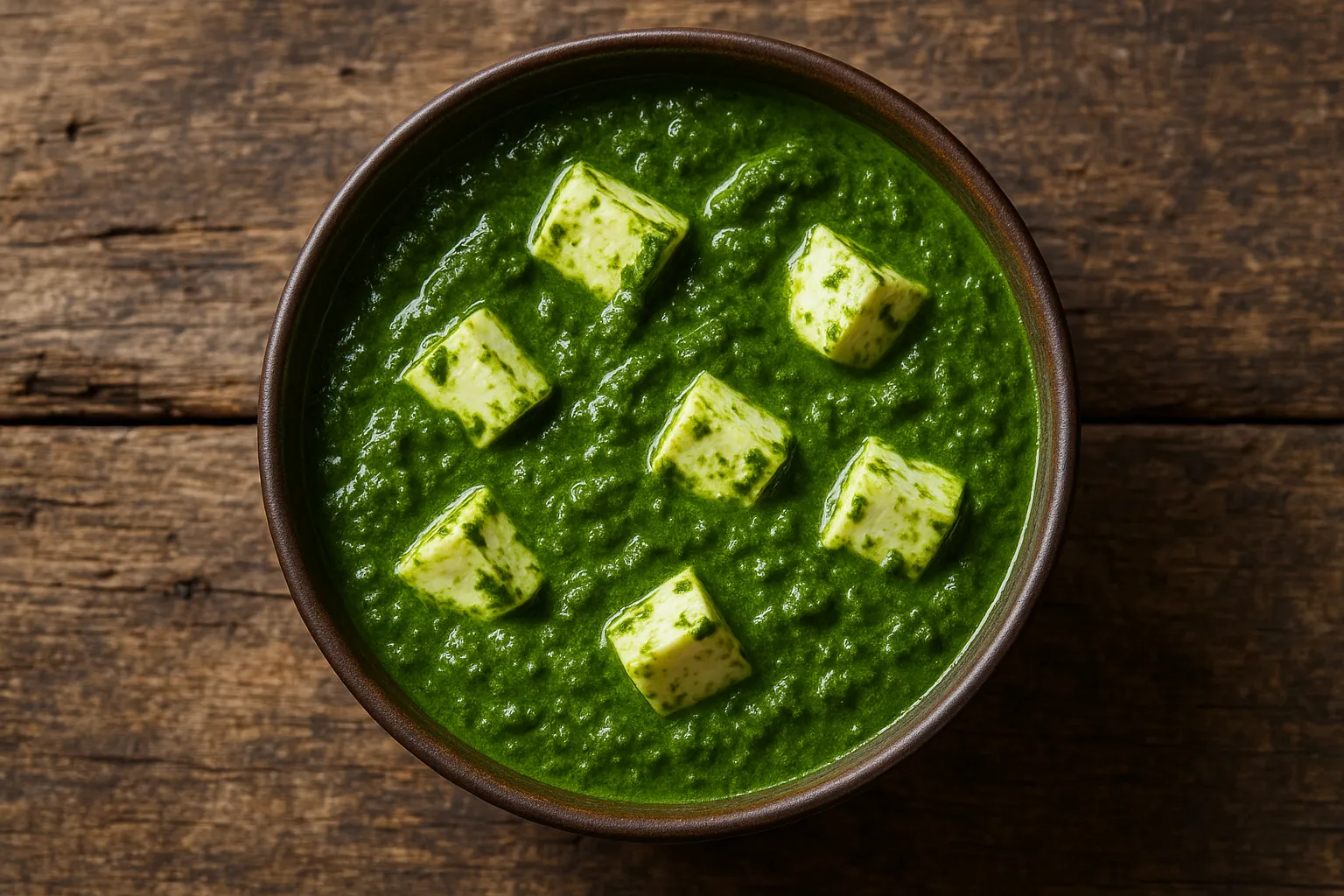
झटपट न्यूट्रिशन फैक्ट्स
Per 1 Serving (200g)
| पोषक तत्व | मात्रा |
|---|---|
| कैलोरी | 200 kcal |
| प्रोटीन | 18g |
| कार्बोहाइड्रेट | 8g |
| फाइबर | 2g |
| वसा | 11g |
| आयरन | 3.2mg |
| कैल्शियम | 320mg |
| मैग्नीशियम | 65mg |
| विटामिन A | 6725 IU |
| विटामिन K | 483mcg |
मैक्रोन्यूट्रिएंट ब्रेकडाउन
 ChatGPT
  Claude
  AI Mode
  Perplexity
पोषण विशेषज्ञ की सलाह
Palak paneer is one of India's most complete vegetarian meals. The bioavailable प्रोटीन (18g) combined with आयरन and calcium makes it ideal for building muscle, preventing anemia, and supporting हड्डियों का स्वास्थ्य. Spinach's high oxalate content is reduced through proper cooking and सुधारता है mineral absorption जब paired with paneer's calcium.
मिथक बनाम सच
मिथक #1: Spinach Is Too High in Oxalates to Eat Regularly
सच्चाई: जबकि spinach शामिल है oxalates, proper cooking methods reduce bioavailability by 50-60%. Pairing with calcium-rich paneer actually सुधारता है both आयरन and calcium absorption. Regular consumption (3-4 times weekly) is safe and लाभदायक.
मिथक #2: Palak Paneer Is Too High in कैलोरी for वजन घटाना
सच्चाई: At 200 कैलोरी प्रति सर्विंग with 18g प्रोटीन and 2g फाइबर, palak paneer सहायता करता है वजन घटाना by promoting fullness. The myth comes from cream-heavy restaurant versions (300+ कैलोरी). Home-पका हुआ versions with yogurt or minimal oil are weight-loss friendly.
मिथक #3: All आयरन in Spinach Is Unusable (Popeye Myth)
सच्चाई: जबकि spinach आयरन has lower bioavailability due to oxalates, cooking कम करता है oxalates by 50-60%, and pairing with विटामिन C सुधारता है absorption by 3-4 fold. One serving delivers usable आयरन for energy and oxygen transport.
मिथक #4: Vegetarians Can't Get Enough प्रोटीन from Palak Paneer
सच्चाई: Palak paneer प्रदान करता है 18g complete प्रोटीन प्रति सर्विंग (equal to 3 eggs), with all nine आवश्यक amino acids. Combined with whole grains or legumes, it matches meat प्रोटीन quality and सहायता करता है मांसपेशी वृद्धि and repair.
मिथक #5: पका हुआ Spinach Loses All Nutritional Value
सच्चाई: Cooking spinach actually बढ़ाता है bioavailability of आयरन, calcium, and beta-carotene by breaking cell walls. जबकि some विटामिन C is lost, the overall nutrient density बढ़ाता है. Lightly blanched spinach retains maximum पोषक तत्व.
मिथक #6: Palak Paneer Is Only Good for Anemia
सच्चाई: Beyond आयरन, palak paneer delivers bone-building calcium (320mg), hormone-supporting magnesium (65mg), immune-boosting विटामिन K (483mcg), and muscle-building प्रोटीन (18g). It सहायता करता है वजन घटाना, मांसपेशी वृद्धि, गर्भावस्था nutrition, and ब्लड शुगर control.
हेल्थ गोल्स के हिसाब से न्यूट्रीस्कोर
| स्वास्थ्य लक्ष्य | NutriScore | यह स्कोर क्यों? |
|---|---|---|
| वजन घटाना |  | 200 कैलोरी, 18g प्रोटीन बढ़ावा देता है fullness, minimal शुगर (2g net कार्ब्स). Best with brown rice or bajra; limit oil. |
| मांसपेशी वृद्धि |  | Complete प्रोटीन (18g), calcium for bone, आयरन for energy. Pair with whole grains for ideal post-workout meal. |
| डायबिटीज प्रबंधन | | Low glycemic load (8g कार्ब्स), high प्रोटीन slows digestion, spinach minimizes ब्लड शुगर spike. Excellent for ब्लड शुगर control. |
| पीसीओएस प्रबंधन | | High प्रोटीन (18g) for hormonal balance, low कार्ब्स, आयरन for energy. कम करता है insulin resistance जब paired with resistant starch. |
| गर्भावस्था पोषण | | Rich in folate (141mcg), आयरन (3.2mg), calcium (320mg) for fetal development, कम करता है anemia risk. Excellent throughout गर्भावस्था. |
| Viral/Flu Recovery | | Easy to digest प्रोटीन, विटामिन A and K for immunity, आयरन for energy recovery. Comforting and nutrient-dense. |
व्यक्तिगत पोषण
अपने भोजन को ट्रैक करें with NutriScan for personalized NutriScores based on your specific health goals!
ब्लड शुगर रेस्पॉन्स to Palak Paneer
Palak paneer has minimal glycemic impact due to low carbohydrate content (8g) and प्रोटीन-वसा combination that slows digestion.
सामान्य ग्लूकोज प्रतिक्रिया वक्र
*यह चार्ट दिखाता है typical रक्त ग्लूकोज response for general स्वस्थ individuals. व्यक्तिगत प्रतिक्रियाएं भिन्न हो सकती हैं. यह मेडिकल सलाह नहीं है.*
स्पाइक को कैसे कम करें
Palak paneer is already low-glycemic, but you can optimize further:
- 🌾 Pair with whole grains - Brown rice, bajra, or ragi roti slow carb absorption
- 🥜 Add nuts or seeds - Almonds, sunflower seeds increase स्वस्थ fats
- 🥬 Increase spinach ratio - More vegetables, less cream maintains nutrient density
- ⏱️ Timing matters - Lunch (1-2pm) प्रदान करता है better glucose control than dinner
सांस्कृतिक महत्व
Palak paneer is deeply rooted in Indian vegetarian cuisine, evolving from traditional saag preparations in Punjab and beyond.
In India:
- Signature dish of North Indian cuisine, विशेष रूप से Punjab and Delhi
- Vegetarian प्रोटीन staple in Hindu, Jain, and vegetarian households
- Spinach (palak) holds cultural significance के दौरान spring harvest season
- Paneer production dates back centuries in Indian dairy farming
- Considered a superfood in Ayurveda for आयरन content and पाचन स्वास्थ्य
Global Impact:
- Popular in South Asian restaurants worldwide as vegetarian showcase
- Growing adoption in vegetarian/vegan menus globally
- Symbol of स्वस्थ Indian cuisine beyond curry stereotypes
- Bridge food introducing non-vegetarians to plant-प्रोटीन options
तुलना और विकल्प
Palak Paneer vs Similar Vegetarian प्रोटीन Dishes (प्रति सर्विंग)
| पोषक तत्व | 🥬 Palak Paneer | 🍲 Chole Curry | 🍝 Paneer Tikka | 🥘 Saag Aloo |
|---|---|---|---|---|
| कैलोरी | 200 kcal | 180 kcal | 250 kcal | 220 kcal |
| प्रोटीन | 18g | 8g | 20g | 6g |
| कार्ब्स | 8g | 25g | 10g | 32g |
| फाइबर | 2g | 6g | 1g | 4g |
| आयरन | 3.2mg | 4.8mg | 1.2mg | 2.5mg |
| वसा | 11g | 8g | 16g | 12g |
| सबसे अच्छा | Complete meal | फाइबर, legumes | Pure प्रोटीन | Comfort food |
अक्सर पूछे सवाल
Is palak paneer good for वजन घटाना?
Yes. At 200 कैलोरी प्रति सर्विंग with 18g प्रोटीन and 2g फाइबर, palak paneer बढ़ावा देता है fullness and sustains energy. The key is minimal oil and cream. Home-पका हुआ versions (yogurt-based) work best; restaurant versions with heavy cream can exceed 350 कैलोरी. Limit to 1 serving दैनिक with brown rice or bajra roti for वजन घटाना.
Can diabetics eat palak paneer?
Yes, absolutely. The low carb content (8g), high प्रोटीन (18g), and वसा combination slow glucose absorption. Spinach has virtually no glycemic impact. Choose low-वसा paneer, reduce oil, skip cream, and pair with complex कार्ब्स (brown rice, ragi). One serving rarely causes ब्लड शुगर spikes.
How much प्रोटीन is in palak paneer?
One serving (200g) delivers approximately 18g complete प्रोटीन from paneer, providing all nine आवश्यक amino acids. This matches two eggs or 3 ounces of chicken. Combining with whole grains or legumes creates a complete, high-प्रोटीन meal ideal for vegetarians and muscle-builders.
What are the main स्वास्थ्य लाभ of palak paneer?
Five Key Benefits: आयरन (3.2mg) for energy and anemia prevention; calcium (320mg) and magnesium (65mg) for हड्डियों का स्वास्थ्य; विटामिन K (483mcg) for clotting and bone; folate (141mcg) for गर्भावस्था; complete प्रोटीन (18g) for muscle. It's a complete nutrient package supporting women's health, vegetarian diets, and overall wellness.
How can I reduce oxalates in palak paneer?
Briefly blanch spinach (2-3 minutes) पहले cooking; this कम करता है oxalate bioavailability by 50-60%. Pair with paneer's high calcium, which binds oxalates. Avoid mixing with high-oxalate foods like tea or chocolate immediately बाद में. Cook with minimal salt (excess सोडियम बढ़ाता है oxalate excretion).
क्या है: the best way to cook palak paneer for health?
Blanch spinach first to reduce oxalates; use minimal oil (1-2 teaspoons), add ginger-garlic for digestion; use yogurt or tomato base instead of heavy cream; cut paneer into small cubes for even cooking. Cook on medium heat 8-10 minutes. Serve with brown rice, ragi roti, or bajra for balanced nutrition and maximum satiety.




Similar पौष्टिक Vegetables
4505 Chicharrones Classic Chili Salt
7 Eleven Japan Crispy Corn Cheese
Explore More Nutrition Tools & Resources
40 साल के Male के लिए Diet Plan
AI Calorie Counter App: photo लो, calories देखो, free
AI Nutritionist App: Monika से meals पर बात करो
Best Protein Supplements Women के लिए
Bulking Meal Plan App: surplus और protein एक साथ
ChatGPT Calorie Counter Alternative: जो total भी याद रखे
ChatGPT Diet Plan Alternative: जो खाया वो track भी करे
ChatGPT Weight Loss Coach Alternative: वज़न भी track करे
Fast Food Calorie Counter App: burger की calories photo से
Indian Diet Plan App: dal, roti, sabzi का सही हिसाब
Indian Food Calorie Calculator
Indian Food Calorie Calculator - भारतीय खाने के लिए तुरंत Nutrition Facts — 2026
Intermittent Fasting App for Women: timer साथ meal log भी
Intermittent Fasting Tracker App - Free Timer, बिना Trial
Macro Tracker App: फोटो से भरें protein, carb, fat
Mediterranean Diet Meal Plan App: तेल भी गिने
Monthly Grocery List Generator
Nutrition Label Scanner App: आपके खाए हिस्से का हिसाब
Vegetarian Meal Plan App: protein target वाला 28 दिन का plan
Voice-Activated Calorie Counter - बोलकर Log करें Meals और Track करें Nutrition Hands-Free — 2026
Water Tracker App: free पानी और Calorie Log