Indian Seasonings: कैलोरी, पोषण और स्वास्थ्य लाभ
Aromatic spice blends that transform ordinary meals into flavorful masterpieces जबकि delivering powerful स्वास्थ्य लाभ.
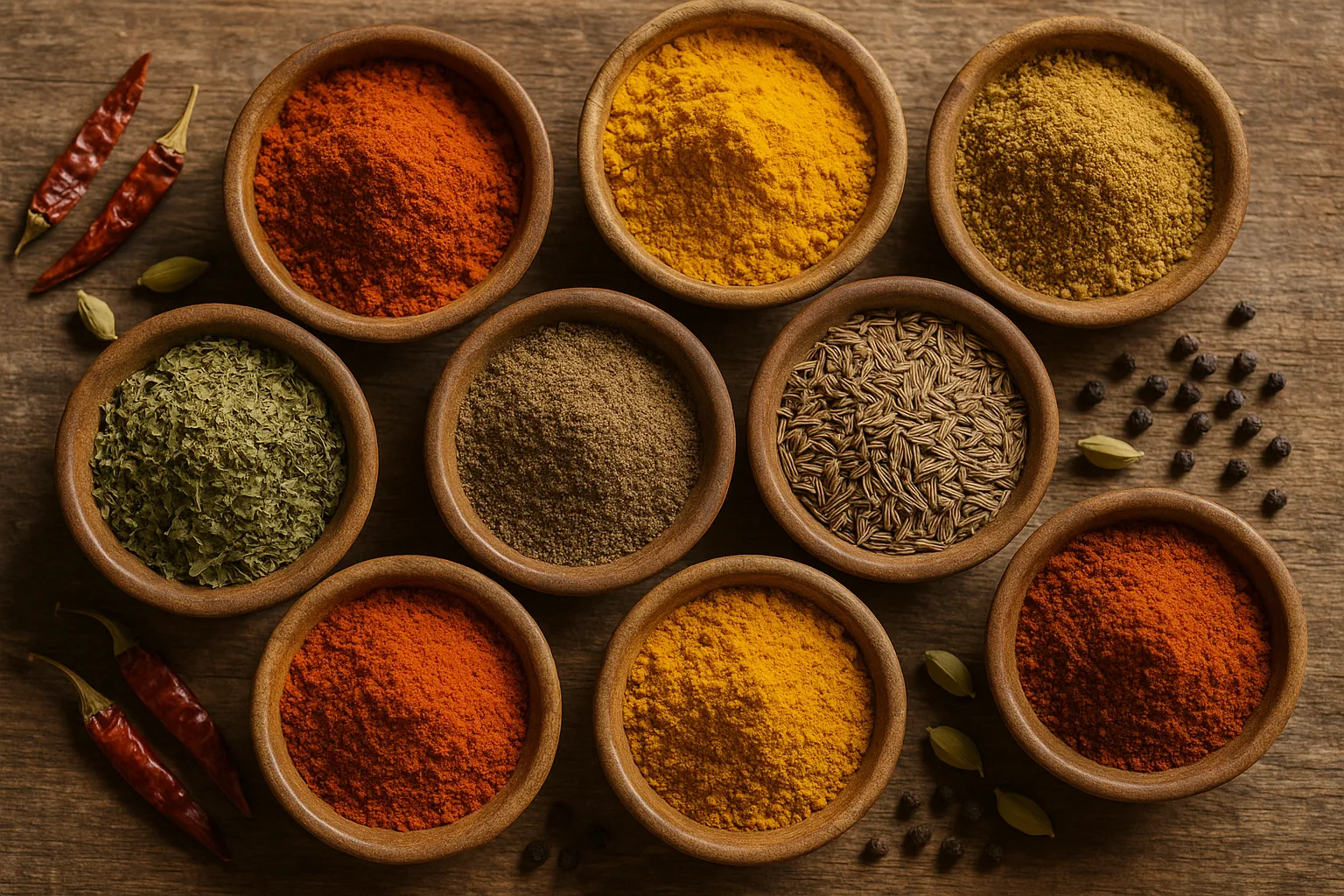
झटपट न्यूट्रिशन फैक्ट्स
Per 1 Teaspoon (2g, typical spice blend)
| पोषक तत्व | मात्रा |
|---|---|
| कैलोरी | 6 kcal |
| प्रोटीन | 0.3g |
| कार्बोहाइड्रेट | 1.2g |
| फाइबर | 0.5g |
| शुगर | 0.1g |
| वसा | 0.3g |
| सोडियम | 10-50mg |
| आयरन | 0.5mg |
| कैल्शियम | 15mg |
| विटामिन A | 30 IU |
मैक्रोन्यूट्रिएंट ब्रेकडाउन
 ChatGPT
  Claude
  AI Mode
  Perplexity
पोषण विशेषज्ञ की सलाह
Indian spices are nutritional powerhouses, not just flavor enhancers. Turmeric शामिल है curcumin (anti-inflammatory), cumin aids digestion, cinnamon regulates ब्लड शुगर. Using spices liberally adds minimal कैलोरी जबकि maximizing स्वास्थ्य लाभ.
मिथक बनाम सच
मिथक #1: Spicy Food is Unhealthy
सच्चाई: Indian spices are among the healthiest foods globally. Research shows regular spice consumption कम करता है सूजन, सुधारता है हृदय स्वास्थ्य, and lowers chronic disease risk. The heat from spices like cayenne actually boosts चयापचय.
मिथक #2: All Indian Food is High in सोडियम
सच्चाई: Pure spice blends contain minimal सोडियम (10-50mg per tsp). The सोडियम in Indian food comes from added salt, not spices. Use spices liberally to reduce salt dependency जबकि maintaining flavor intensity.
मिथक #3: Spices Have No Nutritional Value
सच्चाई: Spices are concentrated sources of एंटीऑक्सीडेंट, विटामिन, and खनिज. Turmeric has powerful anti-inflammatory curcumin; cinnamon सुधारता है insulin sensitivity; cumin सहायता करता है digestion and immunity.
मिथक #4: You Can't Eat Spicy Food with डायबिटीज
सच्चाई: Indian spices like cinnamon, fenugreek, and turmeric actually help manage डायबिटीज by improving insulin sensitivity and glucose चयापचय. Studies show regular consumption कम करता है HbA1c levels.
मिथक #5: Spices Cause Stomach Problems
सच्चाई: Most digestive issues come from heavy oils and rich gravies, not spices. Ginger, cumin, coriander, and fennel actually aid digestion, reduce bloating, and soothe upset stomachs. Used properly, spices heal the gut.
मिथक #6: Store-Bought Masala is Just as Good as ताज़ा
सच्चाई: ताज़ा ground spices contain 2-3 times more volatile oils and एंटीऑक्सीडेंट than pre-ground versions stored for months. Grinding whole spices just पहले cooking maximizes flavor and स्वास्थ्य लाभ. Store whole spices in airtight containers away from light.
हेल्थ गोल्स के हिसाब से न्यूट्रीस्कोर
| स्वास्थ्य लक्ष्य | NutriScore | यह स्कोर क्यों? |
|---|---|---|
| वजन घटाना |  | Negligible कैलोरी (5-20 per tsp), boost चयापचय, increase satiety, add flavor without वसा. Turmeric and black pepper enhance वसा burning. |
| मांसपेशी वृद्धि | | Anti-inflammatory properties aid recovery, improve प्रोटीन absorption, boost testosterone (fenugreek), enhance circulation (cayenne). Perfect for fitness enthusiasts. |
| डायबिटीज प्रबंधन | | Cinnamon, fenugreek, turmeric improve insulin sensitivity, lower ब्लड शुगर, reduce HbA1c. Use liberally in meals. |
| पीसीओएस प्रबंधन | | Turmeric कम करता है सूजन, cinnamon सुधारता है insulin sensitivity, fenugreek regulates hormones. All crucial for पीसीओएस management without adding कैलोरी. |
| गर्भावस्था पोषण |  | Most spices safe in culinary amounts. Ginger कम करता है morning sickness, cumin प्रदान करता है आयरन. Avoid excessive amounts of fenugreek and ajwain. |
| Viral/Flu Recovery | | Turmeric, ginger, black pepper boost immunity, reduce सूजन, fight infections. Cumin and coriander support respiratory health. Perfect immune-supporting foods. |
व्यक्तिगत पोषण
अपने भोजन को ट्रैक करें with NutriScan for personalized NutriScores based on your specific health goals!
Popular Indian Spice Blends
Understanding different masalas मदद करता है you choose the right blend for your dish and health goals.
Garam Masala (Warm Spice Mix)
Per tsp (2g): 6 kcal, 1.3g कार्ब्स, 0.3g प्रोटीन, 0.2g वसा
शामिल है: Cumin, coriander, cardamom, black pepper, cinnamon, cloves, nutmeg
स्वास्थ्य लाभ:
- Boosts चयापचय and digestion
- Anti-inflammatory properties
- सुधारता है हृदय स्वास्थ्य
- Enhances immunity
सबसे अच्छा: Curries, dal, rice dishes, meat preparations
Chaat Masala (Tangy Spice Mix)
Per tsp (2g): 5 kcal, 1.1g कार्ब्स, 0.2g प्रोटीन, 0.1g वसा
शामिल है: Dried mango powder (amchur), cumin, coriander, black salt, chili powder
स्वास्थ्य लाभ:
- Aids digestion with digestive enzymes
- Low सोडियम alternative to table salt
- Rich in विटामिन C from mango powder
- सहायता करता है gut health
सबसे अच्छा: Salads, fruits, street food, yogurt dishes
Tandoori Masala (Smoky Red Spice Mix)
Per tsp (2g): 6 kcal, 1.2g कार्ब्स, 0.3g प्रोटीन, 0.3g वसा
शामिल है: Coriander, cumin, garlic, paprika, cayenne, ginger, fenugreek
स्वास्थ्य लाभ:
- High antioxidant content from paprika
- Metabolism-boosting cayenne pepper
- ब्लड शुगर regulation (fenugreek)
- Anti-inflammatory ginger
सबसे अच्छा: ग्रिल्ड meats, paneer, vegetables, marinades
Curry Powder (Versatile Spice Mix)
Per tsp (2g): 7 kcal, 1.3g कार्ब्स, 0.3g प्रोटीन, 0.3g वसा
शामिल है: Turmeric, coriander, cumin, fenugreek, mustard, red pepper
स्वास्थ्य लाभ:
- Powerful anti-inflammatory (turmeric)
- सहायता करता है liver health
- सुधारता है brain function
- Regulates cholesterol
सबसे अच्छा: Curries, soups, stews, rice dishes
Blood शुगर Impact of Spices
Unlike carbohydrate-rich foods, spices have minimal impact on रक्त ग्लूकोज. In fact, many Indian spices actively help regulate ब्लड शुगर levels.
Blood शुगर Regulation Effect
यह चार्ट दिखाता है how adding Indian spices to a high-carb meal can help flatten the glucose spike. व्यक्तिगत प्रतिक्रियाएं भिन्न हो सकती हैं. यह मेडिकल सलाह नहीं है.
Best Spices for Blood शुगर Control
Research shows these spices significantly improve glucose चयापचय:
- 🌟 Cinnamon (1/2 tsp दैनिक) - सुधारता है insulin sensitivity by 20-30%
- 🌿 Fenugreek (1 tsp seeds) - Slows carb absorption, कम करता है post-meal glucose
- 🧄 Turmeric (1/2 tsp) - कम करता है सूजन affecting insulin resistance
- 🌶️ Cayenne Pepper - बढ़ाता है insulin production, सुधारता है glucose uptake
Add these to curries, dal, vegetables, and rice dishes for better ब्लड शुगर control.
सांस्कृतिक महत्व
Indian spices represent 5,000 years of culinary wisdom, deeply intertwined with Ayurvedic medicine and cultural traditions.
In India:
- Foundation of Ayurvedic medicine for healing and balance
- Each spice has specific "heating" or "cooling" properties
- Used in religious ceremonies and festivals (turmeric in weddings, saffron in offerings)
- Regional variations: Bengali panch phoron, South Indian sambar powder, Punjabi garam masala
- Spice trade shaped India's history and global connections for millennia
Ayurvedic Wisdom:
- Turmeric purifies blood and कम करता है सूजन
- Cumin cools the body and aids digestion
- Ginger stimulates digestion and circulation
- Cardamom balances all three doshas (Vata, Pitta, Kapha)
- Black pepper enhances nutrient absorption (विशेष रूप से turmeric)
Global Impact:
- Indian spices revolutionized global cuisine
- Valued more than gold in ancient trade routes
- Modern research validates ancient Ayurvedic uses
- Growing demand for organic Indian spices worldwide
तुलना और विकल्प
Popular Indian Spice Blends (Per 1 Teaspoon, 2g)
| पोषक तत्व | 🌶️ Garam Masala | 🌿 Chaat Masala | 🔥 Tandoori Masala | 🍛 Curry Powder |
|---|---|---|---|---|
| कैलोरी | 6 kcal | 5 kcal | 6 kcal | 7 kcal |
| कार्ब्स | 1.3g | 1.1g | 1.2g | 1.3g |
| फाइबर | 0.5g | 0.4g | 0.5g | 0.6g |
| प्रोटीन | 0.3g | 0.2g | 0.3g | 0.3g |
| वसा | 0.2g | 0.1g | 0.3g | 0.3g |
| सोडियम | 15mg | 40mg | 30mg | 10mg |
| आयरन | 0.5mg | 0.3mg | 0.6mg | 0.7mg |
| Flavor | Warm, aromatic | Tangy, salty | Smoky, spicy | Mild, versatile |
| सबसे अच्छा | Rich curries, dal | Salads, fruits | ग्रिल्ड foods | Soups, stews |
अक्सर पूछे सवाल
Are Indian seasonings स्वस्थ?
Yes, Indian seasonings are extremely स्वस्थ and should be used liberally. Research consistently shows they provide powerful स्वास्थ्य लाभ with minimal कैलोरी.
Key स्वास्थ्य लाभ:
- Powerful एंटीऑक्सीडेंट - Combat free radicals and aging
- Anti-inflammatory compounds - Reduce chronic सूजन
- Digestive aids - Improve gut health and nutrient absorption
- ब्लड शुगर regulation - Help manage डायबिटीज and insulin resistance
- Immunity boosters - Strengthen प्रतिरक्षा प्रणाली function
- Minimal कैलोरी - 5-20 कैलोरी per teaspoon
Studies show regular Indian spice consumption कम करता है risk of heart disease, डायबिटीज, cancer, and neurodegenerative diseases. The combination of turmeric, cumin, coriander is विशेष रूप से potent.
How many कैलोरी are in Indian masala?
Most Indian spice blends contain 5-20 कैलोरी per teaspoon (2g), making them negligible for calorie counting.
Specific masala कैलोरी:
- Garam masala: 6 kcal per tsp
- Chaat masala: 5 kcal per tsp
- Tandoori masala: 6 kcal per tsp
- Curry powder: 7 kcal per tsp
- Sambar powder: 8 kcal per tsp
महत्वपूर्ण note: You can use spices freely without worrying लगभग कैलोरी. Their स्वास्थ्य लाभ far outweigh the minimal energy they provide. Focus on reducing oil, ghee, and cream in cooking rather than limiting spices.
Can diabetics use Indian spices?
Yes, Indian spices are excellent for डायबिटीज management and should be incorporated दैनिक. Multiple studies show certain spices significantly improve ब्लड शुगर control.
Best spices for डायबिटीज:
- Cinnamon: सुधारता है insulin sensitivity by 20-30%; use 1/2 tsp दैनिक
- Fenugreek: Slows carb absorption, कम करता है post-meal glucose spikes
- Turmeric: कम करता है सूजन affecting insulin resistance
- Cumin: सहायता करता है glucose चयापचय and insulin production
Research published in PMC shows regular consumption of these spices कम करता है HbA1c levels and सुधारता है glucose चयापचय. Add them to dal, curries, vegetables, and rice for better ब्लड शुगर control.
How to use: Add 1/2 to 1 teaspoon of लाभदायक spices to each meal. हमेशा pair spices with balanced meals containing प्रोटीन, फाइबर, and स्वस्थ fats.
क्या है: the healthiest Indian spice?
Turmeric is the healthiest Indian spice due to its active compound curcumin, which has powerful anti-inflammatory and antioxidant properties backed by extensive research.
Why turmeric wins:
- कम करता है chronic सूजन (root cause of many diseases)
- सहायता करता है brain health and may prevent Alzheimer's
- सुधारता है हृदय स्वास्थ्य and blood vessel function
- मदद करता है manage arthritis pain
- सहायता करता है liver detoxification
- May reduce cancer risk
Close runners-up:
- Cinnamon - सबसे अच्छा ब्लड शुगर control and डायबिटीज management
- Ginger - Excellent for digestion, nausea, and सूजन
- Cumin - सहायता करता है immunity, digestion, and आयरन absorption
- Coriander - बढ़ावा देता है हृदय स्वास्थ्य and detoxification
Pro tip: Combine turmeric with black pepper (बढ़ाता है curcumin absorption by 2000%) and स्वस्थ वसा (ghee, olive oil) for maximum benefits.
Do Indian spices help with वजन घटाना?
Yes, several Indian spices actively support वजन घटाना through multiple mechanisms beyond just adding flavor.
Weight loss benefits:
- Turmeric - कम करता है वसा tissue growth, रोकता है new वसा cell formation
- Black pepper - बढ़ाता है चयापचय, blocks new वसा cells (piperine effect)
- Cumin - सुधारता है digestion, बढ़ाता है वसा burning by 25%
- Cayenne pepper - Boosts thermogenesis, कम करता है appetite, burns कैलोरी
- Ginger - Enhances satiety, सुधारता है वसा चयापचय
- Cinnamon - Regulates ब्लड शुगर, कम करता है cravings
How spices aid वजन घटाना:
- Add intense flavor without कैलोरी, वसा, or शुगर
- Make स्वस्थ foods more satisfying and delicious
- Reduce need for salt, शुगर, and unhealthy fats
- Boost चयापचय and thermogenesis
- Improve digestion and nutrient absorption
Best practice: Use spices liberally in dal, vegetables, lean proteins, and whole grains. They make स्वस्थ eating enjoyable and sustainable long-term.
Are there any side effects of Indian spices?
In culinary amounts (1/4 to 1 teaspoon per meal), Indian spices are safe for most people. हालांकि, excessive consumption or supplement doses may cause issues.
Potential side effects (rare):
- Digestive discomfort or heartburn (cayenne, black pepper in excess)
- Blood thinning (turmeric supplements with blood thinners)
- Allergic reactions (rare, but possible with any food)
- Drug interactions (turmeric with डायबिटीज medications)
Special considerations:
- गर्भावस्था: Culinary amounts safe; avoid medicinal doses of fenugreek, ajwain
- Blood disorders: Consult doctor पहले taking turmeric supplements
- Surgery: Stop turmeric supplements 2 weeks पहले surgery (blood thinning effect)
- Medications: Check interactions with डायबिटीज drugs, blood thinners
Safe usage: Stick to culinary amounts (1/4 to 1 tsp per dish), buy ताज़ा quality spices, avoid excessive consumption of any single spice, and consult healthcare provider पहले taking supplement doses.


समान पौष्टिक खाद्य पदार्थ
4505 Chicharrones Classic Chili Salt
7 Eleven Japan Crispy Corn Cheese
Explore More Nutrition Tools & Resources
40 साल के Male के लिए Diet Plan
AI Calorie Counter App: photo लो, calories देखो, free
AI Nutritionist App: Monika से meals पर बात करो
Best Protein Supplements Women के लिए
Bulking Meal Plan App: surplus और protein एक साथ
ChatGPT Calorie Counter Alternative: जो total भी याद रखे
ChatGPT Diet Plan Alternative: जो खाया वो track भी करे
ChatGPT Weight Loss Coach Alternative: वज़न भी track करे
Fast Food Calorie Counter App: burger की calories photo से
Indian Diet Plan App: dal, roti, sabzi का सही हिसाब
Indian Food Calorie Calculator
Indian Food Calorie Calculator - भारतीय खाने के लिए तुरंत Nutrition Facts — 2026
Intermittent Fasting App for Women: timer साथ meal log भी
Intermittent Fasting Tracker App - Free Timer, बिना Trial
Macro Tracker App: फोटो से भरें protein, carb, fat
Mediterranean Diet Meal Plan App: तेल भी गिने
Monthly Grocery List Generator
Nutrition Label Scanner App: आपके खाए हिस्से का हिसाब
Vegetarian Meal Plan App: protein target वाला 28 दिन का plan
Voice-Activated Calorie Counter - बोलकर Log करें Meals और Track करें Nutrition Hands-Free — 2026
Water Tracker App: free पानी और Calorie Log