Tomato Rasam: कैलोरी, पोषण और स्वास्थ्य लाभ
Traditional South Indian soup bursting with lycopene, एंटीऑक्सीडेंट, and warming spices—a light, nutrient-dense meal that सहायता करता है multiple health goals.
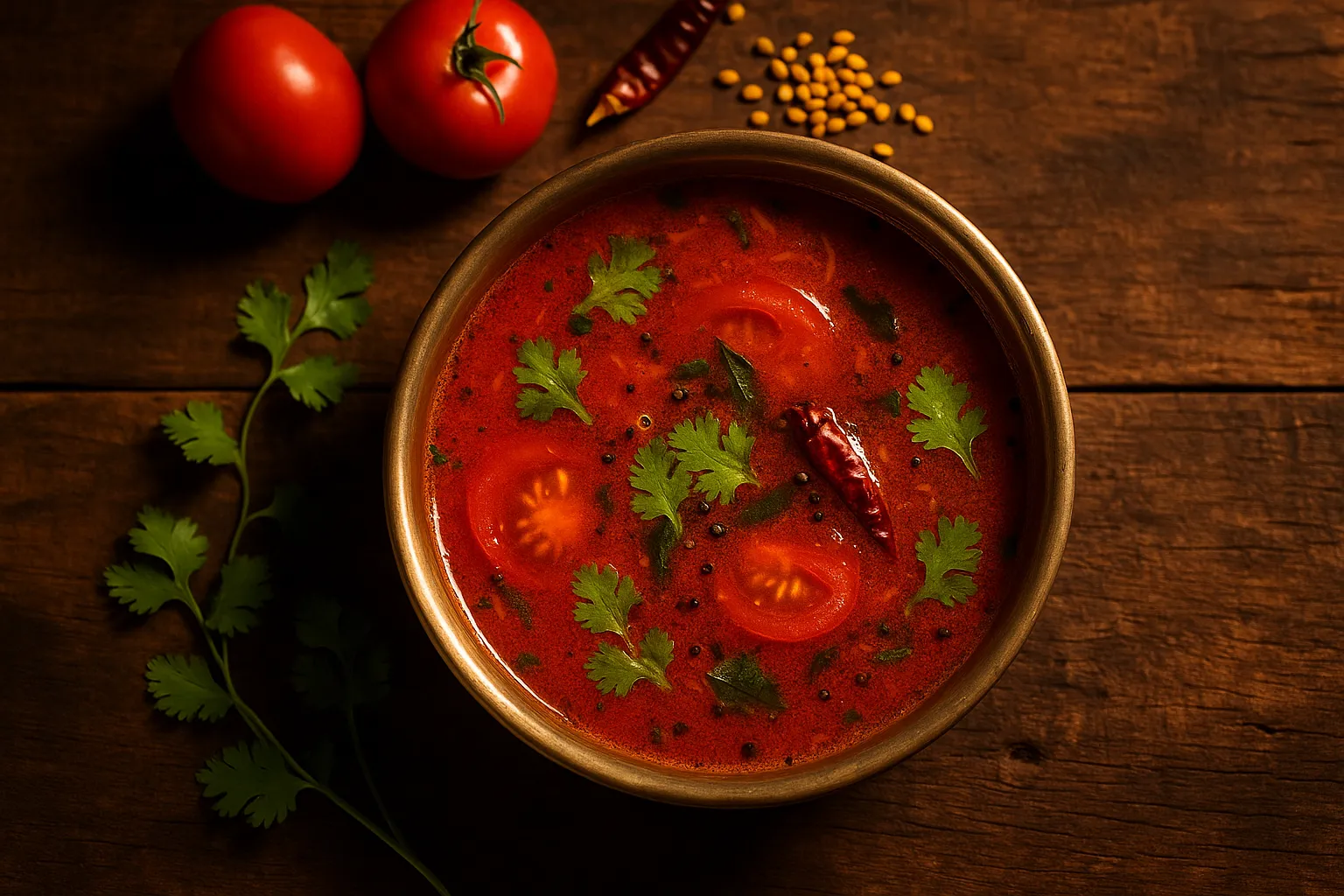
झटपट न्यूट्रिशन फैक्ट्स
Per 1 Serving (250ml)
| पोषक तत्व | मात्रा |
|---|---|
| कैलोरी | 50 kcal |
| प्रोटीन | 1.5g |
| कार्बोहाइड्रेट | 10g |
| फाइबर | 1.8g |
| शुगर | 5g |
| वसा | 0.5g |
| विटामिन C | 18mg |
| पोटैशियम | 280mg |
| Lycopene | 3mg |
| मैग्नीशियम | 15mg |
मैक्रोन्यूट्रिएंट ब्रेकडाउन
 ChatGPT
  Claude
  AI Mode
  Perplexity
पोषण विशेषज्ञ की सलाह
Tomato rasam delivers 36% of दैनिक विटामिन C in just one serving, supporting immunity and आयरन absorption. The spice blend (black pepper, cumin, fenugreek) stimulates digestion जबकि rasam's liquid base aids hydration—making it ideal as a pre-meal digestive or light evening soup.
मिथक बनाम सच
मिथक #1: Rasam is Too Bland for Nutrition
सच्चाई: The concentrated tomato base प्रदान करता है lycopene (3mg प्रति सर्विंग), a powerful antioxidant linked to हृदय स्वास्थ्य and reduced सूजन. Traditional spices like pepper enhance bioavailability—rasam is nutrient-dense despite being light.
मिथक #2: Soups Don't Support वजन घटाना
सच्चाई: High-water-content soups like rasam increase satiety at just 50 कैलोरी प्रति सर्विंग. The फाइबर (1.8g) and spices promote metabolic activity, making rasam an excellent pre-meal option that रोकता है overeating.
मिथक #3: Indian Soups are हमेशा High in कैलोरी
सच्चाई: Traditional tomato rasam, विशेष रूप से prepared with minimal oil, शामिल है only 0.5g वसा प्रति सर्विंग. Preparation method matters—rasam is nutrient-dense and light, unlike cream-based Indian soups that can exceed 200 कैलोरी.
मिथक #4: Rasam Lacks प्रोटीन for मांसपेशी वृद्धि
सच्चाई: जबकि rasam itself प्रदान करता है 1.5g प्रोटीन प्रति सर्विंग, it pairs perfectly with legume-based proteins जब served with beans, lentils, or as a base for chicken. The spices aid प्रोटीन digestion and amino acid absorption.
मिथक #5: Tomatoes Spike Blood शुगर
सच्चाई: Tomato rasam has a low glycemic index due to balanced कार्बोहाइड्रेट (10g), फाइबर (1.8g), and वसा. Research shows tomato-based preparations support glucose stability, विशेष रूप से जब paired with proteins or स्वस्थ fats.
मिथक #6: Rasam is Only a Side Dish
सच्चाई: In traditional Ayurveda, rasam serves as a standalone functional food that सहायता करता है digestion, boosts चयापचय, and प्रदान करता है metabolic warmth. It's complete as a light meal, विशेष रूप से with whole-grain bread or rice for sustained energy.
हेल्थ गोल्स के हिसाब से न्यूट्रीस्कोर
| स्वास्थ्य लक्ष्य | NutriScore | यह स्कोर क्यों? |
|---|---|---|
| वजन घटाना |  | 50 कैलोरी, 1.8g फाइबर बढ़ावा देता है fullness, high water content aids satiety. Perfect as pre-meal soup to reduce overall calorie intake. |
| मांसपेशी वृद्धि |  | Low प्रोटीन (1.5g प्रति सर्विंग) limits standalone use, but pairs excellently with legumes, lentils, or ग्रिल्ड chicken for complete muscle-building meals. |
| डायबिटीज प्रबंधन | | Low GI (25-30), only 10g कार्ब्स प्रति सर्विंग, फाइबर aids ब्लड शुगर control. Lycopene कम करता है oxidative stress linked to डायबिटीज. |
| पीसीओएस प्रबंधन |  | Low carbohydrate load, anti-inflammatory spices support hormonal health. Pair with स्वस्थ fats (coconut milk, olive oil drizzle) for improved insulin sensitivity. |
| गर्भावस्था पोषण | | Rich in folate (20mcg), विटामिन C enhances आयरन absorption, पोटैशियम रोकता है leg cramps, lycopene सहायता करता है fetal antioxidant defense. |
| Viral/Flu Recovery | | High विटामिन C (18mg) boosts immunity, warm liquid aids throat comfort, anti-inflammatory spices support recovery, easy to digest for compromised digestion. |
व्यक्तिगत पोषण
अपने भोजन को ट्रैक करें with NutriScan for personalized NutriScores based on your specific health goals!
ब्लड शुगर रेस्पॉन्स to Tomato Rasam
Understanding how rasam affects रक्त ग्लूकोज can help you make informed decisions लगभग timing and meal pairing.
सामान्य ग्लूकोज प्रतिक्रिया वक्र
यह चार्ट दिखाता है typical रक्त ग्लूकोज response for general स्वस्थ individuals. व्यक्तिगत प्रतिक्रियाएं भिन्न हो सकती हैं. यह मेडिकल सलाह नहीं है.
कैसे करें: Enhance Blood शुगर Control
Pairing tomato rasam with प्रोटीन or स्वस्थ वसा further flattens the glucose curve:
- 🥛 Pair with dhal (lentil soup) - Adds plant प्रोटीन and prebiotic फाइबर
- 🥥 Drizzle coconut milk or ghee - स्वस्थ fats slow absorption
- 🍞 Serve with whole-grain roti or brown rice - Balanced carbohydrate absorption
- 🥚 Add a उबला हुआ egg or paneer - Complete प्रोटीन stabilizes energy
This approach not only maintains steady ब्लड शुगर but extends satiety, making rasam an ideal pre-meal or standalone light dinner.
सांस्कृतिक महत्व
Tomato rasam is a cornerstone of South Indian cuisine, विशेष रूप से in Tamil Nadu and Karnataka, where it has been a breakfast staple for generations.
In India:
- Traditional Ayurvedic preparation uses warming spices (pepper, cumin, fenugreek) to support agni (digestive fire)
- Served as a दैनिक digestive aid in South Indian households, अक्सर बाद में heavy meals
- Regional variations: Tamil rasam (tomato-forward), Telugu rasam (tamarind-focused), Udupi rasam (coconut-milk-based)
- Preparation passed down through families, with recipes varying by household and season
Global Impact:
- Increasingly recognized in international wellness circles for anti-inflammatory benefits
- Lycopene content rivals that of tomato juice due to cooking concentration
- Simple, accessible recipe for plant-based eaters seeking nutrient-dense, low-calorie meals
तुलना और विकल्प
Tomato Rasam vs Similar Soups (Per 250ml Serving)
| पोषक तत्व | 🍅 Tomato Rasam | 🥕 Carrot Soup | 🥬 Vegetable Broth | 🍲 Cream of Tomato |
|---|---|---|---|---|
| कैलोरी | 50 kcal | 80 kcal | 15 kcal | 180 kcal |
| कार्ब्स | 10g | 16g | 2g | 12g |
| फाइबर | 1.8g | 2.2g | 0.5g | 1g |
| प्रोटीन | 1.5g | 1g | 1g | 4g |
| वसा | 0.5g | 0.8g | 0g | 14g |
| विटामिन C | 18mg (30% DV) | 6mg (10% DV) | 0mg | 8mg (13% DV) |
| सबसे अच्छा | Weight loss, डायबिटीज | Weight loss, immunity | Fasting, detox | Comfort, cream lovers |
अक्सर पूछे सवाल
Is tomato rasam good for वजन घटाना?
Yes, tomato rasam is one of the best soups for वजन घटाना. At 50 कैलोरी प्रति सर्विंग with 1.8g फाइबर and high water content, it बढ़ावा देता है satiety and रोकता है overeating. Serve as a pre-meal soup 15 minutes पहले main courses to naturally reduce calorie intake by 10-20%.
Best practices: Use minimal oil (½ teaspoon), focus on spice flavor, serve hot to maximize satiety, drink slowly rather than sipping quickly.
Can diabetics eat tomato rasam?
Diabetics can safely enjoy tomato rasam दैनिक. The low glycemic index (25-30) combined with फाइबर content ensures minimal ब्लड शुगर spikes. The lycopene and एंटीऑक्सीडेंट actively support glucose चयापचय and reduce सूजन linked to डायबिटीज complications.
Tips for diabetics: Monitor salt content (traditional recipes use minimal), pair with प्रोटीन if serving as main course, consume के दौरान daytime rather than late evening.
Is rasam high in सोडियम?
Traditional homemade rasam is low in सोडियम जब prepared without added salt beyond spices. A typical serving शामिल है 200-400mg सोडियम. Store-bought versions vary significantly, so check labels. Use rock salt or reduce salt further for DASH diet compliance.
What makes rasam a functional food?
Rasam combines nutrient density with spice-driven bioavailability. The black pepper enhances lycopene and curcumin absorption, cumin सहायता करता है digestion and insulin sensitivity, and fenugreek प्रदान करता है फाइबर and B विटामिन. Heating tomatoes concentrates lycopene, making rasam more antioxidant-rich than कच्चा tomatoes.
Can I drink rasam दैनिक?
Yes, rasam is safe for दैनिक consumption. Traditional Ayurveda recommends it as a दैनिक digestive aid. The low-calorie profile and high micronutrient density make it ideal for वजन घटाना, डायबिटीज management, and general wellness—up to 2 servings दैनिक without concern.
How should I store leftover rasam?
Refrigerate in an airtight container for up to 4 days. Rasam freezes well for up to 3 months, though spice potency may slightly diminish. Reheat gently to preserve विटामिन C content. Prepare ताज़ा for maximum nutritional benefit.
Is canned tomato rasam as पौष्टिक as homemade?
Homemade rasam is superior nutritionally. Canned versions अक्सर contain added salt, शुगर, and preservatives that increase सोडियम (400-600mg प्रति सर्विंग vs 200-300mg homemade). Homemade retains more volatile विटामिन C and allows spice customization for enhanced bioavailability.


समान पौष्टिक खाद्य पदार्थ
4505 Chicharrones Classic Chili Salt
7 Eleven Japan Crispy Corn Cheese
Explore More Nutrition Tools & Resources
40 साल के Male के लिए Diet Plan
AI Calorie Counter App: photo लो, calories देखो, free
AI Nutritionist App: Monika से meals पर बात करो
Best Protein Supplements Women के लिए
Bulking Meal Plan App: surplus और protein एक साथ
ChatGPT Calorie Counter Alternative: जो total भी याद रखे
ChatGPT Diet Plan Alternative: जो खाया वो track भी करे
ChatGPT Weight Loss Coach Alternative: वज़न भी track करे
Fast Food Calorie Counter App: burger की calories photo से
Indian Diet Plan App: dal, roti, sabzi का सही हिसाब
Indian Food Calorie Calculator
Indian Food Calorie Calculator - भारतीय खाने के लिए तुरंत Nutrition Facts — 2026
Intermittent Fasting App for Women: timer साथ meal log भी
Intermittent Fasting Tracker App - Free Timer, बिना Trial
Macro Tracker App: फोटो से भरें protein, carb, fat
Mediterranean Diet Meal Plan App: तेल भी गिने
Monthly Grocery List Generator
Nutrition Label Scanner App: आपके खाए हिस्से का हिसाब
Vegetarian Meal Plan App: protein target वाला 28 दिन का plan
Voice-Activated Calorie Counter - बोलकर Log करें Meals और Track करें Nutrition Hands-Free — 2026
Water Tracker App: free पानी और Calorie Log